
How Is the Corrosion Resistance of Gr5 Titanium Bars?
- Gr5 Titanium Bars
1. Introduction
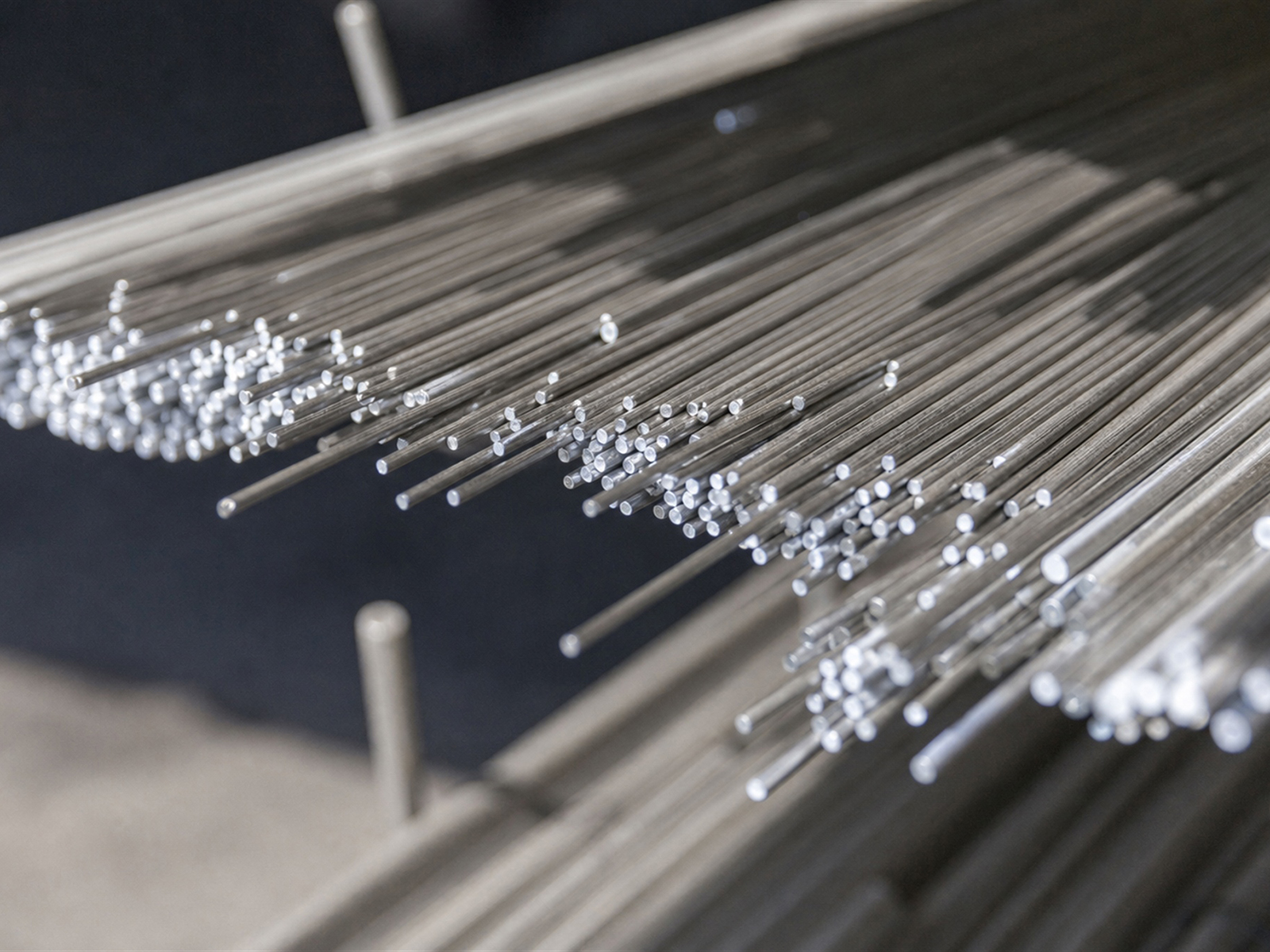
Gr5 titanium bars (Gr5, commonly designated as Ti-6Al-4V) excel in demanding environments thanks to their outstanding corrosion resistance. This alpha-plus-beta dual-phase alloy resists attack from seawater, chloride ions, acid and alkali solutions, and a variety of other corrosive media through a dense, spontaneously formed titanium dioxide (TiO2) passivation layer on its surface. Compared with conventional stainless steel grades, Gr5 titanium bars demonstrate longer service life and lower maintenance costs in marine engineering, chemical equipment, and medical implant applications. Their unique passivation film self-repair mechanism and electrochemical stability make Gr5 the material of choice for corrosion control engineering. This article provides a comprehensive analysis of the corrosion resistance of Gr5 titanium bars, covering passivation mechanisms, performance in various corrosive environments, comparisons with stainless steels, real-world application case studies, and frequently asked questions.
2. Core Mechanisms of Corrosion Resistance in Gr5 Titanium Bars
(1) Formation and Structural Characteristics of the Passivation Film
When exposed to an oxygen-containing environment, the surface of a Gr5 titanium bar instantly forms an amorphous TiO2 passive layer approximately 2–10 nm thick. This oxide film possesses exceptional chemical stability, effectively isolating corrosive media from direct contact with the base metal. The addition of aluminum promotes densification of the film, while vanadium enhances adhesion at elevated temperatures. This synergistic effect of the two alloying elements enables the passivation film to remain intact across a broad pH range of 2–12 at room temperature. (Note: In strongly acidic conditions with pH below 2 or strongly alkaline conditions with pH above 12, localized dissolution of the passivation film may occur.)
(2) Self-Repair Capability and Dynamic Equilibrium
When the passivation film is locally damaged, the freshly exposed titanium substrate reacts rapidly with oxygen in the environment, reforming a protective layer within milliseconds to seconds. This self-healing characteristic enables Gr5 titanium bars to maintain their corrosion resistance even under mechanical wear or micro-cracking conditions. Aluminum in the alloy improves the quality of repair by reducing defect density in the oxide film, ensuring that the post-repair film integrity approaches the original state.
(3) Electrochemical Stability Performance
Gr5 titanium bars exhibit a relatively negative potential in the standard electrode potential sequence (approximately minus 0.07 V vs. SCE). However, in oxygen-containing environments, the material rapidly passivates, shifting the potential positively to between +0.1 V and +0.2 V. This passivation potential range places Gr5 titanium bars in a thermodynamically stable state in most aqueous solutions, with corrosion current densities below 0.1 microamperes per square centimeter.
Table 1. Summary of Corrosion Protection Mechanisms
| Corrosion Mechanism Type | Operating Principle | Key Influencing Factors | Performance Advantage |
| Passivation Film Protection | Physical barrier by TiO2 layer | Environmental oxygen content, pH value | Blocks penetration of corrosive media |
| Self-Repair Capability | Rapid oxidation of exposed surface | Oxygen supply, temperature | Millisecond-level repair after damage |
| Electrochemical Stability | Wide passivation potential range | Solution conductivity, Cl- concentration | Corrosion current < 0.1 microA/cm2 |
3. Performance of Gr5 Titanium Bars in Different Corrosive Environments
(1) Seawater and Marine Environments
The corrosion rate of Gr5 titanium bars in seawater is below 0.001 mm/year, which is virtually negligible. Even in high-velocity seawater flowing at speeds up to 5 m/s, erosion-corrosion does not occur. Compared with 316L stainless steel (corrosion rate of 0.1–0.3 mm/year in seawater) and titanium-aluminum bronze (0.01–0.05 mm/year), Gr5 titanium bars exhibit the superior seawater corrosion resistance. In offshore platforms, marine seawater systems, and coastal engineering projects, Gr5 titanium bars have been demonstrated to achieve maintenance-free service lives exceeding 50 years.
(2) Chloride Environments
Gr5 titanium bars possess absolute resistance to chloride-ion corrosion. Regardless of Cl- concentration, including saturated brine, Gr5 titanium bars do not suffer from pitting, crevice corrosion, or stress corrosion cracking. This characteristic makes Gr5 titanium bars the only viable metallic material choice in salt chemical processing, brine treatment, and de-icing salt environments.
(3) Acidic Environments
The corrosion resistance of Gr5 titanium bars in non-oxidizing acids (such as dilute sulfuric acid and hydrochloric acid) is limited, with corrosion rates increasing significantly at concentrations above 5% or temperatures exceeding 50 degrees Celsius. However, in oxidizing acids (such as nitric acid and chromic acid), Gr5 titanium bars exhibit excellent corrosion resistance. In nitric acid concentrations below 30%, even at boiling temperature, the corrosion rate of Gr5 titanium bars remains below 0.1 mm/year.
(4) Alkaline Environments
Gr5 titanium bars demonstrate good corrosion resistance in alkaline solutions, withstanding sodium hydroxide concentrations up to 50% at temperatures up to and including 80 degrees Celsius. Under concentrated alkali and high-temperature conditions, titanium may experience caustic embrittlement, but this phenomenon is extremely rare and typically occurs only under extreme conditions of pH above 13 and temperature above 150 degrees Celsius.
Table 2. Corrosion Rates in Various Environments
| Corrosive Environment | Gr5 Corrosion Rate | 316L Stainless Steel | Duplex Steel 2205 |
| Seawater (room temperature) | < 0.001 mm/year | 0.1 mm/year | 0.05 mm/year |
| 5% HCl (25 degrees C) | 0.5–1.0 mm/year | 5–10 mm/year | 3–5 mm/year |
| 30% HNO3 (boiling) | < 0.01 mm/year | 0.5 mm/year | 0.2 mm/year |
| Saturated NaCl solution | < 0.001 mm/year | Severe pitting | Crevice corrosion |
4. Corrosion Resistance Comparison: Gr5 Titanium Bars vs. Stainless Steel
(1) Pitting and Crevice Corrosion
316L stainless steel may develop pitting in water solutions containing chloride ion concentrations exceeding 200 ppm, whereas Gr5 titanium bars do not experience pitting at any concentration of chloride in aqueous solutions. Under crevice conditions (e.g., beneath gaskets or bolted connections), the critical pitting temperature for 316L stainless steel is approximately 30 degrees Celsius, while Gr5 titanium bars face no such limitation.
(2) Stress Corrosion Cracking (SCC)
Duplex stainless steels may experience SCC in chloride-containing environments, with a cracking temperature threshold of approximately 60 degrees Celsius. Gr5 titanium bars do not undergo SCC whatsoever in chloride solutions, maintaining integrity even under tensile stress in room-temperature seawater. This characteristic provides significant advantages for Gr5 titanium bars in marine structures and chemical pressure vessels.
(3) Galvanic Corrosion
When Gr5 titanium bars come into contact with carbon steel or aluminum alloys, the large potential difference may accelerate galvanic corrosion of the other materials. However, the Gr5 titanium bars themselves will not corrode due to galvanic effects. In engineering design, insulation isolation measures should be applied at titanium-to-dissimilar-metal contact interfaces.
Table 3. Comparison of Corrosion Types
| Corrosion Type | Gr5 Titanium Bar | 316L Stainless Steel | Duplex Steel 2205 |
| Pitting corrosion | Does not occur | Prone to occur (Cl- > 200 ppm) | Resistant to pitting |
| Crevice corrosion | Does not occur | Critical temperature 30 degrees C | Critical temperature 50 degrees C |
| Stress corrosion cracking | Does not occur | High-temperature chloride environments | Moderate resistance |
| Erosion-corrosion | Excellent | Moderate | Good |
5. Real-World Engineering Application Case Studies
Case Study 1: High-Pressure Pump Impeller in Seawater Desalination Plant
A reverse osmosis seawater desalination plant with a daily capacity of 30,000 metric tons experienced pitting and crevice corrosion in its high-pressure pump impeller after two years of operation. The original impeller was machined from duplex stainless steel 2205, and the corrosion resulted in a 30% reduction in pump efficiency. After replacement with a Gr5 titanium bar machined impeller, the equipment operated continuously for eight years without corrosion-related damage. Maintenance intervals were extended from six months to three years.
Case Study 2: Reactor Stirring Shaft in Chemical Plant
The reactor stirring shaft of a chlor-alkali chemical plant, originally fabricated from 316L stainless steel, suffered wall thinning and cracking after 18 months of operation in a corrosive environment containing wet chlorine gas and hydrochloric acid. After switching to Gr5 titanium bars, the stirring shaft service life extended beyond ten years with no replacements required during that period.
Case Study 3: Offshore Platform Jacket Structures
The ladder systems and cable trays of an offshore oil platform, manufactured from Gr5 titanium bars, were evaluated after twelve years of service in a marine atmospheric environment (characterized by salt spray and high humidity). The titanium components exhibited only a thin surface oxide film with no visible signs of corrosion. Meanwhile, concurrently installed stainless steel components had developed multiple pitting sites.
Table 4. Service Life Comparison in Engineering Applications
| Application Scenario | Service Life | Original Material Life | Performance Improvement |
| Desalination pump impeller | 8+ years | 2 years | Service life extended 4x |
| Chemical stirring shaft | 10+ years | 1.5 years | Service life extended 6x |
| Offshore platform structures | 12+ years | 5 years | Maintenance-free operation |
6. Conclusion
Gr5 titanium bars demonstrate comprehensive advantages over conventional stainless steels in harsh corrosive environments, owing to their self-repairing passivation film mechanism, absolute resistance to chloride-induced corrosion, and broad acid and alkali resistance. While their corrosion resistance in non-oxidizing acids is limited, Gr5 titanium bars remain the optimal corrosion-resistant structural material choice for the vast majority of industrial and marine applications.
FAQ
Q1: Can Gr5 titanium bars be used in hydrofluoric acid environments?
No. Hydrofluoric acid destroys the oxide film on titanium, leading to rapid corrosion. Even at low concentrations and low temperatures, Gr5 titanium bars are not suitable for environments containing fluoride ions (F-).
Q2: Will the corrosion resistance of Gr5 titanium bars be reduced by heat treatment?
Proper heat treatment (such as stress-relief annealing at 550–700 degrees Celsius) will not significantly affect the corrosion resistance of Gr5 titanium bars. However, excessive annealing temperatures (above 700 degrees Celsius) or prolonged heating in air may cause excessive surface oxidation, forming an alpha case layer that slightly reduces fatigue performance and corrosion resistance.
Q3: How should galvanic corrosion risks of Gr5 titanium bars in seawater be managed?
When using Gr5 titanium bars in seawater systems, direct contact with anodic materials such as carbon steel and aluminum alloys should be avoided. If connection is unavoidable, electrical isolation should be achieved using insulating gaskets and bolts, or the cathodic materials should be coated for protection.
Finding a Reliable Gr5 Titanium Bar Supplier
Baoti Titanium Valley Titanium, Nickel & Zirconium Material Processing Co., Ltd. is a professional manufacturer of high-end specialty metal products, equipped with an Italian Danieli rolling production line with an annual titanium bar output exceeding 10,000 metric tons. Full-size customization and EN 10204 3.1 certification services are available. Contact us immediately for technical support and quotation: sales@titaniumvalleys.com
For a broader view of available grades, supply forms, and related specifications, explore our Titanium Rod category.
For product-level details and supply options, you can also review our ASTM F136 Gr5 Eli (Gr23) Titanium Rod page.
References
[1] GB/T 3620.1-2016 Titanium and Titanium Alloy Designations and Chemical Composition [S]. Beijing: Standards Press of China, 2016.
[2] Zhou Ming. Research on Corrosion Resistance of Titanium Alloys in Marine Engineering [J]. Corrosion & Protection, 2020, 41(5): 45–52.
[3] ASTM International. ASTM B348-22 Standard Specification for Titanium and Titanium Alloy Bars and Ingots [S]. West Conshocken: ASTM International, 2022.