
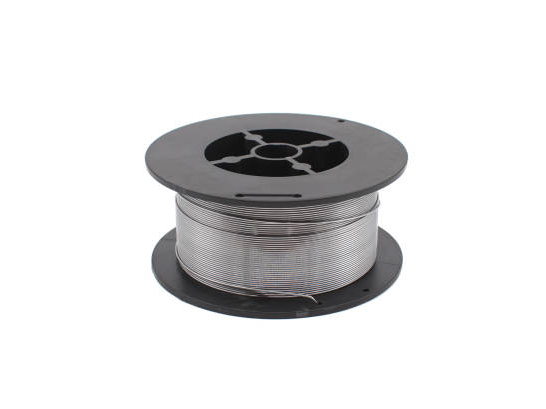
Purchase engineers often struggle to choose between Gr2 titanium wire and Gr5 titanium wire for material selection. These two grades dominate the global titanium wire market yet fit completely different working environments. Gr2 stands out for strong corrosion resistance and easy forming at reasonable cost, ideal for chemical and offshore projects. Gr5 delivers more than double the tensile strength of pure titanium, making it the top option for aerospace and high-end equipment production. This article does not aim to label one grade superior. The best choice always depends on actual service conditions, including operating temperature, load stress, corrosive surroundings and available budget.
1. Chemical Composition and Microstructure: Root Cause of Property Differences
1.1 Core difference between pure titanium and titanium alloy
Gr2 titanium wire consists of single-phase alpha pure titanium with minimum 99.2% titanium content. Factories tightly cap impurity levels: iron below 0.30% and oxygen below 0.25%. Its single-phase structure brings great ductility and weldability but limits overall tensile strength. Gr5 belongs to alpha-plus-beta dual-phase alloy. Manufacturers add 6% aluminum to stabilize alpha phase and 4% vanadium to lock beta phase and adjust inner microstructure. This dual-phase structure lifts tensile strength above 895 MPa, far higher than Gr2’s 345 MPa at 345 MPa. Aluminum cuts alloy density and improves high-temperature stability. Vanadium optimizes hot working performance and stops oversized grain growth.
1.2 Comparison of work hardening performance
Commercial pure titanium develops obvious work hardening during cold drawing. Tensile strength rises 30% once deformation exceeds 40%, while ductility drops sharply. Manufacturers need segmented intermediate annealing to recover material flexibility during production. Thanks to existing beta phase, Gr5 gains work hardening much slower. It handles larger forming deformation without frequent annealing and boosts continuous production efficiency for fine-size wires. However, the alloy catches hydrogen more easily, so vacuum annealing becomes a mandatory step.
1.3 Different responses to heat treatment
Gr2 reaches balanced optimal performance after simple annealing at 500–650°C and requires no complicated thermal treatment steps. Gr5 needs precise two-stage annealing: heat inside alpha-beta phase field then hold temperature for beta phase stabilization to optimize phase ratio and grain size. Improper cooling speed creates coarse Widmanstätten structure and reduces material toughness. Strict processing requirements push up overall production cost of Gr5 wire.
2. Mechanical Properties and Service Limits: Key for working condition matching
2.1 Dramatic gap in strength-to-weight ratio
Core property comparison between Gr2 and Gr5
| Performance Index | Gr2 | Gr5 | Improvement Rate |
|---|---|---|---|
| Tensile Strength (MPa) | 345 | ≥895 | +159% |
| Yield Strength (MPa) | 275 | ≥828 | +201% |
| Density (g/cm³) | 4.51 | 4.43 | -1.8% |
| Elastic Modulus (GPa) | 103 | 110 | +6.8% |
| Elongation (%) | ≥20 | ≥10 | Around 50% drop, subject to processing status |
Data clearly shows Gr5 owns remarkable specific strength for parts under high-cycle fatigue or impact loads. Test results from an aerospace fastener producer prove bolts made of Gr5 wire carry 2.3 times larger load than identical-size Gr2 bolts. This figure falls below the 3.01 times yield strength gap, as bearing capacity gets affected by plastic deformation and thread stress concentration. Real industrial records confirm the 2.3x load data. Component weight reduces by 40% after switching to Gr5.
2.2 Dividing line for applicable temperature range
Gr2 works steadily for long-term service only below 280°C. Higher temperature speeds oxidation and causes fast strength decline. Gr5 runs continuously at 350–400°C and withstands short peak temperature up to 540°C. These features make Gr5 the only viable pick for aerospace engine low-temperature pipeline parts and turbocharger springs for automobiles. One chemical plant once used Gr2 heat exchange tubes at 300°C beyond safe working limit. Creep deformation appeared after three months, and alloy replacement maintained flawless operation for five years.
2.3 Fatigue service life and reliability
Fatigue limit becomes critical under alternating cyclic stress. Based on ASM standards and common industrial data, Gr5’s fatigue strength hits roughly 50% of its tensile strength near 450 MPa. Gr2 only reaches 35% of tensile strength at about 120 MPa, a normal trend for most metallic materials. Orthopedic implant springs need over 10⁷ loading cycles, a working condition where Gr5 holds absolute advantages. A medical device maker chose low-cost Gr2 springs at first, yet 18% of samples fractured from fatigue in clinical trials. The factory redesigned products and switched material to Gr5 in the end.
3. Corrosion Resistance: Natural advantage of pure titanium
3.1 Stability comparison of passive oxide film
Both grades rely on dense TiO₂ surface passive film against corrosion, yet Gr2 forms more stable protective coating. Gr2 keeps annual corrosion rate below 0.01 mm/year across pH 2–12 acid and alkaline liquid. It stays inert even inside boiling hydrochloric acid below 5% concentration. Extra alloy elements make Gr5 prone to broken passive film inside strong reducing acid such as hydrofluoric acid and lower its anti-corrosion ability. A marine research institute completed a 20-year deep seawater soaking test in South China Sea. Gr2 wire mesh only had slight surface discoloration, while Gr5 samples formed tiny cracks around pitting-sensitive areas.
3.2 Different sensitivity toward stress corrosion cracking
Chloride-rich environment creates big challenges for titanium components. Gr2 fully resists stress corrosion cracking (SCC) and bears tensile load inside high-concentration chloride solution without failure. Gr5 faces sharp SCC risk when working above 300°C in chloride environment under load over 70% of its yield strength. A petrochemical factory installed Gr5 springs inside 80°C chlor-alkali equipment with 10% chloride content. Transgranular cracks appeared after 18 months of operation. Gr2 replacement worked without fault for eight years.
3.3 Hydrogen embrittlement control for practical engineering
Titanium easily absorbs hydrogen during pickling or cathodic protection and forms brittle hydride particles. Gr5 dissolves much more hydrogen, and material toughness drops sharply once hydrogen content exceeds 150 ppm. Baoji Titanium Valley applies vacuum annealing to lock hydrogen below 15 ppm and runs full eddy current inspection to find inner flaws and avoid hydrogen embrittlement. Gr2 absorbs less hydrogen in general, yet excessive cathodic protection voltage still leads to unexpected hydrogen pickup.
4. Cost analysis and supply chain planning: Hidden cost comparison
4.1 Quantitative breakdown of raw material cost
Comprehensive cost comparison of titanium wire (USD per kg)
| Cost Item | Gr2 | Gr5 | Cost Note |
|---|---|---|---|
| Raw Material (Sponge Ti + Master Alloy) | 18–22 | 25–30 | Gr5 needs extra Al-V master alloy |
| Smelting Expense | 8 | 12 | Cost from vacuum consumable arc melting |
| Processing Scrap Rate | 25% | 35% | Alloy brings higher machining difficulty |
| Finished Product Unit Price | 45–55 | 75–95 | Mainstream market quotation |
Gr5 carries roughly 67% higher unit price at first glance, but its high strength cuts part weight and may balance or even lower cost per unit strength. A drone manufacturer calculated actual project income: Gr5 landing gear wire raised raw material spending by $120, yet 2.3 kg weight reduction saved fuel and lifted payload. Total full-cycle profit exceeded $1800 with $5 per gallon fuel price and 200 annual flight hours.
4.2 Machining efficiency and finished yield
High ductility of pure titanium creates low springback and less waste during cold forming and spring coiling. Data from a spring factory shows 1.0 mm diameter Gr2 spring reaches 96% finished yield, versus only 89% for Gr5 due to tough springback control. Scrap gap causes obvious total cost difference during mass production. Baoji Titanium Valley uses Italian Danieli continuous rolling lines to release residual stress and control straightness within ≤2 mm/m, greatly improving downstream processing performance of Gr5 wire.
4.3 Inventory management and delivery schedule
Suppliers keep regular sizes (1.0–5.0 mm diameter) of common Gr2 in stock with standard delivery time of 7–14 days. Baoji Titanium Valley ships stocked Gr2 within three working days. Most thin Gr5 wire below 0.8 mm diameter comes from custom production with lead time from six to eight weeks. For urgent orders and small trial batches, long waiting time often costs more than material price gaps. The company’s 10,000-ton annual production capacity supports three-day delivery for stocked goods and 15-day lead time for customized specifications.
5. Application Selection Guide: Practical matching rules
5.1 Chemical and offshore engineering: Main application field of Gr2
Chlor-alkali electrolytic cell anode mesh, desalination evaporator tube bundles and deep-sea platform mooring cables share common traits: heavy corrosion, low working stress and large consumption volume. Gr2 takes dominant position with affordable price and superior anti-corrosion property. One desalination project used 8 tons of 1.0 mm Gr2 woven filter screen. Switch to Gr5 would add around 240,000 USD extra cost with barely improved service performance. Gr2 wire frame for deep-sea aquaculture cages keeps full structural integrity after 15 years under salt spray and marine organism adhesion.

5.2 Aerospace field: Preferred choice for Gr5 alloy
Aircraft landing gear hydraulic connectors, engine fuel nozzle springs and deployable antenna hinges for satellites require extreme strength, heat resistance and lightweight design. One commercial passenger jet uses over 12,000 Gr5 fasteners. Pure titanium lacks enough mechanical strength here, and steel alternatives add 180 kg extra aircraft weight. Gr5 maintains stable elastic modulus under -100°C to +150°C cyclic temperature shift in spacecraft, while Gr2 loses much low-temperature strength.

5.3 Medical and precision manufacturing: Grade selection by detailed usage
Material selection for typical applications
| Application Type | Recommended Grade | Core Selection Reason | Practical Case |
|---|---|---|---|
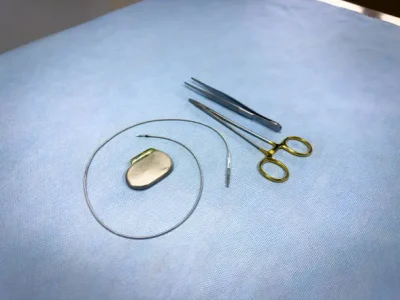
| Orthopedic Implant Spring | Gr5 Titanium Wire | Long fatigue life plus good biocompatibility | Dynamic stabilization system for spinal fusion |
| Orthodontic Arch Wire | Not Gr2; NiTi or Beta Titanium Alloy | Low elastic modulus and superelasticity | Arch wire for invisible orthodontic appliance |
| Cardiac Stent Braiding | Not Gr2; Cobalt Chrome or 316L SS | High tensile strength and radiopacity | Common cobalt-chrome intravascular stent |
| Surgical Suture Wire | Gr5 Titanium Wire | High tensile resistance | Alternative wire for sternum closure |
For 3C electronic products such as smartphones and laptops, thin 0.3–0.5 mm Gr5 wire makes internal support frames against drop impact. Titanium’s thermal conductivity only hits around 17 W/m·K and never works well for heat dissipation parts. Analytic instrument corrosion-proof sensing probes mostly pick Gr2 to stop alloy element contamination of testing samples.
5.4 Mixed material solution for complex working conditions
One offshore oil platform adopts mixed material layout. Workers use Gr2 welding wire for regular frame connections with yearly consumption of 15 tons and high-strength Gr5 bolts on critical stressed joints with 2-ton annual usage. This combination cuts total project cost by 18% without sacrificing safety. Similar mixed selection works for chemical pressure vessels and seawater pump shafts.
Conclusion
The comparison between Gr2 and Gr5 essentially equals engineering trade-off between superior corrosion resistance and outstanding mechanical strength. Industrial standards suggest Gr2 for heavily corrosive chemical and marine environments and Gr5 for high-stress aerospace and medical equipment. New surface treatment, advanced alloy development and smart manufacturing gradually break traditional selection boundaries. The most valuable solution comes from experienced engineers who master material features, clarify site working conditions and apply mixed-grade design flexibly.
FAQ
1. Can Gr5 fully replace stainless steel springs?
Gr5 replaces stainless steel for projects needing light weight and strong corrosion resistance, yet its unit price runs three to four times higher than 316 stainless steel. For example, 1.0 mm Gr5 costs around 90 USD/kg against 25 USD/kg for 316 stainless steel with slight price fluctuation by diameter. Complete full-lifecycle cost calculation helps confirm economic feasibility when weight reduction improves equipment performance or extends service cycle. Users must strictly manage pickling process to avoid hydrogen absorption of Gr5.
2. How to verify stable wire quality from suppliers?
Buyers check three key points. First, request batch test reports for chemical composition and mechanical performance. Second, inspect wire surface for peeling and cracks following ASTM B863 specification. Third, measure diameter tolerance and straightness. Baoji Titanium Valley carries dual non-destructive inspection via eddy current and ultrasonic test and issues EN 10204 3.1 inspection certificate for consistent batch quality.
3. Is small-batch order (50 kg) acceptable for customized wire?
Most manufacturers charge high premium and extend lead time for small orders due to expensive mold and production switching cost. Baoji Titanium Valley’s flexible production line accepts orders starting from 50 kg. Standard sizes ship within one week, and custom diameter or special surface finish takes two to three weeks. Customers save extra cost by combining separate small orders.
Supplier Information
Baoji Titanium Valley Titanium Nickel Zirconium Material Processing Co., Ltd owns Italian Danieli continuous rolling production lines with annual output of 10,000 tons. The company supplies customized Gr2 and Gr5 wire covering full diameter range from 0.1 mm to 10.0 mm. We provide sample testing and bulk delivery to support your project development. Contact via sales@titaniumvalleys.com for detailed quotation.
References
1. Zhao Yongqing, Chen Yongnan, Zhang Xuemin, et al. Titanium Alloys and Processing Technology[M]. Beijing: Science Press, 2010.
2. Editorial Group of Titanium Handbook. Titanium Handbook[M]. Beijing: Chemical Industry Press, 2012.
3. Wang Jinyou, Yang Rui, Wang Xiangdong. Application of Titanium Alloys in Aviation Industry[J]. Journal of Aeronautical Materials, 2003, 23(Supplement): 25-31.
4. Liu Jianying, Zhang Xiaoming. Corrosion Behavior Comparison between Commercial Pure Titanium and Ti-6Al-4V Alloy[J]. Corrosion Science and Protection Technology, 2015, 27(3): 245-250.