
How to Ensure the Gr2 Titanium Bars You Purchase Meet Quality Standards
- Gr2 Titanium Bars
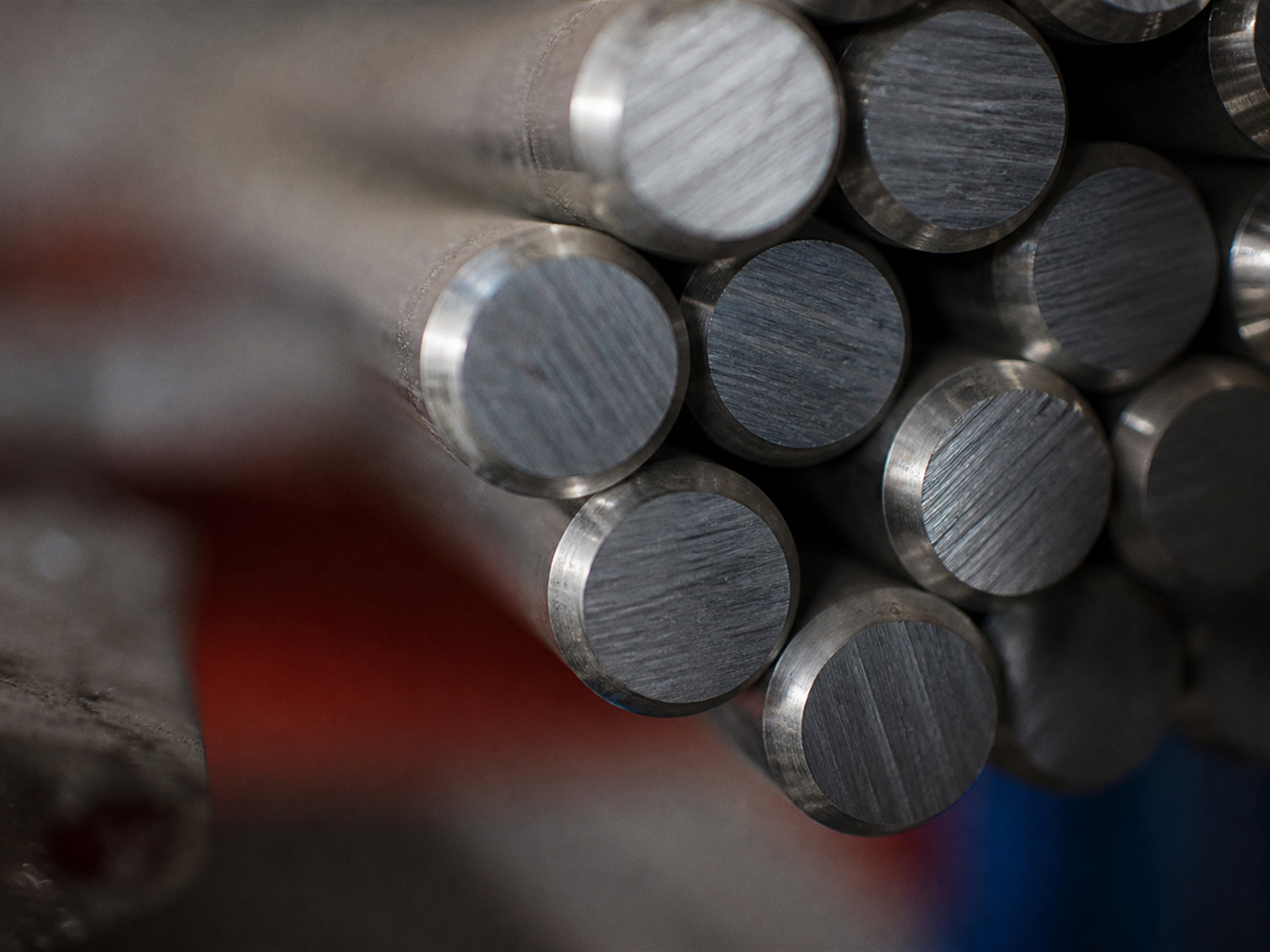
Gr2 titanium bars (industrial pure titanium) are widely used in chemical processing, marine engineering, medical devices, food processing, and other sectors. However, quality among Gr2 titanium bars available on the market varies significantly. Improper selection may lead to equipment corrosion, failure, or even safety incidents. This article systematically guides you through five key areas—quality standard identification, supplier evaluation, inspection methods, acceptance criteria, and common issues—to help ensure that the Gr2 titanium bars you purchase meet required quality standards.
1. Identifying Quality Standards for Gr2 Titanium Bars
(1) International Standards
- ASTM B348: The standard for titanium and titanium alloy bars established by ASTM International. This is the most widely applied Gr2 titanium bar quality standard globally.
- EN 2222: European standard with technical requirements essentially aligned with ASTM B348.
- AMS 4906: Specification for aerospace-grade Gr2 titanium bars with stricter requirements.
(2) Chinese National Standards
- GB/T 3620.1: Specifies the chemical composition requirements for titanium and titanium alloy bars.
- GB/T 3621: Defines dimensional tolerances, shapes, weights, and allowable deviations for titanium and titanium alloy bars.
- GB/T 3622: Establishes technical requirements for titanium and titanium alloy plates and sheets.
2. Key Supplier Evaluation Criteria
(1) Qualifications and Certifications
- Select suppliers certified to ISO 9001 quality management systems.
- For nuclear industry applications, choose suppliers certified to RCC-M or ASME Section III standards.
- For medical device applications, select suppliers certified to ISO 13485.
(2) Production Capability
- Possess complete production lines for smelting, forging, rolling, and heat treatment.
- Maintain advanced testing equipment (spectrometers, tensile testers, hardness testers, etc.).
- Capable of issuing EN 10204 Type 3.1 certificates.
(3) Industry Experience
- Choose suppliers with extensive successful case studies in your target application sector.
- Request third-party test reports and customer references from the supplier.
3. Inspection Methods for Gr2 Titanium Bars
(1) Chemical Composition Analysis
- Use an optical emission spectrometer to determine the chemical composition of Gr2 titanium bars.
- Key element limits: Ti balance, O ≤ 0.20%, Fe ≤ 0.30%, C ≤ 0.08%, N ≤ 0.03%, H ≤ 0.015%.
- No single impurity element shall exceed 0.10%, and the total of all impurity elements shall not exceed 0.40%.
(2) Mechanical Property Testing
- Perform tensile testing in accordance with ASTM E8.
- Key indicators: Tensile strength ≥ 340 MPa, Yield strength ≥ 275 MPa, Elongation ≥ 20%.
- Hardness: HB 120–180 (or HV 125–190).
(3) Dimensional Tolerance Inspection
- Diameter tolerance per ASTM B348: φ6–30 mm = ±0.15 mm; φ30–50 mm = ±0.20 mm.
- Out-of-roundness: Shall not exceed 80% of the diameter tolerance.
- Straightness: Shall not exceed 1.5 mm/m.
(4) Surface Quality Inspection
- Surface shall be free of cracks, laps, scaling, and hairline defects.
- Surface roughness: Ra ≤ 3.2 µm (hot-rolled) or Ra ≤ 1.6 µm (finished).
- Minor permissible scratches shall not exceed 50% of the diameter tolerance in depth.
(5) Non-Destructive Testing
- Ultrasonic Testing (UT): Performed per ASTM E114, with detection sensitivity equivalent to a φ1 mm flat-bottom hole.
- Eddy Current Testing (ET): Used for surface and near-surface defect detection.
4. Acceptance Criteria
(1) Documentation Acceptance
- EN 10204 Type 3.1 certificate (covering chemical composition, mechanical properties, and non-destructive test results)
- Factory inspection report
- Packaging and identification list
(2) Physical Acceptance
- Visual inspection: No visible defects
- Dimensional measurement: Sampling inspection of diameter, out-of-roundness, and straightness
- Hardness spot-check: At least 3 points tested per batch
5. Common Issues and Resolutions
(1) Chemical Composition Non-Conformance
- Immediately cease use and notify the supplier for return or replacement.
- Retain samples as evidence for claims.
(2) Mechanical Properties Below Specification
- Request the supplier to provide re-inspection reports.
- If confirmed non-conforming, reject the entire batch.
(3) Surface Defects
- Minor defects may be removed by grinding, provided the depth does not exceed 50% of the diameter tolerance.
- Severe defects (cracks, laps) require rejection of the affected material.
6. Conclusion
Ensuring Gr2 titanium bars meet quality standards requires rigorous control across multiple stages, including supplier selection, standard identification, inspection methods, and acceptance procedures. We recommend partnering with reputable suppliers and requesting complete test reports and certification documents.
FAQ
Q1: What is the warranty period for Gr2 titanium bars?
Under normal storage and usage conditions, the warranty period for Gr2 titanium bars is typically 2 years. Re-inspection should be performed before use after 2 years.
Q2: Can Gr2 titanium bars be tested in-house?
Chemical composition and mechanical property testing require professional laboratory equipment. Surface quality and dimensional tolerances can be preliminarily inspected in-house.
Q3: How should quality issues be handled?
Notify the supplier immediately, retain samples and evidence, and request product returns, replacements, or compensation.
Finding a Reliable Gr2 Titanium Bar Supplier
Baoji Titanium Valley Titanium Nickel Zirconium Material Processing Co., Ltd. is a professional manufacturer of high-end rare metal products. Equipped with a Danieli (Italy) rolling production line, the company produces over 10,000 metric tons of titanium bars annually, offering full-size customization and EN 10204 Type 3.1 certification services. Contact us now for technical support and quotation: sales@titaniumvalleys.com
For a broader view of available grades, supply forms, and related specifications, explore our Titanium Rod category.
For product-level details and supply options, you can also review our ASTM F136 Gr5 Eli (Gr23) Titanium Rod page.
References
[1] ASTM B348-22 Standard Specification for Titanium and Titanium Alloy Bars and Ingots. West Conshohocken: ASTM International, 2022.
[2] GB/T 3620.1-2016 Titanium and Titanium Alloy Grades and Chemical Composition. Beijing: Standards Press of China, 2016.