
How to Overcome Tool Built-Up Edge Problems When Machining Ni200 Nickel Bars?
- Ni200 Nickel Bars
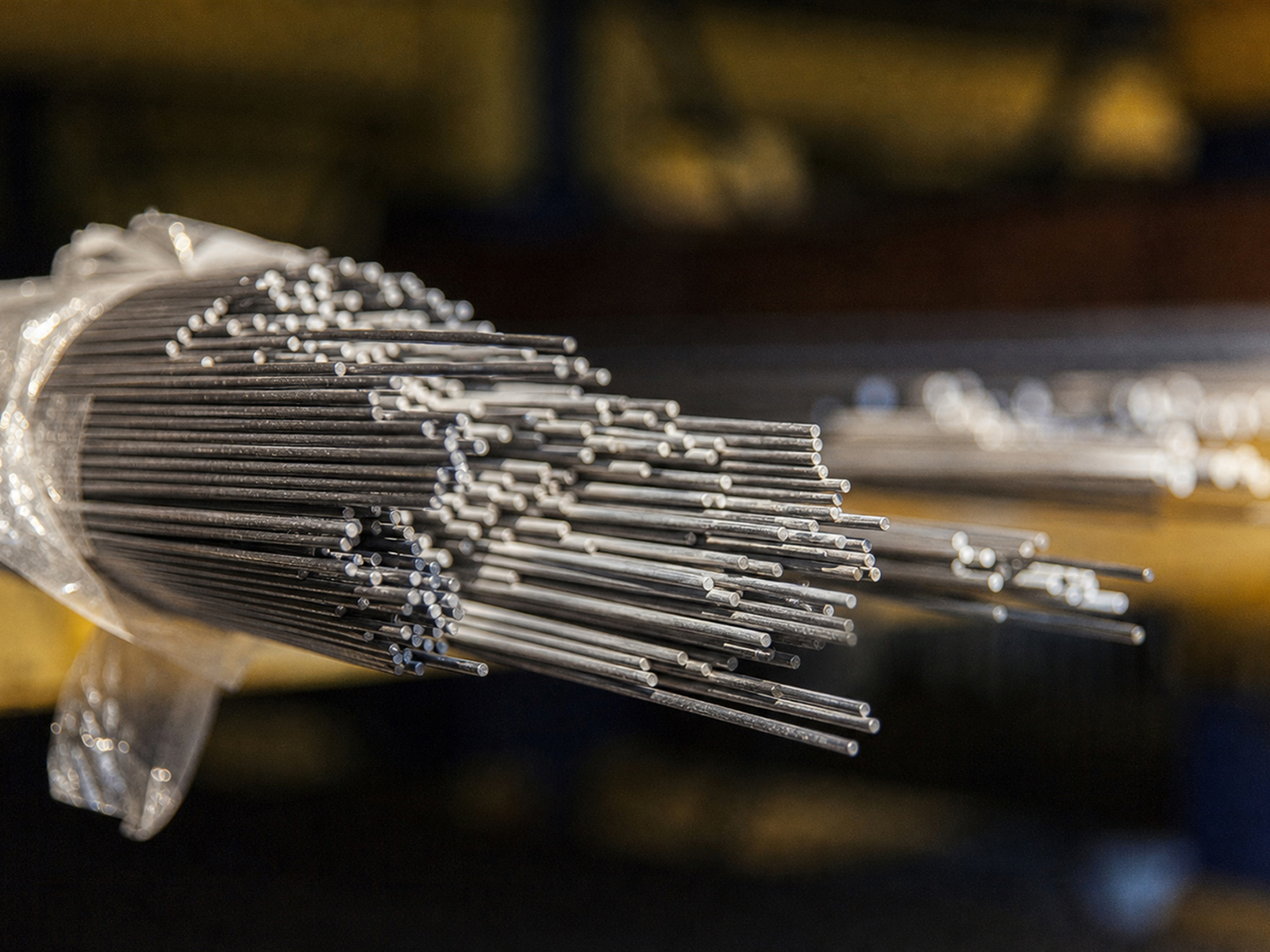
Ni200 nickel bars (industrial-grade pure nickel) frequently exhibit tool built-up edge (BUE) during machining operations. This phenomenon not only degrades surface finish but also accelerates tool wear and reduces overall machining efficiency. The high ductility, low thermal conductivity, and strong chemical reactivity of Ni200 contribute to built-up edge formation during cutting. This article systematically addresses effective countermeasures across five key areas: root-cause analysis, tool selection, cutting-parameter optimization, cooling and lubrication techniques, and process improvements.
1. Root-Cause Analysis of Built-Up Edge Formation on Ni200 Nickel Bars
- High Material Ductility: Ni200 nickel bars exhibit an elongation rate of 35–45%. During cutting, substantial plastic deformation occurs, producing continuous chips that adhere to the tool surface.
- Low Thermal Conductivity: The thermal conductivity of Ni200 is only 90.7 W/(m·K)—approximately one-third that of stainless steel. Cutting heat dissipates poorly, raising the temperature in the cutting zone and intensifying workpiece-tool adhesion.
- Chemical Reactivity: At elevated temperatures, Ni200 readily undergoes chemical reactions with tool-material constituents, forming diffusion layers that promote chip welding onto the tool face.
- Work Hardening: Ni200 exhibits pronounced work hardening during machining. Surface hardness can increase by 30–50%, further accelerating tool wear and aggravating built-up edge formation.
Table 1. Recommended Tool Types and Anti-BUE Performance
| Tool Type | Recommended Rake Angle | Recommended Inclination Angle | Anti-BUE Effectiveness |
| YG8 Carbide | 15–20° | 5–10° | Good |
| TiAlN-Coated Tool | 15–20° | 5–10° | Excellent |
| Al₂O₃-Coated Tool | 10–15° | 5–10° | Excellent |
| Diamond-Coated Tool | 15–20° | 5–10° | Outstanding |
2. Tool Selection
- Tool Material: Carbide tools (e.g., YG8, YT15) are recommended. Coated tools—particularly TiAlN and Al₂O₃ coatings—significantly mitigate built-up edge. For high-speed finishing operations, diamond-coated tools deliver the best performance.
- Tool Geometry: Increase the rake angle to 15–20° and the inclination angle to 5–10° to reduce the tool-chip contact area. Cutting edges must be kept razor-sharp; dull edges exacerbate built-up edge formation.
- Tool Surface Treatment: Ultra-smooth edge preparation (Ra ≤ 0.2 μm) or dedicated anti-adhesion coatings effectively reduce the tendency for nickel material to weld onto the tool.
3. Cutting Parameter Optimization
- Cutting Speed: Medium cutting speeds of 80–150 m/min effectively minimize built-up edge. Excessively low speeds promote BUE formation, while excessively high speeds accelerate tool wear.
- Feed Rate: A higher feed rate of 0.2–0.5 mm/rev ensures the cutting depth exceeds the work-hardened layer, reducing the tendency for built-up edge.
- Depth of Cut: A single-pass depth of cut ≥ 1.0 mm is recommended to bypass the surface-hardened zone.
Table 2. Recommended Cutting Parameters
| Cutting Parameter | Recommended Range | Effect Too Low | Effect Too High |
| Cutting Speed (m/min) | 80–150 | Prone to BUE | Rapid tool wear |
| Feed Rate (mm/rev) | 0.2–0.5 | Poor surface finish | Excessive vibration |
| Depth of Cut (mm) | ≥ 1.0 | Work-hardened layer not removed | Excessive tool load |
4. Cooling and Lubrication Techniques
- Coolant Selection: Use oil-based coolants containing extreme-pressure (EP) additives, such as sulfurized or chlorinated cutting oils. The coolant must possess excellent penetration and lubricity.
- Cooling Method: High-pressure through-tool cooling (pressure ≥ 10 MPa) delivers coolant directly to the cutting zone, effectively lowering cutting temperatures and flushing away adhered chips.
- Coolant Flow Rate: Maintain a sufficient flow rate of ≥ 50 L/min to ensure thorough lubrication and cooling of the cutting zone.
Table 3. Comparison of Cooling Methods
| Cooling Method | Flow Rate (L/min) | Pressure (MPa) | Effectiveness |
| Conventional Flood | 20–30 | 0.5–1.0 | Fair |
| High-Pressure Through-Tool | 50–100 | 5–15 | Excellent |
| Mist Cooling | 10–20 | 0.1–0.5 | Good |
5. Process Improvement Measures
- Pre-Machining Heat Treatment: Anneal the Ni200 nickel bar prior to machining to reduce material hardness and improve machinability.
- Multi-Stage Machining: After roughing removes the bulk of the allowance, perform an intermediate annealing pass to relieve work hardening before proceeding to finishing operations.
- Vibration-Assisted Machining: Ultrasonic-assisted cutting employs high-frequency vibration to disrupt chip continuity, effectively reducing built-up edge formation.
6. Conclusion
Overcoming built-up edge problems on Ni200 nickel bars requires a comprehensive approach encompassing tool selection, cutting-parameter optimization, cooling and lubrication strategy, and process improvements. By properly selecting coated carbide tools, optimizing cutting parameters, employing extreme-pressure coolants, and integrating pre-machining annealing with multi-stage machining practices, manufacturers can significantly reduce built-up edge occurrences and substantially improve both machining efficiency and surface quality.
FAQ
Q1: Can Ni200 nickel bars be machined with high-speed steel (HSS) tools?
Yes, although efficiency will be lower and tool wear will be accelerated. Carbide tools are recommended for superior machining results and extended tool life.
Q2: Is dry machining feasible for Ni200 nickel bars?
Dry machining is generally not recommended for Ni200. Due to the material’s poor thermal conductivity, dry cutting causes excessive temperatures in the cutting zone, which aggravates both built-up edge formation and tool wear.
Q3: How can machining efficiency for Ni200 nickel bars be improved?
By selecting appropriate coated tools, optimizing cutting parameters (medium speed combined with higher feed rate), and utilizing high-pressure through-tool cooling, machining efficiency can be increased by 30–50%.
Finding a Reliable Ni200 Nickel Bar Supplier
Baoti Titanium Valley Titanium-Nickel-Zirconium Materials Processing Co., Ltd. is a professional manufacturer of high-end rare-metal products. Equipped with an Italian Danieli rolling production line, the company produces over 20,000 metric tons of nickel bars annually and offers full-size customization with EN 10204 3.1 certification. Contact us now for technical support and quotation:
Email: sales@titaniumvalleys.com
For a broader view of available grades, supply forms, and related specifications, explore our Nickel Rod category.
For product-level details and supply options, you can also review our ASTM B160 Nickel Rod page.
References
Editorial Committee of the Mechanical Engineering Handbook. Mechanical Engineering Handbook — Volume: Metal Cutting Machine Tools [M]. Beijing: China Machine Press, 2018.