
Manufacturing High-Strength Aerospace Bolts Using Gr4 Titanium Wire Cold Upsetting: Which Process Delivers the Best Results?
- Gr4 titanium wire
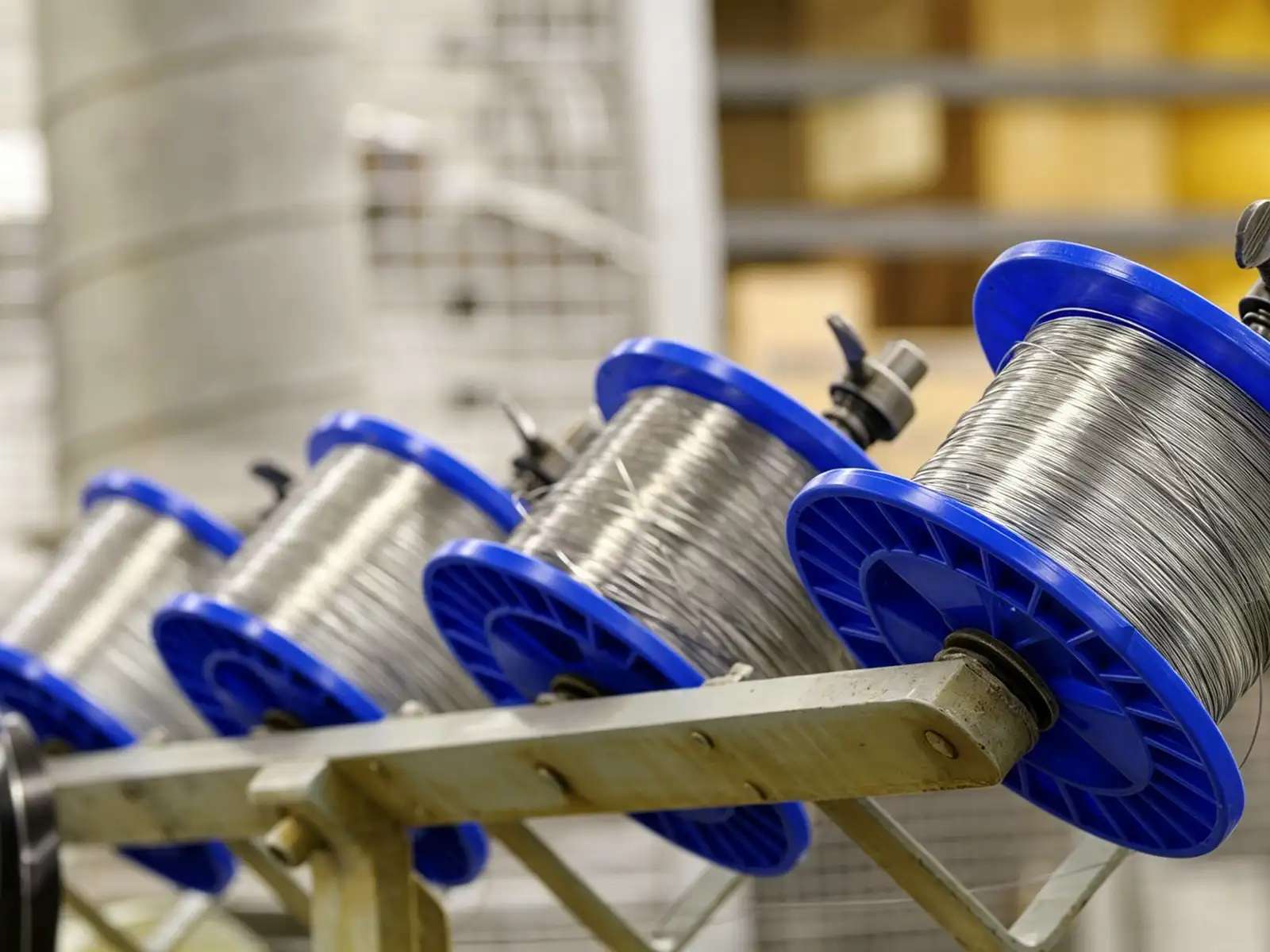
Gr4 Titanium Wire Gr4 titanium wire cold upsetting is a critical manufacturing process for producing high-strength aerospace bolts requiring exceptional fatigue resistance, corrosion immunity, and weight reduction. This article examines the cold upsetting process for Gr4 titanium wire aerospace bolts and provides guidance for process optimization and quality control.
1. Gr4 Titanium Wire for Aerospace Fasteners
(1) Material Requirements
Gr4 titanium wire for aerospace bolts must comply with ASTM B423 specification with tensile strength >= 895 MPa, yield strength >= 828 MPa, and elongation >= 10%. Chemical composition controls aluminum 5.5-6.75%, vanadium 3.5-4.5%, oxygen <= 0.20%, and interstitial elements below strict limits.
(2) Wire Preparation
Gr4 titanium wire is drawn to final diameter with intermediate annealing at 500-600 degrees C to restore ductility. Surface quality requires Ra <= 0.4 micrometers with no scratches, pits, or inclusions that could initiate bolt failure.
2. Cold Upsetting Process
(1) Process Parameters
Cold upsetting of Gr4 titanium wire bolts is performed at room temperature using multi-stage hammer forging with reductions of 30-50% per stroke. Interstage annealing at 550-650 degrees C for 30-60 minutes restores ductility between upsetting operations.
| Parameter | Range | Effect |
|---|---|---|
| Upsetting Temperature | Room temp to 200 C | Controls flow stress |
| Reduction per Stroke | 30-50% | Affects grain flow |
| Interstage Anneal | 550-650 C, 30-60 min | Restores ductility |
| Lubrication | Polyalphaolefin-based | Reduces friction, prevents galling |
(2) Grain Flow and Strength Enhancement
Proper cold upsetting produces fiber-aligned grain flow following bolt contour, enhancing fatigue strength by 20-30% compared to machined bolts. The work hardening from cold forming increases yield strength by 10-15% above annealed values.
3. Heat Treatment and Surface Finish
Finished bolts undergo stress relieving at 500-550 degrees C for 1-2 hours to eliminate residual stresses from cold forming. Surface treatment includes passivation in nitric acid and optional PTFE or dry film lubrication for assembly ease.
4. Quality Control and Testing
Gr4 titanium wire aerospace bolts require 100% visual inspection, dimensional verification per ASME B18.2.6, mechanical testing (tensile, proof load, fatigue), and non-destructive examination per ASTM E1444 (liquid penetrant).
Conclusion
Gr4 titanium wire cold upsetting produces high-strength aerospace bolts with superior fatigue performance, corrosion resistance, and weight reduction compared to steel fasteners. Process optimization ensures consistent quality and reliability for critical aerospace applications.
FAQ
Q1: What bolt grades are available in Gr4 titanium?
Gr4 titanium bolts are available in property classes matching ASTM F593 Grade 5 (tensile 1240 MPa) and higher.
Q2: Can Gr4 titanium bolts be used in marine environments?
Yes, Gr4 titanium bolts exhibit excellent corrosion resistance in seawater and marine atmospheres.
Q3: How does Gr4 bolt weight compare to steel?
Gr4 titanium bolts weigh approximately 45% less than equivalent steel bolts while providing comparable or superior strength.
Contact Us
Baoji Titanium Valley Titanium Nickel Zirconium Material Processing Co., Ltd. supplies Gr4 titanium wire for aerospace fasteners. Contact us at sales@titaniumvalleys.com.
References
[1] ASTM B423/B423M-22. Standard Specification for Titanium and Titanium Alloy Wire for General Purposes.
[2] ASME B18.2.6-2021. Machine Screw Bolts, Socket Head, and Shoulder Bolts.
[3] Shigley J.E., Mischke C.R. Mechanical Engineering Design[M]. 10th Edition. McGraw-Hill, 2023.