
UNS R60705 Zirconium Wire Vs. Zirconium 702 Zirconium Wire, What Is the Difference?
- UNS R60705 Zirconium Wire
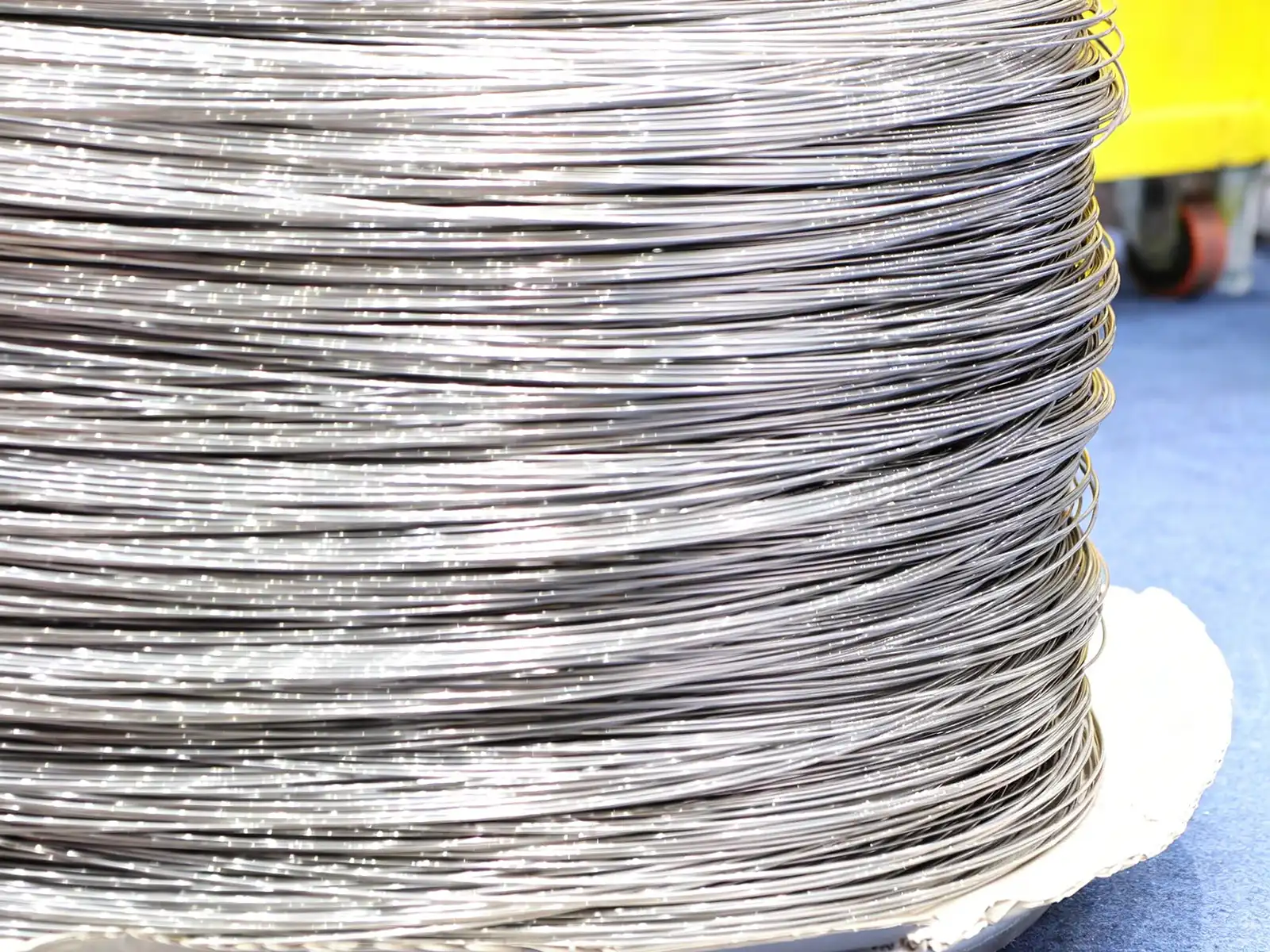
In the selection of high-end industrial materials, engineers often face a key decision: How to choose between UNS R60705 zirconium wire (Zr705) and Zirconium 702 zirconium wire (pure zirconium)? The core difference is alloy strengthening and purity positioning. R60705 is strengthened by adding 2.0-3.0% niobium element, and its mechanical strength is about 40% higher than that of pure zirconium 702, while maintaining excellent corrosion resistance; Zirconium 702, as an industrial pure zirconium, focuses on ultra-high purity and extremely low neutron absorption cross-section, and is more suitable for scenarios such as nuclear reactors that require strict material purity. There are significant differences between the two in strength, toughness, processing performance and application fields. Understanding these differences is crucial to optimizing equipment life and reducing operation and maintenance costs.
1. What Are the Differences in Differences in Composition Systems, Performance Differences Brought About by Alloying Strategies?
(1) What Should You Know About Niobium Element Strengthening Mechanism of R60705?
The core feature of UNS R60705 zirconium wire is that it contains 2.0-3.0% niobium (Nb) alloy element. Niobium forms an alloyed structure in the zirconium matrix, significantly improving the yield strength and tensile strength of the material. This alloy design makes R60705 less likely to deform when subjected to high stress loads, and is particularly suitable for manufacturing pump shafts, valve stems, elastic components and other components that need to withstand alternating stress. The addition of niobium also improves the high-temperature creep performance of the material, allowing it to serve stably for a long time below 350℃.
(2) Why Is Zirconium 702 Purity Advantages Important?
Zirconium 702 belongs to industrial pure zirconium (containing zirconium + hafnium ≥ 99.2%), and the impurity content control is extremely strict: oxygen content ≤ 0.16%, iron ≤ 0.20%, chromium ≤ 0.20%. This ultra-high purity gives it an extremely low neutron absorption cross-section (only 0.18 barn), making it an ideal material for nuclear fuel cladding tubes and reactor core structural parts. Pure zirconium has excellent plasticity and the cold working deformation rate can reach more than 80%, which is convenient for complex forming processes such as deep drawing and winding.
(3) What Are the Differences in Comparison of the Effects of Impurity Elements?
The upper limit of the hafnium content allowed by R60705 is 4.5% (total balance of zirconium + hafnium), while 702 pure zirconium has stricter requirements for hafnium content (usually ≤ 0.01%). Hafnium and zirconium have similar chemical properties, but will significantly increase neutron absorption in nuclear applications, so nuclear-grade zirconium must strictly control the hafnium content. On the other hand, the appropriate amount of interstitial elements such as oxygen and iron in R60705 further improves the strength through alloying, but will slightly reduce the ductility.
Ingredients | UNS R60705 | Zirconium 702 | differential impact |
Niobium (Nb) content | 2.0-3.0% | none | R60705 strength increased by 40% |
Zirconium + Hafnium Purity | margin | ≥ 99.2% | 702 core performance is better |
upper limit of oxygen content | ≤ 0.18% | ≤ 0.16% | R60705 offers higher strength |
Hafnium content upper limit | ≤ 4.5% (total balance of zirconium + hafnium) | ≤ 0.01% (nuclear grade) | 702 neutron absorption cross section is lower |
2. What Are the Differences in Mechanical Property Comparison, Comprehensive Assessment of Strength and Toughness?
(1) What Are the Differences in Significant Difference Between Tensile Strength and Yield Strength?
The room temperature tensile strength of UNS R60705 reaches 550-690 MPa and the yield strength is 380-550 MPa; while the tensile strength of Zirconium 702 is only 380-450 MPa and the yield strength is 210-345 MPa. This means that under the same working stress, R60705 can use smaller cross-section sizes, reduce equipment weight and save material costs. For chemical pump shafts or seawater desalination equipment fasteners that need to withstand high pressure and high torque, R60705 is a more economical choice.
(2) What Should You Know About Elongation and Cold Working Performance Trade-off?
Zirconium 702 has an elongation rate as high as 20-30% and excellent cold working performance. It is suitable for manufacturing medical guide wires and precision springs that require complex bending and deep drawing. The elongation of R60705 is about 16-20% (gauge length 50mm, annealed state, according to ASTM B550 standard). Although it is slightly lower, it can still meet the needs of most cold drawing processes. When producing ultra-fine specifications (φ0.06-0.3mm) zirconium wire, the high plasticity of 702 helps reduce the wire breakage rate, while R60705 requires more precise annealing process control.
(3) What Are the Differences in Stability Differences in High Temperature Performance?
R60705 can still maintain more than 80% of the room temperature tensile strength in a high temperature environment of 350℃ (test conditions are based on ASTM E21). It has excellent creep resistance and is suitable for high-temperature heat exchangers, reactor stirring shafts and other equipment. Zirconium 702’s strength decays quickly at high temperatures, but its excellent oxidation resistance and thermal stability make it perform well in the high-temperature water environment of nuclear reactors. The durability of both in high-temperature corrosive media far exceeds that of stainless steel and ordinary titanium alloys.
Performance indicators | UNS R60705 | Zirconium 702 | Application inspiration |
tensile strength | 550-690 MPa | 380-450 MPa | R60705 is suitable for high stress structural parts |
Elongation (gauge length 50mm) | ≥ 16% | 20-30% | 702 is more suitable for deep processing and forming |
High temperature strength retention rate (350℃) | ≥ 80% | about 60% | R60705 has stronger resistance to high temperature conditions |
cold work hardening index | 0.12-0.15 | 0.10-0.12 | 702 processing softens more obviously |
3. What Are the Differences in In-depth Analysis of Corrosion Resistance, Performance Differences in Extreme Media?
(1) What Are the Differences in Comparison of Corrosion Resistance in Strongly Acidic Media?
Both materials perform well in oxidizing acids such as sulfuric acid, nitric acid, and phosphoric acid, with corrosion rates <0.1 mm/year. However, in reducing acidic media such as hydrochloric acid, wet chlorine, and high-chlorine brine, the advantages of R60705 are more obvious. The addition of niobium improves the stability of the passivation film, making the corrosion rate of R60705 in 37% hydrochloric acid (boiling) only 0.5 mm/year, while 702 pure zirconium will have obvious pitting corrosion under this condition. This makes R60705 the material of choice for hydrometallurgy and the chlor-alkali industry.
(2) What Should You Know About Pitting and Crevice Corrosion Resistance?
Environments containing chloride ions such as sea water and salt spray are typical application scenarios for zirconium alloys. The critical pitting potential (CPP) of R60705 is higher (better than titanium alloy and stainless steel in an environment containing chloride ions), much higher than titanium alloy (about +300 mV vs. SCE) and stainless steel (-50 mV vs. SCE). In the gaps of seawater desalination equipment (such as flange sealing surfaces), R60705 has no obvious corrosion traces after 5, 000 hours of salt spray testing. Although Zirconium 702 is also resistant to chloride ions, it may increase the risk of stress corrosion cracking due to insufficient strength in high-stress crevice locations.
(3) What Should You Know About Performance in Organic Acids and High-temperature Alkali Solutions?
The pharmaceutical and food industries often come into contact with organic acids such as acetic acid and citric acid, as well as high-temperature NaOH solutions. The corrosion rate of R60705 in 80℃ and 20% acetic acid is <0.05 mm/year, with no intergranular corrosion tendency; it is also stable in 100℃ and 30% NaOH. Zirconium 702 has equivalent performance in these media, but due to its lower strength, the wall thickness of the manufactured equipment needs to be increased by 20-30%, affecting heat transfer efficiency and equipment compactness.
corrosive media | R60705 corrosion rate | Zr 702 corrosion rate | Key differences |
37% hydrochloric acid (boiling) | 0.5mm/year | 1.2 mm/year (easy to pitting) | R60705 passivation film is more stable |
Sea water (25℃) | <0.001 mm/year | <0.001 mm/year | Comparable performance |
50% NaOH (100℃) | <0.01 mm/year | <0.01 mm/year | 702 needs to increase wall thickness compensation strength |
Wet chlorine gas (80℃) | 0.3mm/year | 0.8mm/year | R60705 has obvious advantages |
4. What Should You Know About Key Points of Processing Technology and Quality Control?
(1) What Are the Differences in Differences in Annealing System of Cold Drawing Process?
When producing ultra-fine zirconium wire (φ0.06-0.4mm), R60705 requires more frequent intermediate annealing (annealing every 4-5 passes), with an annealing temperature of 650-700℃ and heat preservation for 1-2 hours. Zirconium 702 has a larger plasticity reserve and can extend the annealing cycle (every 6-8 passes). The plasticity can be restored at an annealing temperature of 650-700℃. This results in a slightly longer production cycle for R60705, but by precisely controlling the annealing atmosphere (vacuum or inert gas), it can ensure that the wire surface is free of oxidation and the grains are refined uniformly.
(2) What Should You Know About Surface Treatment and Dimensional Accuracy Control?
The medical and semiconductor industries have extremely high requirements on the surface cleanliness of zirconium wires. Pickling treatment (HF-HNO3 mixed acid) can remove the surface oxide layer produced by cold working, making the surface roughness Ra≤ 0.4 um. The polishing process can reach mirror level (Ra≤ 0.1 um), which is suitable for implant guide wires. Due to its high strength and large rebound, UNS R60705 zirconium wire needs to use a multi-roller tension straightening machine to ensure straightness ≤ 1 mm/m. Straightening of Zirconium 702 is easier, but excessive deformation leading to work hardening needs to be prevented.
(3) How Should Welding Performance and Welding Wire Specification Selection?
R60705 welding wire (φ1.0-3.0mm) performs well in TIG welding, and the weld strength can reach more than 90% of the base metal without post-weld heat treatment. The welding atmosphere needs to be strictly protected (99.99% pure argon back protection) to prevent hydrogen embrittlement and oxidation. Although Zirconium 702 welding wire has good plasticity and is easy to weld, the weld strength is slightly lower (about 85% of the base metal), and the design needs to be strengthened in high-stress welding structures.
5. Why Is Application Scenario Selection Guide, How to Accurately Match Working Conditions Requirements Important?
(1) How Should Material Selection for the Chemical and Petrochemical Industry?
In high-stress corrosion environments (such as high-pressure reactor stirring shafts and deep well pump shafts), R60705 is preferred. Its high strength can reduce the shaft diameter and equipment inertia. For ultra-pure media contact parts (such as pharmaceutical reactor linings, semiconductor wet etching tanks), Zirconium 702 is selected to avoid alloy element precipitation and contamination of the product. Both can be used as heating coils for acetic acid, formic acid and other organic acid storage tanks, but R60705 can be used with a thinner wall thickness to improve heat transfer efficiency.
(2) What Should You Know About Strict Classification of Nuclear Power and Nuclear Industry?
Nuclear fuel cladding tubes and core structural parts must use Zirconium 702 or higher purity nuclear-grade zirconium (such as Zr-2, Zr-4), because niobium will significantly increase the neutron absorption cross-section and affect the neutron economy of the reactor. Nuclear power plant auxiliary systems (such as cooling water pipelines, waste liquid treatment equipment) can use R60705 to meet corrosion resistance requirements while optimizing material costs by reducing wall thickness.
(3) What Should You Know About Special Needs of Medical and Precision Instruments?
Implantable medical devices (such as pacemaker leads, orthopedic internal fixation wires) are preferably made of Zirconium 702. Its biocompatibility has been clinically verified for a long time and it is non-cytotoxic. Surgical instruments (such as forceps and scissors soaked in corrosive disinfectant) can be selected from R60705. The high strength ensures that the instruments are not easily deformed. The internal coil bobbin of magnetic resonance imaging (MRI) equipment requires non-magnetic zirconium wire, which is consistent with both, but the mechanical strength of R60705 makes the design more compact.
Application areas | Recommended materials | Reason for selection |
Hydrochloric acid synthesis unit | UNS R60705 | Resistant to wet chlorine, high strength and high pressure resistance |
nuclear reactor core | Zirconium 702 | Low neutron absorption, ultra-high purity |
Desalination evaporator | UNS R60705 | Crevice corrosion resistance, high strength thinning wall |
Pharmaceutical reactor | Zirconium 702 | Zero precipitation, ultra clean |
Aerospace fasteners | UNS R60705 | High specific strength, high temperature corrosion resistance |
6. What Is the Conclusion?
UNS R60705 zirconium wire and Zirconium 702 zirconium wire represent the two major technical routes of the zirconium material family: strength optimization and ultimate purity. R60705 achieves high strength, excellent resistance to reducing acid corrosion and high temperature stability through niobium alloying, and is suitable for high stress corrosion scenarios such as chemical industry and marine engineering; Zirconium 702 serves fields that are extremely sensitive to material cleanliness such as nuclear industry and medical treatment with ultra-high purity and excellent plasticity. When selecting, it is necessary to comprehensively evaluate the corrosiveness of the medium, stress level, purity requirements and processing technology to achieve the optimal balance between equipment performance and cost.
FAQ
Q1: Which one is more corrosion resistant, R60705 or 702?
The performance of the two is equivalent in most corrosive media, but R60705 is better in reducing acids such as hydrochloric acid and wet chlorine. The advantage of 702 is its ultra-high purity, which is suitable for pollution-free scenarios.
Q2: Why can’t nuclear power plants use R60705?
Niobium element will increase the neutron absorption cross section of the material and reduce the neutron utilization efficiency of the nuclear reactor. Core components such as nuclear fuel cladding must use pure zirconium or zirconium alloys with low absorption cross-sections.
Q3: Which material has better processability for ultra-fine zirconium wire (φ0.1mm)?
Zirconium 702 has higher ductility and lower cold drawing wire breakage rate. However, R60705 can also be produced stably through optimized annealing process, and the finished product has higher strength and is suitable for components such as load-bearing micro springs.
How Should Looking for a Reliable Supplier of High Performance Zirconium Wire?
Baoji Titanium Nickel Zirconium Materials Processing Co., Ltd. has a world-class production line, specializing in the production of UNS R60705 and Zirconium 702 zirconium wires, specifications φ0.06-8.0mm, various surface treatments, and full-process quality traceability. As a leading zirconium material manufacturer, we provide customized material solutions for the global chemical, nuclear power and medical industries. Contact now: sales@titaniumvalleys.com
References
- National Technical Committee for Standardization of Nonferrous Metals. (2021). GB/T 3620.1-2021 Grades and Chemical Compositions of Titanium and Titanium Alloys. Beijing: China Standards Press.
- Li Jingui, Zhao Weimin. (2017). Zirconium and zirconium alloys: physical metallurgy and applications. Beijing: Metallurgical Industry Press.
- Wang Baozhong, Zhang Junxi. (2019). Research on the corrosion behavior of zirconium alloy in corrosive chemical environment. Journal of Materials Science and Engineering, 37(3), 278-285.
- China National Nuclear Corporation. (2018). Technical report on water side corrosion of zirconium alloy in nuclear power plants. Beijing: Institute of Nuclear Industry Standardization Technical Report Series No. CNNC-2018-684.