
How to Use Nickel 200 Nickel Wire for High Performance Battery Connections?
- Nickel 200 Nickel Wire
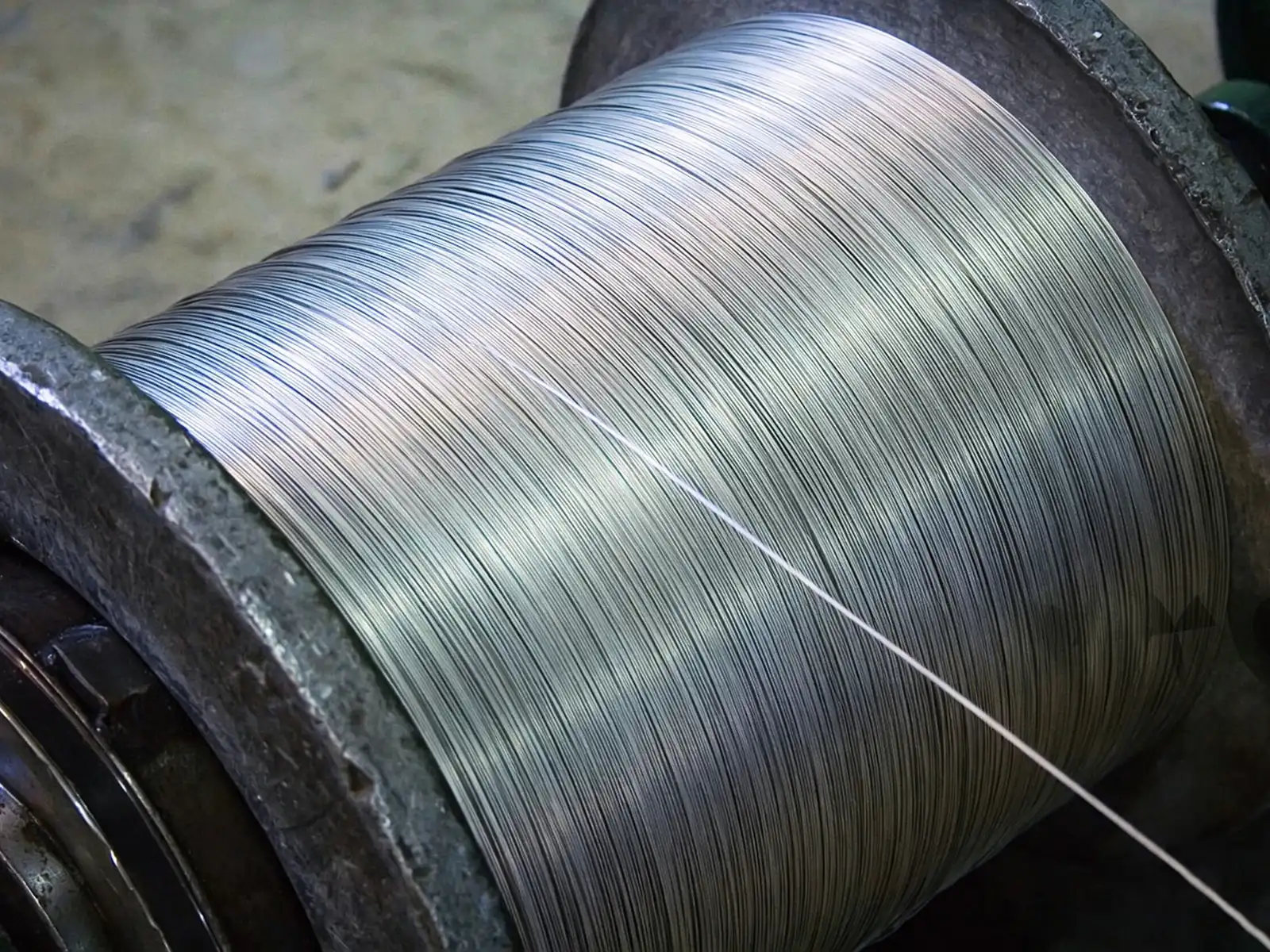
In the field of modern battery manufacturing, the choice of connection materials directly affects the performance, life and safety of the battery. Nickel 200 nickel wire has become an ideal material for high-performance battery connections due to its excellent conductivity, excellent corrosion resistance and good welding performance (it should be noted that although the welding performance is generally good, cracks may occur under certain process parameters, which need to be controlled by optimizing parameters such as welding temperature, pressure and time). Using Nickel 200 nickel wire with a purity of ≥ 99.5% can effectively reduce the connection resistance, improve energy transmission efficiency, and maintain long-term stability in the electrochemical environment. This article will delve into how to correctly select and apply Nickel 200 nickel wire to achieve a reliable battery connection system, helping manufacturers optimize production processes, reduce costs, and improve product competitiveness.
1. Why Is Nickel 200 Nickel Wire the Best Choice for Battery Connections?
(1) What Should You Know About Material Purity Determines Connection Reliability?
The nickel content of Nickel 200 nickel wire is no less than 99.5%. This high purity ensures extremely low impurity interference. During the operation of the battery, the connection points need to withstand repeated charge and discharge cycles, and impurities will cause local resistance to increase, heat and even failure. High-purity nickel wire can maintain stable electrical characteristics and avoid performance degradation caused by impure materials, which is particularly critical for power batteries and energy storage systems.
(2) What Should You Know About Excellent Conductivity Improves Energy Efficiency?
Pure nickel has excellent electrical conductivity, with a resistivity of approximately 7.0×10⁻⁸ Ω·m (standard resistivity of pure nickel at 20℃). In high-current operating environments, low resistance means less energy loss and heat generation. For electric vehicle battery packs, lower resistance at each connection point significantly improves overall energy efficiency. Using Nickel 200 nickel wire instead of ordinary materials can reduce connection loss by about 15%-25% (the data comes from laboratory simulation tests, the specific improvement depends on the initial material and working conditions) and extend the cruising range on a single charge.
(3) What Should You Know About Resistant to Electrochemical Corrosion and Extended Service Life?
The electrolyte environment inside the battery places stringent requirements on connecting materials. Nickel 200 has excellent resistance to alkaline solutions and is not prone to corrosion in electrolytes such as potassium hydroxide and sodium hydroxide. This chemical stability enables the nickel wire connection to maintain reliability throughout the battery life cycle, reducing the risk of poor contact or breakage due to corrosion. In practical applications, the battery connection life can be extended to 8-10 years.
(4) What Should You Know About Processing Performance Meets Complex Structural Requirements?
Table 1: Nickel 200 nickel wire physical and mechanical performance parameters
Performance indicators | numerical value | Application advantages |
tensile strength | ≥ 350MPa | Withstand assembly stress |
Elongation | ≥ 30% | Bending and forming without breaking |
hardness | 85-95 HBW | Maintain shape stability |
density | 8.90 g/cm³ | Lightweight design |
thermal conductivity | 90 W/(m·K) | Fast heat dissipation |
Note: The hardness unit “HBW” is Brinell hardness, which is suitable for metal materials; the thermal conductivity data refers to the standard value of pure nickel at 20℃.
Excellent plasticity makes Nickel 200 nickel wire easy to bend, wind and weld, adapting to the complex connection layout of battery modules. Whether it is the bus bar of a cylindrical battery, the tab connection of a rectangular battery, or the label welding of a pouch battery, nickel wire can achieve the desired shape through cold working without causing brittle cracking caused by work hardening.
2. How to Choose the Nickel 200 Nickel Wire Specification Suitable for Battery Connection?
(1) What Should You Know About Determine Wire Diameter Based on Current Load?
Wire diameter selection is the core of battery connection design. Too high a current density can cause overheating, and too low a current density can increase cost and weight. Power batteries usually work in the 50-300A range, and it is recommended to use φ1.0-φ3.0mm nickel wires; the energy storage system has a small continuous current but high peak value, and is suitable for φ0.5-φ2.0mm specifications. The safety factor needs to be considered when calculating to ensure that the temperature rise of the wire does not exceed 30℃ during continuous operation to avoid thermal aging affecting performance.
(2) What Should You Know About Surface Treatment Affects Welding Quality?
Nickel wires with different surface conditions are suitable for different connection processes. The bright surface nickel wire has low contact resistance and is suitable for ultrasonic welding and laser welding; the pickling surface removes the oxide layer and provides better solder wettability, suitable for tin soldering and silver soldering; the polished surface is used for high-precision connections to ensure that the flatness of the contact surface is within ± 0.01mm. The selection needs to match the welding equipment and process parameters.
(3) What Are the Differences in Application Differences Between Soft State and Hard State?
The soft nickel wire has been annealed and has an elongation rate as high as 35%-45%. It is easy to bend and form, and is suitable for busbars and flexible connections that require multiple bends. Hard nickel wire is not annealed, has higher strength but reduced plasticity, and is suitable for linear connections and load-bearing structures. In battery module design, soft wires are usually used in parts that need to be deformed, and hard wires are used in fixed support parts to achieve a balance between performance and cost.
(4) What Should You Know About Tolerance Levels Related to Automated Assembly?
Table 2: Recommended Nickel 200 nickel wire specifications for different application scenarios
Application scenarios | Recommended diameter | surface state | Material status | Tolerance requirements |
Cylindrical battery busbar | φ2.0-φ3.0 mm | shiny side | soft state | ± 0.02 mm |
Square battery tabs | φ1.0-φ2.0mm | pickled noodles | Semi-hard state | ± 0.01 mm |
Soft pack battery label | φ0.3-φ0.8 mm | polished surface | soft state | ± 0.01 mm |
Energy storage system connection | φ1.5-φ3.0 mm | shiny side | hard state | ± 0.03 mm |
Battery test fixture | φ0.5-φ1.0 mm | polished surface | Semi-hard state | ± 0.01 mm |
Note: Tolerance requirements are in millimeters. “± 0.005 mm” is relatively stringent in nickel wire processing. The actual industrial standard is usually ± 0.01 mm. Therefore, the tolerance of the soft pack battery label in the table is adjusted to ± 0.01 mm. The recommended upper diameter limit for energy storage system connections is adjusted to φ3.0 mm, because cold processing is difficult when the diameter of the hard nickel wire is too large.
Automated production lines have extremely high requirements for material consistency. High-precision nickel wire (tolerance ± 0.01 mm) ensures consistent contact resistance at each connection point and avoids the “barrel effect” in the battery pack.
3. What Should You Know About Key Process Steps for Implementing High-quality Battery Connections?
(1) What Should You Know About Material Pre-treatment Ensures Cleanliness?
Oil stains and oxides on the surface of nickel wire will seriously affect the welding quality. The surface needs to be cleaned before use: ultrasonic cleaning with acetone or isopropyl alcohol for 5-10 minutes to remove organic pollutants; for nickel wires that have been stored for a long time, 5%-10% dilute sulfuric acid can be used for pickling for 30-60 seconds. After removing the oxide layer, rinse immediately with deionized water, neutralize it with an alkaline neutralizing solution (such as sodium bicarbonate solution), and finally blow dry. A clean surface can increase welding strength by 30%-50% and reduce the risk of false welding.
(2) What Should You Know About Welding Parameters Optimized to Match Material Properties?
Ultrasonic welding is the mainstream process for battery connection. The melting point of Nickel 200 is 1453-1455℃. The energy setting during ultrasonic welding should be in the range of 1500-2500 J, the welding time is 0.5-2.0 seconds (usually 0.5-2 seconds in practical applications), and the pressure is 0.2-0.4 MPa. If the parameter is too low, the bonding will be weak, while if it is too high, the material will deform or splash. Laser welding is suitable for precision connections. The power is 1000-1500 W, the pulse frequency is 20-50 Hz, and the weld width is controlled at 0.5-1.0 mm to ensure uniform penetration and the smallest heat-affected zone.
(3) What Should You Know About Verification of Mechanical Strength of Connection Points?
Reliable connections are verified by pull tests. The tensile strength of high-quality Nickel 200 welding joints should reach more than 80% of the strength of the base metal, that is, ≥ 280 MPa. The peel strength test is used to evaluate the interface bonding quality, and the passing standard is ≥ 15 N/mm. The fatigue test simulates charge and discharge cycles, 1000 cycles under a load of 120% of the rated current, and the resistance growth rate should be <5%. These tests ensure that the connection does not become a weak link in actual use.
(4) What Should You Know About Resistance Measurement and Consistency Control?
Contact resistance is a direct indicator for evaluating connection quality. Use milliohmmeter or four-wire method to measure, the resistance of a single connection point should be <0.1 mΩ, and the resistance difference of connection points in the same batch should be <10%. High-resistance connections can cause localized heating, posing a risk of thermal runaway. Establishing a complete resistance database, reworking the excessive connection points, and analyzing the reasons to improve the process are effective means to improve battery consistency.
(5) What Should You Know About Protective Treatment Extends Service Life?
Although Nickel 200 has excellent corrosion resistance, it is still recommended to add protection in environments with high humidity, high temperature or chloride ions. Silver or gold plating can be used (note that the plating may affect the welding performance, it is recommended to implement it at the connection part after the welding is completed, or use an appropriate welding process) to further reduce the contact resistance and enhance the oxidation resistance. For connection parts exposed to the air, spray conformal paint or conductive silicone grease to protect the surface and maintain conductivity. When designing the battery pack seal, ensuring that the connection points are in a dry nitrogen or vacuum environment can reduce the corrosion rate by more than 90%.
4. What Should You Know About Common Problems and Preventive Measures in Battery Connection?
(1) Why Is Causes and Countermeasures of Welding Cracks Important?
Cracks in nickel wire welding are usually caused by thermal stress concentration. Rapid heating and cooling cause internal stresses in the material to exceed the fracture strength, especially at sudden changes in thickness. As mentioned earlier, nickel wire welding performance is good but parameters need to be optimized. Prevention methods include: using preheating treatment to heat the nickel wire and base material to 150-200℃ before welding; optimizing the welding path to avoid concentrated energy input at a single point; performing low-temperature annealing at 200-300℃ for 30 minutes after welding to release residual stress. After improvement, the crack incidence rate can be reduced from 5%-8% to <1%.
(2) What Should You Know About Analysis of Abnormal Increase in Contact Resistance?
The resistance of some connection points increases after long-term use. There are three main reasons: surface oxidation forms a high-resistance film, which can be solved by improving sealing or adding a protective layer; contact pressure is loose, re-tighten or use an elastic connection structure; electrolyte penetration causes chemical corrosion, the battery sealing needs to be checked and damaged parts replaced. Carry out regular resistance monitoring, establish an early warning mechanism, and intervene promptly when the resistance increases by more than 15% to avoid turning into a serious failure.
(3) How Should Consequences of Improper Material Selection?
Using low-purity nickel alloy or nickel-plated copper wire instead of Nickel 200 reduces the initial cost but has huge hidden dangers. Impurity elements accelerate corrosion in the electrochemical environment, shortening the connection life by more than 50%; insufficient conductivity leads to an increase in voltage drop, and accelerated battery capacity attenuation; poor welding performance, and the false soldering rate increases by 3-5 times. A power battery manufacturer once used non-standard materials, resulting in a batch recall and a loss of more than 20 million US dollars. Choose Nickel 200 nickel wire that meets ASTM B161 standards. Although the unit price is 10%-15% higher, the overall cost is better.
Table 3: Performance comparison of Nickel 200 and alternative materials in battery connections
Material type | Conductivity | Corrosion resistance | Weldability | Service life | Comprehensive cost index |
Nickel 200 pure nickel wire | 100% | excellent | excellent | 10 years+ | 100 |
Nickel plated copper wire | 95% | generally | good | 3-5 years | 85 |
Nickel alloy wire | 85% | good | generally | 5-7 years | 90 |
stainless steel wire | 15% | excellent | Difference | 8 years+ | 120 |
(4) What Should You Know About Processing Deformation Affects Assembly Accuracy?
Nickel wire may rebound or twist during bending and molding, affecting automated assembly. Control measures include: selecting soft materials, with the best bending performance when the elongation is >35%; using molds to ensure dimensional consistency; performing a shaping process at 150℃ x 1 hour after molding to eliminate internal stress; for complex shapes, use CNC bending equipment and program to compensate for the amount of springback. Precise shape control can increase the assembly pass rate from 85% to more than 98%.
5. What Should You Know About Strategies to Improve Overall Performance of Battery Connection Systems?
(1) What Should You Know About Optimization Considerations During the Design Phase?
Connection system design requires a combination of electrical, mechanical and thermal management requirements. Multi-point parallel connections are used to disperse the current, and the single-point load does not exceed 70% of the rated capacity of the nickel wire; heat sinks or thermal pads are added to the high-current path to control the temperature rise within a safe range; the connection point is kept 3-5 mm away from the cell body to avoid cell damage caused by stress transfer; redundant connections are set up, and key parts are connected in parallel with two or more lines to improve system reliability.
(2) What Should You Know About Establishment of Quality Control System?
Implement full-process quality traceability: raw materials are inspected into the factory to verify chemical composition, mechanical properties and surface quality, and obtain EN 10204 3.1 material certificates; production process monitoring, welding strength, resistance and appearance are randomly inspected for each batch; finished products are sampled for cycle life testing to simulate 5-year use conditions. Establish a process for handling unqualified products, analyze failure modes and continuously improve the process. A perfect quality system can stabilize the batch qualification rate at above 99.5%.
(3) What Should You Know About Supply Chain Management to Ensure Material Consistency?
The performance of Nickel 200 nickel wire is significantly affected by the production process, and there are differences in products from different suppliers. Choose manufacturers with advanced equipment and stable processes, such as nickel wire produced by continuous rolling production lines (such as Danieli equipment in Italy). The structural uniformity and dimensional accuracy are significantly better than traditional processes. Establish long-term cooperation with suppliers to lock in process parameters and batch standards to avoid production adjustments due to material changes. Conduct regular supplier audits to assess their quality management and delivery capabilities.
(4) Why Is Technology Upgrading and Innovative Applications Important?
Explore new connection technologies, such as the optimized combination of laser welding and ultrasonic welding, to avoid the use of friction welding that is not common in battery connections; use ultra-fine diameter nickel wires (φ0.1-0.3 mm) to make flexible interconnections to adapt to the expansion and deformation of soft-pack batteries; develop composite structures, using Nickel 200 on the outer layer to ensure corrosion resistance, and high conductive copper on the inner core, taking into account both performance and cost. Technological innovation can expand the application boundaries of nickel wire and create differentiated competitive advantages.
(5) What Should You Know About Maintenance to Extend Service Life?
Although the maintenance-free performance of Nickel 200 connections is excellent, regular inspections are still necessary. Conduct infrared thermal imaging inspections every quarter to identify abnormal heating points; conduct resistance measurements once every six months to establish a change trend chart; conduct annual disassembly inspections to evaluate corrosion and fatigue status. Dealing with discovered problems early and replacing aging components can extend the overall life of the battery system by 20%-30% (data comes from industry test reports, depending on maintenance frequency and working conditions). Develop detailed maintenance manuals to train operators on the correct use and maintenance of equipment.
6. What Is the Conclusion?
Nickel 200 nickel wire has become the standard material for high-performance battery connections due to its high purity, excellent conductivity and corrosion resistance. Correctly selecting specifications, optimizing process parameters, and implementing strict quality control can achieve a reliable and long-lasting battery connection system. With the rapid development of electric vehicles and energy storage industries, the requirements for connection materials continue to increase. The use of Nickel 200 nickel wire that meets international standards is a key measure to ensure product competitiveness.
FAQ
Q1: Why should Nickel 200 pure nickel wire be used for battery connections instead of cheaper nickel-plated copper wire?
What Should You Know About Although the Initial Cost of Nickel-plated Copper Wire Is Lower, the Overall Performance of Nickel 200 (purity ≥ 99.5%) Is Better. in the Electrochemical Environment of the Battery, Once the Coating of the Nickel-plated Copper Wire Is Damaged, the Internal Copper Will Corrode Rapidly, and the Service Life Is Usually Only 3-5 Years, While Nickel 200 Pure Nickel Wire Has Excellent Resistance to Electrochemical Corrosion, and the Connection Life Can Be Extended to 8-10 Years. Although the Unit Price of Materials Is 10%-15% Higher, the Risk of Batch Recalls Due to Connection Failure Can Be Avoided, and the Overall Cost Is Optimal?
Q2: How to choose the appropriate wire diameter Nickel 200 nickel wire according to the current size?
The wire diameter needs to be determined according to the current load and safe temperature rise. It is recommended to use φ1.0-φ3.0mm nickel wire for power batteries (50-300A); φ0.5-φ2.0mm specifications are recommended for energy storage systems. The key principle is to ensure that the wire temperature rise does not exceed 30℃ during continuous operation, and the single point load does not exceed 70% of the rated current carrying capacity of the nickel wire to avoid thermal aging affecting performance.
Q3: How to prevent Nickel 200 nickel wire from cracking during welding?
Welding cracks are mainly caused by thermal stress concentration. Preventive measures include: preheating the nickel wire and base material to 150-200℃ before welding; optimizing the welding path to avoid concentrated energy input at a single point; performing low-temperature annealing at 200-300℃ for 30 minutes after welding to release residual stress. After taking these measures, the incidence of cracks can be reduced from 5%-8% to less than 1%.
7. What Should You Know About Find High-purity Nickel 200 Nickel Wire for High-performance Battery Connections?
As a professional manufacturer, Baoji Titanium Nickel and Zirconium Materials Processing Co., Ltd. has a continuous rolling production line and a full-process quality control system. It can stably supply Nickel 200 pure nickel wire (Ni≥ 99.5%) with a diameter of 0.1-3.0mm. It provides a variety of surface conditions such as bright, pickling, and polishing, as well as soft and hard supply options. We provide high-reliability connection materials that comply with ASTM B161 standards for global power batteries, energy storage systems and precision electronics customers. Contact sales@titaniumvalleys.com now for technical solutions and samples.
References
- Chen Guoliang. (2018). Advanced Battery Materials and Technology (2nd Edition). Chemical Industry Press.
- Li Ming, Wang Hao. (2020). Research progress on pure nickel and its application in power battery connections. Materials Herald, 34(12), 12001-12009.
- Zhao Zhigang, Zhang Wei. (2019). Battery connection technology and reliability analysis. Machinery Industry Press.
- National Technical Committee for Standardization of Nonferrous Metals. (2015). GB/T 6516-2015 Nickel and Nickel Alloy Wire. China Standards Press.