
How to Choose the Right GR1 Titanium Rod for Aerospace Applications?
- Gr1 Titanium Rod
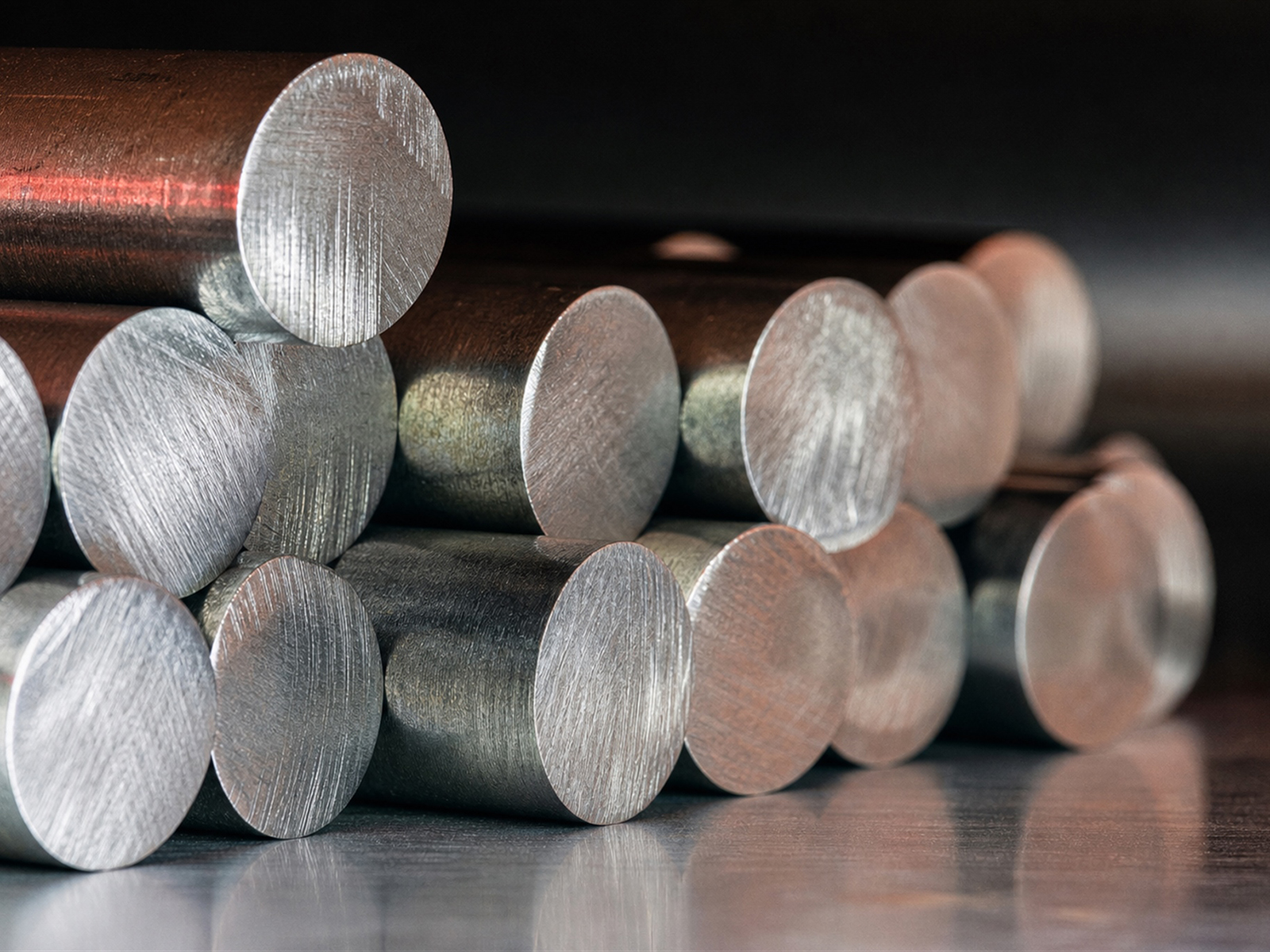
Choosing a suitable GR1 titanium rod in the aerospace field requires comprehensive consideration of multiple dimensions such as material purity, mechanical properties, processing accuracy, and certification standards. GR1 titanium rod is the highest purity grade among industrial pure titanium. Its titanium content is ≥ 99.5%. It has excellent corrosion resistance and good plasticity. It is especially suitable for non-load-bearing structural parts, precision connectors, conduit systems and aerospace components that require a non-magnetic environment. When selecting, priority should be paid to the ASTM B348 standard compliance, ultrasonic flaw detection report, surface roughness grade and heat treatment status of the material. At the same time, the diameter tolerance, surface treatment method and length specification of the bar should be determined according to specific application scenarios – such as hydraulic system pipelines, instrument brackets, sensor housings or fasteners in corrosive environments, to ensure that the material performance perfectly matches the stringent safety and reliability requirements of aerospace.
1. Why Is Understand the Unique Value of GR1 Titanium Rods in the Aerospace Industry Important?
(1) What Should You Know About the Critical Role of Material Purity and Chemical Stability?
The titanium content of GR1 titanium rod exceeds 99.5%, and impurity elements (iron ≤ 0.20%, oxygen ≤ 0.18%, carbon ≤ 0.08%) are strictly controlled at extremely low levels. This high purity makes it chemically stable in aerospace applications and less prone to unexpected reactions in aviation fuels, hydraulic fluids, cleaning agents or marine atmospheric environments. Compared with alloy titanium materials, GR1’s single-phase structure avoids performance fluctuations caused by phase changes, ensuring the predictability of material behavior during long-term service.
(2) What Should You Know About the Contribution of Lightweight Design to Aircraft Performance?
Every kilogram of weight reduction in aerospace engineering can significantly reduce fuel consumption and increase payload. The density of GR1 titanium rod is only 4.51 g/cm³, which is about 57% of the weight of steel. Although it is 1.7 times heavier than aluminum alloy, it has better corrosion resistance. This lightweight advantage makes it an ideal choice for aircraft hydraulic pipe joints, satellite antenna support rods, and drone frame connectors to achieve weight reduction goals without sacrificing structural integrity.
(3) What Should You Know About the Necessity of Non-magnetic Features in Precision Instruments?
Modern aerospace equipment is equipped with a large number of magnetically sensitive equipment, including inertial navigation systems, magnetometers, electronic compasses, etc. The non-magnetic nature of GR1 titanium rods (magnetic susceptibility is close to zero) ensures no interference with these precision instruments. In fastener applications for satellite attitude control components, avionics equipment racks, and magnetic shielding cavities, GR1 titanium rods can maintain measurement accuracy and system reliability, which is an irreplaceable advantage of stainless steel or nickel-based alloys.
2. Why Is Key Selection Parameters for GR1 Titanium Rods in Aerospace Applications Important?
(1) Why Is Mechanical Performance Indicators Match Application Scenarios Important?
Table 1: Correspondence between the mechanical properties of GR1 titanium rods and typical aerospace applications (data source: ASTM B348 standard)
Performance indicators | Numeric range | Adapt to application scenarios | Not applicable scenarios |
tensile strength | 240-345 MPa | Pipe clamps, instrument brackets, sensor housings | Engine suspension, main load-bearing frame |
Yield strength | 170-275 MPa | Non-load-bearing fasteners, wire protection tubes | Landing gear components, torque transmission shaft |
Elongation | ≥ 24% | Pipes and complex-shaped joints that require cold bending | High-speed rotating parts |
fatigue strength | Excellent low load cycle | Hatch hinge pins, low-frequency vibration environment fixing parts | High frequency vibration bearing parts |
Although the tensile strength of GR1 titanium rod is lower than that of GR2 or GR5 titanium alloy, its elongation of more than 24% provides excellent forming ability. When manufacturing curved pipes for aircraft fuel systems and flexible connecting rods for satellite deployment mechanisms, this plasticity advantage can reduce processing stress concentration and reduce the risk of part failure.
(2) What Should You Know About Dimensional Accuracy and Surface Quality Requirements?
Aerospace components have extremely stringent dimensional tolerance requirements. The polished rod (cold drawn state) provides an accuracy level of ± 0.05 to ± 0.2mm, meets the H7/H8 matching requirements, and is suitable for precision shafts, mold guide posts, etc. Tolerances of ± 0.3 to ± 0.5mm for turning bars (hot + turning) are suitable for subsequent machining of the blank. In terms of surface roughness, polished rods with Ra ≤ 1.6 meet the needs of sealing surfaces and sliding mating surfaces; turned rods with Ra 3.2-6.3 are suitable for welding or assembly purposes.
Table 2: Comparison of aerospace applicability of different surface treatment states
surface state | RoughnessRa | Tolerance class | Typical aerospace applications | Follow-up processing requirements |
polishing rod | ≤ 1.6 | ± 0.05-0.2mm | Precision hydraulic piston rod, sensor shaft | Can be assembled directly |
turning rod | 3.2-6.3 | ± 0.3-0.5mm | Welding flange blanks, bracket connectors | Need to remove burrs |
pickling rod | No machining texture | looser | Chemical environment exposed parts, welding preparation materials | Anti-pollution protection |
black leather stick | >12.5 | ± 1.0mm | Large margin forging blank | Must be machined |
(3) What Should You Know About Effect of Heat Treatment Status on Performance?
Annealed (M) GR1 titanium rods are stress-relieved and annealed, with a uniform structure and residual stress below 80 MPa, making them suitable for precision parts requiring dimensional stability. The hot-processed state (R) retains a certain work-hardening effect, has slightly higher strength but slightly lower plasticity, and is suitable for subsequent cold processing. In the cold working state (Y), the strength is increased by 15-20% through cold drawing, but attention should be paid to the issue of springback. In aerospace applications, it is recommended to use annealed materials to avoid the risk of long-term dimensional drift or stress corrosion cracking due to residual stress.
3. What Should You Know About Key Points of Material Verification for Special Aerospace Working Conditions?
(1) What Should You Know About Environmental Suitability Assessment of Corrosion Resistance?
Aerospace equipment faces a variety of corrosive environments: marine atmosphere (salt spray), aviation fuel (containing sulfide), hydraulic oil (phosphate ester), cleaning agent (alkaline solution). The thickness of the TiO2 oxide film spontaneously formed on the surface of GR1 titanium rod is about 2-7nm. It has self-healing ability and can resist media erosion in the pH range of 2-12. In coastal airports or carrier-based aircraft applications, the corrosion rate of fasteners and pipe joints made of GR1 titanium rods in the salt spray test (ASTM B117) is negligible, which is far superior to the pitting corrosion risk of 300 series stainless steel.
(2) What Should You Know About Dimensional Stability Under High and Low Temperature Cycling?
When the spacecraft is in orbit, it experiences a temperature cycle of -150℃ to +120℃. There is also a significant temperature difference between the aircraft cruising at high altitude and parking on the ground. The linear expansion coefficient of GR1 titanium is 8.6×10⁻⁶/K, which is about 38% of that of aluminum alloy. This low thermal expansion characteristic allows precision positioning pins and optical instrument holders to maintain dimensional stability when temperature changes. In the high-temperature area near the engine (≤ 400℃), the material will not undergo performance degradation.
(3) What Should You Know About Non-destructive Testing and Quality Traceability System?
Aerospace grade GR1 titanium rods must pass ultrasonic flaw testing (UT) to detect internal defects. According to the AMS 2631 standard, it is required to be able to identify equivalent flat-bottomed holes with a diameter ≥ 0.8mm. Eddy current testing (ET) is used to find surface cracks ≥ 0.1mm. Materials must be accompanied by a material certificate (MTC), which includes chemical composition spectrum analysis, mechanical property tensile test data, and heat treatment heat number records to ensure that each bar can be traced back to the original titanium ingot batch. Choosing suppliers with AS9100 aviation quality certification is a prerequisite for ensuring material reliability.
4. What Should You Know About Processing Technology Adaptability and Cost Control Strategy?
(1) What Should You Know About Suggestions for Optimizing Cutting Parameters?
The thermal conductivity of GR1 titanium is about 1/5 that of carbon steel. During cutting, heat is concentrated on the cutting edge of the tool, which can easily lead to tool wear. It is recommended to use carbide cutting tools (YG8, YT15), the cutting speed is controlled at 60-100 m/min, the feed rate is 0.1-0.2 mm/r, and the cutting depth does not exceed 3mm. Using high-flow cutting fluid (emulsion or extreme pressure cutting oil) can reduce the cutting temperature by 40% and extend the tool life by 3 times. For small-diameter bars (φ≤ 20mm), Swiss-type automatic lathes can be used to achieve high-precision processing and reduce material waste.
(2) What Should You Know About Key Points of Quality Control of Welded Connections?
GR1 titanium rod has excellent weldability and is suitable for TIG (argon arc welding) and electron beam welding. During welding, 99.99% purity argon gas must be used for protection to avoid oxygen and nitrogen contamination causing weld embrittlement. Before welding, it is necessary to use acetone to clean the oil stains and pickle to remove the oxide layer to ensure that the cleanliness of the welding area reaches Class 3. The welding current is selected according to the plate thickness: 70-90A for 2mm thickness, 120-150A for 5mm thickness. If you need to eliminate welding stress, it is recommended to perform vacuum annealing (550-650℃×1h) to restore the plasticity of the material and prevent stress corrosion in the weld area.
(3) What Should You Know About Bulk Purchasing and Inventory Management Strategies?
Table 3: Specification selection and purchasing suggestions for GR1 titanium rods for aerospace use
Application categories | Recommended diameter range | Recommended surface condition | Length specification | Procurement recommendations |
Precision shaft parts | φ8-φ30mm | Polishing rod H8 | 500-1000mm | Stock up on a quarterly basis to reduce cutting losses |
Pipeline connectors | φ12-φ50mm | turning rod | 1000-2000mm | Recommended regular stock: ≥ 500 kg |
Fastener blank | φ6-φ20mm | Cold drawn rod (annealed state recommended) | Length ≤ 20mm | Lock in price with an annual contract |
Load-bearing structural parts | φ20-φ100mm | pickling rod | 2000-3000mm | Project-based procurement requires 12 weeks delivery |
Procurement of fixed length can reduce the loss of cutting residual material by 10-15%, but it needs to bear the tolerance of ± 20mm and the allowance of +5mm for each cutting. For mass-produced standard parts (such as M6 and M8 bolt blanks), using φ8-φ12mm annealed cold-drawn rods with a fixed length of 1000mm, and using automatic feeding lathes, the material utilization rate can be achieved ≥ 92%, significantly reducing the cost of a single piece.
How Should Supplier Evaluation and Selection?
What Should You Know About Dimensions of Inspection of Production Capacity and Technical Strength?
Aerospace projects have extremely high requirements on suppliers’ production capacity stability. The ideal GR1 titanium rod supplier should have a continuous annealing production line with an annual production capacity of ≥ 3, 000 tons, equipped with vacuum annealing furnace, ultrasonic flaw detection equipment, spectrum analyzer and other testing equipment. The technical team should include materials engineers and quality engineers, who can provide material selection suggestions and failure analysis support. A certain titanium processing industry cluster has gathered a complete industrial chain from titanium sponge smelting to precision processing, with rapid response capabilities and cost advantages.
What Should You Know About Review of the Necessity of Quality Certification System?
The aerospace supply chain requires suppliers to pass AS9100 quality management system certification, which is a key entry threshold in addition to material standards such as ASTM and AMS. Certification ensures that suppliers have complete quality systems such as risk management, traceability control, first article inspection, and process monitoring. Checking the supplier’s Nadcap (National Aerospace and Defense Contractor Credit Program) certification scope, especially special process certifications such as chemical treatment, heat treatment, and non-destructive testing, can avoid batch quality fluctuations caused by insufficient process capabilities.
What Should You Know About Response Speed and Customized Service Capabilities?
The aerospace research and development stage often requires small batches of sample materials of multiple specifications, requiring suppliers to deliver customized sizes (such as φ15.5mm×800mm fixed length) within 2-3 weeks. Mature suppliers should provide one-stop services such as pickling, polishing, ultrasonic flaw detection, and spectrum testing to reduce the time cost of secondary outsourcing for customers. After establishing a strategic partnership, suppliers can stock commonly used specifications based on the customer’s annual forecast, shortening the delivery time for emergency orders to 5-7 working days, ensuring that project progress is not affected by material supply.
5. What Is the Conclusion?
Selecting the right GR1 titanium rod for aerospace applications requires a balance between performance, process, cost and supply chain. Only by clarifying the load characteristics, environmental conditions and accuracy requirements of the application scenario, matching the corresponding bar specifications, surface conditions and quality standards, and selecting suppliers with aviation certification, technical support capabilities and rapid response advantages, can we ensure that the materials will perform reliably throughout the product life cycle and meet the stringent requirements of the aerospace industry.
FAQ
Q1: How to choose between GR1 titanium rod and GR2 titanium rod in aerospace applications?
GR1 has lower oxygen content (≤ 0.18% vs ≤ 0.25%), better plasticity but slightly lower strength, and is suitable for scenes that require complex molding or extreme corrosion resistance, such as fuel lines. GR2 is 15% stronger and is suitable for light load-bearing parts such as instrument mounting brackets. Neither is suitable for main load-bearing structures.
Q2: How to verify whether GR1 titanium rod meets aerospace quality requirements?
Suppliers are required to provide complete MTC material certification, including chemical composition spectrum analysis report, room temperature tensile test data, ultrasonic flaw detection report (according to AMS 2631 standard) and heat treatment furnace batch number. Materials should be accompanied by a copy of the AS9100 certification to ensure traceability of the quality system.
Q3: How long does it usually take to deliver small batches of customized size GR1 titanium rods?
Standard stock specifications (such as φ10, φ16, φ20mm) can usually be shipped within 1 week; customized diameter or surface treatment (such as φ18.5mm polished rod H8 precision) requires 2-3 weeks of production; special length or large diameter forged rods (φ≥ 150mm) may require 8-12 weeks. It is recommended to communicate with suppliers in advance about annual demand plans to shorten delivery time.
6. What Should You Know About Get Professional Support Now?
As a professional GR1 titanium rod manufacturer and supplier, Titanium Valley has an Italian Danieli rolling production line with an annual output of 20, 000 tons and a complete AS9100 quality system. We offer aerospace grade titanium rods that meet ASTM B348 standards, support custom specifications and fast delivery. Welcome to contact our technical team for material selection suggestions and sample testing support: sales@titaniumvalleys.com
References
- “Titanium Alloy Material Selection and Design Manual for Aerospace Use”, China Aviation Industry Press, 2021
- “Industrial Pure Titanium Processing Technology and Performance Control”, Metallurgical Industry Press, 2020
- “Applications of Titanium and Titanium Alloys in Marine Engineering and Aerospace”, Chemical Industry Press, 2019
- “Interpretation of ASTM B348 standard technical specifications for titanium and titanium alloy rods”, Journal of Materials Science and Engineering, Issue 5, 2022