
What Are the Characteristics of Gr1 Titanium Rods?
- Gr1 Titanium Rods
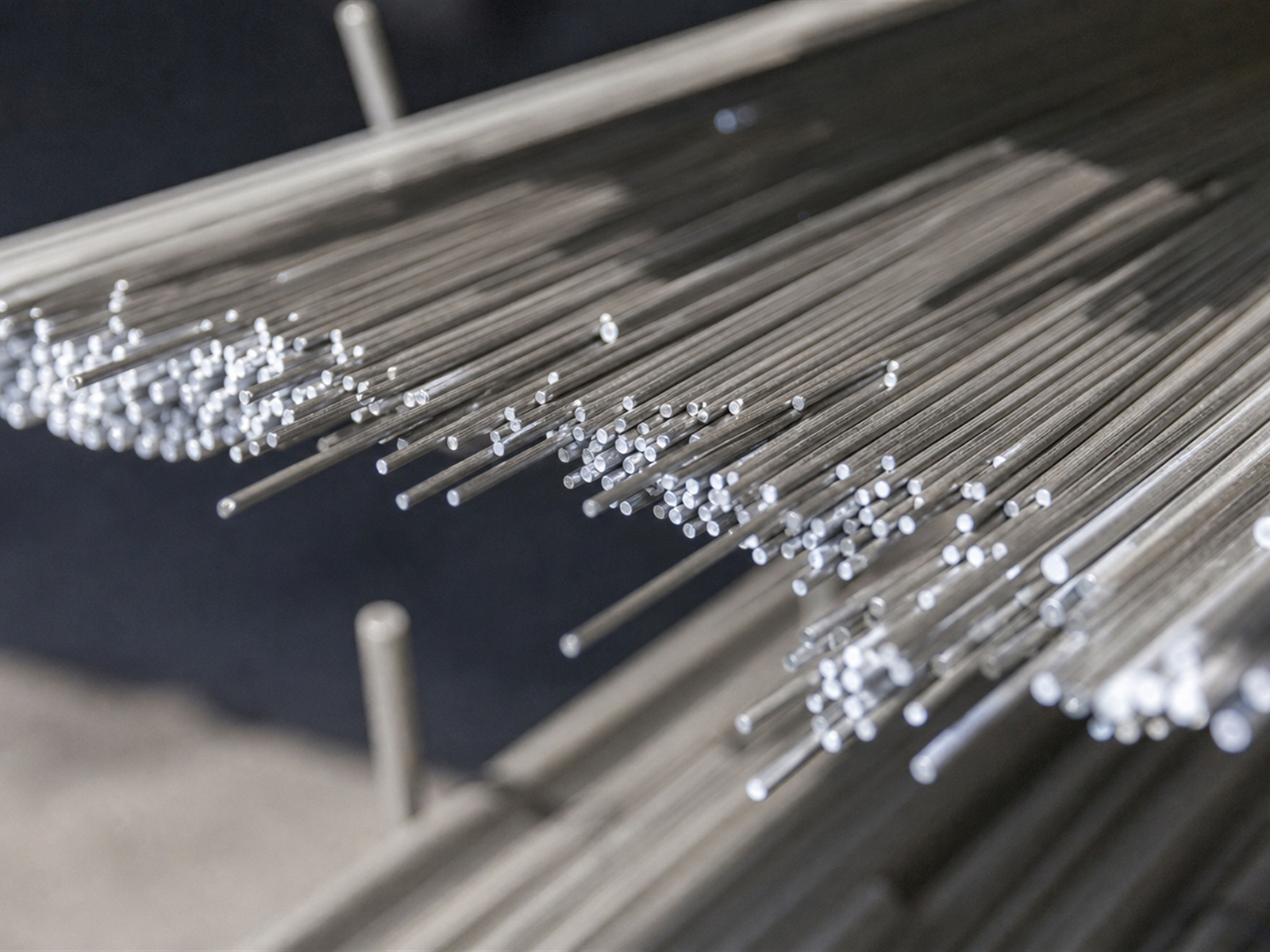
Gr1 titanium bars, as the highest purity material among industrial pure titanium, have a titanium content of over 99.5%. They possess excellent plastic deformation capability, superior corrosion resistance, and good biocompatibility. With a density of 4.51 g/cm³, they are about 40% lighter than ordinary steel, while also featuring a high melting point of 1660℃ and non-magnetic properties. This material performs exceptionally well in fields such as chemical corrosion protection, medical devices, and marine engineering, and is particularly suitable for applications that require complex forming processes, long-term corrosion resistance, or strict safety standards. The tensile strength of Gr1 titanium bars is 240-345 MPa, with an elongation of ≥ 24%, and they can withstand various manufacturing processes such as cold working and welding, making them an ideal material choice for precision manufacturing.
1. What Should You Know About the Material Nature of Gr1 Titanium Rod, the Performance Foundation Brought by High Purity?
(1) What Should You Know About Strict Control Standards for Chemical Composition?
Gr1 titanium rods belong to the α-type industrial pure titanium, and their chemical composition is strictly controlled. The titanium content is not less than 99.5%, and impurity elements such as iron ≤ 0.20%, oxygen ≤ 0.18%, carbon ≤ 0.08%, nitrogen ≤ 0.03%, and hydrogen ≤ 0.015%. This ultra-low impurity content ensures the stability and predictability of the material, avoiding complex phase transformation issues that may be caused by the introduction of alloying elements.
(2) What Should You Know About Histological Structural Characteristics?
After processes such as vacuum arc remelting, forging, and stress annealing, a uniform α-phase single-phase structure is formed inside the Gr1 titanium rod. This microstructure endows the material with excellent plasticity, allowing it to undergo large deformation cold working operations at room temperature. The uniformity of the microstructure directly affects the consistency of the material’s mechanical properties and the stability of subsequent processing.
(3) What Should You Know About Protective Mechanism of Surface Oxide Film?
The surface of Gr1 titanium rods naturally forms a dense TiO2 oxide film with a thickness of about 2-7 nanometers. This passive film has self-healing ability; when the surface is slightly scratched, the oxide film can quickly regenerate in an oxygen-containing environment. This protective layer is the core source of titanium’s corrosion resistance and can effectively shield against the erosion of most acidic, alkaline, and saline solutions.
2. What Should You Know About Physical Properties of Gr1 Titanium Rod, a Combination of Light Weight and Stability?
(1) Why Is Density and Weight Reduction Value Important?
Material Type | Density (g/cm³) | Relative weight ratio | Typical Application Advantages |
Gr1 Titanium Rod | 4.51 | 1.0 | Lightweight Design Benchmark |
304 stainless steel | 7.93 | 1.76 | Traditional anti-corrosion materials |
6061 aluminum alloy | 2.70 | 0.60 | Insufficient strength |
Hastelloy C-276 | 8.89 | 1.97 | High-cost alternative |
The low-density characteristics of Gr1 titanium rods create significant value in aerospace, mobile devices, and marine equipment. Reducing structural weight can decrease fuel consumption, improve transportation efficiency, and at the same time lower equipment operating energy consumption.
(2) What Should You Know About Thermal Physical Property Parameters?
The material’s coefficient of thermal expansion is 8.6×10⁻⁶/K (20-100℃), slightly lower than that of stainless steel, a characteristic that allows it to maintain good dimensional stability in environments with temperature fluctuations. The thermal conductivity is about 17 W/(m·K); although lower than copper and aluminum, this becomes an advantage in situations requiring thermal insulation. The melting point reaches 1660℃, providing a safety margin for high-temperature applications.
(3) Why Is Application Value of Non-Magnetic Features Important?
The relative magnetic permeability of Gr1 titanium rods is close to 1, making them a paramagnetic material that does not interfere with magnetic fields. This characteristic makes it an ideal structural material for nuclear magnetic resonance equipment, precision measuring instruments, and semiconductor manufacturing equipment. In the fields of electronic packaging and vacuum coating, non-magnetic properties ensure the stability of the process.
3. Why Is Mechanical Properties of Gr1 Titanium Bar, Advantages in Plasticity and Processing Adaptability Important?
(1) What Should You Know About Balance Between Strength and Ductility?
Mechanical indicators | Gr1 Titanium Rod | Gr2 Titanium Rod | Remarks |
Tensile Strength (MPa) | 240-345 | 345-485 | Gr1 has lower strength |
Yield Strength (MPa) | 170-275 | 275-380 | But the elongation is higher |
Elongation (%) | ≥ 24 | ≥ 20 | Easy to cold work |
Cross-sectional shrinkage rate (%) | ≥ 30 | ≥ 25 | Strong ability to transform |
The elongation of Gr1 titanium bars ranks first among industrial pure titanium, which means the material can withstand greater plastic deformation without cracking. This characteristic is crucial for the manufacturing of components that require complex forming processes such as deep drawing, bending, and flaring.
(2) What Should You Know About Cold Working Performance?
The material has good strain hardening characteristics in the cold working state. Cold drawing can increase tensile strength by 15-20% while maintaining sufficient residual plasticity. Processes such as cold rolling, cold bending, and stamping can be carried out at room temperature without the need for intermediate annealing. Material that has been work-hardened can be returned to its original soft state through annealing, providing flexibility for multiple-pass processing.
(3) What Should You Know About Fatigue and Creep Characteristics?
Under low-stress cyclic loading, Gr1 titanium rods exhibit a fatigue life superior to that of carbon steel. The fatigue strength is about 30-50% of the tensile strength, making it suitable for parts subjected to periodic operation, such as valves and pump bodies. The material shows good creep resistance below 250℃, but the creep rate increases significantly above 400℃, so long-term loading at high temperatures should be avoided.
4. Why Is Corrosion Resistance of Gr1 Titanium Rods, Key Advantages of Chemical Stability Important?
(1) What Should You Know About Corrosion Resistance Performance in Acidic Media?
Gr1 titanium rods demonstrate excellent performance in oxidizing acids, such as nitric acid, chromic acid, and hypochlorous acid, with almost no corrosion occurring. Under normal temperature conditions, the corrosion rate in dilute sulfuric acid (concentration <40%) and dilute hydrochloric acid (concentration <5%) is less than 0.1 mm/year. However, it should be noted that in concentrated hydrochloric acid, concentrated sulfuric acid, or environments containing fluoride ions, the passive film can be damaged, leading to rapid corrosion. Under high-temperature conditions, the corrosion rate increases significantly, and it is recommended to avoid using them in such media above 60℃.
(2) What Should You Know About Marine Environment and Chloride Ion Resistance?
Under standard test conditions, the material exhibits excellent corrosion resistance in seawater, salt spray, and high-chloride solutions, with a corrosion rate typically less than 0.005 mm/year. In marine engineering, Gr1 titanium rods can be immersed in seawater for long periods without the risk of pitting or crevice corrosion. This performance makes it the preferred material for seawater desalination, offshore platforms, and ship heat exchangers.
(3) What Should You Know About Alkaline and Organic Solvent Environments?
corrosive medium | Concentration/Temperature | Annual corrosion rate | Application Evaluation |
Sodium hydroxide solution | 10%/Boiling | <0.01 mm | Good |
Sodium chloride solution | Saturated/80℃ | <0.005 mm | Excellent |
Acetic acid | Glacial acetic acid/boiling | <0.1 mm | Good |
Methanol | Purity 99% / Room Temperature | Almost zero | Excellent |
In alkaline solutions, the corrosion rate of Gr1 titanium rods is low, and they remain stable even in high concentrations of sodium hydroxide. Organic solvents have minimal corrosive effects on titanium, making it suitable for pharmaceutical and fine chemical equipment.
5. What Should You Know About Processing Characteristics of Gr1 Titanium Rods, Full-process Control From Raw Material to Finished Product?
(1) What Should You Know About Hot Processing Technology Window?
The hot working temperature range for Gr1 titanium bars is 800-950℃, within which the material has good plasticity and moderate deformation resistance. The total forging ratio is usually controlled between 3-6, which can achieve a fine and uniform grain structure. After hot rolling, pickling is required to remove the oxide scale, followed by stress annealing to eliminate residual stress and ensure dimensional stability.
(2) What Should You Know About Machining Parameter Optimization?
Titanium has a low thermal conductivity and high chemical reactivity, making it prone to tool adhesion and work hardening during cutting. It is recommended to use carbide or CBN tools, with a cutting speed controlled at 20-40 m/min and a feed rate of 0.1-0.3 mm/rev. Adequate cooling with cutting fluid is key to preventing tool wear and workpiece deformation. Conventional machining such as turning, milling, and drilling can all be carried out.
(3) What Should You Know About Welding Performance and Joint Quality?
Gr1 titanium rods have excellent welding performance and are commonly welded using TIG welding and electron beam welding. Welding must be carried out under argon protection to prevent the ingress of oxygen, nitrogen, and hydrogen, which can cause weld brittleness. The strength of welded joints can reach more than 90% of the base material, and the corrosion resistance will not be significantly reduced. Post-weld annealing can be performed to further eliminate welding stress.
6. What Should You Know About Surface Treatment and Quality Control of Gr1 Titanium Rods?
(1) How Should Selection of Different Surface Conditions?
Black steel bar: After hot processing, the scale is retained, the surface is rough but the cost is low. It is suitable for applications with a diameter ≥ 20mm and where further machining is required. The tolerance range is relatively wide, such as φ50± 1.0mm (referring to the usual machining allowance), and it is mainly used for forging blanks.
Turning rod: Oxide scale is removed through turning process, surface roughness Ra 3.2-6.3, tolerance ± 0.3-0.5mm, can be directly used for assembly and welding. Suitable for structural components and pipe connectors with a diameter ≥ 10mm.
Polishing Rod: Cold drawn or precision polished, surface roughness Ra ≤ 1.6, tolerance range according to H7/H8 standards (for example, φ10mm corresponds to ± 0.015mm, φ50mm corresponds to ± 0.025mm), high dimensional accuracy. Suitable for precision shafts, molds, and non-magnetic components with diameters of φ4-φ50mm.
(2) What Should You Know About Pickling and Surface Cleanliness?
Pickling treatment uses a nitric acid-hydrofluoric acid mixture to remove the oxide layer, exposing the original color of the metal. The surface of the pickled titanium rod is clean, free of metal contamination, and suitable for chemical corrosion protection and welded components. Ultrasonic cleaning can further remove oil and particles, ensuring medical device-grade cleanliness.
(3) What Should You Know About Quality Inspection and Standards Compliance?
The production process is carried out in accordance with ASTM B348 standards, with comprehensive testing of chemical composition, mechanical properties, surface quality, and dimensional tolerances. Ultrasonic testing is used to detect internal defects, and eddy current testing is used to detect surface cracks. A material test certificate (MTC) is provided for each batch of products, including furnace batch number, chemical analysis, and mechanical test data, ensuring traceability.
7. Why Is the Actual Application Scenarios and Value Realization of Gr1 Titanium Bars Important?
(1) What Should You Know About Core Components of Chemical Anti-corrosion Equipment?
In heat exchangers that handle corrosive media such as sulfuric acid, hydrochloric acid, and nitric acid, Gr1 titanium rods are processed into components like tube sheets, tie rods, and bolts. The stirring shafts and support frames of reaction kettles are made of titanium rods, allowing long-term operation in high-temperature acidic and alkaline environments. In electroplating equipment, hangers and electrode rods made from titanium rods prevent metal ion contamination of the plating solution and improve product quality.
(2) What Should You Know About Marine Engineering and Seawater Desalination?
Flanges, joints, and fasteners of the seawater pipeline system are made from Gr1 titanium rods, resisting seawater scouring and chloride ion corrosion. Evaporator tube sheets and condenser components of desalination units use titanium materials, extending equipment life to over 20 years. Structural components of marine monitoring instruments utilize titanium’s non-magnetic and corrosion-resistant properties to ensure data acquisition accuracy.
(3) What Should You Know About Medical Devices and Biological Implants?
Orthopedic implants, such as intramedullary nails and bone plates, use raw materials made of Gr1 titanium rods, which are implanted into the human body after precision machining and surface treatment. Dental implants and orthodontic appliances utilize titanium’s biocompatibility and corrosion resistance. Handles and connecting rods of surgical instruments are made from titanium rods to achieve light weight and sterility.
(4) What Should You Know About Electronics and Semiconductor Manufacturing?
The chamber components and target material holders of vacuum coating equipment use Gr1 titanium rods to avoid magnetic interference and particle contamination. The connecting rods and fixtures of semiconductor process chambers use titanium, resistant to plasma corrosion. The drive shafts and measuring rods of precision instruments take advantage of titanium’s dimensional stability and low thermal expansion characteristics.
(5) What Should You Know About Food and Pharmaceutical Equipment?
The stirring shafts and fixtures of food processing machinery are made of Gr1 titanium rods, meeting hygiene and safety standards and not contaminating food. Cleanroom components and sterile piping systems of pharmaceutical equipment use titanium material, which is easy to clean and sterilize. Titanium rods are chosen as raw materials for high-end tableware and jewelry, displaying a unique luster after polishing and anodizing.
8. What Is the Conclusion?
Gr1 titanium rods, with a high purity of over 99.5%, excellent plastic deformation capability, outstanding corrosion resistance, as well as non-magnetic properties and biocompatibility, demonstrate irreplaceable value in fields such as chemical engineering, marine, medical, and electronics. Their lightweight characteristics and long-term stability reduce the total lifecycle cost, providing an ideal material choice for precision manufacturing and harsh environment applications.
FAQ
Q1: Is Gr1 titanium bar suitable for high-strength load-bearing applications?
The tensile strength of Gr1 titanium bar is 240-345 MPa, which belongs to medium-low strength materials. It is not suitable for high-stress applications such as engines or high-speed heavy loads. If higher strength is required, it is recommended to choose Gr2 or titanium alloy bars.
Q2: Can Gr1 titanium rods be used in environments containing fluoride ions?
Fluorine-containing media can damage the oxide protective layer on the surface of titanium, leading to rapid corrosion. Environments such as hydrofluoric acid and fluoride solutions are not recommended for Gr1 titanium rods, and nickel-based alloys or special protective measures should be considered.
Q3: How to distinguish between Gr1 and Gr2 titanium rods?
The main difference lies in the oxygen content: Gr1 has an oxygen content ≤ 0.18%, while Gr2 is ≤ 0.25%. Gr1 has better plasticity but slightly lower strength, making it suitable for complex forming; Gr2 has higher strength, making it suitable for structural load-bearing. They can be distinguished by chemical analysis or mechanical testing.
What Should You Know About Contact Us?
Baoji Titanium Valley Titanium Nickel Zirconium Material Processing Co., Ltd. is a professional manufacturer and supplier of Gr1 titanium bars, with an annual production capacity of 20, 000 tons of titanium bar materials. We offer customized sizes, surface treatments, and quality certification services to meet your precision processing needs. Welcome to contact us for technical support and product quotations: sales@titaniumvalleys.com
References
- Wang Hongwei, Li Ming. Microstructure, Properties, and Processing Technology of Industrial Pure Titanium [M]. Beijing: Metallurgical Industry Press, 2019.
- Zhang Jianhua, Liu Wenhui. Application of Titanium and Titanium Alloys in Chemical Equipment [M]. Shanghai: Chemical Industry Press, 2020.
- Chen Guang, Zhao Yongqing. Medical Titanium Alloy Materials Science and Engineering [M]. Xi’an: Northwestern Polytechnical University Press, 2021.
- Sun Jianfei, Zhou Wei. Evaluation of Corrosion Resistance and Material Selection Guide for Titanium [M]. Chengdu: Sichuan Science and Technology Press, 2018.