
What Are the Key Inspection Points to Ensure Nickel 200 Foil Complies with ASTM Standards?
- Nickel 200 Foil
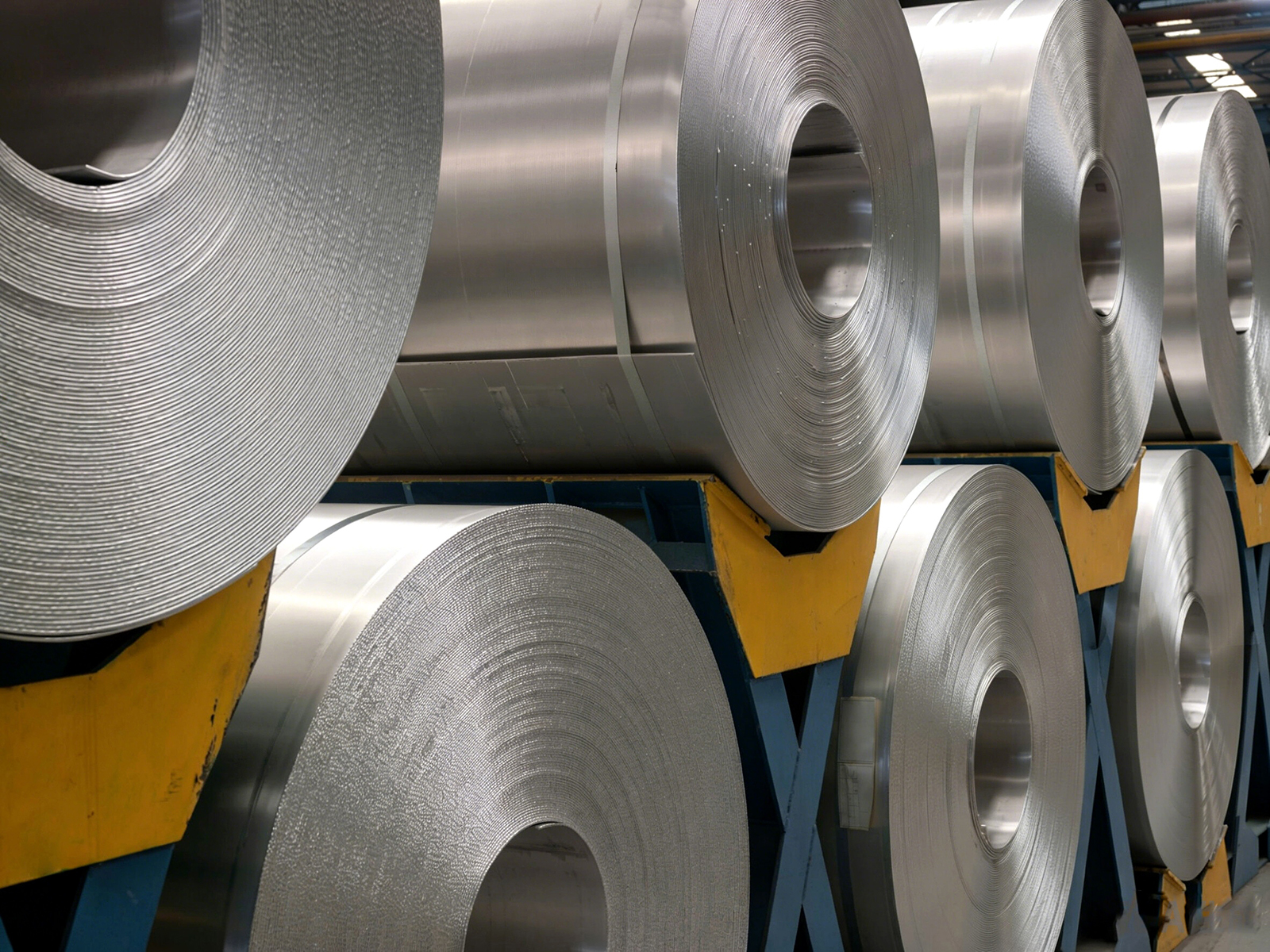
Nickel 200 Foil In high-end industrial applications, Nickel 200 foil quality directly affects product performance and system stability. Nickel foil complying with ASTM B162 must meet strict requirements for chemical composition, mechanical properties, and surface quality. Key verification steps include confirming nickel purity reaches 99.6% or above, verifying tensile strength and elongation conform to annealed or cold-worked condition specifications, checking thickness tolerance controlled within ±0.002 mm range, evaluating surface cleanliness and defect conditions, and reviewing completeness of material certificates and third-party test reports. These inspection measures effectively reduce material failure risk and ensure long-term reliability in battery tab, electrolytic electrode, and electromagnetic shielding applications.
What Is the Chemical Composition Verification Process?
1. Precise Measurement of Nickel Content
ASTM B162 specifies minimum nickel content of 99.6% for Nickel 200 foil. Inductively Coupled Plasma Optical Emission Spectroscopy (ICP-OES) per ASTM E1629 is the standard analytical method. Sample preparation requires cutting representative specimens from multiple locations across the coil, ensuring compositional homogeneity. The nickel content must be determined to within ±0.02% accuracy. Any batch showing nickel content below 99.55% should be rejected, as lower purity directly compromises corrosion resistance in alkaline environments.
2. Impurity Element Limits and Their Impact
Beyond nickel content, ASTM B162 sets maximum limits for key impurities: carbon (0.15% max), iron (0.15% max), manganese (0.10% max), silicon (0.05% max), and sulfur (0.01% max). Elevated iron content reduces electrical conductivity, while excess carbon can form carbides at grain boundaries, reducing intergranular corrosion resistance. Each impurity element must be analyzed using standardized methods-carbon and sulfur by combustion analysis (ASTM E1019), iron and manganese by ICP-OES, silicon by gravimetric method.
3. Batch-to-Batch Compositional Consistency
For critical applications, compositional consistency across production batches is essential. Manufacturers should provide a statistical summary of compositional data showing process capability indices (Cpk) greater than 1.33 for all controlled elements. Incoming inspection should verify each delivery lot against the certified analysis, with spot-check sampling per ASTM A751 procedures.
How Are Mechanical Properties Verified for Nickel 200 Foil?
1. Tensile Strength Testing
Mechanical properties of Nickel 200 foil must be tested per ASTM E8/E8M. Standard tensile specimens with 12.5 mm gauge length are cut from representative locations. For annealed condition (Temper T1), minimum tensile strength is 310 MPa with minimum elongation of 45%. For half-hard condition (Temper T2), tensile strength ranges from 415-550 MPa with elongation of 8-15%. Each test specimen must meet or exceed the specified minimum values. Testing at room temperature (23 ±5 ?) using a calibrated universal testing machine with crosshead speed of 1 mm/min.
2. Hardness Measurements
Rockwell B hardness testing per ASTM E18 provides a quick verification of mechanical condition. Annealed Nickel 200 foil typically exhibits HRB 40-50, while cold-worked material reaches HRB 60-80. Hardness testing should be performed at a minimum of 5 locations across each coil, with readings consistent within ±3 HRB units.
3. Impact of Processing Condition on Properties
The mechanical properties of Nickel 200 foil are significantly affected by the final processing condition. Cold rolling increases strength through work hardening but reduces ductility. Final annealing temperature (typically 600-850 ? depending on gauge) and cooling rate determine the recrystallized grain structure. Proper annealing produces uniform equiaxed grains with diameters between 15-50 µm, optimizing the balance of strength and formability.
What Surface Quality Checks Are Required for Nickel 200 Foil?
1. Thickness Tolerance Verification
ASTM B162 specifies thickness tolerances based on gauge and width. For foil thicknesses up to 0.15 mm, tolerance is ±0.002 mm. Thickness measurement should be performed using a calibrated micrometer or electronic gauge with resolution of 0.001 mm. Minimum 10 measurements per coil-five across the width (edge, quarter, center, three-quarter, edge) and five along the length-ensuring uniform thickness distribution.
2. Surface Defect Inspection
Visual inspection under standardized lighting (minimum 1000 lux) identifies surface defects including scratches, pits, roll marks, inclusions, and discoloration. For battery tab applications, surface defects must not exceed 0.01 mm in depth. Electropolished surfaces require additional inspection for micro-pitting using electrochemical impedance spectroscopy. Acceptance criteria follow ASTM B689 guidelines for commercial-quality nickel sheet and strip.
3. Surface Cleanliness Assessment
Residual rolling oil, fingerprints, or oxidation films on Nickel 200 foil surface can compromise downstream processing. Surface cleanliness is verified by water break test per ASTM D1729-a continuous water film should persist for at least 30 seconds after rinsing. Contact angle measurement (should be <10°) and solvent wipe test (white cloth shows no discoloration) provide additional verification.
What Documentation and Certification Requirements Must Be Met?
1. Mill Test Certificate (MTC) Contents
Each delivery of Nickel 200 foil must be accompanied by a Mill Test Certificate per EN 10204 Type 3.1 or 3.2. The certificate must include: chemical composition of the melt, mechanical property test results, dimensions and weight, heat treatment records, inspection and test status, and traceability to the original production lot. All test results must reference the applicable ASTM standard specifications.
2. Third-Party Laboratory Verification
For critical aerospace, medical, or nuclear applications, independent third-party testing per ISO/IEC 17025 accredited laboratories is required. Third-party verification should include full chemical analysis, tensile testing, hardness testing, surface roughness measurement, and microscopic examination for grain structure and inclusion rating per ASTM E45.
3. Quality Management System Certification
Manufacturers should maintain ISO 9001:2015 certification with documented procedures for incoming material inspection, in-process monitoring, and final product release. For aerospace applications, AS9100D certification is required. Medical device suppliers should additionally hold ISO 13485 certification.
What Is the Recommended Inspection Workflow for Nickel 200 Foil?
1. Incoming Inspection Procedure
Upon receipt, verify packaging integrity, labeling accuracy, and quantity against the purchase order. Confirm the presence and completeness of Mill Test Certificates. Perform incoming inspection sampling per ANSI/ASQ Z1.4 Level II, with AQL of 1.0 for critical dimensions and 2.5 for general characteristics.
2. In-Process Quality Control
During fabrication, monitor process parameters continuously. For stamping or forming operations, verify material hardness consistency before each production run. Track yield rates and correlate with incoming material properties to identify potential quality trends.
3. Final Product Verification
Before shipment, perform final inspection covering all critical characteristics. Conduct dimensional verification, surface quality assessment, and packaging inspection. Ensure each shipment is accompanied by complete documentation including test certificates, packing lists, and handling instructions.
Conclusion
Ensuring Nickel 200 foil compliance with ASTM B162 requires systematic verification across chemical composition, mechanical properties, surface quality, and documentation. Rigorous inspection protocols-from incoming material verification through final product release-effectively mitigate material failure risks and ensure long-term reliability in demanding industrial applications. Manufacturers and end-users who implement comprehensive quality assurance programs benefit from consistent performance, reduced warranty claims, and enhanced supply chain confidence.
FAQ
Q1: What is the typical nickel purity of commercial-grade Nickel 200 foil?
Commercial-grade Nickel 200 foil typically contains 99.6-99.9% nickel. Premium grades for semiconductor or battery applications may reach 99.95% purity. Higher purity levels reduce electrical resistivity and improve corrosion resistance, particularly in alkaline electrolyte environments.
Q2: How does cold working affect the corrosion resistance of Nickel 200 foil?
Cold working introduces dislocations and stored energy into the nickel crystal structure, which can slightly increase the corrosion rate in aggressive environments. However, for most industrial applications, the corrosion resistance of cold-worked Nickel 200 remains well within acceptable limits. Stress relief annealing at 540-650 ? restores optimal corrosion resistance after significant cold work.
Q3: What storage conditions are recommended for Nickel 200 foil?
Nickel 200 foil should be stored in a dry, climate-controlled environment (relative humidity below 60%, temperature 10-35 ?). Packaging should remain intact until use to prevent surface contamination. Stacked coils should be supported on flat pallets to avoid deformation. For long-term storage (>12 months), apply vapor phase corrosion inhibitor (VCI) packaging.
Contact Us
Baoji Titanium Valley Titanium Nickel Zirconium Material Processing Co., Ltd. produces ASTM B162-compliant Nickel 200 foil with thickness range 0.02-2.0 mm and width up to 1,200 mm. Our facility is equipped with ICP-OES spectrometers, universal testing machines, and electronic gauges for comprehensive quality verification. Annual capacity of 5,000 metric tons ensures reliable supply. Contact us at sales@titaniumvalleys.com for material certifications and sample requests.
References
[1] Wang Qiang, Li Feng. Chemical Composition Analysis of Nickel 200 Foil for Industrial Applications[J]. Nonferrous Metals Engineering, 2022, 15(4): 67-73.
[2] ASTM International. Standard Specification for Nickel and Nickel-Alloy Strip, Sheet, and Plate[S]. ASTM B162-23, 2023.
[3] Zhao Min, Sun Wei. Mechanical Property Testing of Cold-Rolled Nickel Foil[J]. Materials Testing, 2021, 63(8): 890-896.
[4] China Nickel Association. Technical Specification for Electrolytic Nickel Products[S]. YB/T 4196-2021, 2021.