
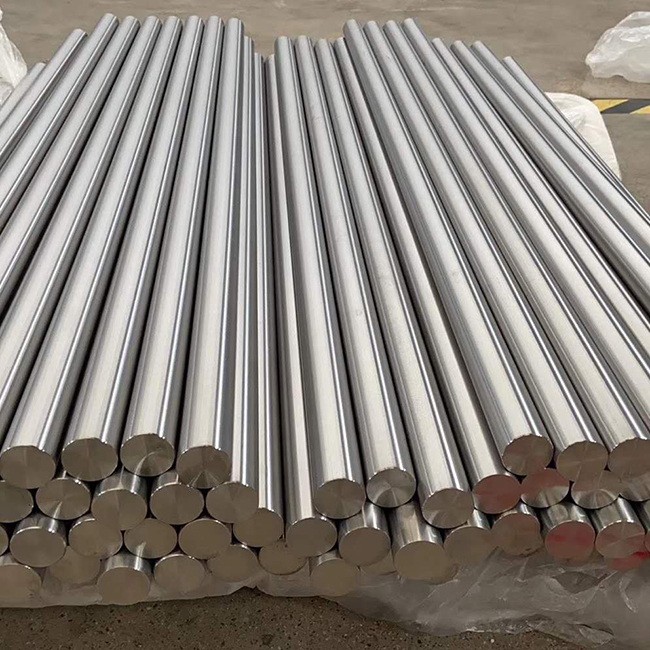
Gr2 titanium rod is the most widely used grade of commercially pure titanium. It holds an important position in the global market for its balanced overall performance. This material complies with UNS R50400. It balances purity, mechanical strength and ductility well. Its titanium content is no less than 99.2%, and tensile strength stays above 340 MPa. It features excellent corrosion resistance, good workability, light weight and stable biocompatibility. Compared with stainless steel and carbon steel, it delivers better performance and lower full-life cost in marine engineering, chemical anti-corrosion, medical devices and precision manufacturing. It is a preferred material for engineers and buyers to solve problems under complex working conditions.
1. Material Composition and Structural Features of Gr2 Titanium Rod
1.1 Balanced Chemical Composition
Manufacturers control the chemical composition of Gr2 titanium rod precisely. Titanium content reaches over 99.2%. Oxygen content stays below 0.25% to adjust material strength. This composition keeps the good corrosion resistance of pure titanium, and raises mechanical strength by around 20% compared with Gr1. Strict limits apply to impurities: iron ≤0.30%, carbon ≤0.08%, nitrogen ≤0.03%. These controls ensure stable performance and good weldability.
1.2 Advantages of Single Alpha Phase Structure
The material has uniform single alpha phase microstructure. This structure brings great ductility at room temperature and strong cold forming ability. Vacuum melting, forging and annealing refine grains evenly and remove stress concentration points. The material resists cracks during bending and stamping, and maintains stable dimension.
1.3 Self-healing Mechanism of Surface Oxide Film
A dense TiO₂ film quickly forms on Gr2 titanium rod surface. The film thickness ranges from 1 nm to 10 nm. It has self-repairing ability. It regrows fast in oxygen-rich environments even after mechanical damage. This is the core reason for its outstanding corrosion resistance. The film stays stable across a wide pH range, so the material fits diverse working conditions.
Composition Comparison between Gr2 Titanium Rod and Common Metals
| Material Grade | Main Element (%) | Oxygen Content (%) | Iron Content (%) | Density (g/cm³) | Tensile Strength (MPa) |
|---|---|---|---|---|---|
| Gr2 Titanium Rod | Ti ≥ 99.2 | ≤0.25 | ≤0.30 | 4.51 | ≥340 |
| 304 Stainless Steel | Fe base + Cr 18 | – | Balance | 7.93 | ≥520 |
| Q235 Carbon Steel | Fe base | – | Balance | 7.85 | ≥370 |
2. Analysis on Core Performance Parameters
2.1 Balance between Mechanical Strength and Toughness
Gr2 titanium rod has tensile strength from 340 MPa to 480 MPa, yield strength ≥275 MPa and elongation ≥20%. This combination supports medium load bearing and good impact resistance. It keeps good toughness at low temperature and avoids brittle fracture. It retains over 80% strength at 300℃, so it works across a wide temperature range.
2.2 Quantitative Corrosion Resistance
In 3.5% sodium chloride solution, Gr2 titanium rod shows extremely low corrosion rate, much better than 316L stainless steel. It works stably in 10% sulfuric acid and 30% nitric acid. Do not use it in high-concentration reducing acid such as concentrated hydrochloric acid or high-temperature hydrofluoric acid. Its service life in seawater is several times longer than stainless steel, and cuts equipment replacement frequency greatly.
2.3 Physical Properties and Functional Advantages
Its density is only 4.51 g/cm³, about 57% of steel. It achieves obvious weight reduction in aerospace and portable devices. Its magnetic susceptibility is close to 1, so it is non-magnetic. It suits MRI medical equipment and precision instruments. It has higher thermal conductivity than stainless steel. Its thermal expansion coefficient is about 8.6×10⁻⁶/℃, close to certain ceramics. This feature benefits composite application with other materials.
Corrosion Resistance of Gr2 Titanium Rod in Different Media
| Corrosive Medium | Concentration / Condition | Temperature (℃) | Corrosion Rate (mm/year) | Suitability Rating |
|---|---|---|---|---|
| Seawater | Natural seawater | Room temperature | Extremely low | Excellent |
| Sulfuric acid | 10% | Boiling point | Low | Good |
| Nitric acid | 30% | 100 | Low | Excellent |
| Sodium chloride solution | 3.5% | Room temperature | Extremely low | Excellent |
3. Machining and Manufacturing Performance
3.1 Cold and Hot Working Performance
The material has excellent cold forming capacity. Workers make complex shapes via cold rolling, cold drawing and stamping. Its hot working temperature ranges from 800℃ to 950℃ with good forging performance. Manufacturers produce rods from 4 mm to 300 mm in diameter. Use carbide tools for turning and milling. Keep cutting speed between 30 m/min and 50 m/min to get smooth surface.
3.2 Welding Compatibility
One major advantage of Gr2 titanium rod is that welded zones keep original corrosion resistance. It supports TIG welding, MIG welding and resistance welding. Weld joint strength reaches over 90% of base metal strength. Use inert gas shielding during welding to prevent high-temperature oxidation. No post-weld heat treatment is needed, which improves efficiency for mass production.
3.3 Surface Treatment and Precision Control
Ultrasonic cleaning and acid passivation produce smooth surface. Precision grinding and polishing achieve diameter tolerance of h6 to h9, namely ±0.01 mm to ±0.05 mm. Straightness stays within 1 mm per meter. It fully meets requirements for mass customized production.
4. Application Value in Key Industries
4.1 Solutions for Chemical Corrosion Prevention
Gr2 titanium rod makes heat exchanger tubes, stirring shafts, pump bodies and valves. These parts run steadily for long periods in harsh corrosive environments like chlor-alkali, soda ash and pharmaceutical production. Field cases show titanium anodes for electrolytic cells have longer service life and lower total cost. The material resists corrosion from chlorine gas and hypochlorite, and reduces downtime for maintenance.

4.2 Application in Marine Engineering and Desalination Equipment
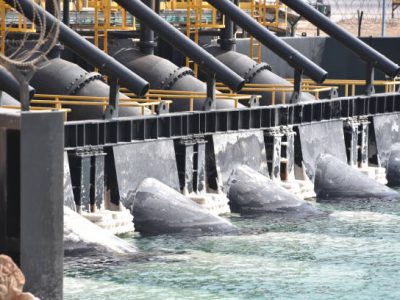
Evaporator and condenser tubes of seawater desalination units are typical applications for Gr2 titanium rod. The material stays intact for long service in high-salt environments with chloride and sulfate ions. Fasteners and flanges for offshore platforms extend maintenance cycles, and cut labor and shutdown costs.
4.3 Medical Devices and Precision Manufacturing
Medical grade Gr2 titanium rod makes orthopedic plates, bone screws and dental implants. Its chemical inertness allows good integration with human tissues, and releases almost no metal ions. Small cold drawn and polished rods serve as non-magnetic sensor brackets and semiconductor parts in precision electronics. High dimensional tolerance meets strict standards of high-end manufacturing.

Typical Applications and Performance Requirements of Gr2 Titanium Rod in Various Industries
| Industry | Typical Products | Key Performance Requirements | Size Range | Annual Demand Trend |
|---|---|---|---|---|
| Chemical Anti-corrosion | Heat exchanger tube, stirring shaft | Chloride corrosion resistance | φ10-φ100mm | Steady growth |
| Marine Engineering | Seawater pipe, fastener | Seawater resistance and fatigue resistance | φ8-φ200mm | Rapid growth |
| Medical Devices | Orthopedic implants | Biocompatibility and high purity | φ4-φ30mm | Sustained growth |
| Environmental Equipment | Desulfurizer parts, electrode | Acid and alkali resistance, high temperature resistance | φ20-φ150mm | Steady growth |
| Precision Electronics | Non-magnetic fixture, lead wire | Non-magnetism and high precision | φ4-φ12mm | Technology-driven growth |
5. Material Selection and Supply Advantages
5.1 Cost Performance
Gr2 titanium rod costs slightly more than Gr1, but its strength rises by over 20%. It cuts material usage for load-bearing parts, so the actual total cost is equal or even lower. It costs much less than alloy titanium like Gr5, and fits most industrial working conditions. Though its unit price is higher than stainless steel, its light weight reduces material consumption and long service life cuts replacement frequency. It brings obvious cost benefits in long-term use.
5.2 Inventory and Customization Capacity
Regular stock covers round rods from φ8 mm to φ200 mm with length from 300 mm to 3000 mm for immediate delivery. Product range includes cold drawn precision rods (φ4-φ30mm), large forged rods (φ100-φ300mm) and special profiles such as square rods and hexagonal rods. It supports diversified stock demands.
5.3 Quality System and International Certification
All products follow international standards including ASTM B348. We provide material test reports and third-party inspection reports for each batch. Full quality control covers titanium sponge selection, vacuum melting, forging, rolling and non-destructive testing. Complete certification and traceability systems guarantee stable material quality.
Conclusion
Gr2 titanium rod balances purity and strength well. It also has excellent corrosion resistance, good machinability and prominent lightweight features. It acts as a key material connecting traditional metals and high-end applications. Its wide use in chemical anti-corrosion, marine engineering, medical devices and environmental equipment proves its positioning of wide application and high cost performance. With global carbon neutrality and hydrogen energy development, demand for Gr2 titanium rod will keep growing in water electrolysis for hydrogen production, fuel cells and water treatment fields.
FAQ
1. What are the main differences between Gr2, Gr1 and Gr5?
Gr2 has higher oxygen content (0.25% against 0.18% of Gr1) and around 20% higher strength, while the two grades have similar corrosion resistance. Unlike Gr5 alloy titanium, Gr2 contains no aluminum or vanadium. It costs less and has better weldability, but its strength is only about 40% of Gr5. It suits medium and light load working conditions.
2. How to tell if Gr2 titanium rod fits your project?
Check three points first. See if the load is medium, if the medium is oxidizing or neutral, and if welding is required. Gr2 is your ideal choice if all conditions match and you pursue good cost performance.
3. What notes for procurement and storage of Gr2 titanium rod?
Check compliance with ASTM B348 standard and complete material reports during procurement. Make sure the surface has no scratches or discoloration. Store products in dry and ventilated areas. Keep them away from steel to avoid galvanic corrosion. Use plastic film for long-term storage isolation. Use dedicated cutting fluid during machining, and do not adopt chlorine-containing coolant.
Looking for Reliable Gr2 Titanium Rod Manufacturer
Baoji Titanium Valley Titanium Nickel Zirconium Material Processing Co., Ltd. is a professional supplier. We own world-class production lines and full-process quality control systems. We supply customized and bulk Gr2 titanium rods from φ4 mm to φ300 mm. Our Italian Danieli rolling line has annual output over 20,000 tons. We support fast delivery and professional technical service. Feel free to contact us for detailed datasheets and quotations: sales@titaniumvalleys.com
References
- ASTM International. ASTM B348/B348M-21 Standard Specification for Titanium and Titanium Alloy Bars and Billets. 2021.
- Zhang Conghui. Introduction to Titanium and Titanium Alloys. Metallurgical Industry Press, Beijing, 2024.
- Performance and Application Features of Titanium and Titanium Alloys & Related Equipment. Chemical Equipment Technology, 2006(05).