
What Are the Typical Applications of Gr12 Titanium Wire in the Chemical Industry?
- GR12 Titanium Wire
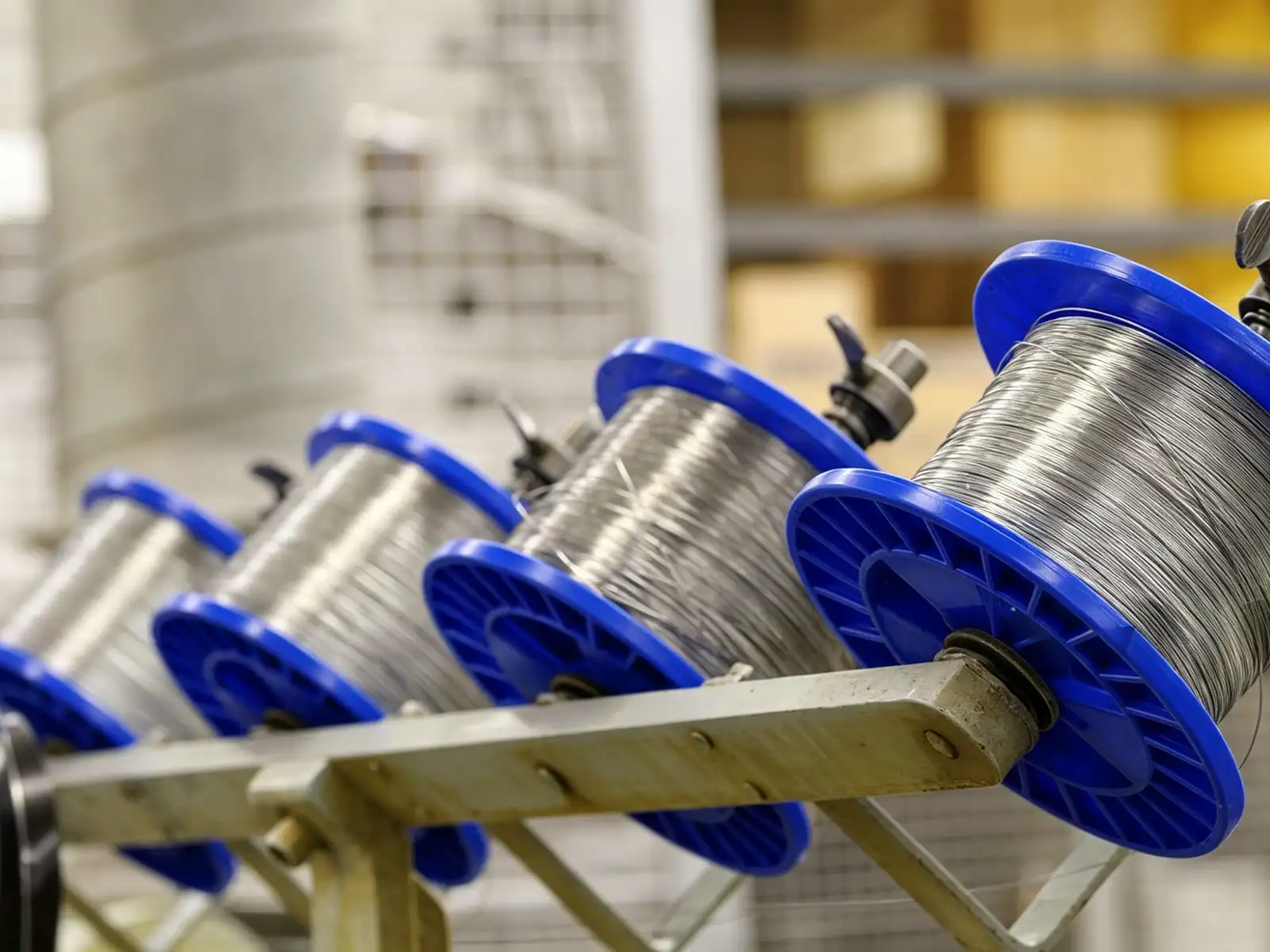
In modern chemical production, material corrosion resistance directly affects production safety and economic benefits. Gr12 titanium wire (Ti-0.3Mo-0.8Ni) is a near-alpha corrosion-resistant titanium alloy. Molybdenum and nickel alloying greatly improve its ability to resist reducing media. Its performance sits between commercially pure titanium and high-strength titanium alloys. It works reliably in harsh environments such as hydrochloric acid, sulfuric acid, hot chloride liquid, hydrogen sulfide and carbon dioxide. It has outstanding resistance to pitting and crevice corrosion. Chemical equipment manufacturers and engineering contractors adopt Gr12 titanium wire. It solves rapid failure problems of traditional materials under complex corrosion. It meets medium strength requirements and keeps equipment running stably for long cycles. It also optimizes total lifecycle costs.
1 Structural Applications in Chemical Anti-corrosion Equipment
1.1 Connection for Heat Exchanger Tubes and Tube Sheets
Gr12 titanium wire makes binding wires and fixing parts for heat exchanger tube bundles. Ordinary stainless steel easily suffers stress corrosion cracking in chloride-containing high-temperature media. Commercially pure titanium has hidden risks at crevice areas. The combined strengthening effect of molybdenum and nickel keeps Gr12 stable in acidic chloride liquid at 80 ℃ to 150 ℃. It prevents tube bundle loosening and liquid leakage. It has good weldability and forms sound metallurgical bonds with titanium tube sheets. It suits large heat exchange units for petrochemical and coal chemical industries.
1.2 Lining Fixing Systems for Reaction Vessels
Most chemical reactors use titanium plate or titanium clad plate as inner lining. Gr12 titanium wire acts as mechanical fasteners to connect lining and carbon steel base. This application requires both corrosion resistance and mechanical strength. Annealed Gr12 titanium wire with diameter 2.0 mm to 4.0 mm has tensile strength above 483 MPa and elongation over 20%. It bears assembly stress and adapts to temperature and pressure fluctuations during operation. It avoids lining detachment caused by material failure.
1.3 Auxiliary Parts for Agitation Units
Gr12 titanium wire makes spring pins and cotter pins for agitator blades and drive shafts. These parts stay immersed in sulfuric acid, hydrochloric acid or mixed acid for a long time. They bear shear force and cyclic load at the same time. Gr12 adapts well to fluctuating redox potential. Its corrosion rate stays below 0.05 mm per year in static acid liquid with pH 1 to 3 under room temperature. 316L stainless steel has a corrosion rate over 0.5 mm per year under the same conditions. It greatly extends equipment maintenance intervals.
| Application Part | Working Condition Features | Performance Advantages of Gr12 | Comparison with Alternative Materials |
|---|---|---|---|
| Heat exchanger tube bundle | High-temperature liquid with chloride | Strong crevice corrosion resistance | Around 30% better corrosion resistance than Gr2 pure titanium in standard tests |
| Reactor lining fixture | Mechanical stress + corrosive environment | Balanced strength and ductility | Higher strength than Gr1 and Gr2 titanium |
| Agitator fasteners | Fatigue load + mixed acid | Fatigue corrosion resistance | Fatigue life about 5 times longer than 316L in simulated tests |
2 Piping and Fluid Control Equipment
2.1 Binding for Corrosive Fluid Pipes
Titanium pipelines for chlor-alkali, hydrogen chloride and wet chlorine need corrosion-resistant binding wires for support. Gr12 titanium wire with diameter 0.8 mm to 2.0 mm has bright surface after bright drawing. It has no burrs and will not scratch pipeline anti-corrosion layers. It is non-magnetic and causes no electromagnetic interference near electrolytic cells. Vacuum melting keeps hydrogen content below 0.015% and eliminates hydrogen embrittlement risks. It fits long-term service in wet chlorine environments.
2.2 Spring Components for Valve Seals
Bellows and spring-loaded seals for chemical valves need corrosion resistance and stable elasticity. Cold-worked Gr12 titanium wire with diameter 0.5 mm to 1.5 mm gets special heat treatment. Its tensile strength reaches 800 MPa to 1000 MPa with good elastic modulus. Bellows made from this material stay intact after over 5000 opening and closing cycles. It resists sulfide stress corrosion cracking in wet hydrogen sulfide desulfurization units and improves equipment reliability greatly.
2.3 Fastening Systems for Flange Joints
Gr12 titanium wire makes wound gaskets and auxiliary fasteners for high-pressure corrosive fluid pipelines. Annealed Gr12 wire with diameter 3.0 mm to 5.0 mm has good ductility. Workers bend it into gaskets and locking parts on site. Gr12 fasteners keep good performance after 10 years of service in concentrated brine pipes at 60 ℃ with chloride concentration up to 35000 ppm. Ordinary titanium develops crevice corrosion after 2 to 3 years under the same conditions.
3 Electrochemical and Hydrometallurgy Equipment
3.1 Connecting Wires for Electrolyzer Anodes
Connecting parts between anodes and busbars in chlor-alkali and hydrometallurgy facilities need resistance to strong oxidizing electrolyte. Gr12 titanium wire acts as flexible conductive connectors. Molybdenum and nickel form stable passive film in anode oxidizing environments. It also maintains good corrosion resistance in cathode reducing environments. Its resistivity stands at about 55 μΩ·cm. The value is higher than pure copper but meets auxiliary conduction requirements. Its service life is over 20 times longer than copper.
3.2 Fixtures for Hydrometallurgy Extraction
Gr12 titanium wire makes agitator fixtures and liquid level sensor brackets for rare earth, nickel and cobalt leaching and extraction processes. Parts work in mixed solution of sulfuric acid and organic solvent at 40 ℃ to 80 ℃ with pH below 12. Molybdenum improves resistance to sulfate ions. Nickel lowers sensitivity to chloride ions. Its annual corrosion rate stays below 0.03 mm in mixed liquid of 5% sulfuric acid and 3% hydrochloric acid at 50 ℃. Equipment runs over 3 years without replacement.
3.3 Hangers for Electroplating and Surface Treatment
Titanium hangers for electroplating are usually welded from titanium wire. Gr12 titanium wire has excellent weldability and overall corrosion resistance. It becomes the top choice for complex hangers. Hangers for chromium plating and nickel plating bear current impact and chemical corrosion at the same time. Weld joints of Gr12 wire with diameter 1.0 mm to 2.5 mm retain over 85% of base metal strength. Weld zones have no obvious performance drop. A single set of hangers can be reused over 5000 times in standard electroplating processes and brings good economic benefits.
| Electrochemical Application | Medium Conditions | Technical Index of Gr12 | Economic Comparison |
|---|---|---|---|
| Chlor-alkali electrolyzer | pH > 12, 75 ℃ | Stable passive film | Service life about 8 times longer than 316Ti in simulated tests |
| Sulfuric acid leaching tank | pH < 1, 80 ℃ | Corrosion rate < 0.03 mm/year | Around 60% lower maintenance cost per user feedback |
| Electroplating hanger | Mixed acid + current impact | Weld strength > 85% | Reusable over 5000 times |
4 Environmental Protection and Flue Gas Desulfurization Systems
4.1 Internal Parts of Wet Desulfurization Towers
Internal supports for spray layers and mist eliminators in flue gas desulfurization units of coal-fired power plants and chemical plants contact condensate with sulfur dioxide, hydrogen chloride and hydrogen fluoride. Gr12 titanium wire has strong resistance to chloride-induced pitting and crevice corrosion in desulfurization slurry at pH 2 to 4 and 50 ℃ to 80 ℃. Field data from a power plant shows equipment maintenance intervals extend from 2 years to over 5 years.
4.2 Aeration Systems for Wastewater Treatment
Aeration tanks in chemical park wastewater contain high concentration sulfide, chloride and organic acid. Stainless steel brackets and connectors usually develop penetration holes within 6 to 12 months. Manufacturers use Gr12 titanium wire with diameter 2.0 mm to 4.0 mm to make lifting and anti-drop assemblies. The material stays intact after 3 years in harsh water with COD over 5000 mg/L and chloride content above 3000 mg/L. It improves equipment reliability and environmental safety greatly.
4.3 Components for Acid Gas Scrubbers
Packing supports and liquid distributors in acid scrubbers for petrochemical tail gas are woven or welded from Gr12 titanium wire. The material keeps stable structure in acid condensate at 80 ℃ to 120 ℃. Its thermal expansion coefficient is 8.6×10⁻⁶/℃, while carbon steel stands at about 12×10⁻⁶. Designers offset thermal stress via structural optimization. The overall service life of equipment extends to over 15 years.
5 Special Titanium Wire for Dedicated Chemical Processes
5.1 Catalyst Carrier Frames
Some heterogeneous catalytic reactions use metal frames to carry coated catalysts. Gr12 titanium wire woven mesh and coil springs work as carrier frames. They provide mechanical support and cause no interference to catalytic reactions. The material has good high-temperature oxidation and chlorine corrosion resistance. It works stably for long cycles under corrosive gas at 200 ℃ to 400 ℃, such as chlorine oxidation and propylene ammoxidation processes.
5.2 Structured Packing for Rectification Towers
Packing for high-purity chemical distillation needs low pressure drop, high efficiency and good corrosion resistance. Gr12 titanium wire woven corrugated packing has large specific surface area and even fluid distribution. It releases no metal ions when contacting trace chloride in organic solvent. Its non-magnetic property avoids catalytic decomposition of magnet-sensitive compounds. The finished product purity reaches 99.99%.
5.3 High-temperature Corrosion Monitoring Probes
On-line corrosion monitoring systems for chemical plants use Gr12 titanium wire to make resistance and electrochemical probes. Precision wire with diameter 0.5 mm to 1.0 mm has stable temperature coefficient of resistance. It reflects thickness loss caused by corrosion accurately. Probes installed at key process points provide real-time data for predictive maintenance and prevent sudden leakage accidents. A petrochemical plant reports fewer annual safety incidents after using this monitoring system.
| Process Application | Technical Difficulties | Solutions with Gr12 | Performance Improvement |
|---|---|---|---|
| Catalyst carrier | High temperature + chlorine corrosion | Stable oxidation resistance at 400 ℃ | Catalyst service life extends about 40% (lab data) |
| Distillation packing | Low pressure drop + zero contamination | Non-magnetic + high purity | Product purity rises about 0.05% |
| Corrosion monitoring probe | High measurement precision | Stable resistance | False alarm rate below 5% |
Conclusion
Gr12 titanium wire combines molybdenum-nickel alloying design with balanced medium strength and excellent corrosion resistance. It becomes an irreplaceable core material for chemical anti-corrosion fields. It solves equipment failure problems under complex corrosive conditions for heat exchangers, pipelines, electrolytic and environmental protection facilities. It balances operational safety and economic benefits. As chemical industry develops toward higher parameters, longer service cycles and cleaner production, Gr12 titanium wire will see broader application prospects.
FAQ
1. What are the core differences between Gr12 titanium wire and commercially pure titanium wire for chemical use?
2. How to select wire diameter and material state for different chemical equipment?
3. What is the maximum working temperature of Gr12 titanium wire in chemical environments?
Choose Professional Gr12 Titanium Wire from Titanium Valley
Baoji Titanium Valley Titanium Nickel Zirconium Material Processing Co., Ltd. specializes in Gr12 titanium wire production. We provide full sizes from φ0.1 mm to 10.0 mm. All products comply with ASTM B86 standards and come with complete material certificates. Feel free to contact us for technical consultation and sample testing: sales@titaniumvalleys.com
References
- Li Ming, Zhang Qiang. Research on Corrosion-resistant Titanium Alloys for Chemical Equipment[J]. Chemical Machinery, 2018, 45(3): 234-240.
- Wang Jianguo, Liu Wei. Corrosion Behavior of Ti-0.3Mo-0.8Ni Alloy in Reducing Media[J]. Corrosion Science and Protection Technology, 2020, 32(2): 112-118.
- Chen Zhiqiang, Zhao Min. Performance Research on Welded Joints of Titanium Alloys for Electroplating[J]. Materials Protection, 2019, 52(6): 56-61.
- Zhou Tao, Sun Lei. Overview of Titanium Alloy Applications in Flue Gas Desulfurization Systems[J]. Environmental Engineering, 2021, 39(4): 145-150.
- Huang Haibo, Yang Jie. Selection and Design of Titanium Alloy Wires for Chemical Equipment[J]. Petro-Chemical Equipment, 2022, 51(1): 78-83.