
What Are the Typical Applications of Gr2 Titanium Rods?
- Gr2 Titanium Rods
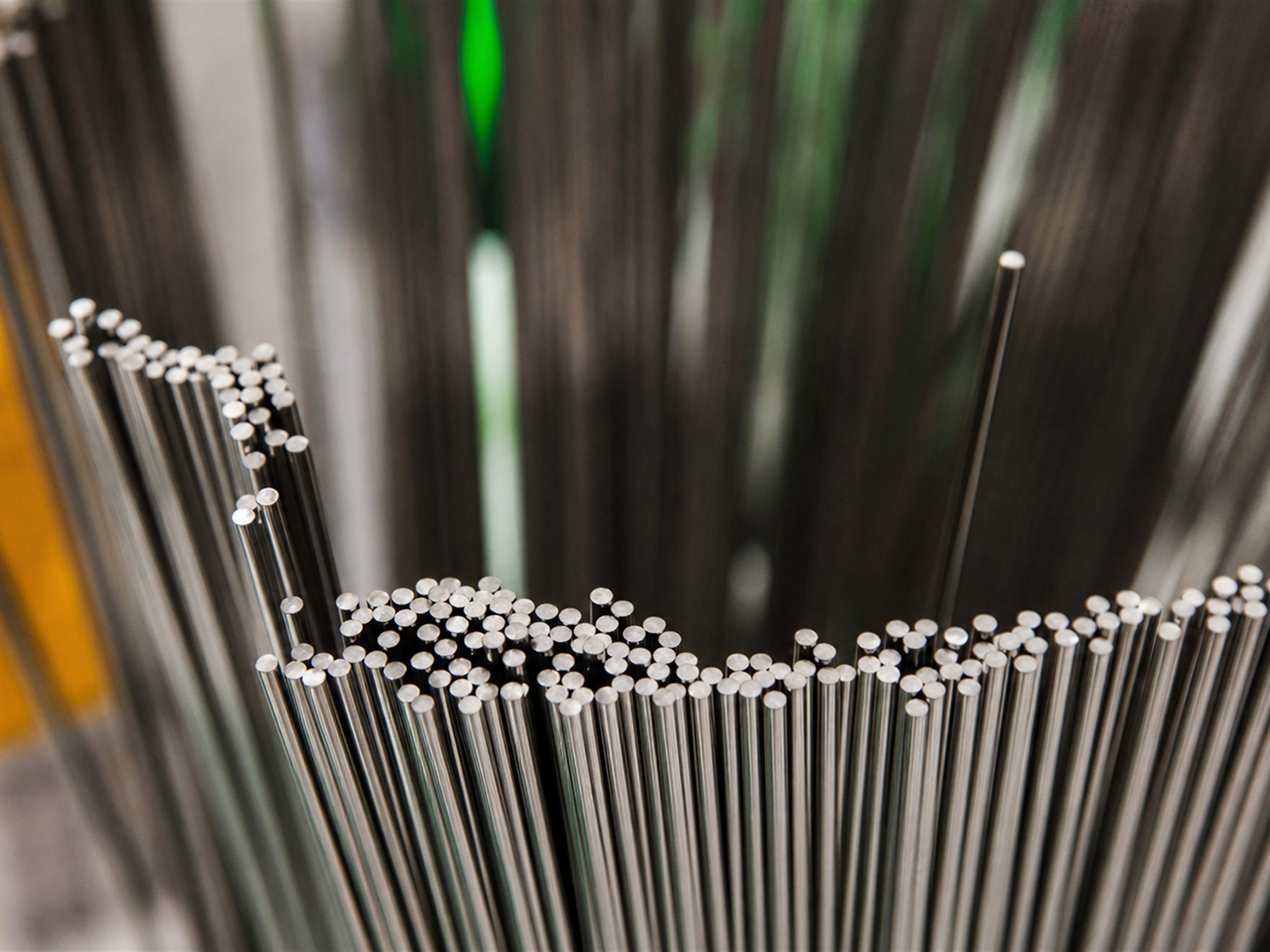
As the most widely used grade of commercial pure titanium, Gr2 titanium rod has penetrated into many key fields such as chemical industry, marine engineering, medical care, and environmental protection due to its excellent corrosion resistance, lightweight properties, and good processing performance. The titanium content of this material exceeds 99%, and the tensile strength reaches more than 340MPa. It increases the mechanical strength by more than 20% while maintaining the excellent corrosion resistance of pure titanium. Its density is only 4.51g/cm³, which is about 57% of stainless steel, which can significantly reduce the structural weight. From reactor stirring shafts in chemical plants to piping systems in seawater desalination units, from orthopedic implants to environmentally friendly desulfurization equipment, Gr2 titanium rods are helping various industries overcome the failure problems of traditional metal materials in extreme environments and achieve significant optimization of equipment life cycle costs.
1. Why Is Core Applications in the Field of Chemical Anti-corrosion Important?
The chemical industry faces complex and ever-changing corrosive environments. Traditional stainless steel and carbon steel materials often fail prematurely due to media erosion. With its self-healing oxide film on the surface, Gr2 titanium rods show excellent long-term stability under harsh conditions such as strong acids, strong alkali, and salt solutions, making them the preferred material for chemical anti-corrosion equipment.
(1) What Should You Know About Key Components in Heat Exchange Equipment?
Chemical heat exchangers are one of the most typical application scenarios of Gr2 titanium rods. When dealing with corrosive fluids such as chlorine-containing media, acetic acid, and sulfuric acid, titanium heat exchange tube bundles and tube-sheet connectors can maintain stable operation for up to 15-20 years. Compared with the 3-5 year replacement cycle of 316L stainless steel, the whole life cycle cost is reduced by more than 40%.
(2) What Should You Know About Reactor and Stirring System?
In the production of fine chemicals such as pharmaceuticals, pesticides, and dyes, reactor stirring bearings are subject to the double test of alternating loads and chemical corrosion. The diameter range of the stirring shaft processed by Gr2 titanium rods covers φ50-φ200mm, and the surface finish can reach Ra0.8um. Together with precise dynamic balancing processing, it ensures stability under high-speed working conditions. The non-magnetic properties of the material itself (relative magnetic permeability 1.0008) avoid interference problems in magnetic stirring systems.
(3) What Should You Know About Piping Systems and Valve Accessories?
The piping systems of the chlor-alkali industry and soda ash production lines use a large number of flanges, bolts, and valve bodies processed from Gr2 titanium rods. These components serve in saturated salt water, liquid chlorine, and wet chlorine environments. Traditional materials will experience perforation and leakage in 6 months, while titanium materials can operate stably for more than 10 years. Standard parts with specifications ranging from 1/2 inch to 3 inches can be supplied in batches, and the lead time is stable at 3-4 weeks.
Chemical equipment types | Common specification range | Comparison of alternative materials | Lifespan increase multiplier |
heat exchanger tube bundle | φ16-φ38mm | 316L stainless steel | 3-4 times |
Stirring shaft | φ50-φ150mm | Hastelloy C276 | Cost reduction by 25% |
Valve body | φ25-φ100mm | Duplex steel 2205 | 5-6 times |
2. Why Is Strategic Value in Marine Engineering and Shipbuilding Important?
The high salinity and high chloride ion concentration of the marine environment pose severe challenges to metal materials. The corrosion rate of Gr2 titanium rods in seawater is less than 0.01mm/a, making it an ideal material for long-term maintenance-free marine engineering equipment.
(1) What Should You Know About Skeleton Materials for Desalination Systems?
The global seawater desalination capacity has exceeded 100 million tons per day, and Gr2 titanium rods are widely used in heat transfer tubes, distributors, and tube sheets in evaporators and condensers. A 100, 000-ton desalination plant in the Middle East used φ25mm×2mm titanium tubes instead of copper-nickel alloys. There were zero leakage accidents during the 15-year operation period, and maintenance costs were saved by more than 3 million US dollars. Cold-drawn polished Gr2 titanium rods (φ4-φ30mm) are used for precision nozzle and distribution manifold processing, with dimensional tolerances controlled within ± 0.05mm.
(2) What Should You Know About Anti-corrosion Structural Parts for Offshore Platforms?
The fasteners, hanging parts, and guide rods of offshore oil platforms are exposed to salt spray and splash zones for a long time. Traditional hot-dip galvanized steel parts need to be repainted every three years. The M16-M48 bolts and φ20-φ80mm lifting rings machined from Gr2 titanium rods have stable performance during the 20-year maintenance-free period. The 55% weight reduction reduces the platform load and facilitates helicopter hoisting operations.
(3) What Should You Know About Ship Supporting System?
The seawater cooling pipelines, ballast water system valves, and thruster sleeves of yachts and scientific research vessels are made of Gr2 titanium rods. A luxury yacht manufacturer upgraded the cooling water pump shaft from 316 stainless steel to a φ35mm titanium shaft, reducing the failure rate by 80% and significantly improving customer satisfaction. Square bars (□30×30-□60×60mm) are used for customized marine structural parts to meet complex cross-section requirements.
Marine application scenarios | Material specifications | service environment | Economic comparison |
desalinator tube bundle | φ16-φ32mm | 60-90℃ sea water | Copper-nickel alloy costs the same and lifespan doubles |
platform fasteners | M12-M64 | Salt spray + UV | Galvanized steel whole-cycle cost reduced by 60% |
Marine pump shaft | φ25-φ80mm | Sea water + gravel | Alloy steel maintenance costs reduced by 70% |
3. What Should You Know About Precision Manufacturing in the Medical Device Field?
Medical grade Gr2 titanium rods must meet the strict requirements of biocompatibility, non-toxicity and zero rejection. Its non-magnetic characteristics make it one of the only metal options for MRI device-compatible implants.
(1) What Should You Know About Orthopedic Implant Core Materials?
The diameters of titanium rods required for artificial hip stems, knee tibial platforms, and spinal fusion cages are concentrated in the φ8-φ30mm range. The cold drawing polishing process ensures surface roughness Ra≤ 0.4um to avoid stress concentration. An orthopedic implant manufacturer uses φ12mm Gr2 titanium rods to produce femoral stems through a five-axis machining center. The material utilization rate has increased from 35% of traditional forgings to 75%, and the cost of a single piece has dropped by US$40.
(2) What Should You Know About Dental Implants and Restorations?
Small components such as dental implant abutments, healing caps, and screws have extremely high requirements for material purity. After ultrasonic cleaning and vacuum annealing treatment of φ4-φ6mm small diameter titanium rods, the impurity content is controlled below 50ppm. The uniformity of the surface oxide film thickness determines the osseointegration effect, and professional heat treatment stabilizes the oxide layer in the 2-5nm range.
(3) What Should You Know About Surgical Instruments and Instrument Trays?
Titanium surgical scissors, forceps, and micro-instrument handles require good toughness and fatigue resistance. Hexagonal bars (distance across edges 6-20mm) facilitate cold heading forming of anti-slip handles. The non-magnetic nature makes titanium instruments safe to enter the MRI operating room, which is not possible with stainless steel instruments. A medical device factory changed the scalpel handle from 420 stainless steel to a Gr2 titanium rod, which reduced the weight by 45% and significantly improved doctors’ fatigue during long-term operations.
4. Why Is Innovative Applications of Environmental Protection and New Energy Industries Important?
Driven by the “carbon neutrality” strategy, environmental protection equipment and new energy facilities have put forward higher requirements for the durability and environmental friendliness of materials. Gr2 titanium rods show unique advantages in these emerging fields.
(1) What Should You Know About Flue Gas Desulfurization and Denitrification System?
The spray pipes, demisters, and slurry circulation pump shafts in flue gas treatment devices in coal-fired power plants and steel plants face triple tests of high temperature, strong acid, and abrasion. Under the working conditions of temperature 120-180℃ and pH value 2-4, 316L stainless steel will be pierced in 18 months, while the φ50-φ100mm spray pipe processed by Gr2 titanium rod has a service life of more than 8 years. A power plant renovation project estimates that the initial investment in titanium materials will increase by 30%, but the total cost will be reduced by 55% within a 10-year operation and maintenance cycle.
(2) What Should You Know About Electrode Materials for Electrolytic Hydrogen Production?
Alkaline electrolyzers and PEM electrolyzers in the hydrogen energy industry chain require stable diversion rods and plate frames. Gr2 titanium rod is passivated for a long time under 30% KOH solution, 80℃, 2A/cm² current density, and the corrosion rate is <0.005mm/a. The flow guides processed from φ10-φ20mm titanium rods ensure uniform current distribution and increase the electrolysis efficiency by 3-5 percentage points.
(3) What Should You Know About Wastewater Treatment and Environmental Protection Equipment?
Heavy metal ions and cyanide in electroplating wastewater and chemical wastewater are extremely destructive to ordinary materials. The electrolytic cell anode hanger, aeration pipe, and sludge dehydrator screw are made of Gr2 titanium rods, which can be replaced without replacement for more than 10 years. A centralized processing center in an electroplating park uses a φ80mm titanium stirring shaft to replace fiberglass composite materials, completely solving the problem of breakage and shutdown, and increasing the equipment availability rate from 85% to 99%.
Environmental protection equipment | Working condition parameters | Titanium rod specifications | substitution benefit |
Desulfurization tower spray layer | pH 2-4, 150℃ | φ50-φ100mm | 5 times the life of stainless steel |
Electrolyzer frame | 30% lye, 80℃ | φ16-φ32mm | Nickel material cost reduced by 40% |
Sludge dewatering machine | Mortar containing liquid | φ60-φ120mm | Fiberglass reliability increased by 10 times |
5. What Should You Know About Diversified Expansion of High-end Manufacturing and Special Equipment?
The ultimate pursuit of material performance in high-tech fields such as aerospace, electronic information, and precision instruments has opened up a new application space for Gr2 titanium rods.
(1) What Should You Know About Vacuum Coating Equipment Components?
Vacuum furnace fixtures, suspension parts, and heating shields in the semiconductor and optical coating industries require high temperature resistance, low outgassing, and non-magnetic properties. The Gr2 titanium rod does not release harmful gases under 10⁻⁶Pa vacuum and 400℃ short-term working conditions, ensuring the cleanliness of the coating. Precision fixtures for processing φ8-φ20mm thin rods, with position accuracy maintained at ± 0.02mm, meeting the stringent standards of chip manufacturing.
(2) What Should You Know About Special Fixtures for the Electronics Industry?
CNC processing fixtures, test probes, and heat dissipation modules for 3℃ electronic products require lightweight and dimensional stability. Hexagonal titanium rods (opposite sides 8-16mm) are processed by a centering machine, and the production cycle is shortened from 3 days to 8 hours. After a mobile phone manufacturer adopted titanium fixtures, the inertia of the equipment was reduced, the processing cycle time was increased by 12%, and the tool life was extended by 30%.
(3) What Should You Know About Cryogenic Engineering and Hydrogen Energy Storage and Transportation?
The structural materials of liquid hydrogen storage tanks (approximately -253℃) and LNG ship pipelines (approximately -162℃) need to maintain toughness at extremely low temperatures. The impact toughness of Gr2 titanium rod in cryogenic environment does not decrease but increases, and the fracture toughness value reaches 80MPa·m½. The valve stem of a vehicle-mounted hydrogen storage bottle developed by a hydrogen energy company uses a φ25mm titanium rod and has passed 5, 000 thermal cycle tests to achieve reliable opening and closing in the full temperature range of -40℃ to +85℃.
(4) What Should You Know About Sports Leisure and Customized Products?
In the fields of high-end consumer products such as golf heads, bicycle frames, and outdoor equipment connectors, Gr2 titanium rods provide a unique combination of performance and aesthetics. φ12-φ30mm round rods are anodized and colored, showing blue, purple, gold and other colors to meet individual needs. A sports brand customized a titanium alloy handlebar riser that weighs only 60% of aluminum alloy and has a 50% increase in impact strength. The price is three times that of ordinary materials and is still in short supply.
6. What Is the Conclusion?
Relying on its comprehensive advantages in strength, corrosion resistance, lightweight, and biocompatibility, Gr2 titanium rods have become a common strategic material across industries. From deep-sea engineering to human implants, this material is redefining equipment reliability standards. With the improvement of manufacturing technology and the gradual optimization of costs, Gr2 titanium rods will replace traditional materials in more fields and promote the upgrading of the industry towards high efficiency, environmental protection and long life.
FAQ
Q1: What are the advantages of Gr2 titanium rods compared with Gr1 titanium rods?
The tensile strength of Gr2 titanium rods is more than 20% higher than that of Gr1 (≥ 340MPa vs ≥ 240MPa), it can withstand greater loads, and its cost is lower than that of higher grades of titanium materials. It can replace higher grades of titanium materials in medium and mild corrosion environments, achieving the best balance between cost and performance, and its processing performance and welding performance are equally excellent.
Q2: How long is the delivery time for small batch customization of non-standard size titanium rods?
Regular stock specifications (φ8-φ200mm) can be shipped in 3-5 working days. For customized specifications such as square bars, hexagonal bars or special tolerance requirements, the production cycle is usually 2-3 weeks, depending on the order quantity and surface treatment requirements. It is recommended to communicate and confirm in advance.
Q3: How to verify the material authenticity of Gr2 titanium rod?
Regular suppliers provide material certificates (MTC, Mill Test Certificate), including chemical composition and mechanical property testing data. A third-party testing report can be requested to verify key indicators such as titanium content ≥ 99.2% and oxygen content ≤ 0.25% through spectral analysis. The surface should be free of cracks, folds and other defects.
How Should Looking for Reliable Gr2 Titanium Rod Supplier?
Baoji Titanium Valley Titanium Nickel Zirconium Materials Processing Co., Ltd. is a professional manufacturing plant equipped with Italian Danieli rolling production line with an annual production capacity of over 20, 000 tons and provides full specification customized services from φ4 to φ300mm. The strict quality system ensures that each batch of products meets ASTM B348 standards and is delivered quickly to meet your project schedule needs. Contact us now for technical solutions and quotations: sales@titaniumvalleys.com
References
- Li Xiaohong, Zhang Guodong. Application and material selection of titanium and titanium alloys in chemical equipment[J]. Chemical Equipment Technology, 2021, 42(3): 58-65.
- Wang Haibo, Chen Jun. Corrosion behavior and protection technology of titanium alloys used in marine engineering [J]. Chinese Journal of Corrosion and Protection, 2019, 39(6): 445-452.
- Liu Jianhua, Zhou Lian. Research progress on biocompatibility of medical titanium alloys[J]. Rare Metal Materials and Engineering, 2018, 47(12): 3821-3828.
- Zhao Yongqing, Hong Quan, Ge Peng. Metallographic diagram of titanium and titanium alloys[M]. Changsha: Central South University Press, 2011.