
What Is ASTM B160 Nickel Rod and Where Is It Used
- ASTM B160 Nickel Rod
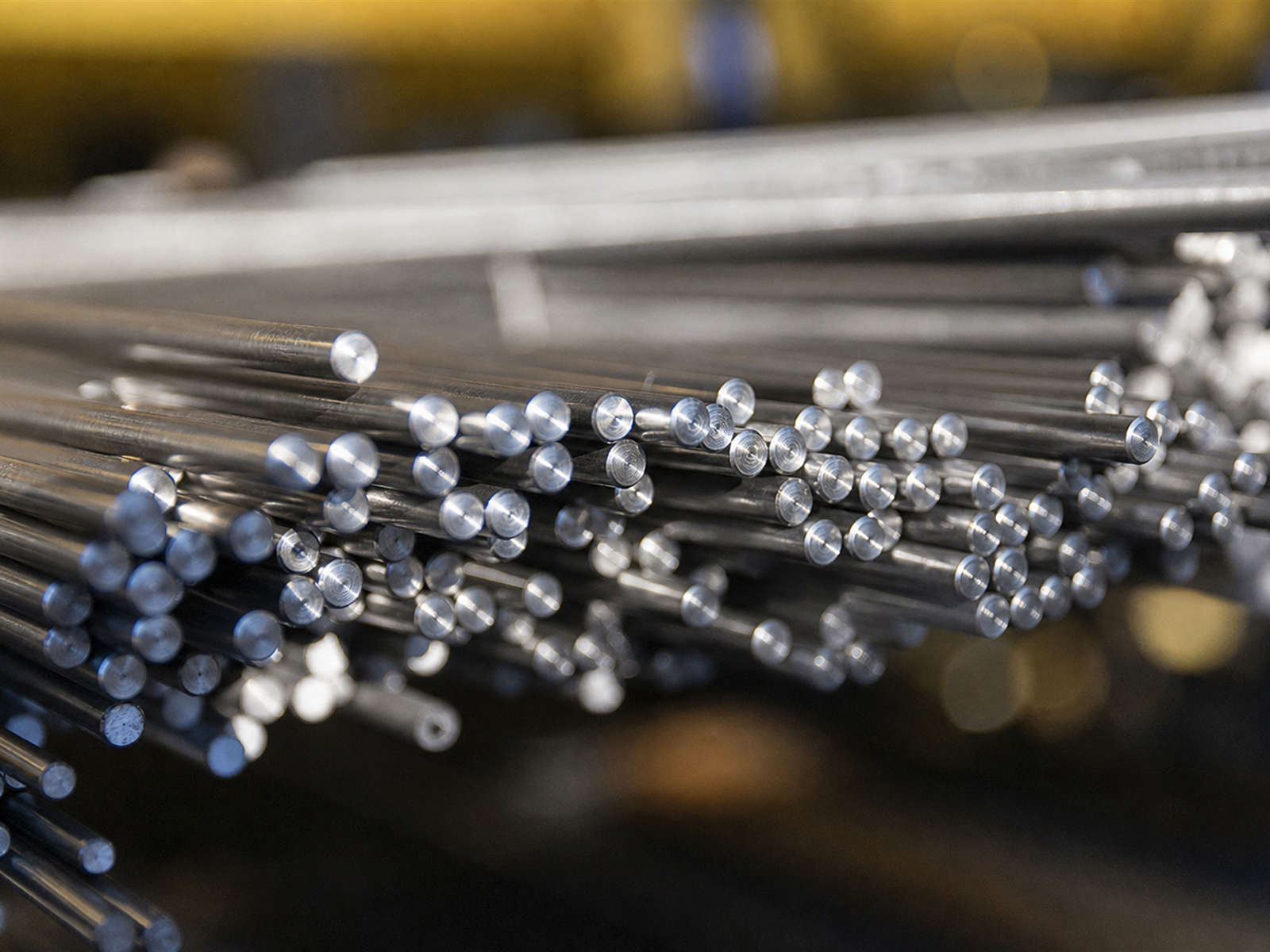
ASTM B160 Nickel Rod is a rod product based on pure nickel material, mainly covering two major grades: Ni200 (UNS N02200) and low carbon Ni201 (UNS N02201). This type of material has excellent alkali corrosion resistance, high purity characteristics and good electrical and thermal conductivity, and is widely used in chemical industry, electronics, aerospace, marine engineering, food and medicine and other fields. As a universal international standard specification, ASTM B160 ensures the dimensional accuracy, structural uniformity and reliability of mechanical properties of materials under different processing states (hot processing, annealing, cold processing), and has become the first choice material for the global industry to solve extreme corrosive environments, high-purity media contact and special electromagnetic scenarios.
1. Material composition and standard specifications of ASTM B160 nickel rods
(1) Core material composition and purity requirements
The core value of ASTM B160 Nickel Rod lies in its high purity nickel content. The total content of nickel and cobalt in the material must reach ?99.0% to ensure the stability of the material under harsh working conditions. Other main ingredients include: iron content does not exceed 0.40%, carbon content is controlled within 0.15%, manganese and silicon do not exceed 0.35%, copper does not exceed 0.25%, and harmful elements such as sulfur and phosphorus are strictly limited to less than 0.01% and 0.015%. This precise composition control allows ASTM B160 Nickel Rods to play a key role in electrolysis, electroplating and other scenarios that require extremely high material purity.
(2) Comparison of the differences between Ni200 and Ni201
By reducing the carbon content to less than 0.02%, Ni201 effectively avoids the problem of graphitization brittleness caused by the precipitation of carbon elements at high temperatures, allowing the material to maintain good toughness in environments exceeding 315 ?C. This feature makes it suitable for low-stress industrial scenarios such as high-temperature halogen gas environments, high-temperature pressure vessels, and heat treatment furnace lining components.
(3) International standard system and quality certification
ASTM B160 is an authoritative standard issued by the American Society for Testing and Materials, and corresponds to the European standard DIN 17752 and the Japanese standard JIS H4551. Products are usually equipped with EN 10204 3.1 material certification, chemical composition analysis report, mechanical property test data, and non-destructive testing (ultrasonic UT, eddy current ET) certification according to customer needs. These strict quality control systems ensure that each batch of materials meets the traceability and consistency requirements of high-end manufacturing.
2. Core performance characteristics of ASTM B160 Nickel Rod
(1) Excellent alkali corrosion resistance
In strong alkaline media, ordinary stainless steel and carbon steel often fail quickly, while ASTM B160 Nickel Rods can work stably for a long time in high-concentration alkali solutions such as sodium hydroxide (NaOH) and potassium hydroxide (KOH). This alkali resistance comes from the fact that nickel can form a dense protective film in an alkaline environment, effectively blocking the erosion of corrosive media. Key components such as electrolytic cell anode plates, alkali heating tubes, and heat exchanger tube bundles in the chlor-alkali industry are largely made of Ni200 nickel rods. Their service life is significantly longer than that of conventional materials, which significantly reduces the frequency of shutdown maintenance and comprehensive operating costs.
(2) Good electrical and thermal conductivity
The resistivity of nickel is about 6.84 ???cm (20 ?C). Its electrical conductivity is lower than that of copper and aluminum, but higher than that of iron and most stainless steels. This characteristic has certain advantages in electrochemical applications when the purity reaches more than 99.0%. ASTM B160 Nickel Rods are used in resistive heating elements, electrode materials, battery current collectors and other scenarios that require current transmission. Its thermal conductivity is approximately 90.9 W/(m?K), which can transfer heat quickly and evenly, and plays an important role in thermal management systems such as heat exchangers, catalyst carriers, and high-temperature reactors. This electrical and thermal conductivity property makes nickel rods an important material in the electrochemical industry.
(3) Magnetic characteristics
The annealed ASTM B160 Nickel Rod is ferromagnetic, and has stable ferromagnetic behavior at room temperature in the annealed condition (O temper, annealed); above the Curie temperature of approximately 358 ?C, it becomes paramagnetic. It is suitable for certain application scenarios that have certain control requirements for magnetic field interference. For applications that are sensitive to magnetic field interference, such as precision electronic equipment, magnetic shielding devices, and nuclear magnetic resonance equipment components, specially treated low-magnetization nickel materials or other low-magnetic or non-magnetic alloys can be used. For drive shafts, sensor brackets, and fixtures in vacuum coating equipment in semiconductor manufacturing equipment, appropriate brands need to be selected based on actual magnetic field sensitivity.
(4) Wide temperature range stability and processing performance
The excellent plasticity of the material makes it easy to cold process and form, and the scrap rate is much lower than that of high-hardness alloy materials. This process friendliness not only shortens the production cycle, but also provides the feasibility of customized and small batch production.
3. Industrial application fields of ASTM B160 Nickel Rods
(1) Core materials in chemical and chlor-alkali industries
The chemical industry is the main application market for ASTM B160 Nickel Rods. In chlor-alkali electrolysis production, nickel rods are processed into key components such as anode plates, cathode rods, and connecting busbars of electrolytic cells, which can withstand the triple test of high temperature, strong alkali, and strong current. When the reaction kettle stirring shaft, valve seat, pump impeller, etc. in the fine chemical industry come into contact with high-concentration sodium hydroxide and potassium hydroxide solutions, ordinary materials will quickly corrode and perforate, while nickel rods can operate stably for several years or even more than ten years. Downhole tools in oil and gas extraction and pipeline joints in environments containing hydrogen sulfide (H?S) also rely on the corrosion resistance of nickel materials in reducing media.
(2) Precision applications in electronics and semiconductor manufacturing
The electronics industry has clear requirements for material purity, magnetic permeability and magnetic field compatibility. ASTM B160 Nickel Rods are made into grids for electron tubes, anode leads for rectifier tubes, seals and supports for vacuum equipment. In the manufacture of nickel metal hydride batteries and nickel cadmium batteries, nickel rods are cold drawn and polished to become high-precision cathode current collectors and battery case connectors. The precision positioning axis of semiconductor lithography equipment, the corrosion-resistant cavity components of plasma etching machines, and the lead frame of chip packaging all need to take advantage of the good conductivity and processability of nickel materials. These applications promote the development of miniaturization and high reliability of electronic products.
(3) Aerospace and high-temperature special equipment
Pure nickel is more suitable for corrosion-resistant piping systems, special electrical conduction leads or low-stress thermal insulation structural parts in the aerospace field; high-temperature load-bearing parts of aerospace engines usually require nickel-based high-temperature alloys instead of Ni201 pure nickel. The spacecraft’s attitude control thruster and the deployment mechanism of the satellite’s solar panels make use of the low-temperature toughness and stability of nickel materials in vacuum environments. The exhaust manifold valves and catalytic converter brackets of high-performance racing cars also use nickel rods to cope with the impact and corrosion of high-temperature exhaust gases.
(4) Food, medicine and marine engineering
In the food industry, nickel rods are processed into reactor stirring paddles, mold rollers, and conveyor chains that handle acidic media such as acetic acid and citric acid. The high purity of the material ensures that harmful metal ions will not be released into food and meets FDA and other food safety standards. Surgical tool handles for medical instruments, heating rods for sterilization and sterilization equipment, and bioreactor mounts utilize the corrosion resistance and easy-to-clean properties of nickel materials. The reverse osmosis membrane holder of the seawater desalination device, the seawater-resistant sensor bracket of the ocean monitoring equipment, and the shaft sleeve of the ship propeller require materials that can resist pitting and crevice corrosion in a chloride ion environment for a long time.
(5) Emerging applications: hydrogen energy and carbon neutrality
As the global carbon neutrality strategy advances, the hydrogen energy industry is rising rapidly. Alkaline electrolytic cells require a large amount of alkali-resistant, high-purity nickel materials as electrode substrates. ASTM B160 Nickel Rods have become the mainstream choice in this field due to their cost advantages and performance reliability. Gas diffusion layer fixings of proton exchange membrane fuel cells and valve components of hydrogen storage containers have also begun to be manufactured in batches using nickel rods.
4. Specification system and processing technology of ASTM B160 Nickel Rod
(1) Diversified specifications to meet different needs
ASTM B160 Nickel Rods are available in three cross-sectional shapes: round rod, square rod, and hexagonal rod. The diameter of round rods covers ?4 mm to ?300 mm, of which ?8 ~ ?200 mm is the standing stock specification, ?4 ~ ?30 mm achieves high precision through cold drawing or grinding process, and large-size bars of ?100 ~ ?300 mm are forged. The side length of square rods and hexagonal rods can be customized from 6 mm to 80 mm. Commonly used imperial sizes include 1/4? (6.35 mm), 1/2? (12.7 mm), 1? (25.4 mm), 2? (50.8 mm), 3? (76.2 mm) to meet the compatibility needs of the international market. In terms of length, annealed products are usually 300-4000 mm random size, the hot or cold processing state can reach 6000 mm, the length tolerance is controlled within +15 mm when cutting to length.
(2) Surface condition and finishing options
Black skin/Hot-forged state retains oxide scale, suitable for rough machining of blanks and structural parts with no special surface requirements. The oxide layer can be removed by pickling. The peeling/turning state removes the scale by centerless turning, with slight turning marks, and is used for general assembly parts and industrial pipes. The cold drawn/bright state has been cold drawn and straightened, with a smooth surface without oxide scale and high dimensional accuracy. It is suitable for electrical and electronic parts, anode materials and occasions that require clean surfaces. The polished/finished grinding state achieves extremely high straightness and roundness through centerless grinding and cylindrical grinding, and is used for precision shafts, molds and high-precision instruments. The polished/mirror state is processed by mechanical polishing and fine abrasive grading, and the surface reaches a mirror effect. It is suitable for clean environments in the food, pharmaceutical, and semiconductor industries.
(3) Production process and quality control
The manufacturing of ASTM B160 Nickel Rod begins with high-purity electrolytic nickel raw materials, which are vacuum induction melted to remove gases and inclusions to ensure composition uniformity. The ingot is hot forged or hot rolled at 1100~1200 ?C to densify the structure and preliminarily shape it. Annealing treatment (usually heat preservation at 800~950 ?C and then furnace cooling) eliminates processing stress and restores the material’s plasticity. Cold drawing, turning or grinding processes give the product its final dimensions and surface quality. Stress relief annealing is used as the final heat treatment process to stabilize the material structure. The whole process goes through chemical composition spectrum analysis, tensile test, hardness test, non-destructive testing (ultrasonic detection of internal defects, eddy current detection of surface cracks), size and surface roughness measurement to ensure that each nickel rod meets the standard requirements.
5. Key considerations for selecting ASTM B160 Nickel Rods
(1) Working environment and media compatibility
Before selecting materials, the type, concentration, temperature and pressure of the working medium must be clarified. ASTM B160 Nickel Rod performs well in strong alkalis, reducing acids, and neutral salt solutions, but is not suitable for high-temperature oxidizing acids (such as concentrated nitric acid), high-temperature sulfur-containing atmospheres (sulfur embrittlement is likely to occur over 315 ?C), and strongly oxidizing chlorine salt environments (easy to pitting corrosion). When designing chemical equipment, Ni200 or Ni201 needs to be selected based on the medium characteristics to avoid the risk of material failure.
(2) Matching of accuracy and surface requirements
Electronic component leads and precision shafts need to be cold-drawn in a bright or polished state to obtain a dimensional tolerance of ?0.05 mm and a surface roughness of less than Ra 0.8. Food and pharmaceutical equipment gives priority to polished mirror surfaces to reduce bacterial adhesion and difficulty in cleaning. Structural parts and general mechanical parts can be used in peeled or black skin, and can be machined to meet the final requirements to reduce procurement costs.
(3) Supply chain stability and certification completeness
Global supply chains require materials with traceability and multi-country certification. Choose suppliers who can provide ASTM, ASME SB160, EN 10204 3.1 certificates to ensure materials are recognized in multinational projects. For large-volume purchases, it is necessary to examine the supplier’s inventory depth, delivery cycle and customized processing capabilities to avoid delays in supply that affect production plans. As a global rare metal processing base, China’s Baoji region has a complete industrial chain and mature quality management system, and has become an important supply source for the international market.
(4) Whole life cycle cost assessment
Although the initial purchase cost of ASTM B160 Nickel Rod is higher than that of ordinary stainless steel, its ultra-long service life, low maintenance frequency, and high energy efficiency significantly reduce the overall cost. When a chlor-alkali enterprise replaces an electrolytic cell anode plate, the downtime loss often exceeds the material cost several times. Using nickel rods can extend the replacement cycle from 1 to 2 years to 5 to 10 years, significantly improving production continuity and economic benefits. Battery manufacturers use high-purity nickel rods as current collectors, which reduce internal resistance and energy loss and improve product competitiveness.
Conclusion
ASTM B160 Nickel Rod has become an indispensable key material in chemical industry, electronics, aerospace, marine engineering and other fields due to its high purity, excellent alkali corrosion resistance, good electrical and thermal conductivity and wide temperature range stability. With the rapid development of hydrogen energy economy and carbon neutral technology, its application prospects are broader. The selection of ASTM B160 Nickel Rods requires comprehensive consideration of the working medium, accuracy requirements, quality certification and full life cycle costs to achieve the best balance between performance and economy.
FAQ
Q1: How to choose between ASTM B160 Ni200 and Ni201 nickel rods in practical applications?
Ni200 is suitable for normal and medium temperature alkali environments below 315 ?C, such as chlor-alkali electrolyzers and normal temperature chemical equipment. Due to its low carbon content, Ni201 avoids high-temperature graphitization brittleness and is suitable for heat treatment furnaces exceeding 315 ?C, high-temperature halogen gas environments, high-temperature pressure vessels and heat treatment furnace lining components to ensure toughness and reliability under long-term high temperatures.
Q2: What are the advantages of ASTM B160 Nickel Rod compared with 316 stainless steel?
The corrosion resistance of nickel rods in strong alkaline media is far superior to that of 316 stainless steel, and its service life is significantly extended in sodium hydroxide environments. The electrical conductivity is more than 5 times that of 316 stainless steel, making it suitable for electrolytic plating scenarios. Its high magnetic permeability and ferromagnetic characteristics make it used in magnetic shielding devices and specific magnetic circuit components of precision electronics; however, because it is magnetic at room temperature, it needs to be carefully selected in scenarios that require no magnetic interference (at this time, 316 stainless steel has more advantages because it is non-magnetic). However, the cost is high and the full life cycle economics need to be evaluated.
Q3: What quality certification documents do you need to pay attention to when purchasing ASTM B160 Nickel Rods?
EN 10204 3.1 material certificate, chemical composition spectrum analysis report, and mechanical property test data (tensile strength, yield strength, elongation) must be provided. Critical applications require additional non-destructive testing reports (ultrasonic UT or eddy current ET), as well as ASTM B160 or ASME SB160 standard compliance statements to ensure material traceability and international recognition.
Contact Baoji Baoji Titanium Valley Titanium Nickel Zirconium Material Processing Co., Ltd.
As China’s leading nickel material manufacturer and supplier, Baoji Baoji Titanium Valley Titanium Nickel Zirconium Material Processing Co., Ltd. has an annual production capacity of 3,000 tons of high-precision nickel foil and 20,000 tons of nickel rods and wires, and provides ASTM B160 full specification nickel rod customization services. We are equipped with a complete quality inspection system and international certification, and our products are exported to high-end markets such as the United States, Germany, Japan, and South Korea. For more technical specifications, quotations or sample testing, please contact: sales@titaniumvalleys.com
References
Compiled by China Nonferrous Metals Industry Association, “Nickel and Nickel Alloy Materials Handbook”, Metallurgical Industry Press, 2019
Li Hongbin, Zhang Lei, “Study on the Corrosion Behavior of Pure Nickel in Alkaline Medium”, Corrosion Science and Protection Technology, 2020, Volume 32, Issue 4
Wang Jianguo, Zhao Yongqiang, “Performance Evaluation of Ni201 Nickel Alloy in High Temperature Environment”, Rare Metal Materials and Engineering, 2021, Volume 50, Issue 6
Liu Wei, Chen Jianhua, “Application Progress of Nickel-Based Electrode Materials for Hydrogen Production from Water Electrolysis”, Progress in Chemical Engineering, 2022, Volume 41, Issue 5