
What Makes Zr702 Foil Different from Other Zirconium-Based Foils?
- Zr702 foil
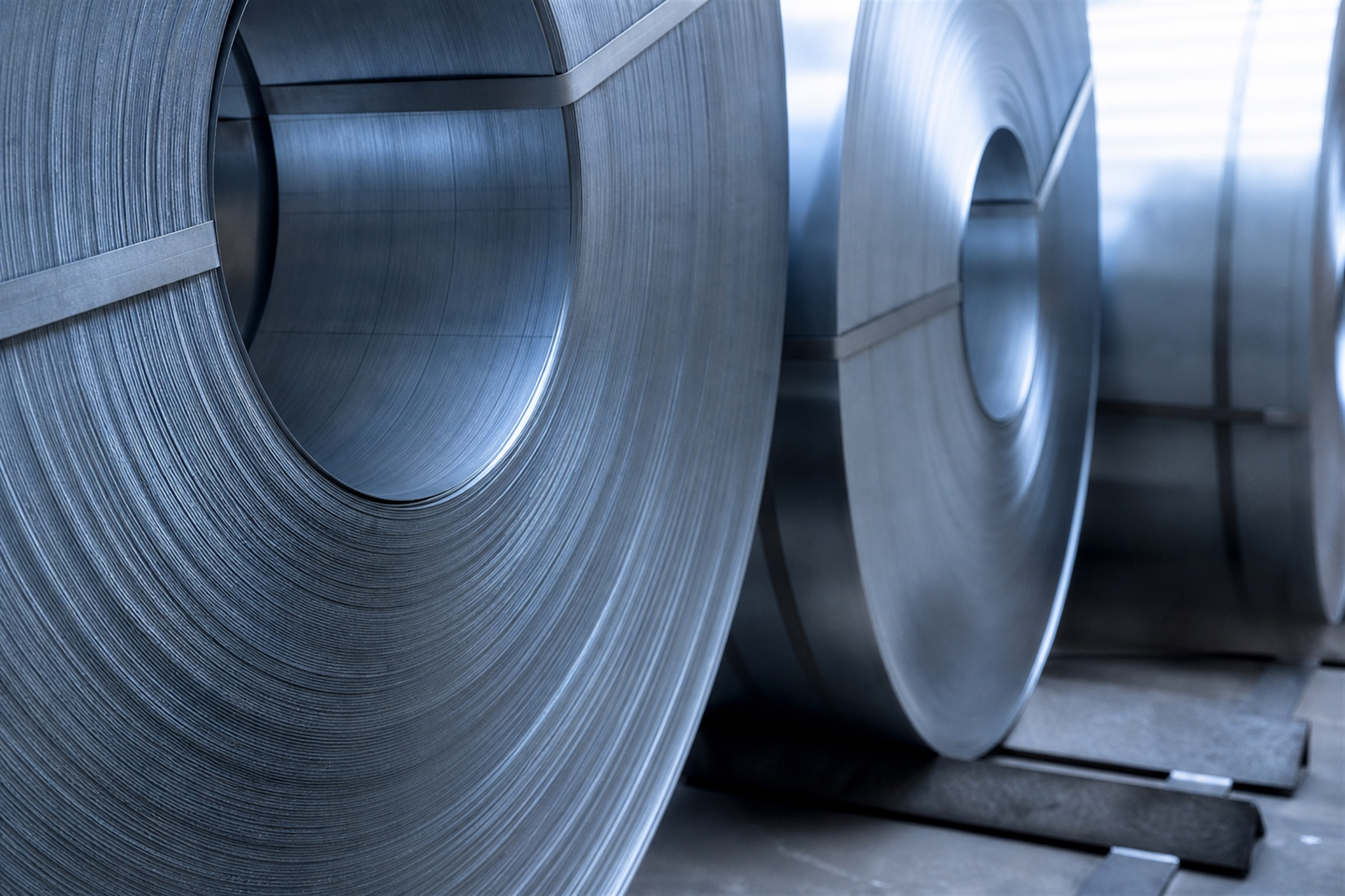
Zr702 (corresponding to Gr2 commercial-purity zirconium) is an industrial pure-zirconium foil material that stands out among zirconium-based materials for its excellent corrosion resistance, good formability, and biocompatibility. Compared with Zr705 (zirconium-niobium alloy), Zr704 (zirconium-tin alloy), and Zr706 (zirconium-molybdenum alloy), Zr702 has the lowest alloy content and the highest chemical purity. This article provides a detailed comparison of Zr702 with other zirconium-based foils across five dimensions: chemical composition, corrosion resistance, mechanical properties, machinability, and application areas.
1. Chemical Composition Characteristics of Zr702
Zr702 (Gr2) contains at least 99.2 pct zirconium, with oxygen at or below 0.25 pct, iron at or below 0.20 pct, carbon at or below 0.05 pct, hydrogen at or below 0.005 pct, and nitrogen at or below 0.03 pct. Compared with Zr705 (containing 2.0-3.0 pct Nb) and Zr704 (containing 1.0-1.7 pct Sn), Zr702 has the lowest alloying-element content and the highest chemical purity. This high purity gives Zr702 inherent advantages in corrosion resistance and biocompatibility.
2. Comparison of Corrosion Resistance
Among all zirconium-based foils, Zr702 exhibits the best uniform-corrosion resistance. Its corrosion rate in seawater is less than 0.001 mm/year, in hydrochloric acid (concentration below 5 pct) it ranges from 0.1 to 0.5 mm/year, and in sulfuric acid (concentration below 10 pct) it ranges from 0.05 to 0.2 mm/year. By contrast, Zr705 and Zr704, due to their added alloying elements, show slightly lower corrosion resistance in strong-acid environments compared with Zr702, but they perform better in hydrolysis resistance at elevated temperatures.
Corrosion Medium | Zr702 Corrosion Rate | Zr705 Corrosion Rate | Zr704 Corrosion Rate |
Seawater (ambient temp.) | <0.001 mm/year | 0.001-0.005 mm/year | 0.001-0.005 mm/year |
5 pct HCl (ambient temp.) | 0.1-0.5 mm/year | 0.5-1.0 mm/year | 0.5-1.0 mm/year |
10 pct H2SO4 (ambient temp.) | 0.05-0.2 mm/year | 0.2-0.5 mm/year | 0.2-0.5 mm/year |
3. Differences in Mechanical Properties
Zr702 foil has a tensile strength of 340-450 MPa (annealed condition), a yield strength of 275-345 MPa, and an elongation of at least 20 pct. Compared with Zr705 (tensile strength 550-700 MPa) and Zr704 (tensile strength 450-550 MPa), Zr702 has lower strength but the best ductility. This strength-ductility balance gives Zr702 unique advantages in applications requiring deep forming.
Property | Zr702 (Gr2) | Zr704 (Gr4) | Zr705 (R60705) | Zr706 (Gr7) | 316L Stainless Steel |
Zr Content (%) | At least 99.2 | At least 98.0 | At least 96.0 | At least 99.0 | – |
Tensile Strength (MPa) | 340-450 | 450-550 | 550-700 | 500-650 | 515-620 |
Density (g/cm3) | 6.52 | 6.55 | 6.55 | 6.52 | 8.0 |
Seawater Corrosion Resistance | Excellent | Very Good | Very Good | Excellent | Good |
Price Index | 1.0 | 1.2 | 1.8 | 2.5 | 0.3 |
4. Comparison of Machinability
Zr702 foil offers the best cold-forming capability, allowing complex processes such as deep drawing, bending, and flanging. Its weldability also surpasses that of alloyed zirconium materials, and it can be joined using conventional welding methods including TIG, MIG, and laser welding. Zr702 has good machinability, but care must be taken since zirconium has relatively poor thermal conductivity, which can lead to heat accumulation during cutting operations.
Processing Method | Zr702 Performance | Zr705 Performance | Notes |
Cold Forming | Excellent | Good | Zr702 is suitable for deep drawing |
Weldability | Very Good | Good | Argon shielding gas required |
Machinability (cutting) | Good | Fair | Pay attention to heat dissipation |
5. Differences in Application Areas
Zr702 foil is primarily applied in fields that demand high corrosion resistance and biocompatibility, such as chemical equipment linings, medical devices, seawater desalination equipment, and non-critical nuclear-industry components. Zr705 and Zr704, on the other hand, are more frequently used in applications requiring higher strength, such as nuclear fuel assembly structural parts and high-strength chemical containers.
Application Area | Recommended Zirconium Material | Reason | Expected Service Life |
Chemical Linings | Zr702 | Best corrosion resistance | 20+ years |
Nuclear Fuel Assemblies | Zr705 | High strength + low neutron absorption | 15+ years |
Medical Devices | Zr702 / Zr706 | Good biocompatibility | Permanent implant |
Seawater Desalination | Zr702 | Seawater corrosion resistance | 30+ years |
6. Conclusion
With its high purity, excellent corrosion resistance, and good processability, Zr702 foil holds irreplaceable advantages in applications that demand material purity and corrosion resistance. Although its strength is lower than that of alloyed zirconium materials, in most corrosive environments the corrosion resistance of Zr702 is sufficient to meet engineering requirements, and its cost is lower.
FAQ
Q1: Are Zr702 and Gr2 zirconium materials the same?
Yes. Zr702 is the grade designation under the ASTM standard, while Gr2 is the designation under the Chinese national standard. Their chemical compositions and performance requirements are essentially identical.
Q2: Can Zr702 foil be used in the food industry?
Yes. Zr702 possesses good chemical stability and biocompatibility. It does not release harmful substances into food and meets food-safety requirements.
Q3: Why is the price of Zr702 foil lower than that of Zr705?
Zr702 does not require the addition of expensive alloying elements such as niobium, resulting in lower raw-material costs. Additionally, Zr702 has a larger production volume, and economies of scale further reduce the per-unit cost.
Looking for a Reliable Zr702 Foil Supplier? Baoji Titanium Valley Titanium-Nickel-Zirconium Material Processing Co., Ltd. is a professional manufacturer of high-end rare-metal products. Equipped with an Italian Danieli rolling production line, the company produces over 5,000 metric tons of zirconium materials annually and offers full-size customization along with EN 10204 3.1 certification. Contact us now for technical support and quotation: sales@titaniumvalleys.com
References
[1] ASTM B551-21. Standard Specification for Zirconium and Zirconium Alloy Bars and Rods[S]. West Conshohocken: ASTM International, 2021.
[2] GB/T 27634-2011. Nuclear-grade Zirconium Alloy Tubes, Bars, and Wires[S]. Beijing: Standards Press of China, 2011.