
What Should You Know About Everything You Need to Know About Grade 5 Titanium Foil?
- Grade 5 Titanium Foil
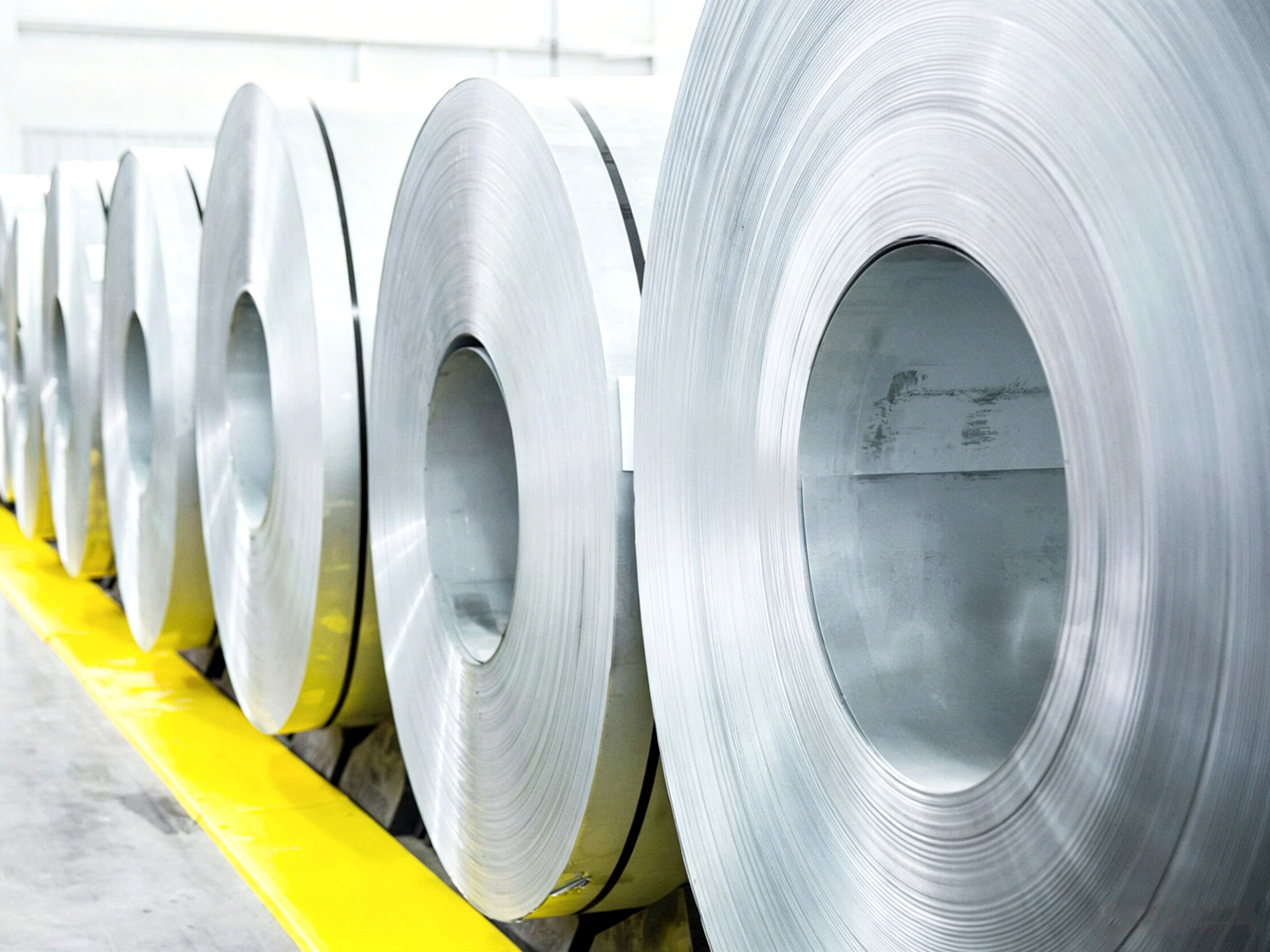
Grade 5 titanium alloy foil (Gr5 Titanium Foil) is a high-performance thin strip material based on Ti-6Al-4V, which is made through multi-pass precision cold rolling and vacuum annealing processes. It breaks through the limitation of insufficient strength of pure titanium. While maintaining excellent corrosion resistance and non-magnetic properties, the tensile strength can reach 930-1100 MPa, the yield strength exceeds 825 MPa, and the density is only 60% of steel. This α+β dual-phase alloy performs well in the fields of aerospace, medical implants, new energy batteries and high-end manufacturing, and is especially suitable for long-term working environments below 300℃. Its ultra-thin specifications of 0.03-0.8mm, wide width capacity of 350-670mm, and thickness control accuracy of +/-0.001mm make it an ideal choice for high-strength lightweight structures.
1. Why Are Grade 5 Titanium Foils Irreplaceable in High-end Manufacturing?
(1) What Are the the Revolution in Mechanical Properties Brought About by Dual-phase Structure?
Ti-6Al-4V alloy contains 6% aluminum and 4% vanadium, forming a unique α+β dual-phase microstructure. The α phase provides good ductility and weldability, and the β phase contributes high strength and thermal stability. This combination increases the tensile strength of the material by 40-60% compared to pure titanium, while maintaining an elongation of more than 10%. During the vacuum annealing process, the temperature is controlled in the range of 700-850℃, which can achieve precise control of the phase structure and ensure that the performance consistency between batches is better than +/-3%.
(2) What Are the Specific Strength Advantage Redefines Lightweight Design?
The density of 4.43 g/cm³ means that the weight of grade 5 titanium foil of the same volume is only 57% of stainless steel and 1.6 times that of aluminum alloy. However, its yield strength is 1.8 times that of 7075 aluminum alloy, and it can reduce weight by 25-35% in aerospace structural parts. This specific strength advantage is translated into direct load increase or endurance increase in applications such as rocket fuel tanks and drone fuselages. Under the same load-bearing capacity, using 0.05mm thick Gr5 foil instead of 0.08mm aluminum alloy can effectively achieve lightweight structure.
(3) What Should You Know About High Temperature Stability Solves Extreme Environmental Challenges?
The long-term use temperature of 300℃ covers most industrial scenarios, and it can withstand high temperatures of 400℃ in the short term. Unlike pure titanium, which rapidly decays in strength after 250℃, Ti-6Al-4V still maintains more than 85% of its room temperature strength at 300℃. The oxide film has strong self-healing ability at high temperatures, and the thickness of the surface oxide layer only increases by 2-3 um after 100 hours of high temperature exposure. This extends its service life by 3-5 times in high-temperature corrosive environments such as engine heat shields and chemical reactor linings.
2. What Should You Know About Seven Major Technological Breakthroughs in Ultra-thin and Wide-width Processing?
(1) What Should You Know About 20-roller Finishing Technology Achieves Stable Mass Production of 0.03mm?
When processing high-strength alloys with traditional 4-roll or 6-roll mills, it is difficult to take into account both plate shape control and thickness uniformity. After adopting the 750mm 20-high Sendzimir rolling mill, the work roll diameter is reduced to Φ60mm, the contact arc length is shortened by 60%, and the rolling pressure distribution is more uniform. Cooperating with the hydraulic AGC system to detect thickness deviation in real time, the response time is <0.1 seconds, achieving +/-0.001mm precision control. The total deformation of multi-pass cold rolling reaches more than 95%, the grain size is refined to 8-12um, and the surface roughness Ra≤0.4um.
(2) What Are the Tension Control System Solves the Problem of Cracking of High-strength Materials?
The plasticity of Ti-6Al-4V is 30-40% lower than that of pure titanium, and traditional rolling is prone to edge cracks and strip breakage. By establishing a dynamic tension model, the inlet tension is controlled at 15-20% of the yield strength, and the outlet tension is maintained at 8-12%. With the fine adjustment of the roller speed (accuracy 0.1%), the belt breakage rate is successfully reduced from 12% to less than 0.3%, that is, the belt breakage rate is reduced by 97.5%. The tension fluctuation range is controlled within +/-2% to ensure that the flatness of the 670mm wide product is ≤3mm/m.
(3) What Should You Know About Vacuum Annealing Achieves Breakthrough in Microstructure Uniformity?
Oxygen contamination is the main cause of performance degradation of titanium alloys. The continuous vacuum annealing furnace is heated under a vacuum of 10⁻³Pa, and the oxygen content increases by <0.005%. Three-stage temperature control (preheating-insulation-slow cooling) stabilizes the α phase volume fraction at 85+/-3% and the β phase is evenly distributed. The standard deviation of hardness after annealing is <8HB, and the tensile property dispersion coefficient of the same batch is <4%. Compared with air annealing, the fatigue life is increased by 2.2 times, and the strength coefficient of the welded joint is increased from 0.75 to 0.88.
Process parameters | traditional craft | Optimize process | Performance improvements |
Rolling accuracy | +/-0.005mm | +/-0.001mm | Accuracy increased by 80% |
Breakage rate | 12% | 0.3% | Belt breakage rate reduced by 97.5% |
thickness uniformity | +/-8% | +/-2% | Consistency improved by 75% |
surface roughness | Ra 0.8um | Ra 0.4um | Improved smoothness by 50% |
fatigue life | base value | 2.2x benchmark | Reliability increased by 120% |
(4) What Should You Know About Ultrasonic Cleaning Ensures Surface Cleanliness?
Residual oil dirt and micro-particles will cause subsequent welding defects or corrosion hazards of Gr5 titanium foil. The 40kHz ultrasonic cleaning system is combined with an alkaline degreasing agent, and the cleaning efficiency is 5 times higher than that of traditional spray. Five-stage countercurrent rinsing ensures that the residual ion concentration is <10ppm and the surface water contact angle is <15°. Immediately enter the argon protection channel after cleaning to avoid secondary pollution. Testing shows that the surface particle size (>5um) after cleaning is <3 particles/dm², meeting Class 100 cleanliness requirements.
(5) What Should You Know About Precision Slitting Technology Meets the Challenge of Ultra-thin Materials?
When cutting 0.03mm foil, it is easy to produce burrs and wavy edges. Using a carbide disc cutter (blade angle 72°) and an air cushion support table, the cutting force fluctuation is <5N. When the cutting speed reaches 120m/min, the edge burr height is <0.02mm and the width tolerance is +/-0.3mm. The tension adaptive system automatically adjusts the winding tension (range 20-80N) according to thickness changes to avoid indentation and curling. The slitting yield rate increased from 82% in the traditional process to 96.8%.
(6) What Should You Know About Surface Treatment Meets Diverse Needs?
The pickled surface is treated with HF-HNO3 mixed acid to remove the oxide scale and α-shell layer, revealing a silver-white metallic luster, which is suitable for subsequent welding. The bright surface is electropolished, with surface roughness Ra<0.2um and reflectivity>75%. It is used for decoration and optical reflection. The matte surface is sandblasted with aluminum oxide powder, and the roughness Ra is adjustable from 0.6-1.2um to enhance coating adhesion. Three surface states can be flexibly selected according to application scenarios, eliminating the need for secondary processing by customers.
(7) What Should You Know About Online Inspection System Ensures Quality Throughout the Entire Process?
The laser thickness gauge samples 200 times per meter to monitor the thickness change trend in real time. Eddy current flaw detection detects surface defects with a resolution of 0.1mm×0.05mm. The machine vision system identifies 18 types of defects such as scratches, pits, and inclusions, with a false detection rate of <0.5%. The data is uploaded to the MES system to establish product quality files and achieve batch traceability. Quality gates are set up in key processes, and unqualified products are automatically eliminated to ensure that the first-time pass rate of factory products is >99.2%.
3. How Is Performance Matching Strategies for Different Application Areas?
(1) What Should You Know About Aerospace’s Extreme Requirements for Fatigue and Reliability?
Aircraft skin and honeycomb core materials are required to withstand more than 10⁷ cyclic loads and require fatigue strength >500MPa (R=-1). By controlling the beta phase content in the microstructure to 12-15% and combining surface shot peening (coverage >98%), the fatigue crack growth rate is reduced by 40%. 0.1mm thick foil has a fatigue life of 2×10⁷ times under a stress amplitude of +/-300MPa. A certain type of rocket fuel tank is welded and formed from 0.15mm Gr5 foil, and the air tightness test is 10⁻⁹Pa·m³/s, which meets the requirements of deep space exploration missions.
(2) What Should You Know About Biocompatibility Verification of Medical Implant-grade Materials?
Artificial joints and orthopedic implants need to pass the ISO 10993 series of tests. The vanadium content of Ti-6Al-4V is controlled at 3.5-4.5% to avoid excessive release of vanadium ions that may cause cellular toxicity. Cell culture experiments show that the proliferation rate of osteoblasts on the foil surface reaches 95%, which is equivalent to that of pure titanium. The anti-corrosion performance of the polarization resistance in artificial body fluids is >1MΩ·cm², and the self-healing time of the passivation film is <24 hours. The 0.05mm ultra-thin foil can be processed into a flexible skull repair piece, with the fit improved by 60% and postoperative CT scan artifacts reduced by 80%.
(3) How Is Innovative Application of Thermal Management in New Energy Battery Packs?
The power battery pack needs to work stably in the temperature range of -40℃ to 85℃. The thermal conductivity of Ti-6Al-4V is 7.5 W/(m·K). With the embossing treatment to form a flow guide groove, the heat dissipation efficiency is 15% higher than that of aluminum alloy. The cooling plate made of 0.08mm foil can dissipate heat per unit area up to 1.2 kW/m², and the battery temperature difference is controlled within +/-3℃. The non-magnetic properties avoid electromagnetic interference. Although the conductivity is lower than that of copper and aluminum, the surface copper plating layer (thickness 5-10um) can meet the conductive connection requirements. After a new energy vehicle company adopted Gr5 foil, the weight of the battery pack was reduced by 18% and the cruising range was increased by 35 kilometers.
Application areas | key performance indicators | Gr5 foil performance | Comparative advantages of competing products |
Aviation structural parts | Fatigue life (R=-1) | 2×10⁷ times@+/-300MPa | 3 times higher than 7075 aluminum alloy |
medical implant | biocompatibility | Cell proliferation rate 95% | Equivalent to pure titanium and 40% stronger |
Battery Thermal Management | Cooling efficiency | 1.2 kW/m² | 40% lighter than aluminum alloy of the same thickness and 15% more heat dissipating |
Chemical equipment | Corrosion resistance life | >20 years (seawater environment) | Stainless steel 5 times lifespan |
(4) What Are the High-frequency Performance Optimization of Electronic Electromagnetic Shielding?
The sensitivity of 5G base stations and precision instruments to electromagnetic interference is <-80dBm. The shielding efficiency of 0.03mm Gr5 foil reaches 85-110dB in the 1-18GHz frequency band, which is better than copper foil (oxidation issues need to be considered). The non-magnetic characteristics make the magnetic permeability μr≈1, which does not affect the magnetic field measurement accuracy. Microhole arrays (pore diameter 0.1-0.5mm) are formed through chemical etching. The shielding efficiency loss is <3dB and the air permeability is increased by 80%. It is suitable for heat dissipation in closed electronic cabins. A semiconductor equipment manufacturer used etched Gr5 foil as a Faraday cage, and the first pass rate of the equipment’s EMC test increased from 65% to 98%.
(5) What Should You Know About Long-term Guarantee of Corrosion Resistance in Marine Engineering?
The chloride ion concentration in seawater is as high as 19, 000 ppm, and stainless steel is prone to pitting corrosion. Ti-6Al-4V has a natural potential of -0.1V (SCE) in seawater, is in the passivation zone, and has a corrosion rate of <0.005mm/year. The heat exchanger tube plate made of 0.2mm foil can operate in 80℃ seawater for 15 years without any puncture. Compared with pure titanium, its resistance to stress corrosion cracking is 3 times stronger in high-temperature seawater (>60℃) environments. The deep-sea detector uses Gr5 foil welded pressure chamber, with a yield safety factor of >2.5 at a water depth of 6, 000 meters, and a service life of more than 500 dive cycles.
4. What Should You Know About Key Decision Factors in Purchasing and Customization?
(1) What Are the Effect of Thickness Tolerance on Subsequent Processing?
The accuracy of +/-0.001mm means that the thickness fluctuation of 0.05mm foil is controlled within 2%, the stamping die wear is reduced by 50%, and the scrap rate is reduced from 8% to 1.2%. During laser welding, the heat input of foils with good thickness consistency can be reduced by 15-20%, the porosity of the weld seam is <0.3%, and the tensile strength reaches more than 90% of the base material. A medical device factory reported that after using high-precision foil, the implant processing cycle was shortened by 30% and the tool life was doubled.
(2) What Should You Know About Technical Logic of Surface State Selection?
The pickled surface is suitable for TIG welding and diffusion welding. It has high surface activity and does not require additional oil removal during welding. The bright surface is used for reflective insulation and decorative parts, and the mirror effect reduces the coating process. The frosted surface Ra range of 0.8-1.2um provides the best coating adhesion. The adhesion test of an aviation coating reached 25MPa (standard >15MPa). The chemically polished surface (Ra<0.3um) is suitable for electronic plating, and the coating uniformity is improved by 40%. Customers can directly select models based on terminal applications to avoid the cost and quality risks of secondary surface treatment.
(3) What Are the Differences in Properties Between Annealed and Cold Rolled States?
The annealed state has moderate strength (tensile strength 930-1000MPa) and elongation >10%, and is suitable for plastic processing such as stamping and stretching. The cold-rolled strength is increased to 1050-1150MPa, but the elongation is reduced to 5-7%, and no reshaping is required for load-bearing structural parts. An automobile factory uses cold-rolled foil to make the battery pack frame, which increases the yield strength by 12% and can meet the strength requirements without heat treatment after welding. After the annealed foil is stamped and formed, customers can perform aging treatment (540℃×4h) as needed to increase the strength by 8-10%.
(4) What Are the Width Specifications and Material Utilization Optimization?
Standard width 350/450/550/670mm corresponds to different application scenarios. The 670mm width is suitable for aviation large-size honeycomb core materials, with a single-piece cutting rate of 92% and a 60% reduction in leftover materials. The 450mm width matches the standard mold of the electronic shielding cover, eliminating the need for splicing welds and increasing the yield by 15%. The service response cycle for customized width (tolerance +/-2mm) is 7-10 days. After a customer customized a 528mm wide foil, an additional 126m² of finished product was produced per ton of raw materials, and the cost was reduced by 8.5%.
(5) What Should You Know About Supply Cycle and Inventory Management Strategy?
Gr5 titanium foil regular specifications (0.05/0.1/0.2mm×450mm) inventory turnover cycle is 15 days, small batch orders (≥50kg) are shipped in 3-5 days. Customized specifications involve rolling production scheduling, with a cycle of 20-30 days, but VMI (Vendor Managed Inventory) service can be provided, so customers have zero inventory pressure. The annual production capacity of 3, 000 tons can meet the stable supply of 500 tons per year to a single customer. An aviation group signed a three-year framework agreement, with price lock-in fluctuations of <5% and a delivery on-time rate of 99.6%.
5. What Should You Know About Quality Verification and Standards Conformity System?
(1) What Should You Know About Spectral Analysis and Batch Traceability of Material Components?
The direct reading spectrometer detects Al, V, Fe and other elements with an accuracy of +/-0.02%. Ti content is calculated by difference subtraction method, and purity >89.5% complies with ASTM B265 standard. Interstitial elements such as O, N, and H are measured using the inert gas melting method, and the O content is controlled at 0.18-0.20% (critical value 0.20%) to ensure strength and avoid brittleness. Each roll of foil is laser-coded with a batch number, which is associated with 67 pieces of data such as melting furnace number, rolling parameters, and annealing curves, and can be traced within 10 years.
(2) What Are the Statistical Process Control for Mechanical Property Testing?
Five pieces from each batch were sampled for tensile testing (referring to ASTM E8 standards), and a control chart was established for the three indicators of tensile strength, yield strength, and elongation. Cpk value >1.67 indicates excellent process capability and the batch pass rate is over 99.73%. The hardness test uses a Brinell hardness tester (3000kg load), the 5-point average value is 270-330HB, and the standard deviation is <8HB. The fatigue test is performed in accordance with ASTM E466. After 107 cycles, the crack growth rate is da/dN<10⁻⁸m/cycle. The data is entered into the database for customer query.
(3) What Should You Know About Non-destructive Testing Technology Ensures Internal Quality?
Eddy current flaw detection detects surface and near-surface defects (depth <0.5mm), and the defect detection rate is >98%. Ultrasonic flaw detection is used for thicknesses above 0.3mm to detect internal inclusions and delaminations, with a sensitivity of 0.5mm equivalent to flat-bottomed holes. X-ray fluorescence analysis verifies the uniformity of surface element distribution and the clarity of the interface between α phase and β phase. Metallographic analysis of key batches shows that the grain size is 8-9 (ASTM E112), the β-phase volume fraction is 12-15%, and there is no continuous β-phase network.
(4) What Should You Know About Third-party Certification and Customer Factory Audit Mechanism?
Passed three major system certifications: ISO 9001, AS9100D (aviation quality management), and ISO 13485 (medical devices). SGS and TÜV conduct regular factory audits. The material report includes three parts: chemical composition, mechanical properties, and non-destructive testing, and is stamped with the CNAS seal. A European aviation customer’s annual factory audit score was 96 points (out of 100), and its supplier grade was A. Provides FAI (First Article Inspection Report) and PPAP (Production Part Approval Process) document packages, including 30 items of dimensional data and 15 items of performance indicators, meeting IATF 16949 automotive industry requirements.
Test items | Testing standards | Detection frequency | Qualification standards |
chemical composition | ASTM E1409 | per furnace | Al: 5.5-6.75%, V: 3.5-4.5% |
Tensile properties | ASTM E8 | 5 pieces per batch | Rm≥895MPa, Rp0.2≥825MPa |
Thickness accuracy | ASTM B265 | 100% online testing | +/-0.001mm |
surface defects | ASTM E709 | 100% eddy current flaw detection | No cracks or inclusions |
Grain size | ASTM E112 | Monthly random inspection | Level 8-9 |
(5) What Should You Know About Environmental Adaptability and Accelerated Aging Test?
There is no red rust in the salt spray test (ASTM B117) for 1000 hours, and the surface is slightly discolored but the protective film is intact. The tensile strength change is <3% after high and low temperature cycles (-55℃ to 125℃ × 100 times). Damp heat test (85℃/85%RH×240h) weight increase <0.5mg/cm², resistivity change <2%. UV aging (340nm×500h) surface gloss retention rate >90%. After a composite environmental test (salt spray + vibration + thermal shock) required by a military customer, the strength of the welded joint still reached 82% of the base material and passed the acceptance inspection.
6. What Is the Conclusion?
Gr5 titanium alloy foil achieves a balance of strength and toughness with its α+β dual-phase structure, maintains a tensile strength of ≥895MPa in ultra-thin specifications of 0.03-0.8mm, and has a density of only 4.43 g/cm³. Through seven major technological breakthroughs, including 20-roller finishing rolling, vacuum annealing, and tension control, stable mass production with +/-0.001mm precision and 670mm width was achieved. Its differentiated performance matching in the aviation, medical, and new energy fields, coupled with a complete quality traceability system, has become the core material choice for lightweight and high-reliability design in high-end manufacturing.
FAQ
Q1: What are the main differences between Gr5 titanium alloy foil and pure titanium foil?
Gr5 contains 6% aluminum and 4% vanadium to form an α+β dual-phase structure. The tensile strength reaches 930-1100 MPa, which is 40-60% higher than pure titanium. The density is similar but the load-bearing capacity is significantly improved. Pure titanium has better ductility and is suitable for deep drawing. Gr5 is suitable for high-strength load-bearing structures. Its high temperature performance at 300℃ is better than that of pure titanium, but its formability is slightly lower and the amount of cold working deformation needs to be controlled.
Q2: How to ensure operability of 0.03mm ultra-thin specifications in practical applications?
Ultra-thin foil is supplied in rolls and protected by release paper. Customers can use automatic feeding equipment to avoid manual contact deformation. During laser cutting or chemical etching processing, the vacuum adsorption table fixes the material with a positioning accuracy of +/-0.05mm. Welding uses micro-beam plasma or laser technology with a heat input of 50-80 J/mm, which can achieve deformation-free connection. The yield rate of an electronics factory reaches 97%.
Q3: How to choose between annealed and cold rolled foil?
For plastic forming such as stamping and stretching, the annealed state is selected. The elongation is >10% and it can withstand 30-50% deformation. It can be aged and strengthened after forming. For direct use in load-bearing structures, choose cold-rolled form, which has 8-12% higher strength and good dimensional stability. The annealed state of medical implants can be selected to facilitate precision processing, and the cold-rolled state of aviation honeycomb core material can be selected to meet the strength requirements. The specific requirements need to be comprehensively evaluated based on the application load and processing technology.
7. What Should You Know About Looking for Reliable Gr5 Titanium Alloy Foil Manufacturer?
Baoji Titanium Valley Titanium Nickel Zirconium Material Processing Co., Ltd. (Baoji Titanium Valley) has an annual ultra-thin wide titanium alloy foil production capacity of 3, 000 tons, a 750mm 20-roll finishing production line and a full-process quality control system, providing customized supply services for the aviation, medical, and new energy industries. Contact us to obtain technical specifications and sample testing: sales@titaniumvalleys. com
References
- “Titanium Alloy Materials Manual” (Third Edition), China Aviation Industry Press, 2019
- “Processing and Properties of Titanium Alloys”, Metallurgical Industry Press, 2015
- “Precision Thin Strip Rolling Theory and Technology”, Metallurgical Industry Press, 2021
- “Titanium Alloy Heat Treatment Process”, Chemical Industry Press, 2017