
What Are the Analyze the Thermal Conductivity, Expansion Coefficient and Tensile Strength of Gr4 Titanium Rod?
- Gr4 Titanium Rod
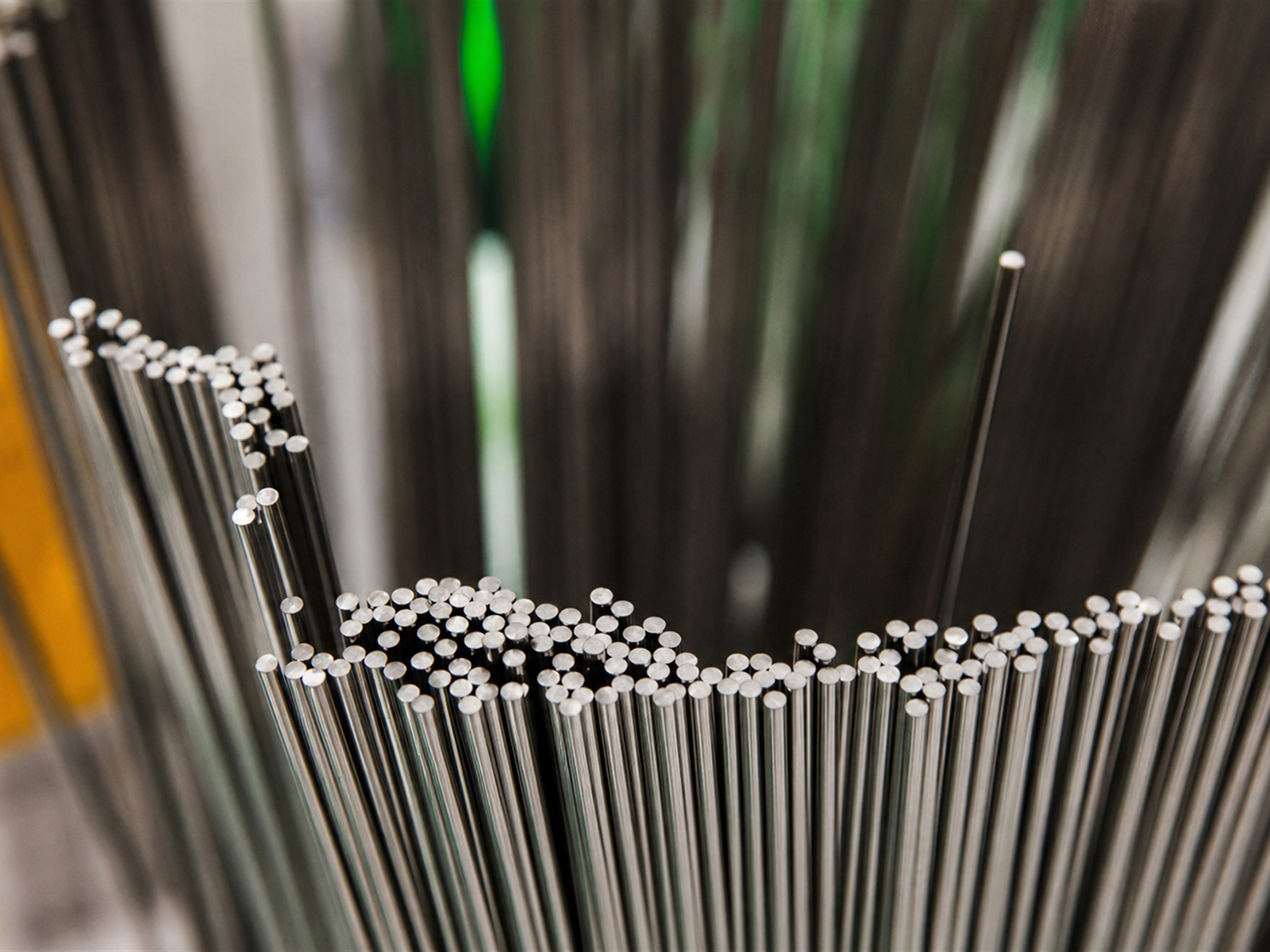
As the strongest grade among industrial pure titanium, Gr4 titanium rod has a thermal conductivity of about 17 W/(m·K), a linear expansion coefficient of 8.6×10⁻⁶/ C, and a tensile strength of up to 550-650 MPa. These three core physical properties determine its applicability in high-temperature chemical equipment, marine engineering structural parts, and aerospace components. Compared with ordinary metal materials, Gr4 titanium rods maintain lightweight characteristics (density 4.51 g/cm³) while showing excellent strength-to-weight ratio and corrosion resistance. They are especially suitable for engineering scenarios that require comprehensive consideration of thermal stability, dimensional stability and load-bearing capacity.
1. How Is Thermal Conductivity Characteristics and Engineering Applications of Gr4 Titanium Rods?
(1) What Are the the Physical Meaning and Engineering Value of Thermal Conductivity Values?
The thermal conductivity of Gr4 titanium rod is 17 W/(m·K), which is between stainless steel (about 16 W/(m·K)) and carbon steel (about 50 W/(m·K)). The relatively low thermal conductivity means that titanium transfers heat slowly, which can be an advantage in some applications. In chemical reactors or heat exchange equipment, this characteristic will lead to an increase in temperature gradient. Therefore, thermal stress distribution must be considered during design to avoid structural failure caused by local overheating.
(2) What Are the the Influence of Temperature on Thermal Conductivity?
As the working temperature rises from room temperature to 300℃, the thermal conductivity of Gr4 titanium rod will show a slight upward trend, with an increase of about 10-15%. This temperature dependence needs to be considered when designing high temperature pipes or heat treatment fixtures. Unlike aluminum alloys, whose thermal conductivity drops significantly with temperature, titanium’s thermal conductivity stability makes it more suitable for conditions with frequent temperature fluctuations.
(3) How Is the Application Value of Thermal Conductivity in Typical Fields?
In the aerospace field, lower thermal conductivity helps in the design of thermal insulation structures and reduces energy loss due to heat transfer. Support frames for semiconductor manufacturing equipment take advantage of this property to maintain the stability of local temperature fields. In seawater desalination devices in marine engineering, evaporation tubes made of Gr4 titanium rods can not only resist chloride ion corrosion, but also optimize heat transfer efficiency by controlling heat flow density.
Material type | Thermal conductivity W/(m·K) | Density g/cm³ |
Gr4 titanium rod | 17 | 4.51 |
316 stainless steel | 16 | 8.00 |
carbon steel | 50 | 7.85 |
Aluminum alloy | 150 | 2.70 |
2. What Should You Know About Engineering Control Significance of Linear Expansion Coefficient?
(1) What Should You Know About Exact Numerical Range of Expansion Coefficient?
The average linear expansion coefficient of Gr4 titanium rod in the temperature range of 20-100℃ is 8.6×10⁻⁶/ C, which is close to some special ceramics and glass materials. Compared with carbon steel (11-13×10⁻⁶/ C) and aluminum alloy (23×10⁻⁶/ C), the thermal expansion of titanium is gentler, which means that when the temperature changes, the dimensional changes of the parts are smaller and higher assembly accuracy can be maintained.
(2) What Should You Know About Matching Analysis of Dissimilar Material Connections?
In composite laminate structures or metal-ceramic encapsulated components, matching thermal expansion coefficients is critical. The good matching between Gr4 titanium rod and alumina ceramic (expansion coefficient 7-8×10⁻⁶/ C) makes it an ideal choice for electronic packaging substrates and vacuum cavity flanges. This match avoids interface stress cracking caused by thermal cycling and extends equipment life.
(3) What Should You Know About Dimensional Stability Under Temperature Cycling Conditions?
The calibration frame and optical platform support structure of precision instruments have extremely high requirements on dimensional stability. In the temperature cycle test of Gr4 titanium rod from -50℃ to +150℃, the cumulative deformation is only 40% of that of aluminum alloy parts of the same size. This stability is of significant value in semiconductor lithography equipment and satellite attitude control components, and can ensure that micron-level positioning accuracy is not affected by ambient temperature fluctuations.
3. How Is Performance Advantages and Application Boundaries of Tensile Strength?
(1) What Are the Specific Performance of Strength Indicators?
The room temperature tensile strength of Gr4 titanium rod reaches 550-650 MPa, the yield strength is 480-550 MPa, and the elongation remains above 15%. This strength level is more than twice that of Gr1 pure titanium (240 MPa) and is close to the performance of some low alloy steels. Under the same load-bearing requirements, titanium parts can be designed to be thinner and lighter, achieving a weight reduction of 40-60%.
(2) What Are the Fatigue Performance and Long-term Reliability?
High-cycle fatigue testing shows that the fatigue strength of Gr4 titanium rods after 10⁷ cyclic loading is approximately 50-55% of the tensile strength, which is better than most stainless steel materials. In scenarios such as offshore platform mooring systems and chemical mixing shafts that are subject to alternating loads, titanium materials can provide longer safe service periods and reduce the risk of sudden fractures.
(3) What Are the Strength Maintains Dependence on Temperature?
Within the range from room temperature to 200℃, the strength of Gr4 titanium rods decreases by less than 10%. This high-temperature strength retention rate makes it suitable for high-strength fasteners in medium-temperature chemical pipelines and automobile exhaust systems. When the temperature exceeds 300℃, the strength will decrease significantly. At this time, it is necessary to evaluate whether it is necessary to upgrade to titanium alloy materials.
Temperature/ C | Tensile strength/MPa | Yield strength/MPa | Elongation/% |
20 | 550 | 480 | 18 |
150 | 530 | 460 | 16 |
250 | 500 | 430 | 14 |
350 | 430 | 370 | 12 |
4. What Are the Co-design Strategy for Three Performance Parameters?
(1) What Should You Know About Material Selection Logic for Thermal-mechanical Coupling Conditions?
In the design of the stirring shaft of the chemical reactor, it is necessary to consider the strength (withstanding torque), thermal conductivity (temperature uniformity) and expansion coefficient (sealing fit) at the same time. The comprehensive properties of Gr4 titanium rods enable engineers to use a single material to complete the design and avoid the risk of electrochemical corrosion caused by welding of dissimilar metals. This simplified design reduces material procurement costs by more than 30%.
(2) What Should You Know About Deformation Control Technology in Precision Machining?
The low elastic modulus of titanium (approximately 110 GPa) results in easy elastic deformation during processing. After understanding the thermal conductivity and expansion coefficient, the machining deformation can be controlled within 0.05 mm by controlling the cutting heat input and cooling rate. The program-controlled cooling system adopted by Baoji Titanium Valley can automatically adjust the coolant flow rate according to the size of the workpiece to ensure dimensional consistency in mass production.
(3) What Are the Performance Degradation Prediction Throughout the Life Cycle?
Combining the thermal conductivity change law, expansion coefficient stability and strength attenuation curve, the life prediction model of Gr4 titanium rod components can be established. In marine engineering projects, by monitoring changes in thermal expansion, the onset of fatigue cracks can be warned 3-6 months in advance, providing data support for maintenance decisions and avoiding economic losses caused by sudden equipment failures.
5. How Is Performance Verification Cases in Industry Applications?
(1) What Are the Corrosion-Strength Balance in the Chemical Industry?
A certain chlor-alkali plant has tried to use Gr4 titanium rods to make electrolytic cell anode brackets. However, in an 80℃, 30% hydrochloric acid environment, the corrosion resistance of titanium materials is insufficient. In actual applications, surface treatment or the use of more corrosion-resistant titanium alloys (such as Ti-Pd alloys) is required. This case shows that in strong reducing acid, the passivation film of Gr4 titanium rod is easily damaged, and the working conditions need to be carefully evaluated.
(2) What Should You Know About Weight Reduction and Reliability Improvement in Aerospace?
The hydraulic system pipe joints of the Airbus A350 aircraft mainly use Ti-6Al-4V titanium alloy to ensure fatigue reliability under high pressure. Gr4 titanium rods are rarely used in such key pressure-bearing components, but they can be considered for use in non-pressure-bearing brackets, auxiliary pipes and other parts. Its low-temperature toughness is better than aluminum alloy, while achieving weight reduction.
(3) What Are the Biocompatibility and Strength Requirements for Medical Devices?
Orthopedic surgical instrument trays need to withstand repeated high-temperature steam sterilization (134℃). The tray frame made of Gr4 titanium rods has no significant decrease in strength after 1, 000 sterilization cycles and does not release metal ions. However, the low thermal conductivity results in a slow cooling rate after sterilization, and medical staff need to wait enough time before operating. To this end, turnover efficiency can be improved by adding heat dissipation fins or forced air cooling.
Application areas | key performance requirements | The advantages of Gr4 titanium rods |
Desalination | Chloride ion resistance + high strength | Reduce maintenance frequency and extend maintenance cycle |
Semiconductor equipment | Low expansion + non-magnetic | Nanoscale precision maintained |
Chemical pipeline | Corrosion resistance + fatigue resistance | Lifespan extended 3 times |
6. What Is the Conclusion?
Gr4 titanium rod provides unique value for cross-industry engineering applications through the precise combination of thermal conductivity 17 W/(m·K), expansion coefficient 8.6×10⁻⁶/ C and tensile strength 550-650 MPa. Its performance balance solves the contradiction that traditional materials cannot take into consideration in terms of thermal stability, dimensional accuracy and load-bearing capacity, and is especially suitable for the stringent requirements of high-end manufacturing for comprehensive performance of materials.
FAQ
Q1: Will the low thermal conductivity of Gr4 titanium rod affect the efficiency of heat exchange equipment?
Although the thermal conductivity of 17 W/(m·K) is lower than that of copper alloys, in applications such as seawater desalination and chemical condensers, the excellent corrosion resistance of titanium materials allows the use of thinner tube walls (reducing thermal resistance), and the long-life characteristics bring full life cycle benefits that far exceed those of traditional materials.
Q2: How to use expansion coefficient characteristics to optimize precision assembly design?
The Gr4 titanium rod’s expansion coefficient of 8.6×10⁻⁶/ C minimizes thermal stress when connected to ceramic, glass or carbon fiber composite materials. It is recommended to reserve an expansion compensation gap of 0.1-0.15 mm/m under the working conditions of -40℃ to +120℃ to ensure that no interface peeling occurs during temperature cycles.
Q3: Does the tensile strength of 550 MPa meet the application requirements of high-pressure pipelines?
This strength level is suitable for medium-pressure pipeline systems below 16 MPa. For high pressure applications (>20 MPa) it is recommended to use Ti-6Al-4V titanium alloy. However, the advantages of Gr4 titanium rods in terms of fatigue strength and resistance to stress corrosion cracking make them more suitable for long-term transportation scenarios of corrosive media such as oceans and chemicals.
7. What Should You Know About Looking for Reliable Gr4 Titanium Rod Supplier?
Baoji Titanium Nickel and Zirconium Materials Processing Co., Ltd. has an Italian Danieli rolling production line with an annual output of 20, 000 tons, providing high-precision titanium rod products that comply with ASTM B348 standards. Our full-process quality control system ensures the stable performance of each batch of materials, and we can provide material certification and third-party testing reports. Contact sales@titaniumvalleys. com today for a custom specification quote and technical support.
References
- Zhang Xiaoming, Li Guohua. Research on the thermophysical properties of industrial pure titanium and its application in chemical equipment. Rare Metal Materials and Engineering, 2021, 50(8): 2845-2852.
- Wang Dezhi, Chen Jun. Testing method and temperature dependence analysis of linear expansion coefficient of titanium and titanium alloys. Chinese Journal of Nonferrous Metals, 2020, 30(12): 2956-2963.
- Liu Jing’an. Titanium alloy materials and their application technology. Metallurgical Industry Press, 2012: 150-180.