
How Is Understanding Grade 5 Titanium Foil: Composition, Strength and Applications?
- Grade 5 Titanium Foil
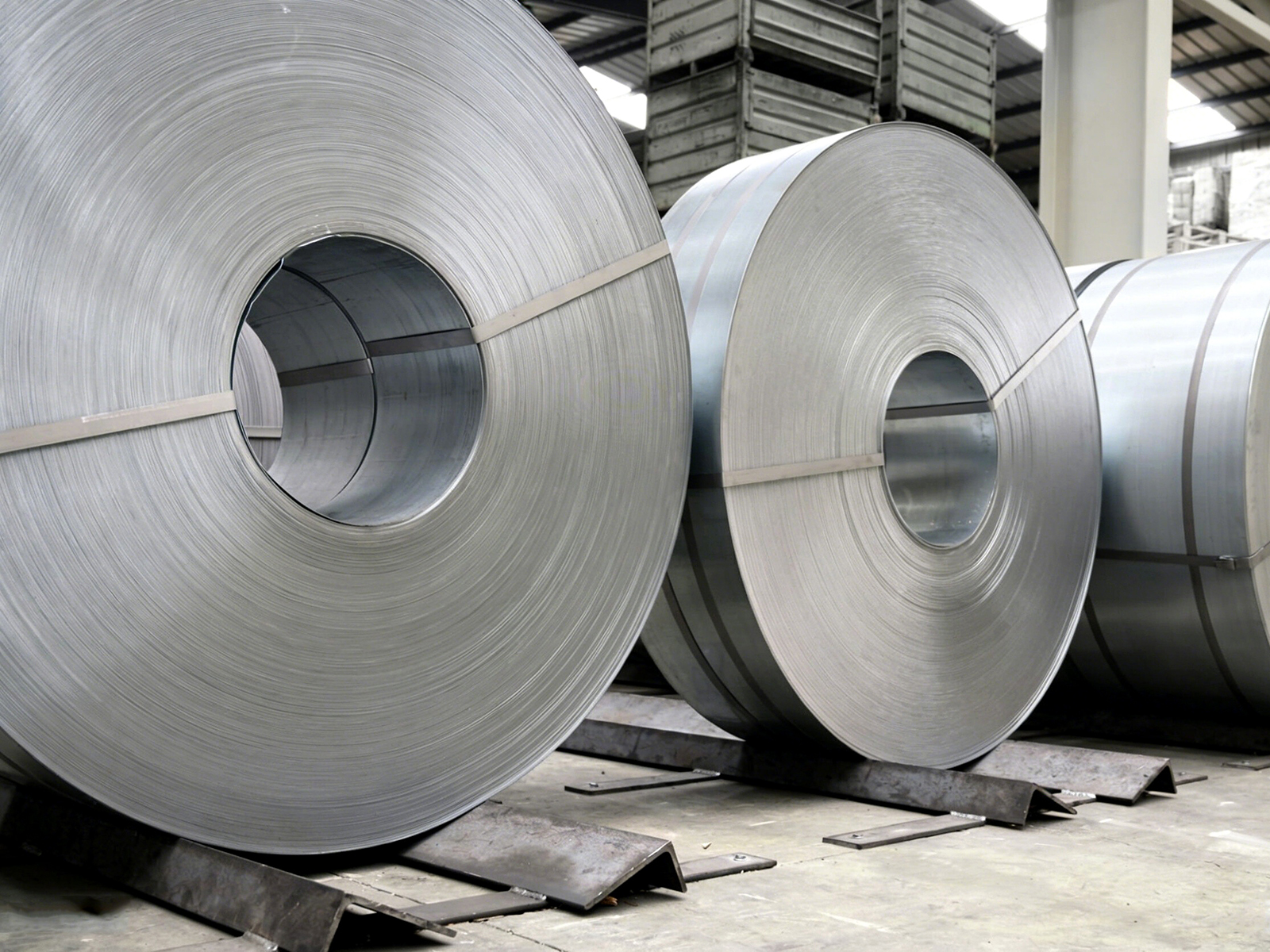
Grade 5 titanium foil (Gr5 Titanium Foil) is a high-performance titanium alloy foil based on the Ti-6Al-4V alloy system and has an α+β dual-phase structure. The material is made through multi-pass precision cold rolling and vacuum annealing processes, with a thickness ranging from 0.03-0.8mm and a width up to 350-670mm. Compared with pure titanium, the tensile strength of grade 5 titanium foil is ≥895MPa (typical value 930-1100MPa), the yield strength is more than 825MPa, and the density is only 4.43g/cm³, which is about 60% of steel. Its excellent specific strength, corrosion resistance and long-term service capability at 300℃ make it a key material in the fields of aerospace, medical implants, new energy batteries and high-end manufacturing. The alloy design of Ti-6Al-4V gives it excellent fatigue resistance and high temperature stability, breaking through the application bottleneck of pure titanium’s insufficient strength.
1. What Are the Material Composition and Alloying Principle of Grade 5 Titanium Foil?
(1) What Are the the Core Composition of the Ti-6Al-4V Alloy System?
The chemical composition of grade 5 titanium foil strictly follows international standards: titanium content is the balance, aluminum (Al) content is 5.5-6.75%, and vanadium (V) content is 3.5-4.5%. Aluminum, as an α-phase stabilizing element, significantly improves the material’s α-phase stability and oxidation resistance, and cooperates with the β-phase to improve high-temperature strength; vanadium, as a β-phase stabilizing element, improves room temperature plasticity and fracture toughness. Impurity elements are strictly controlled: iron ≤ 0.30%, oxygen ≤ 0.20%, carbon ≤ 0.08%, nitrogen ≤ 0.05%, hydrogen ≤ 0.015%. This precise ingredient ratio ensures that the α+β dual-phase structure is evenly distributed, forming the best balance of strength and toughness.
(2) How Biphasic Tissue Contributes to Performance?
The α phase (close-packed hexagonal structure) provides high-temperature creep resistance and fatigue strength, and the β phase (body-centered cubic structure) gives the material good plastic processing capabilities. During the vacuum annealing process, the phase transformation temperature is controlled in the range of 880-950℃, so that the α phase precipitates in lamellar form and is evenly distributed in the β phase matrix. This microstructure design allows grade 5 titanium foil to maintain high strength while still achieving an elongation of more than 10%, meeting complex forming and welding requirements.
(3) How Is the Significance of Impurity Control for Critical Applications?
Medical implant-grade applications require oxygen content below 0.13% to avoid increased brittleness, and aerospace-grade products need to control the hydrogen content below 0.0125% to prevent hydrogen embrittlement. A professional manufacturer achieved precise control of impurity elements through vacuum melting and electron beam refining processes. The production line is equipped with an ICP-MS spectrum analyzer to conduct all-element testing of each batch of raw materials to ensure that the component fluctuation range is less than 30% of the standard value, laying the foundation for batch stability.
2. What Are the Strength Characteristics and Mechanical Behavior of Grade 5 Titanium Foil?
(1) What Are the Quantitative Index of Room Temperature Mechanical Properties?
The tensile strength of grade 5 titanium foil in the annealed state (M state) is ≥895MPa, and that of conventional products can reach 930-1100MPa, which is more than 60% higher than that of pure titanium. The yield strength is ≥825MPa, the hardness is HB 270-330, and the elastic modulus is about 114GPa. The cold-rolled (Y state) strength can be further increased to 1150MPa, but the elongation is reduced to 6%. This difference in strength results from changes in dislocation density and grain orientation: high-density dislocation walls remain in the cold-rolled state, while uniform equiaxed grains are obtained through recrystallization in the annealed state.
state | Tensile strength (MPa) | Yield strength (MPa) | Elongation (%) | Typical applications |
Annealed state (M) | 930-1100 | ≥825 | ≥10 | Aviation skin, medical equipment |
Cold rolled state (Y) | 1050-1150 | ≥950 | 6-8 | High-strength structural parts, spring sheets |
(2) What Are the High Temperature Performance Stability Performance?
Grade 5 titanium foil can serve for a long time in an environment of 300℃, and its short-term peak temperature resistance can reach 400℃. Compared with pure titanium, whose strength decreases significantly after 250℃, Ti-6Al-4V still maintains 85% of its room temperature strength at 300℃. This is due to the Al₂O₃ passivation film formed by the aluminum element that prevents oxygen diffusion, and the pinning effect of α relative dislocation motion. This material is preferred for high-temperature components such as engine heat shields and chemical reactor linings to avoid creep deformation and thermal fatigue cracking.
(3) What Are the Fatigue Resistance and Fracture Toughness Advantages?
Aerospace structural parts need to withstand more than 10⁷ cyclic loads. The fatigue limit of grade 5 titanium foil reaches 550MPa (stress ratio R=-1), which is 30% higher than that of aluminum alloy. The crack growth rate is only 3×10⁻⁸m/cycle when ΔK=20MPa·m½, and the fracture toughness KIC≥55MPa·m½. The plastic deformation ability of the β phase effectively blunts the crack tip and delays fatigue crack expansion. After the honeycomb core material and the fuselage connection parts are made of grade 5 titanium foil, the structural life is extended by more than 40%.
3. What Should You Know About the Decisive Role of Manufacturing Process in Product Quality?
(1) What Should You Know About Precision Control Technology for Multi-pass Cold Rolling?
A professional manufacturer uses a 750mm 20-high finishing mill to distribute pressure through three levels of work rolls, intermediate rolls, and backup rolls to control the single-pass reduction rate at 8-15%. After intermediate annealing, the total cumulative cold rolling deformation reaches more than 90%, and the thickness tolerance accuracy can reach +/-0.005mm. The high-strength and low-plasticity Ti-6Al-4V is prone to edge cracks and plate waves during the rolling process. The front and rear tension ratio (1: 1.2) is adjusted in real time through the tension control system, and combined with the feedback of the online thickness gauge, to achieve stable output of ultra-thin specifications.
(2) What Should You Know About Vacuum Annealing Microstructure Homogenization Process?
The continuous vacuum annealing furnace operates under a vacuum of 10⁻³Pa, with a heating temperature of 760-820℃, a holding time of 2-4 hours, and a cooling rate of ≤50℃/h. This process eliminates cold work hardening stress, promotes α-phase spheroidization and β-phase recrystallization, and makes the grain size reach ASTM 8-10. Inert gas protection avoids surface oxidation, and the oxygen increase is controlled within 50ppm. After annealing, the material elongation returns to more than 10%, meeting the subsequent stretch forming requirements.
(3) What Should You Know About Surface Treatment and Cleanliness Management?
The ultrasonic cleaning system uses a frequency of 40kHz, combined with alkaline degreasing agent and mixed acid pickling (HF: HNO3=1: 4), to remove rolling grease and scale. The sand surface treatment line uses a nylon brush roller to adjust the surface roughness Ra 0.4-1.6um, adapting to different welding and coating processes. The whole-process cleanliness control ensures that particle contaminants are ≤0.5mg/m², ensuring surface quality requirements for electronic and medical-grade applications.
Process link | key equipment | Technical indicators | quality contribution |
Precision cold rolling | 20-high rolling mill | Thickness+/-0.005mm | Dimensional stability |
Vacuum annealing | Continuous annealing furnace | Vacuum degree 10⁻³Pa | tissue uniformity |
Ultrasonic cleaning | Multi-frequency cleaning line | Cleanliness 0.5mg/m² | surface quality |
4. How Is Application Scenarios of Grade 5 Titanium Foil in High-end Fields?
(1) How Is Lightweight Structural Applications in Aerospace?
The aircraft fuselage skin is made of 0.3-0.5mm thick grade 5 titanium foil, which reduces weight by 15% compared to aluminum alloy and increases tensile strength by 50%. The core material of the honeycomb sandwich structure uses 0.05mm ultra-thin foil, which is hydroformed and then bonded. The load-bearing capacity per unit area reaches 12MPa. The engine nacelle heat shield needs to withstand 300℃ high temperature and vibration impact. The thermal expansion coefficient of Ti-6Al-4V foil (8.6×10⁻⁶/K) matches the composite material well to avoid peeling failure caused by thermal stress mismatch.
(2) What Are the Thermal Conductivity and Structural Components of New Energy Batteries?
The power battery pack uses 0.1-0.2mm titanium foil as the tab connection piece and heat dissipation substrate. Although its thermal conductivity coefficient of 7.3W/(m·K) is lower than that of aluminum, its density advantage makes the thermal conductivity per unit mass equivalent, and its corrosion resistance eliminates the risk of electrolyte erosion. The battery pack shell is stamped and formed from 0.5mm foil. Its yield strength ensures collision safety, and its non-magnetic properties prevent interference with magnetic sensors. After a European car company adopted a titanium foil cooling solution, the weight of the battery pack was reduced by 18% and the cycle life was extended by 25%.
(3) How Is Medical Implants and Biocompatible Applications?
The skull repair mesh and spinal fixation plate are made of 0.4-0.6mm medical grade 5 titanium foil, which is laser cut and polished. Its elastic modulus (approximately 114GPa) is closer to human bones (10-30GPa) than stainless steel, reducing the stress shielding effect. The surface is anodized to form a TiO2 passivation layer, and the cytotoxicity test complies with ISO 10993 standards. The high-strength feature reduces the thickness of the implant by 30%, reducing surgical trauma and infection risks. The artificial heart valve stent is made of ultra-thin foil material and has a fatigue life of more than 400 million heartbeat cycles.
(4) What Should You Know About Corrosion-resistant Structures in Chemical and Marine Engineering?
The electrolytic cell electrode substrate uses 0.3mm titanium foil, which is coated with a precious metal catalytic layer and can withstand high-concentration NaCl and Cl2 corrosion in the chlor-alkali industry. The evaporator tube plate of the seawater desalination device is welded with wide-width foil, and the pitting corrosion potential is +600mV (SCE) to ensure a 30-year service life. The pressure chamber of the deep-sea submersible is lined with high-strength foil material. Its compressive strength meets the water depth requirements of 6, 000 meters, and its weight is 40% lighter than that of titanium alloy thick plates.
5. What Should You Know About Breakthrough of Technical Barriers and Stable Batch Supply Capability?
(1) What Are the Paths to Improve Formability of High-strength Materials?
Ti-6Al-4V has limited elongation at room temperature, and cold forming needs to control the deformation to ≤20%. Using a warm forming process (200-400℃) and nitrogen spring rebound compensation, the forming pass rate of complex-shaped parts is increased to 95%. Laser welding parameters are optimized (power 2-3kW, speed 1-2m/min) to avoid hot cracks and pore defects, and the weld strength reaches more than 90% of the base metal. Incremental forming and superplastic forming technology expand the application boundaries of thin-walled parts.
(2) What Should You Know About Breakthrough in Shape Control of Wide Ultra-thin Foils?
For 0.03mm foil with a width of 670mm, the transverse thickness difference must be controlled within +/-3um. Through the hydraulic AGC (automatic thickness control) system, the sampling frequency is 100Hz and the response time is 0.05s, rolling force fluctuations are corrected in real time. The tensile straightener applies an elongation of 0.5-1.5% to eliminate warpage caused by residual stress. The online laser flatness detection accuracy is +/-0.1mm/m, ensuring the process stability of subsequent slitting and stamping.
(3) What Should You Know About Large-scale Delivery Capacity of 3, 000 Tons Per Year?
The automated production line of a professional manufacturer realizes the integrated process of continuous rolling, annealing and slitting. The weight of a single coil is 500-800kg, and the monthly production capacity is 250 tons. The ERP system integrates order management, inventory tracking, and quality inspection data, and the order delivery cycle is shortened to 4-6 weeks. Third-party testing agencies (TUV, SGS) conduct random inspections at the factory. The material report includes chemical composition, mechanical properties, microstructure, and ultrasonic flaw detection data, and meets the requirements of ASTM B265 and AMS 4911 standards.
technological breakthrough items | Traditional difficulties | A professional manufacturer’s response strategy | Performance improvements |
Ultra-thin rolling | Frequent disconnection | 20-roll mill + tension control | Thickness accuracy +/-0.005mm |
tissue uniformity | Performance fluctuates greatly | Vacuum annealing + slow cooling | Batch strength CV<3% |
wide slitting | Burr/deformation | Precision tools + tension matching | Edge quality grade A |
6. What Is the Conclusion?
Grade 5 titanium foil relies on the α+β dual-phase design of Ti-6Al-4V alloy to achieve the comprehensive advantages of specific strength, corrosion resistance and high temperature stability. Its tensile strength is ≥895MPa and its density is only 4.43g/cm³. It can serve for a long time at 300℃ and meet the stringent requirements of high-end fields such as aerospace, medical implants, and new energy batteries. A professional manufacturer has broken through the problem of stable production of ultra-thin and wide-width high-strength materials through 20-roll finishing rolling, vacuum annealing and full-process quality control. Its annual production capacity of 3, 000 tons ensures batch supply.
FAQ
Q1: What is the difference in strength between grade 5 titanium foil and pure titanium foil?
The tensile strength of grade 5 titanium foil (Ti-6Al-4V) is ≥895MPa, which is more than 160% higher than that of pure titanium (Gr2 about 340MPa). The α+β dual-phase structure formed by aluminum-vanadium alloying significantly improves dislocation movement resistance while maintaining good elongation (≥10%), making it suitable for high load-bearing structures.
Q2: How to choose between annealed and cold-rolled grade 5 titanium foil?
The elongation of the annealed state (M) is ≥10%, which is suitable for complex forming such as stamping and drawing; the strength of the cold-rolled state (Y) can reach 1150MPa but the elongation is reduced to 6-8%, and it is suitable for high-strength structural parts after preforming. The delivery status needs to be matched according to the processing technology and final performance requirements.
Q3: Can grade 5 titanium foil be used in seawater corrosive environments?
Totally applicable. The pitting corrosion potential of Ti-6Al-4V in seawater is +600mV (SCE). The TiO2 passivation film on the surface can be self-repaired, and its resistance to chloride ion erosion is better than that of 316 stainless steel. This material is widely used as a key corrosion-resistant component in seawater desalination, offshore platforms and other equipment, with a service life of more than 30 years.
7. Looking for a Reliable Grade 5 Titanium Foil Manufacturer?
A professional manufacturer focuses on the mass production of Ti-6Al-4V ultra-thin wide foils, providing customized thicknesses of 0.03-0.8mm, in line with ASTM/AMS aviation-grade standards. As a professional supplier and factory, we provide one-stop services from raw materials to finished products to customers around the world. Contact us: sales@titaniumvalleys. com
References
- Zhao Yongqing, Hong Quan, Ge Peng. Titanium alloy materials and their applications[M]. Beijing: Science Press, 2018.
- Wang Jinyou, Ma Jimin, Wu Qingzhi. Titanium Alloy Handbook[M]. Shanghai: Shanghai Science and Technology Press, 1989.
- Zhang Xiyan, Zhao Yongqing, Bai Chenguang. Titanium alloy and its processing technology[M]. Beijing: Metallurgical Industry Press, 2010.
- Li Chenggong, Fu Hengzhi, Yu Qiao. Aerospace Materials Technology[M]. Beijing: National Defense Industry Press, 2001.