
What Should You Know About Sanding Stick, Black Leather Stick or Sandblasting, choose the Appropriate Surface Condition of Gr2 Titanium Rod?
- Gr2 Titanium Rod
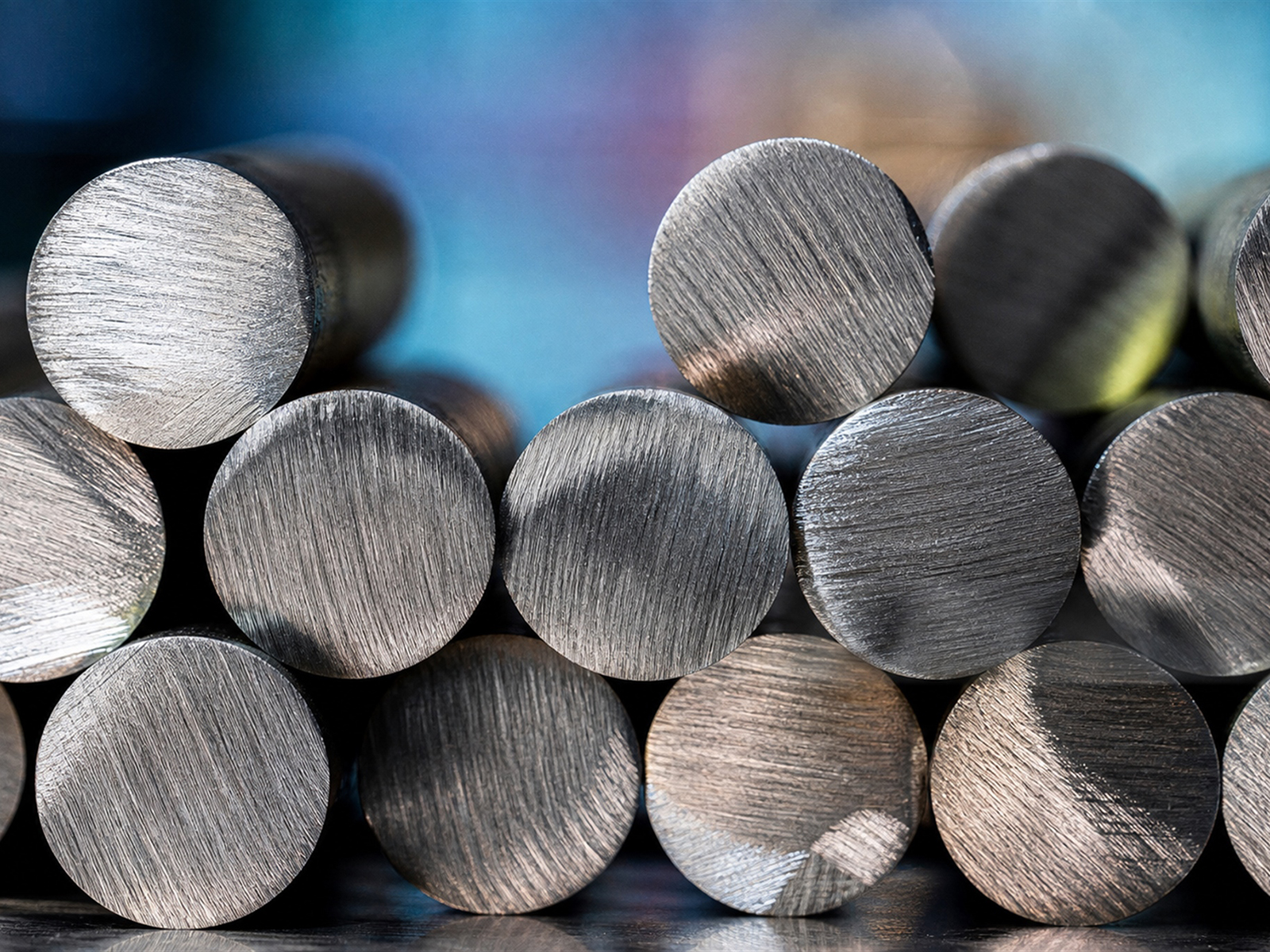
When selecting Gr2 titanium rods, the surface condition directly affects subsequent processing efficiency, part performance and cost control. Polished rods are suitable for precision parts and medical equipment, and have a smooth surface without the need for secondary treatment; black leather rods retain the original oxide layer of forging or rolling, which is low-cost and suitable for welding and large-scale workpieces; sandblasted rods have a uniform and rough surface, which enhances adhesion and is suitable for coating and surface modification scenarios. Enterprises need to match the appropriate surface condition based on the application environment, processing technology and cost budget to avoid material waste and performance loss caused by misunderstandings in selection.
1. What Should You Know About Comparison of Processing Technology and Characteristics of Three Surface States?
Gr2 titanium rods with different surface states originate from different production process routes, which directly determine the surface roughness, dimensional accuracy and subsequent processing suitability of the material.
(1) What Should You Know About Precision Machining Path of Polishing Rod?
After the polishing rod is annealed, the surface oxide layer is removed by turning or centerless grinding, and the surface roughness can reach Ra 0.4~1.6um. This process eliminates the black skin layer and micro-cracks, making the surface of the titanium rod appear metallic luster, and the dimensional tolerance can be controlled within +/-0.05mm. The polished titanium rod does not require additional surface cleaning and can be directly used for CNC machining, cold heading forming or precision assembly, significantly shortening the production cycle. Medical implants, electronic connectors and optical instrument parts often use this type of surface.
(2) What Should You Know About the Original Oxide Layer Protection of the Black Leather Rod?
The black leather rod retains the dark gray to black oxide layer formed after thermal processing, with a typical thickness of about 5 to 20 um and a surface roughness of Ra 3.2 to 12.5 um. This oxide film is mainly composed of TiO2, which has a certain protective effect and can prevent further oxidation of titanium materials during storage and transportation. The price of black leather rods is about 16.7% lower than that of polished rods. They are suitable for machining scenarios that require large amounts of excess material to be removed, or for chemical equipment parts that require pickling before welding. Since the surface is not finished, the dimensional tolerance is large, usually +/-0.3~0.5mm.
(3) What Should You Know About Surface Modification Treatment of Sandblasting Rod?
The sandblasting rod uses alumina, glass beads or ceramic particles to spray the surface of the titanium rod at high speed to remove the oxide layer and form a uniform micro-concave-convex structure. The surface roughness Ra is adjustable from 2.5 to 6.3 um. Sandblasting increases surface area and improves the bond strength of coatings, plating or plasma sprays while eliminating stress concentration points. This surface state is often used on parts that require subsequent surface treatment, such as anodized titanium rods, PVD-coated substrates or biomedical surface-modified implants.
Surface condition comparison table
surface state | Surface roughness (Ra um) | Dimensional tolerance (mm) | Price increase (based on black leather sticks) | Typical application scenarios |
polishing rod | 0.4~1.6 | +/-0.05~0.10 | Baseline +20% | Precision parts, medical implants |
black leather stick | 3.2~12.5 | +/-0.3~0.5 | base price | Chemical equipment, welding parts |
sandblasting rod | 2.5~6.3 | +/-0.15~0.25 | Baseline +8% | Coating substrate, surface modification |
2. How Is Surface State Selection Logic for Different Industry Application Scenarios?
Differences in industry working conditions require that the surface condition of titanium rods accurately matches processing needs, use environment and cost control. Errors in selection will lead to reduced processing efficiency or substandard performance.
(1) What Should You Know About Surface Requirements in the Field of Chemical Anti-corrosion?
Gr2 titanium rods used in chemical equipment are mainly used to manufacture heat exchanger tube bundles, stirring shafts and pump body parts. These parts need to withstand long-term corrosion by acid and alkali media. After the oxide layer is removed by pickling the black leather rod, a fresh passivation film is formed on the surface, and the welding performance is equivalent to that of the polished rod. For the valve body and flange that need to be machined, the black leather rod has sufficient margin, and the surface quality after turning meets the sealing requirements. Sandblasting rods are used for parts that need to be coated with PTFE or enamel layers. The rough surface improves the coating adhesion and extends the anti-corrosion life.
(2) What Should You Know About Cleanliness Requirements for Medical Devices?
Orthopedic implants, dental implants and surgical instruments place extremely high demands on surface cleanliness and biocompatibility. After ultrasonic cleaning of the polishing rod, the surface is free of oil stains, particles and residual oxide layers. The residual amount of particles on the surface is less than 0.02% (weight percentage), which complies with ISO 5832-2 medical grade standards. This surface state can be directly electropolished or anodized without additional polishing and avoiding the risk of cross-contamination. After the sandblasting rod is combined with acid etching, a micron-sized pore structure is formed on the surface, which promotes the growth of bone cells and is suitable for implants that require osseointegration.
(3) What Should You Know About Dimensional Control of Electronic Precision Components?
Semiconductor devices, connectors and sensor housings require strict dimensional consistency and surface flatness. The diameter fluctuation of the polishing rod is less than 0.03mm, and the coaxiality is high, which reduces tool setting errors and tool wear during CNC machining. Before electroplating, use a sandblasting rod to remove the surface passivation film, and then electroless nickel or gold plating to improve conductivity and welding reliability. Due to uneven surface hardness, black leather rods are prone to vibration marks during precision turning and are not suitable for high-precision electronic parts.
(4) What Should You Know About Industry Surface Condition Selection Table?
Application industry | preferred surface | secondary surface | Key considerations |
Chemical anti-corrosion | black leather stick | sandblasting rod | Welding performance, coating adhesion |
medical device | polishing rod | Sand blasting rod + acid etching | Cleanliness, biocompatibility |
Electronic precision | polishing rod | sandblasting rod | Dimensional accuracy, surface flatness |
Marine Engineering | black leather stick | polishing rod | Cost control, seawater corrosion resistance |
3. What Should You Know About Analysis of Adaptability of Processing Technology to Surface State?
The cutting, welding and forming processes of titanium rods have differentiated requirements for surface conditions. Choosing the right surface condition can reduce tool wear and improve yield.
(1) What Should You Know About Effect of Tool Life in Cutting Process?
There is no obvious work-hardened layer on the surface of the polished rod, the cutting force is uniform, and the tool life is 30 to 50% longer than that of the black leather rod. The hardness of the oxide layer on the surface of the black leather rod reaches HV 450~550, which is 80% higher than the base body. It is easy to cause tool chipping or rapid wear, so carbide or ceramic tools need to be used. Although the oxide layer is removed from the surface of the sandblasting rod, the sandblasting particles may be embedded in the micropores on the surface, resulting in hard spots during turning. It is recommended to perform light pickling first. For batch processing, although the unit price of polishing rods is 15 to 20% higher, the total cost may be lower based on the tool cost and processing efficiency.
(2) What Should You Know About Surface Purification Requirements Before Welding?
Titanium welding is extremely sensitive to surface cleanliness, with oil, oxide layers and moisture causing porosity and embrittlement. Before welding, the black leather rod must be pickled with a nitric acid + hydrofluoric acid mixture to remove the oxide layer thickness of at least 10 um, and then degreased with acetone to ensure that the surface has a silver-white metallic luster. Polished rods require only an acetone wipe to weld, reducing chemical consumption and waste disposal costs. The surface roughness of the sandblasting rod is large, and inclusions are easily produced in the weld fusion zone. It is not recommended for pressure-bearing or vacuum sealing welding.
(3) What Should You Know About Surface Integrity of Cold Forming?
Cold heading, cold drawing and cold rolling processes require that the surface of titanium rods be free of cracks and folding defects. The surface of the polished rod has been inspected for flaw detection and the depth of defects is less than 0.1mm. There will be no surface tearing after cold forming. The oxide layer of the black rod may peel off and be embedded in the matrix during cold working, forming surface defects and affecting the appearance and corrosion resistance of the part. The surface stress of the sandblasting rod is uniform and suitable for bending and stretching. However, the sandblasting parameters need to be controlled to avoid surface micro-cracks caused by excessive spraying.
(4) What Should You Know About Processing Technology Adaptation Table?
Processing technology | polishing rod | black leather stick | sandblasting rod | Key considerations |
High speed cutting | excellent | Difference | middle | Oxide layer hardness affects tool life |
TIG welding | excellent | Medium (needs pickling) | Difference | Surface cleanliness determines weld quality |
Cold heading forming | excellent | Difference | middle | Surface defects causing molding tears |
Coating treatment | middle | Difference | excellent | Roughness affects coating adhesion |
4. What Should You Know About Cost-effectiveness and Supply Chain Management Trade-off Strategies?
The selection of surface conditions requires comprehensive consideration of procurement costs, processing losses, quality risks and delivery stability, and a full life cycle cost model is established.
(1) What Should You Know About Price Gradient of Initial Purchase Cost?
Taking a Gr2 titanium rod with a diameter of 50mm and a length of 3000mm as an example, the unit price of the black rod is about 62, 000 yuan/ton (62 yuan/kg), the unit price of the polished rod is about 75, 000 yuan/ton (75 yuan/kg), and the unit price of the sandblasting rod is about 67, 500 yuan/ton (67.5 yuan/kg). Simply looking at the purchase price, black leather rods have obvious advantages. When purchasing in bulk, the minimum order quantity for polished rods is usually higher (starting from 500kg) due to the many processing steps, while black leather rods are highly flexible and can be customized from 100kg. Under the small batch and multi-variety production model, the inventory pressure of black leather rods is small and the capital turnover efficiency is high.
(2) What Should You Know About Hidden Cost Analysis of Subsequent Processing?
The turning allowance of the black leather rod needs to be increased by 1.5 to 2 mm, the material utilization rate is reduced by 5 to 8%, and the recycling value of the titanium chips generated is only 40% of the raw material price. The processing allowance of the polishing rod is 0.3~0.5mm, and there is little material waste. In terms of tool cost, processing 1 ton of black leather rods consumes about 12 carbide blades, while polishing rods only require 6. The difference in tool cost is about 1, 200 yuan. Comprehensive calculations show that when the processing volume exceeds 500kg, the total cost of the polishing rod may be lower than that of the black leather rod.
(3) What Should You Know About Quality Stability and Delivery Guarantee?
The production cycle of polished rods is long, taking 20 to 25 days from hot rolling to fine grinding. The delivery time is relatively stable in the off-season and may be extended to 35 days in the peak season. Black leather rods have a short production process and can be delivered in 10 to 15 days, making them suitable for urgent orders. Sandblasting rods require outsourcing processing, and the delivery time is affected by the production capacity of the outsourcing factory and fluctuates greatly. In terms of inventory strategy, chemical companies always keep black leather rods in stock for 3 to 6 months, while medical companies purchase polished rods according to orders to reduce the risk of expiration. Establish long-term cooperation with professional suppliers such as Titanium Valley to obtain customized surface state services and technical support.
Whole life cycle cost comparison (unit: yuan/ton)
cost item | polishing rod | black leather stick | sandblasting rod |
Purchase unit price | 75, 000 | 62, 000 | 67, 500 |
Processing loss | 2, 250 | 4, 960 | 3, 375 |
Tool consumption | 1, 200 | 2, 400 | 1, 600 |
Surface treatment | 0 | 1, 800 (pickling) | 800 (sandblasting) |
total cost | 78, 450 | 71, 160 | 73, 275 |
Note: Among the surface treatment costs, the black leather rod represents the pickling cost, and the sandblasting rod represents the sandblasting processing fee, both of which are estimated based on batch processing.
5. What Should You Know About Selection Decision Tree and Avoidance of Common Misunderstandings?
Establish a systematic selection process to avoid selection deviations and quality accidents caused by empiricism.
(1) How Is Decision Matrix Based on Application Scenarios?
For precision medical and electronic parts, the surface roughness requirement is Ra<1.6um and the dimensional tolerance is within +/-0.05mm. A polishing rod must be selected. For welded parts such as chemical mixers and heat exchanger tube bundles, where the budget is limited and subsequent pickling is required, black leather rods are the first choice. For parts requiring coating, plating or surface modification, sandblasting rods provide the ideal roughening base. For high-load structural parts such as offshore platform fasteners, black leather rods have the best cost performance after proper processing. In mixed use scenarios of multiple working conditions, priority is given to the combination of polished rods and black leather rods.
(2) What Should You Know About Avoid Common Selection Misunderstandings?
Misunderstanding 1: I think polished rods are definitely better than black leather rods. In welding applications, the weld quality of black leather rods after pickling is not significantly different from that of polished rods, and there is no actual benefit from the extra cost. Misunderstanding 2: Ignoring the influence of sandblasting parameters. Excessive sandblasting will reduce the surface fatigue strength. High-cycle fatigue parts should control the sandblasting pressure to ≤0.4MPa. Misunderstanding 3: Confusing surface condition and material grade. The corrosion resistance of Gr2 titanium rods is determined by the material. The surface condition only affects the processability. Polished rods cannot be used to replace higher-grade titanium alloys (such as Gr5 Ti-6Al-4V, which is often used for high-strength structural parts).
(3) What Should You Know About Key Testing Points for Quality Acceptance?
The acceptance of polished rods focuses on inspecting surface roughness (using a roughness meter), diameter tolerance (multi-point measurement with a micrometer) and surface defects (visual inspection with a 10x magnifying glass). For black-skinned rods, it is necessary to confirm the uniformity of the thickness of the oxide layer to avoid processing difficulties caused by local excessive thickness. The sandblasting rod detects surface hardness consistency and prevents local hardening caused by uneven sandblasting. All surface conditions are required to provide material certificates (MTC) and ultrasonic flaw detection reports to ensure internal quality.
6. What Is the Conclusion?
The surface condition selection of Gr2 titanium rods needs to match the specific application conditions, processing technology and cost budget. Polishing rods are suitable for precision machining and medical fields, black leather rods balance cost and chemical anti-corrosion requirements, and sandblasting rods serve surface modification scenarios. Enterprises should establish a decision-making matrix, comprehensively evaluate the full life cycle costs, avoid selection misunderstandings, maintain technical communication with professional suppliers, obtain customized surface treatment solutions, and improve material utilization and product competitiveness.
FAQ
Q1: Will the oxide layer on the surface of the black rod affect the corrosion resistance of the titanium rod?
The oxide layer itself has a protective effect, but uneven thickness or local spalling can lead to crevice corrosion. Before use, it must be completely removed by pickling and re-passivated to form a uniform and dense TiO2 film to ensure long-term corrosion resistance.
Q2: Can the polishing rod be used directly for coating applications that require a rough surface?
Not recommended. The surface of the polishing rod is too smooth, the mechanical bite force of the coating is insufficient, and it is easy to fall off. A sandblasting rod should be selected, or a secondary sandblasting treatment should be performed on the polished rod to increase the surface roughness to Ra 3.2~6.3um.
Q3: How to verify whether the sandblasting quality of the sandblasting rod is qualified?
Use a surface roughness meter to measure the Ra value and check whether it is within the specified range; use a magnifying glass to observe that there are no embedded sandblasting particles on the surface; conduct an adhesion test to ensure that the peeling strength of the coating or electroplating layer is ≥10MPa.
7. What Should You Know About Call to Action?
Titanium Valley (Baoji Titanium Valley Titanium-Nickel-Zirconium Materials Processing Co., Ltd.), as a professional manufacturer and supplier of Gr2 titanium rods, provides customized services in various surface conditions such as polishing, black leather, sandblasting, etc. It is equipped with Italian Danieli precision rolling line and has an annual production capacity of over 20, 000 tons to meet your high standard needs. Welcome to contact us for technical support and sample testing: sales@titaniumvalleys. com
References
- Zhao Yongqing, Hong Quan, Ge Peng. “Metalographic Atlas of Titanium and Titanium Alloys”. Central South University Press, 2011.
- Xin Shewei, Zhao Yongqing. “Research Progress in Titanium Alloy Surface Treatment Technology”. Rare Metal Materials and Engineering, 2018, 47(12): 3865-3872.
- Ren Fengzhang, Liu Ping, et al. “Research Progress on Surface Modification of Medical Titanium Alloys”. Materials Herald, 2016, 30(3): 98-103.
- Li Shiyang, Zhang Xin. “Selection and Corrosion Control of Titanium Materials for Chemical Equipment”. Chemical Equipment and Pipelines, 2020, 57(4): 62-68.