
What Should You Know About Gr5 Titanium Foil Composition, Properties, and Uses?
- Gr5 Titanium Foil
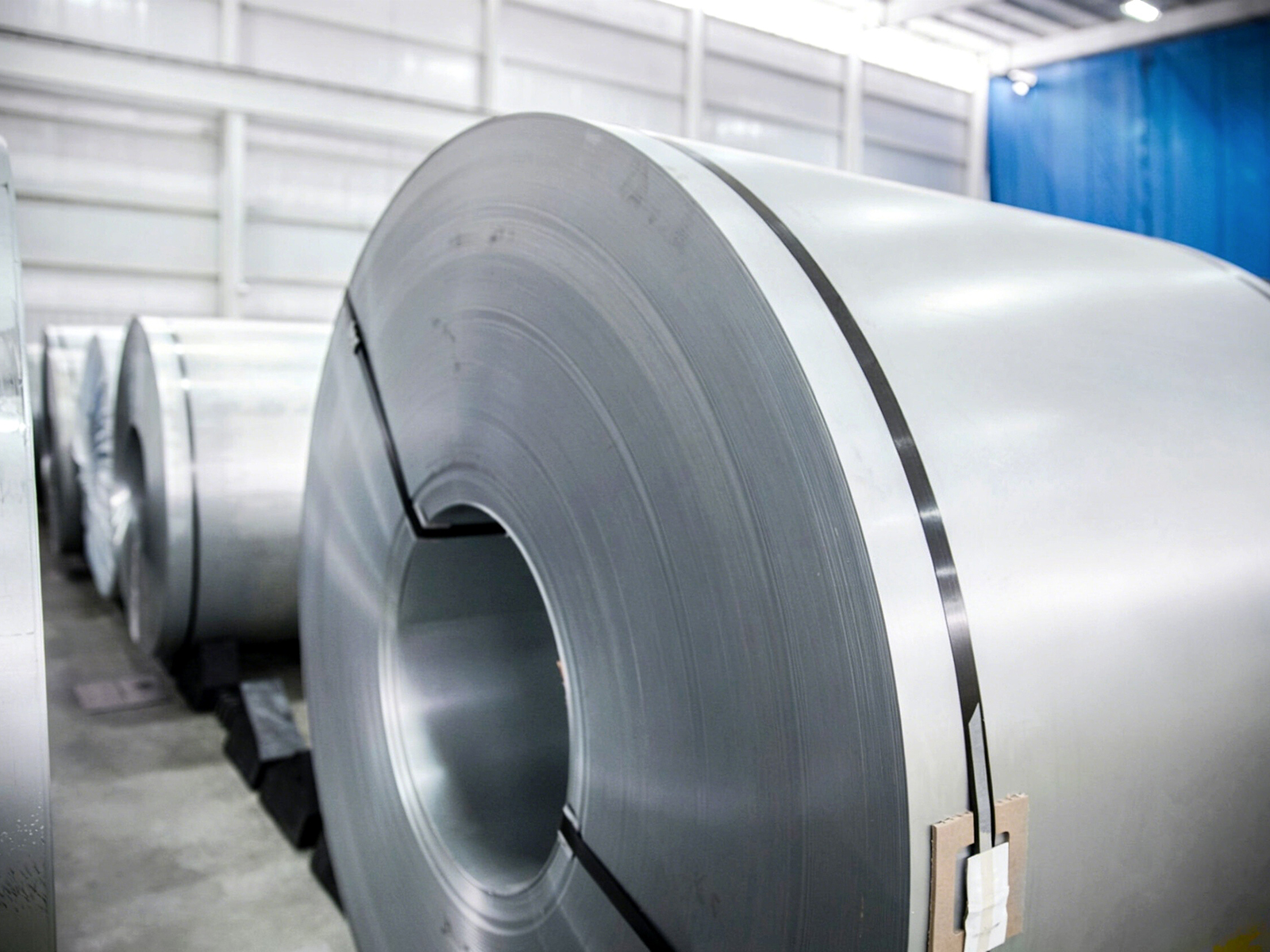
Gr5 titanium foil is a high-performance ultra-thin material based on Ti-6Al-4V alloy, which is made through multi-pass precision cold rolling and vacuum annealing processes. The tensile strength of this α+β dual-phase titanium alloy can reach 895-1100 MPa, the yield strength is ≥ 825 MPa, and the density is only 4.43 g/cm³, which is about 60% of steel. Its thickness range is 0.03-0.8mm, its width can reach 350-670mm, and it can work stably for a long time in a 300℃ environment. Compared with pure titanium (Gr1/Gr2), Gr5 titanium foil significantly improves the load-bearing capacity while maintaining excellent corrosion resistance and non-magnetic characteristics, becoming a key material in high-end fields such as aerospace, new energy batteries, and electromagnetic shielding.
1. What Should You Know About Chemical Composition and Microstructure of Gr5 Titanium Foil?
(1) What Should You Know About Composition Ratio of Ti-6Al-4V Alloy?
The chemical composition design of Gr5 titanium foil follows the ASTM B265 standard. Titanium is used as the matrix, the aluminum content is controlled between 5.5-6.75%, and the vanadium content is 3.5-4.5%. Aluminum, as an α-stabilizing element, can improve the high-temperature strength and oxidation resistance of the material; vanadium, as a β-stabilizing element, can improve the toughness and processing performance of the alloy. The iron content needs to be strictly controlled below 0.30%, the oxygen content does not exceed 0.20%, and interstitial elements such as carbon, nitrogen, and hydrogen are also strictly limited to avoid embrittlement tendencies. This precise ingredient ratio gives Gr5 titanium foil a good balance between strength and plasticity.
(2) What Should You Know About the Formation Mechanism of Α+β Biphasic Structure?
After vacuum or inert gas annealing, a stable α+β dual-phase structure is formed inside the Gr5 titanium foil. The α phase (close-packed hexagonal structure) provides high strength and creep resistance, and the β phase (body-centered cubic structure) gives the material good plasticity and fracture toughness. The annealing temperature and cooling rate directly affect the proportion and distribution morphology of the two phases. The continuous vacuum annealing process can ensure the uniformity of the structure and avoid local performance fluctuations. This dual-phase synergy is the fundamental reason why Gr5 titanium foil is superior to pure titanium and single-phase alloys.
(3) What Should You Know About Effect of Impurity Elements on Performance?
Although interstitial elements such as oxygen and nitrogen can increase strength, excessive amounts will lead to a sharp decrease in plasticity and an increase in crack sensitivity. Hydrogen content exceeding 0.015% may cause hydrogen embrittlement, especially in low temperature environments. Excessive iron content will reduce corrosion resistance, especially in chlorine-containing media. Therefore, whole-process cleanliness control is adopted during the production of Gr5 titanium foil. From smelting to annealing, everything is carried out under vacuum or high-purity inert gas protection, combined with an ultrasonic cleaning system to ensure that surface and internal purity meet aviation-grade requirements.
element | Content range | Main function |
Ti | margin | matrix element |
Al | 5.5-6.75% | Improve high temperature strength and oxidation resistance |
V | 3.5-4.5% | Improve toughness and processability |
Fe | ≤ 0.30% | Need to be controlled to ensure corrosion resistance |
O | ≤ 0.20% | Affects strength and plasticity balance |
H | ≤ 0.015% | Prevent hydrogen embrittlement |
2. What Should You Know About Key Performance Indicators of Gr5 Titanium Foil?
(1) What Should You Know About Ultra-high Specific Strength Characteristics?
The tensile strength of Gr5 titanium foil is usually in the range of 930-1100 MPa, which is much higher than Gr2 pure titanium (345 MPa) and Gr4 pure titanium (550 MPa). Under the same load-bearing requirements, the weight of Gr5 titanium foil is only about 56% of stainless steel. This high specific strength advantage is outstanding in aircraft honeycomb structures, racing car bodies and drone fuselages. The yield strength ≥ 825 MPa ensures the safety margin of the material in high stress environments and is suitable for key parts such as engine heat shields and pressure vessel linings. Although the elongation rate is ≥ 10% (referring to ASTM E8 standard, applicable to the thickness range of 0.1-0.8mm) is lower than that of pure titanium, through precise control of the annealing process, the formability can be optimized while ensuring strength.
(2) What Should You Know About High Temperature Stability and Creep Resistance?
Gr5 titanium foil can serve in an environment of 300℃ for a long time (referring to continuous operating temperature), and can withstand high temperatures of 400℃ in the short term. The close-packed hexagonal structure of the α phase remains stable at high temperatures, and the presence of vanadium suppresses grain boundary slip, giving the material excellent creep resistance. In aerospace engine compartments and hot-end components of automobile exhaust systems, Gr5 titanium foil can withstand thermal cycle shocks without performance degradation. Compared with aluminum alloys whose strength drops rapidly above 200℃, Gr5 titanium foil shows obvious high-temperature advantages. The resistivity of 165-175 μΩ·cm also makes it suitable for thermal management systems that require a certain degree of conductivity.
(3) What Should You Know About Corrosion Resistance and Non-magnetic Characteristics?
A dense oxidation passivation film can spontaneously form on the surface of titanium alloys. Gr5 titanium foil exhibits excellent corrosion resistance in seawater, acid and alkali solutions and chloride environments. In chemical electrolyzers and offshore platform structural parts, the corrosion rate of Gr5 titanium foil is much lower than that of stainless steel and nickel-based alloys. Its non-magnetic properties (magnetic permeability close to that of a vacuum) make it an ideal material for precision instruments, medical implants and electromagnetic shielding. In MRI equipment, compass systems and electronic warfare equipment, Gr5 titanium foil will not interfere with magnetic field distribution, ensuring equipment accuracy and reliability.
Performance indicators | Gr5 titanium foil | Gr2 pure titanium | 304 stainless steel |
Density (g/cm³) | 4.43 | 4.51 | 8.0 |
Tensile strength (MPa) | ≥ 895 | 345 | 515 |
Specific strength (MPa·cm³/g) | 202 | 76.5 | 64.4 |
Temperature resistance (C, long term) | 300 | 250 | 650 |
Corrosion resistance | Excellent | Excellent | good |
3. What Should You Know About Gr5 Titanium Foil Production Technology and Technological Breakthroughs?
(1) What Should You Know About Multi-pass Precision Cold Rolling Technology?
The high strength and low plasticity characteristics make Gr5 titanium foil prone to edge cracks and strip breakage during the rolling process. Using a 750mm 20-roll finishing mill, by increasing the number of support rollers to disperse the pressure, and working with the tension control system to adjust the front and rear tension in real time, stable rolling of ultra-thin specifications of 0.03mm can be achieved. The reduction amount of each pass is accurately controlled within the range of 3-8% (for specifications with initial thickness ≥ 0.05mm, the reduction amount is calculated based on the absolute thickness reduction value; for thinner specifications, the reduction rate is adjusted in real time based on the actual deformation), and the final thickness can be reached after a total of 15-25 passes. The roller surface roughness is controlled within Ra 0.2um to ensure the surface quality of the foil. The thickness tolerance can reach ± 0.001mm, meeting the precision processing needs in the fields of microelectronics and optics.
(2) What Should You Know About Vacuum Annealing and Tissue Homogenization?
There are a large number of dislocations and residual stress inside the cold-rolled Gr5 titanium foil, and the ductility must be restored and the structure optimized through annealing. The continuous vacuum annealing furnace heats the foil to 700-850℃ under 10⁻³ Pa vacuum, holds it for 1-2 hours, and then cools at a controlled rate. The vacuum environment avoids oxidation and hydrogenation and ensures surface finish. After annealing, the α phase is evenly distributed in the equiaxed crystal form, and the β phase is located at the grain boundary and acts as a “binder”. In this organizational state, the strength-plasticity matching of the material reaches a good state, and the fatigue life is significantly improved.
(3) What Should You Know About Shape Control and Precision Slitting Process?
Wide and ultra-thin foils are prone to plate defects such as waves and bows. A multi-roller tension straightening machine is used to eliminate deformation caused by uneven internal stress through differential pressure and elongation control between rollers. The precision slitting line is equipped with high-speed ceramic cutting tools and an edge detection system. The cutting edge burrs are controlled within 5 um to avoid stress concentration points. The width tolerance is ± 0.5mm, and the length is customized according to customer needs. The entire process adopts a clean workshop environment, and the surface particle size is controlled within level 100, meeting the cleanliness standards of the semiconductor and medical device industries.
Process link | key equipment | Technical parameters |
cold rolled | 750mm 20-roll finishing mill | Thickness tolerance ± 0.001mm |
Clean | Ultrasonic cleaning system | Surface granularity level 100 |
annealing | Continuous vacuum annealing furnace | Vacuum degree 10⁻³ Pa, temperature 700-850℃ |
leveling | Multi-roller tension straightener | Straightness≤ 1mm/m |
Cut | High-precision slitting line | Burr≤ 5um |
4. Why Is High-end Application Scenarios of Gr5 Titanium Foil Important?
(1) What Should You Know About Structural Lightweighting in Aerospace?
In commercial airliners and military fighter jets, Gr5 titanium foil is widely used in fuselage skin honeycomb sandwich structures. The honeycomb core material is stamped and formed from Gr5 titanium foil with a thickness of 0.05-0.1mm, and the outer composite panel is fixed by gluing or brazing. While ensuring rigidity, this structure is 20-30% lighter than the aluminum alloy solution. The heat shield of the engine compartment is made of multi-layered 0.3-0.5mm Gr5 titanium foil, which uses its low thermal conductivity and high melting point characteristics to effectively isolate high-temperature gas radiation. The satellite solar panel bracket and antenna reflecting surface are also made of Gr5 titanium foil, which has excellent resistance to space radiation and thermal cycle.
(2) What Should You Know About Thermal Management System for New Energy Batteries?
The heat dissipation efficiency of the power battery pack directly affects the safety and lifespan. Gr5 titanium foil is used as a thermal partition and connecting piece between battery modules due to its high strength and corrosion resistance. The foil with a thickness of 0.1-0.2mm is fixed by laser welding or ultrasonic welding to form a stable heat conduction path. The moderate resistivity allows it to conduct heat and conduct electricity to a certain extent, and can double as a current bus. In hydrogen fuel cell systems, Gr5 titanium foil is used as a support structure for bipolar plates and membrane electrode assemblies. It can withstand electrolyte corrosion and mechanical stress and has a service life of more than 10, 000 hours.
(3) What Should You Know About Electromagnetic Shielding and Precision Components for Electronic Equipment?
5G base stations, server rooms and precision measuring instruments are extremely sensitive to electromagnetic interference. The shielding cover made of Gr5 titanium foil can effectively block electromagnetic waves above 30 dB, and the shielding effect is stable in the 1-10 GHz frequency band. Non-magnetic features avoid secondary interference with signals and are suitable for high-frequency circuits and radio frequency modules. In semiconductor manufacturing equipment, Gr5 titanium foil is used as a vacuum cavity lining and wafer transfer tray. It can withstand plasma bombardment and high-purity chemical cleaning with extremely low particle release, ensuring chip yield. Medical implants such as pacemaker shells and artificial joint surface coatings also use Gr5 titanium foil, which has excellent biocompatibility and mechanical strength.
5. Why Is Application Selection Considerations Important?
(1) What Should You Know About Material Certification and Quality Traceability Requirements?
The aerospace and medical industries have high requirements for material traceability. Gr5 titanium foil suppliers are required to provide a complete material quality certificate (MTC), including chemical composition spectral analysis, tensile test data, grain size testing and ultrasonic flaw detection reports. For products that comply with ASTM B265 and AMS 4911 standards, each batch must be accompanied by a heat treatment curve record and surface roughness test report. Certification reports from third-party testing agencies such as SGS and TÜV can enhance the credibility of the material. The batch number laser marking system ensures that each roll of foil can be traced back to the original titanium ingot and production date, meeting the requirements of the AS9100 aviation quality management system.
(2) How Should Customized Processing and Specification Selection?
Different application scenarios have different requirements for the thickness, width, surface state and mechanical properties of Gr5 titanium foil. Manufacturers with flexible production capabilities can provide full specification coverage of 0.03-0.8mm, supporting various surface treatments such as pickled surface, glossy surface, and matte surface. Customized cutting lengths range from 100 meters to 2, 000 meters, which can avoid customer losses in secondary processing. OEM orders can be punched, bent, welded and other deep processing based on drawing requirements to shorten the supply chain cycle.
(3) What Should You Know About Technical Support and Process Adaptation?
High-end customers often require suppliers to provide material selection suggestions and process optimization solutions. The professional technical team can assist customers in conducting finite element analysis to evaluate the stress distribution and fatigue life of Gr5 titanium foil under specific loads. Debugging support for welding process parameters (TIG welding, laser welding) can avoid weld cracking and performance degradation. Surface modification treatments such as anodizing and micro-arc oxidation can further improve wear resistance and decoration.
Application areas | Typical specifications | key performance requirements |
aerospace honeycomb structure | 0.05-0.1mm×500mm | High strength, lightweight, anti-fatigue |
battery heat sink | 0.1-0.2mm×400mm | Thermal conductivity, corrosion resistance, weldability |
Electromagnetic shielding cover | 0.05-0.15mm×600mm | Shielding efficiency, non-magnetic, clean surface |
medical implants | 0.3-0.5mm×Customized | Biocompatibility, strength, surface finish |
6. What Is the Conclusion?
Gr5 titanium foil relies on the α+β dual-phase structure of Ti-6Al-4V alloy to achieve a good combination of strength (≥ 895 MPa) and lightweight (density 4.43 g/cm³). Through advanced processes such as 20-roller finishing rolling, vacuum annealing and precision slitting, ultra-thin wide specifications of 0.03-0.8mm can be stably produced with a thickness tolerance of ± 0.001mm. Its high temperature stability, corrosion resistance and non-magnetic characteristics make it an important material in high-end fields such as aerospace, new energy, and electronic equipment.
FAQ
Q1: What are the advantages of Gr5 titanium foil compared with Gr2 pure titanium?
The tensile strength of Gr5 titanium foil is ≥ 895 MPa, which is 2.6 times that of Gr2 pure titanium (345 MPa), while maintaining excellent corrosion resistance and lightweight properties. The dual-phase structure gives it better high-temperature stability and fatigue resistance, making it suitable for aerospace structural parts and high-stress environments, while pure titanium is more suitable for deep drawing forming and normal temperature chemical applications.
Q2: How to ensure the shape quality of ultra-thin Gr5 titanium foil?
A 20-roll finishing mill is used to disperse the pressure, and a real-time tension control system is used to avoid edge cracks. The multi-roller tension straightener eliminates internal stress through differential elongation, and the flatness can reach ≤ 1mm/m. Vacuum annealing homogenizes the structure, reduces warping deformation caused by residual stress, and ensures the geometric accuracy and surface quality of wide-width foils.
Q3: How effective is the application of Gr5 titanium foil in battery thermal management?
Gr5 titanium foil with a thickness of 0.1-0.2mm has both high strength and good thermal conductivity, and can be used as a battery module spacer and current busbar. Corrosion resistance resists electrolyte erosion, excellent laser welding performance, and reliable connection. Compared with aluminum foil and copper foil, Gr5 titanium foil has obvious advantages in lightweight and long life, and its service life can exceed 10, 000 hours.
7. What Should You Know About Get Customized Gr5 Titanium Foil Now?
As a professional manufacturer and supplier of Gr5 titanium foil (Ti-6Al-4V), Baoji Titanium Valley Titanium Nickel and Zirconium Material Processing Co., Ltd. is equipped with a 750mm 20-roller precision finishing mill, a continuous vacuum annealing furnace and a fully automatic slitting system. The annual production capacity reaches 2, 800 tons, and can provide full-specification customization services for 0.03-0.8mm thickness and 350-670mm width. The product complies with ASTM B265 and AMS 4911 standards, and its surface supports pickling, bright and matte treatments. It is widely used in aerospace honeycomb structures, new energy battery thermal management, electromagnetic shielding and medical implants. Welcome to send technical requirements to sales@titaniumvalleys.com to obtain sample testing and professional technical support.
References
- Zhao Yongqing, Xi Zhengping, Zhu Kangping. (2015). Titanium alloy and its processing technology. Science Press.
- Chen Jun, Wang Jinyou. (2018). Research progress of titanium alloy materials for aviation. Materials Herald, 32(5), 721-730.
- Zhang Xiaoming, Li Wei. (2020). Research on optimization of ultra-thin titanium foil cold rolling process parameters. Rare Metal Materials and Engineering, 49(3), 895-902.
- Wang Liping. (2016). Titanium alloy material properties and engineering applications. National Defense Industry Press.