
What Should You Know About Zirconium Alloy Wire Grades and Applications?
- Zirconium Alloy Wire
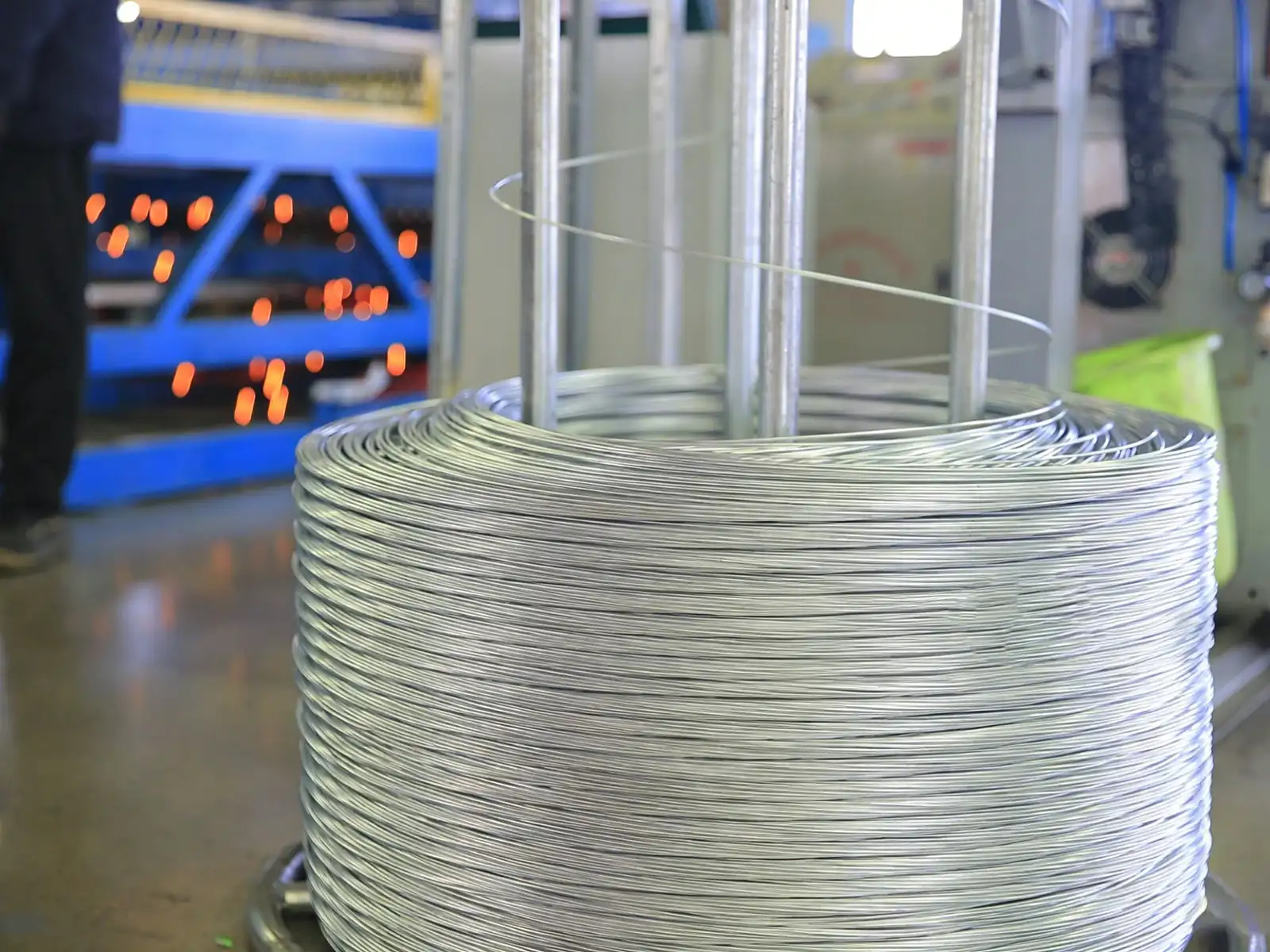
Zirconium alloy wire is an indispensable high-performance material in modern industry, especially in extreme corrosive and high-temperature environments. This guide focuses on UNS R60705 zirconium alloy wire (Zr705), a zirconium-niobium alloy containing 2.0-3.0% niobium. Compared with pure zirconium, R60705 is strengthened by the niobium element, which significantly improves the mechanical strength while maintaining excellent corrosion resistance, making it the preferred material in the chemical industry, nuclear power, medical and aerospace fields. This article will systematically analyze the grade system, performance characteristics, processing technology and industry applications of zirconium alloy wire to help engineers and purchasing decision-makers make accurate material selections.
1. What Should You Know About Zirconium Alloy Wire Core Grade Analysis and Material Properties?
(1) What Should You Know About Alloy Design Logic for UNS R60705?
UNS R60705 zirconium alloy wire belongs to the zirconium-niobium binary alloy system, and the niobium content is controlled between 2.0-3.0%. This ratio is not set arbitrarily: niobium, as a β-stabilizing element, can refine the grain structure and make the alloy tensile strength reach 500-650 MPa, far exceeding the 300 MPa of pure zirconium R60702. The hafnium content is limited to less than 4.5% to control costs, while interstitial elements such as oxygen, nitrogen, and hydrogen are strictly controlled at the ppm level to avoid the risk of embrittlement.
(2) Why Is Physical Metallurgical Performance Advantages Important?
The density of R60705 is 6.51 g/cm³, the melting point is about 1850℃, and the elastic modulus is 95 GPa. Its non-magnetic characteristics give it significant advantages in NMR equipment and precision instruments. The material has stable performance during long-term service below 350℃ and does not undergo phase change or intergranular corrosion. Compared with titanium alloys, zirconium alloys have orders of magnitude better corrosion resistance in chlorine-containing media and organic acids; compared with nickel-based alloys, their biocompatibility and non-magnetic properties are more suitable for medical applications.
(3) What Should You Know About Standard System and International Certification?
This material complies with ASTM B550 standards, and also corresponds to ASME SB550 pressure vessel standards and ISO 5832-3 medical implant standards. Complete material traceability includes chemical composition analysis, mechanical property testing, ultrasonic flaw detection and surface quality inspection, and quality inspection certificates can be provided to meet the strict audit requirements of the nuclear power and pharmaceutical industries.
2. What Should You Know About Zirconium Alloy Wire Precision Manufacturing Process and Quality Control?
(1) What Should You Know About Full Process Control From Ingots to Finished Products?
Production begins with vacuum consumable arc melting (VAR) or plasma melting, ensuring that impurity elements are below standard limits. After forging and peeling, the ingot enters the hot rolling process. A short stress rolling mill is used to achieve multi-pass continuous rolling, and the diameter of the bar is gradually reduced from 60mm to less than 8mm. Multiple annealings are required to eliminate work hardening. The annealing temperature is controlled at 650-750℃ in a vacuum or protective atmosphere to prevent oxygen contamination.
(2) What Should You Know About Cold Drawing and Surface Treatment Technology?
Cold drawing is a key process to obtain precision wire. Multi-mode stepwise diameter reduction is adopted, and the diameter reduction rate of each pass is controlled at 15-20% to avoid surface micro-cracks. For ultra-fine wire (φ0.06-0.4mm), diamond molds and special lubricants are required to ensure the tolerance reaches ± 0.01mm. Surface treatment provides a variety of options: pickling the surface to remove the oxide layer, suitable for welding; polishing the surface roughness Ra≤ 0.4um, used for medical devices; bright surface through a combination of wire drawing die and electrolytic polishing to achieve a mirror effect.
(3) What Should You Know About Online Inspection and Defect Control?
The entire process is equipped with eddy current flaw detection, laser diameter measurement and automatic straightness detection systems. The automated system monitors process parameters in real time and ensures batch stability through closed-loop control. In view of the industry problems of zirconium alloy being easy to stick to the mold and deforming, customized mold materials and dynamic tension control technology are used to achieve a yield rate of more than 92%. 100% visual inspection and sampling metallographic analysis are carried out before vacuum packaging to ensure there are no inclusions, cracks and surface defects.
Table 1: Typical applications and tolerance requirements of zirconium alloy wires of different diameters
Diameter range | Main form | Tolerance class | Typical applications |
φ0.06-0.4mm | Pansi | ± 0.01mm | Medical guide wire, microelectronic lead |
φ0.5-3.0mm | Coiled/straight wire | ± 0.01mm | Welding materials and fasteners |
φ3.0-6.0mm | Straight wire | ± 0.02mm | Valve stem, pump shaft, structural parts |
φ6.0-10.0mm | Customized straight wire | ± 0.03mm | Heat exchanger tube bundles, large equipment |
3. What Should You Know About Corrosion Resistance and Failure Mechanism Under Extreme Working Conditions?
(1) What Should You Know About Corrosion Behavior in Strong Acid Media?
The corrosion rate of R60705 zirconium alloy wire in boiling hydrochloric acid, sulfuric acid, and nitric acid mixed acid is less than 0.1mm/year, forming a dense ZrO₂ passivation film to prevent further erosion. In wet chlorine and hypochlorous acid solutions, stainless steel and titanium alloys will undergo severe pitting and perforation, while zirconium alloys remain intact and passive. Organic acids such as formic acid, acetic acid, and oxalic acid are highly corrosive to carbon steel and ordinary alloys under high temperature and high concentration conditions. Zirconium alloys can withstand them for a long time and are suitable for reactor linings in pharmaceuticals and fine chemicals.
(2) What Should You Know About Pitting Corrosion Resistance in Chloride Ion Environment?
In scenarios such as seawater desalination and lithium extraction from salt lakes, high concentrations of chloride ions can destroy the passive film of stainless steel, leading to crevice corrosion and stress corrosion cracking. The pitting corrosion potential of R60705 is as high as +1.2V (vs SCE), far exceeding the +0.2V of 316L stainless steel. After being soaked in an 80℃ solution containing 100, 000 ppm chloride ions for 1, 000 hours, there are no visible corrosion pits on the surface. This property comes from zirconium’s low affinity for chlorine and the self-healing properties of the oxide film, making it an ideal material for marine engineering and brine treatment.
(3) What Should You Know About High Temperature Oxidation and Hydrogen Embrittlement Risk Control?
Zirconium easily absorbs hydrogen at high temperatures, leading to embrittlement, but R60705 effectively alleviates this problem by controlling the hydrogen content to ≤ 0.005% and adding niobium. In a water vapor environment below 350℃, the material maintains good plasticity and toughness. In nuclear power applications, it is necessary to prevent zirconium from reacting with high-temperature water to produce hydrogen, and to achieve safe operation for up to 30 years by limiting service temperature and optimizing surface conditions. The thickness of the oxide film grows parabolically with time. After 5 years of service, the film thickness is only 2-3 microns, which does not affect the structural strength.
Table 2: Comparison of corrosion resistance between R60705 and common materials in typical media
corrosive medium | R60705 zirconium alloy | 316L stainless steel | TA2 pure titanium | Hastelloy C-276 |
boiling 10% hydrochloric acid | <0.1 mm/year | severe corrosion | Not recommended | 0.5mm/year |
wet chlorine | <0.05 mm/year | Pitting and perforation | localized corrosion | good |
high temperature organic acid | <0.1 mm/year | intergranular corrosion | good | Excellent |
Sea water (80℃) | No corrosion | crevice corrosion | good | Excellent |
4. Why Is Multi-industry Application Scenarios and Technical Solutions Important?
(1) What Should You Know About Chemical and Hydrometallurgical Fields?
In the chlor-alkali industry, R60705 wire is used to make electrolytic cell anode leads, corrosion monitoring probes and sealing springs for acid-resistant pumps. The heat exchanger tube bundle in the hydrochloric acid synthesis device uses zirconium alloy welded tubes, which extends the service life from 2-3 years for stainless steel to more than 15 years. The leaching process of zinc hydrometallurgy involves a sulfuric acid-chloride ion system. The zirconium alloy stirring blades and filters can withstand the extreme conditions of pH<1, reducing the frequency of equipment replacement and production shutdown losses.
(2) Why Is Nuclear Power and Energy Equipment Applications Important?
The positioning grid, guide tubes and fasteners of nuclear reactor fuel assemblies need to meet both low neutron absorption cross-section and radiation resistance. The thermal neutron absorption cross-section of R60705 is only 0.18 Tern, which is much lower than the 2.5 Tern of stainless steel, which can improve reactor efficiency. In high-temperature gas-cooled reactors and molten salt reactors, filters woven with zirconium alloy wires can withstand 700℃ molten salt corrosion, ensuring the safety of the nuclear fuel cycle system. The seawater desalination pretreatment device of offshore wind power uses zirconium alloy wire mesh filters, which have better resistance to marine biological corrosion than titanium alloys.
(3) What Should You Know About Medical Devices and Precision Manufacturing?
The typical diameter of the guidewire for cardiovascular interventional treatment is 0.35mm, which requires high flexibility, visibility and biocompatibility. R60705 ultra-fine wire has been implanted into the human body after surface passivation treatment and has no toxic side effects, and can be clearly visualized under X-rays. The locking screws of orthopedic implants are made of φ2.0mm zirconium alloy wire, which has higher fatigue resistance than pure titanium and does not produce artifacts during MRI examinations. The sterile filter frame in pharmaceutical equipment is welded with zirconium alloy wire, which is resistant to high-pressure steam sterilization at 121℃ and has no metal ion precipitation to contaminate the medicinal solution.
(4) What Should You Know About Aerospace and Military Equipment?
The anti-corrosion pipe joints and sealing rings of the aircraft engine fuel system are made of φ1.0-3.0mm zirconium alloy wire wound springs to withstand long-term erosion by aviation kerosene and additives. The non-magnetic fasteners of the satellite attitude control system use cold-formed zirconium alloy wire, which has stable performance in the space radiation environment. The pressure-resistant shell welds of the underwater unmanned vehicle are reinforced with zirconium alloy welding wire to ensure the structural integrity under the pressure of 3, 000 meters in the deep sea.
Table 3: Core technical requirements for zirconium alloy wire in different industries
Application industry | key performance indicators | Typical specifications | special request |
Chemical equipment | Resistant to hydrochloric acid/chloride ions and stress corrosion resistance | φ1.0-6.0mm | Welding performance, surface finish |
Nuclear power engineering | Low neutron cross section, radiation resistant | φ2.0-5.0mm | Purity and hydrogen content control ≤ 0.005% |
medical device | Biocompatible, non-magnetic | φ0.35-2.0mm | Tolerance ± 0.01mm, surface passivation |
Aerospace | High strength/weight ratio, high temperature resistance | φ1.0-3.0mm | Fatigue life, dimensional stability |
5. How Should Selection Guide and Supply Chain Management Strategy?
(1) How Should Scientific Selection of Material Grades?
In the face of complex working conditions, it is necessary to select the appropriate grade according to the specific medium and temperature. Pure zirconium R60702 is suitable for medium concentration acid and alkali and environments below 200℃, but its strength is insufficient. R60705 is strengthened with niobium to solve high stress problems and is suitable for pressure-bearing equipment and dynamic loads. Zr702+Nb containing 2.5% niobium is more widely used in the field of nuclear power, while medical grade requires an extra-low iron formula (Fe<0.1%) to reduce magnetic effects. Compared with high-end materials such as tantalum and Hastelloy, the cost of zirconium alloy is 40-60% lower when the corrosion resistance is equivalent.
(2) What Should You Know About Evaluation of Custom Processing Capabilities?
Bulk purchasing needs to examine the supplier’s full-process capabilities. The production line can directly produce finished yarn from ingots, avoiding quality fluctuations in outsourcing links. Customized services cover non-standard diameters (such as φ0.18mm for special sensors), special surfaces (anodized color markings) and heat treatment states (semi-hard, fully soft to adjust elastic modulus). Supports flexible switching between small batch samples and ton-level mass production.
(3) What Should You Know About Quality Certification and Technical Support?
High-end applications require suppliers to have certifications such as ISO 9001, AS9100 (aviation), and ISO 13485 (medical). Chemical composition spectral analysis, tensile test, metallographic inspection and corrosion test reports are provided for each batch. Key items can be stationed in the factory to witness sampling and third-party testing. The technical team provides value-added services such as material selection consultation, corrosion simulation, and welding process development, and assists customers in passing FDA, CE or ASME certification audits. Establish strategic inventory and VMI models to shorten emergency order response time to 72 hours.
6. What Should You Know About Summarize?
Zirconium alloy wire occupies an important position in the chemical industry, nuclear power, medical and aerospace fields due to its excellent corrosion resistance, high strength and special functionality. UNS R60705 zirconium alloy wire is reinforced with niobium to achieve a balanced performance. With precision processing technology and strict quality control, it can meet the diverse needs of ultra-fine medical guide wires to large chemical equipment. Understanding material properties, process routes and application scenarios is the key to achieving scientific material selection and long-term reliable operation.
FAQ
Q1: How to choose between UNS R60705 and pure zirconium R60702 in practical applications?
R60705 contains 2-3% niobium and has a tensile strength of 500-650 MPa. It is suitable for high-stress pressure-bearing equipment, filament materials and occasions requiring higher mechanical properties. The strength of R60702 pure zirconium is about 300 MPa, which is suitable for low-stress environments but has comparable corrosion resistance and slightly lower cost. R60705 is preferred for high-pressure valves and pump shafts.
Q2: How long can zirconium alloy wire be used in seawater desalination projects?
In a seawater environment of 80℃ and 100, 000 ppm chloride ions, R60705 has a corrosion rate of <0.05mm/year and a theoretical service life of more than 20 years. In actual projects, it is necessary to regularly check the stress concentration areas, and with cathodic protection, the service life can be extended to more than 30 years, far exceeding that of titanium alloy and stainless steel.
Q3: What is the difference between medical grade zirconium alloy wire and industrial grade?
Medical grade must comply with ISO 5832-3 standards. The iron content is controlled below 0.1% to reduce magnetism, and impurities such as oxygen, nitrogen, and hydrogen are more stringent. The surface requires sterile passivation treatment, biocompatibility testing and USP Class VI certification are provided. Industrial grade focuses on corrosion resistance and strength. Impurity control is relatively loose but still meets ASTM B550 requirements.
7. What Should You Know About Get Certified Grade Zirconium Alloy Wire Now?
As a professional manufacturer and supplier of zirconium alloy wire (UNS R60705), Baoji Titanium Valley Titanium Nickel Zirconium Material Processing Co., Ltd. is equipped with a vacuum consumable arc melting furnace, a multi-mode continuous cold drawing production line and a fully automatic eddy current flaw detection system. Its annual production capacity reaches 800 tons, and it can provide customized services for zirconium wire in full specifications of Φ0.06-10.0mm. The products fully comply with ASTM B550, ASME SB-550 and ISO 5832-3 standards, and the surface supports pickling, polishing, brightening and passivation treatments. They are widely used in chemical corrosion-resistant equipment, nuclear power reactor core components, medical implants and aerospace precision components. Each batch of products comes with complete chemical composition analysis, mechanical property testing, grain size testing reports and EN 10204 3.1 material certificates. Welcome to send technical requirements to sales@titaniumvalleys.com to obtain selection suggestions, sample testing and professional technical support.
References
- Wang Minghua, Li Jianguo. “Zirconium and Zirconium Alloy Material Processing Technology”. Metallurgical Industry Press, 2019.
- Zhang Wei, Liu Xiaofeng. “Advanced Nuclear Reactor Material Selection and Performance Evaluation”. Atomic Energy Press, 2021.
- Chen Zhiqiang, Zhao Jianping. “Handbook of Corrosion and Protection of Nonferrous Metal Materials”. Chemical Industry Press, 2018.
- Li Ming, Wang Yong. “Medical Metal Materials and Their Surface Modification Technology”. Science Press, 2020.