
Where Can I Source Quality Ni200 Rods for Industrial Use?
- Ni200 Rods
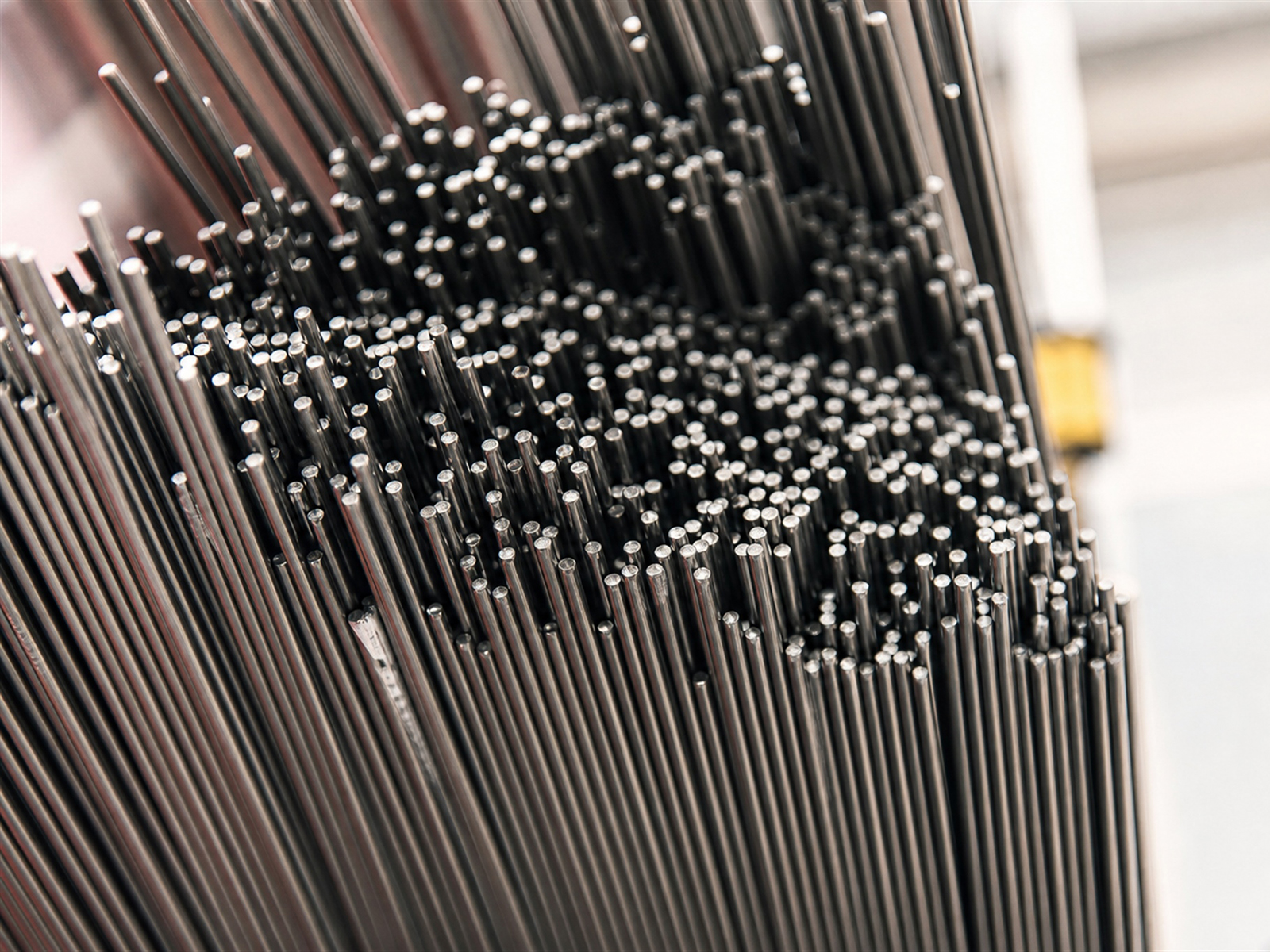
In the wave of global industrial upgrading, finding reliable supply channels for Ni200 rods has become a key issue faced by purchasers in the chemical, electronics, aerospace and other industries. High-quality industrial-grade Ni200 nickel rods not only need to meet strict chemical composition and mechanical performance standards, but also require suppliers to have stable delivery capabilities and a full-process quality traceability system. Take a professional nickel alloy processing enterprise located in Baoji Titanium Valley, China, as an example. It relies on advanced vacuum melting, precision rolling and heat treatment technologies to provide industrial users in North America, Europe and the Asia-Pacific region with high-purity nickel rods that comply with international standards such as ASTM B160 and EN 2.4060. These manufacturers are usually equipped with continuous rolling production lines imported from Italy (such as Danieli MIM series), with an annual production capacity of more than 20, 000 tons (data from the company’s official website). They can stably supply round bars, square bars and customized special-shaped specifications with a diameter of 6-300mm, and provide complete quality documents including material certificates (MTC, traceable) and ultrasonic flaw detection reports to meet the diverse application needs from chlor-alkali electrolysis equipment to precision electronic components.
1. Why Is the Core Value and Application Problems of Ni200 Rods in Industrial Scenarios Important?
(1) What Should You Know About Corrosion Challenges in the Chemical and Chlor-Alkali Industries?
Traditional stainless steel or carbon steel materials are prone to rapid corrosion, perforation and even equipment failure in high temperature and concentrated alkali environments. In the chlor-alkali electrolysis process, the sodium hydroxide concentration in the catholyte can reach 30-50% (common industrial design parameters are 10-30%, here is a specific process data), and the operating temperature often exceeds 100℃. The annual corrosion rate of ordinary metal materials can reach several millimeters, resulting in the need for frequent replacement of key components such as electrolyzers, heating pipes, and valves, increasing maintenance costs and affecting production continuity. With a high purity nickel content of more than 99.6%, Ni200 nickel rod forms a dense oxidation protective film in a strong alkali medium, with a corrosion rate as low as less than 0.02mm/year (laboratory test conditions: boiling temperature, 50% NaOH solution), which can extend the service life of the equipment by 5-8 times.
(2) What Should You Know About Purity and Magnetic Requirements for the Electronics Industry?
Precision electronic applications such as semiconductor packaging and vacuum tubes impose strict standards on material purity and magnetic properties. The content of impurity elements such as iron, copper, and sulfur must be controlled at the ppm level to avoid contaminating the process medium or affecting electrical performance. Annealed Ni200 exhibits extremely low magnetic permeability (close to vacuum permeability) and can effectively avoid magnetic field interference, which is crucial for electrolytic capacitor leads and magnetic resonance equipment shielding components. Inferior nickel rods have excessive inclusions due to defects in the smelting process, which can cause device breakdown or performance degradation.
(3) What Should You Know About Adaptable to Low and High Temperature Extreme Working Conditions?
Aerospace cryogenic fuel systems and liquefied natural gas (LNG) transmission pipelines require materials to maintain good toughness at -196℃ to avoid brittle fracture. The face-centered cubic crystal structure of Ni200 gives it excellent low-temperature ductility. At a low temperature of -196℃, the impact energy can still maintain more than 70% of the room temperature level. At the high temperature end, although Ni200 is not suitable for strongly oxidizing atmospheres, its oxidation resistance and creep resistance are sufficient to support applications such as heat treatment fixtures and industrial furnace conveyor belts in reducing or neutral environments below 600℃.
How to Identify and Evaluate Quality Ni200 Rod Suppliers?
What Should You Know About Inspection of Production Technology and Equipment Level?
Top nickel rod manufacturers use vacuum arc remelting (VAR) technology to reduce the gas content to less than 10ppm (according to ASTM E1019 standard) through multiple remeltings to eliminate porosity and segregation. In the forging stage, a 10, 000-ton hydraulic press is used for multi-directional forging to ensure structural uniformity. The precision rolling process is equipped with a four-roller reversible cold rolling mill, the surface roughness can be controlled within Ra 0.4um, and the diameter tolerance reaches ± 0.05mm. The annealing heat treatment is performed in a hydrogen annealing furnace to prevent surface oxidation and optimize the grain size to ASTM grade 4-6 (according to ASTM E112 standard). Suppliers with these hardware conditions (such as a Baoji company) usually have an investment scale of more than 50 million US dollars and an annual production capacity of more than 10, 000 tons.
What Should You Know About Quality Management System and Certification Qualifications?
Reliable industrial-grade nickel rod suppliers must pass ISO 9001 quality management system certification and hold industry-specific certifications such as PED (EU Pressure Equipment Directive) and NACE MR0175 (Sulfide Stress Corrosion in the Oil and Gas Industry). Each batch of products must provide spectral analysis, tensile test, intergranular corrosion test (referring to ASTM G28 standard) and other data, and meet the chemical composition and mechanical performance requirements of ASTM B160. The coverage rate of non-destructive testing such as ultrasonic flaw testing (UT) and eddy current testing (ET) should reach 100% to ensure that there are no internal defects such as cracks and slag inclusions. Material certificates issued by third-party testing agencies such as SGS and TÜV can increase the transparency of the supply chain.
What Should You Know About Customization Capabilities and Delivery Response Speed?
Industrial applications often involve non-standard specifications: for example, the rod specifications used for chlor-alkali electrolytic cell anodes are φ80mm×3000mm; precision shafts require h6 tolerance and 0.8um surface finish. High-quality suppliers are equipped with CNC lathes, grinders and other finishing equipment, and can provide a variety of surface states such as Bright Turned, Annealed & Pickled, etc. The flexible production model supports small batch requirements with a minimum order of 100kg. There is sufficient inventory of standard specifications and can be shipped in 3-5 working days (for inventory items). For bulk orders of more than 10 tons, the lead time from smelting to delivery is usually controlled at 8-12 weeks, and urgent orders can be coordinated to 4-6 weeks.
Supplier evaluation dimensions | key indicators | Quality supplier standards |
Metallurgical purity | Ni+Co content/gas inclusion | ≥ 99.6% (ASTM B160) / <20ppm (total) |
Mechanical properties | Tensile strength/elongation | 400-550 MPa (ASTM B160) / >30% |
surface quality | Roughness/Oxide Thickness | Ra≤ 0.8um/<5um |
Detection coverage | UT/ET flaw detection/MTC traceability | 100% / The furnace number is fully traceable |
Delivery capability | Standard product delivery time/customization cycle | ≤ 5 days / 8-12 weeks |
2. What Should You Know About Global Main Ni200 Rod Procurement Channels and Regional Characteristics?
What Should You Know About Asia Pacific, Baoji Titanium Valley Industrial Cluster, China?
As the world’s largest rare metal processing base, Baoji, Shaanxi, China, has gathered more than 200 titanium, nickel and zirconium material companies. These manufacturers benefit from a complete industrial chain – from nickel ore smelting, electrolytic nickel production to bar finishing, forming significant cost advantages and economies of scale. Baoji Titanium Valley Enterprises have generally introduced world-class rolling equipment such as Italy’s Danieli and Germany’s SMS Group, and the Ni200 bars they produce have reached the level of similar European and American products in terms of chemical composition stability and dimensional accuracy. Exports to the North American chlor-alkali market, Japanese electronics industry, and Korean battery industry have grown at an average annual rate of 15%, with prices 20-30% lower than European suppliers and delivery cycles shortened to 4-6 weeks.
Why Is Europe and North America, Transformation of Traditional Advantage Suppliers Important?
Established nickel alloy manufacturers such as Germany’s VDM Metals and the United States’ Special Metals have a century of technology accumulation and remain leaders in the field of aerospace-grade high-end nickel materials. Its Ni200 products focus on special requirements such as oversized forgings (diameter >500mm), ultra-low sulfur and phosphorus control (S<0.005%), and the unit price is more than 50% higher than conventional industrial grades. In recent years, these companies have gradually outsourced general-specification products to Asian partner factories and focused on high value-added market segments. The EU’s carbon neutrality policy promotes the development of the green hydrogen energy industry, and the demand for nickel materials for electrolyzers has surged. Local suppliers’ production capacity is tight, and the delivery time has been extended to 16-20 weeks.
What Should You Know About Emerging Markets, Production Capacity Layout in India and Southeast Asia?
Nicrofer in India and nickel processing companies in Vietnam have rapidly expanded production capacity relying on their labor cost advantages and policy support. However, due to equipment technology and quality management experience, the products are mainly targeted at the mid-to-low-end market, such as conventional chemical pipelines, general fasteners, etc. Impurity control and structural uniformity are still weak links, and high-purity electronic-grade and aviation-grade nickel rods still need to be imported from China or Europe. These areas are gradually attracting multinational companies to establish localized processing centers to serve the electronics manufacturing industry in Vietnam, Thailand and other places and the Indian pharmaceutical equipment market.
3. What Should You Know About Key Technical Parameters and Acceptance Criteria for Purchasing Ni200 Rods?
What Should You Know About Chemical Composition and Metallurgical Purity Control?
Ni200 for industrial use requires the nickel plus cobalt content to be no less than 99.6% (ASTM B160), and impurity elements such as iron and copper are strictly restricted. Iron content exceeding 0.4% will reduce alkali corrosion resistance, and excessive copper will increase the risk of thermal processing cracking. The carbon content is controlled below 0.15% (ASTM B160 stipulates Ni200 carbon ≤ 0.15%). In high-temperature application scenarios, care must be taken to avoid the precipitation of grain boundary carbides. The total amount of harmful elements such as sulfur and phosphorus must be less than 0.02% to prevent thermal brittleness. When purchasing, the supplier should be required to provide an ICP-OES or X-ray fluorescence spectrum analysis report to confirm the measured value of each element. The content of hydrogen, oxygen and nitrogen gases is detected by the inert gas melting method, and the total amount should be <20ppm to ensure the density of the material.
What Should You Know About Mechanical Properties and Microstructure Requirements?
The tensile strength range of annealed Ni200 rods is 400-550 MPa (ASTM B160), the yield strength is 100-220 MPa, and the elongation is not less than 30%. Excessive strength often means cold work hardening residue, which affects subsequent molding processing. The hardness is controlled between HRB 60-85. Too hard will increase cutting tool wear. The metallographic structure should show uniform equiaxed grains without defects such as band segregation and excessive twins. The grain size is rated according to ASTM E112, with grades 4-6 being the best. If it is too coarse, the strength will be reduced, and if it is too fine, it will affect the high-temperature creep performance. The impact toughness should be >120 J at room temperature and not less than 80 J at low temperature (-196℃) to meet the needs of extreme working conditions.
What Should You Know About Dimensional Accuracy and Surface Integrity Inspection?
Diameter tolerance level directly affects subsequent machining allowance and yield. Ordinary industrial grade adopts h9-h11 tolerance, and precision applications require h6-h7 (for example, the tolerance of φ50mm bar is only ± 0.019mm). The straightness deviation should not exceed 1mm per meter to avoid vibration marks during turning. There must be no defects such as cracks, folds, pits, etc. on the surface. Minor scratches with a depth of less than 0.5mm are allowed and can be repaired by grinding. The thickness of the decarburization layer and the carburization layer must be controlled within 0.05mm (refer to ASTM E1077 standard) to prevent cracks during welding. Ultrasonic flaw detection is performed in accordance with ASTM E213 standards, and defects with a flat-bottomed hole equivalent diameter >1.5mm are deemed unqualified (some precision applications require 1.2mm).
Key technical parameters | Standard requirements | Acceptance testing methods |
Nickel content (Ni+Co) | ≥ 99.60%(ASTM B160) | ICP-OES spectral analysis |
Iron impurities (Fe) | ≤ 0.40%(ASTM B160) | Chemical Titration/XRF |
tensile strength | 400-550 MPa (ASTM B160) | GB/T 228 tensile test |
Elongation | ≥ 30% | Gauge length 50mm specimen |
Grain size | ASTM grade 4-6 | Metallographic microscope 500× |
surface roughness | Ra≤ 0.8um | Surface profilometer |
Ultrasonic flaw detection | φ1.5mm flat bottom hole sensitivity | ASTM E213 water immersion method |
4. What Should You Know About Cost Optimization and Long-term Supply Cooperation Strategy?
Why Is Price Advantage and Inventory Management of Bulk Purchasing Important?
The price of Ni200 bar consists of three parts: nickel spot price, processing fee and logistics cost. Nickel prices on the London Metal Exchange (LME) fluctuated violently, with a single-day surge of 100% in March 2022. When signing a long-term contract with a supplier, the “base price + processing fee” model can be used to lock in processing costs and settle the raw material part according to the monthly LME average price to avoid price risks. A single purchase of more than 5 tons can get a 5-8% discount (the specific discount is negotiated based on the order volume), and the bargaining space for more than 10 tons is 12%. Establishing safety stock (usually 3 months’ supply, which needs to be combined with the assessment of the company’s financial situation), combined with vendor managed inventory (VMI) services, can achieve zero inventory procurement.
Why Is Technical Service Support and Application Development Cooperation Important?
High-quality suppliers not only provide standard materials, but also assist customers in process optimization. When a chlor-alkali company purchased Ni200 anode rods, the supplier optimized the welding joint design through finite element analysis, reducing stress concentration by 40% and extending the continuous operation cycle of the electrolytic cell from 18 months to 30 months. For the emerging field of hydrogen energy, we jointly developed anti-hydrogen embrittlement modified Ni200 materials, which reduce the hydrogen diffusion coefficient by 30% through trace element control (comparison benchmark: conventional Ni200 in a hydrogen environment of 85℃ and 20MPa). Regular technical seminars are held to share practical experiences such as corrosion failure case analysis and welding process parameter optimization to help users reduce comprehensive use costs.
What Should You Know About Global Supply Network and Localized Services?
To meet the needs of multi-location factories of multinational companies, top suppliers have set up warehousing and distribution centers in North America, Europe, and Asia to achieve 48-hour emergency response. Cooperate with international logistics companies to provide flexible trade terms such as DDP (delivery duty paid), CIF (cost plus insurance plus freight), and simplify the customs clearance process. Some large suppliers can provide technical service engineers stationed at customer sites to provide value-added support such as material selection consultation, failure analysis, and welding guidance. Establish a digital supply chain platform (such as providing order tracking, quality inspection report downloads, logistics status inquiries, etc.), so that purchasers can query relevant information in real time and improve collaboration efficiency.
Procurement strategy | Implementation method | expected benefit |
price lock mechanism | LME price linkage + fixed processing fee | Avoid 30% price fluctuation risk |
Tiered discount | 5 tons 5% / 10 tons 12% / 20 tons 18% | The cost per ton is reduced by 800-1500 yuan |
VMI inventory management | Supplier manages safety stock for 3 months | Reduce capital occupation by 60% |
Technology collaborative development | Joint research on special working condition materials | Equipment life extended by 50-100% |
Global warehousing network | Three continents distribution center | Delivery time shortened to 3-7 days |
5. What Is the Conclusion?
The key to purchasing high-quality Ni200 rods is to choose professional suppliers with advanced smelting technology, perfect quality systems and global service capabilities. China Baoji Titanium Valley has become an important supply base for global industrial-grade nickel rods by virtue of its industrial cluster advantages and cost competitiveness. It provides cost-effective customized services on the basis of meeting international standards such as ASTM and EN. Through scientific supplier evaluation, strict acceptance standards and long-term strategic cooperation, companies can significantly improve equipment reliability, reduce comprehensive operating costs, and gain sustained competitive advantages in chemical industry, electronics, aerospace and other fields.
FAQ
Q1: What is the difference between Ni200 rod and Ni201? How to choose?
Ni200 has a carbon content of 0.15% and is suitable for working conditions below 315℃; Ni201 carbon content is reduced to 0.02% to avoid intergranular corrosion caused by graphite precipitation at high temperatures, and is recommended for applications between 315-600℃. If the operating temperature is below 300℃ and cost is sensitive, Ni200 is preferred.
Q2: How to verify the true purity of Ni200 rod?
Suppliers are required to provide chemical composition reports issued by third-party testing agencies, focusing on checking whether the nickel content is ≥ 99.6% and iron is ≤ 0.4%. When conditions permit, organizations such as SGS can be entrusted with independent verification. It should be noted that portable XRF spectrometers cannot detect light elements such as carbon and sulfur and should not be used as the sole basis for acceptance of finished products.
Q3: Is it feasible to purchase Ni200 rods in small quantities?
Professional suppliers usually accept a minimum order quantity of 50-100kg, but the unit price is 15-25% higher for larger quantities. It is recommended to work with users in the same industry to make centralized purchases, or choose a supplier that provides zero-cut services and purchase according to the actual demand length to balance costs and inventory pressure.
6. What Should You Know About Get Industrial Grade Ni200 Nickel Rod Now?
As a professional manufacturer and supplier of Ni200 nickel rods, Baoji Titanium Valley Titanium Nickel and Zirconium Materials Processing Co., Ltd. is equipped with a vacuum arc remelting furnace (VAR), a 10, 000-ton multi-directional forging unit and an Italian Danieli continuous rolling production line. The annual production capacity reaches 20, 000 tons. It can provide Φ6-300mm round bars, square bars and special-shaped specifications customized services. The products fully comply with ASTM B160, EN 2.4060 and ASME SB-160 standards and can be delivered in Annealed, Bright Turned and Pickled states. The surface roughness Ra≤ 0.8um and the diameter tolerance reaches h6-h7 level. Each batch of products comes with a full set of EN 10204 3.1/3.2 warranty documents, ultrasonic flaw detection reports and third-party testing and certification, serving the global chlor-alkali electrolysis, semiconductor manufacturing, aerospace and new energy fields. Welcome to send technical requirements to sales@titaniumvalleys.com to obtain selection suggestions, sample testing and professional technical support.
References
- Li Minghua, Zhang Qiang. “High Purity Nickel Material Preparation Technology and Industrial Application”. Metallurgical Industry Press, 2021.
- Wang Zhigang, Chen Yu. “Material selection and failure analysis of nickel-based corrosion-resistant materials for chlor-alkali industry”. “Corrosion and Protection”, Issue 6, 2022, pp. 45-52.
- Zhao Wei, Liu Xiaofeng. “Compilation of Nickel and Nickel Alloy Standards (Second Edition)”. China Standards Press, 2020.
- National Technical Committee for Standardization of Nonferrous Metals. GB/T 2054-2013 “Nickel and Nickel Alloy Plate”. China Standards Press, 2013.
- Zhou Jianming. “Application and impurity control of high-purity nickel in the electronics industry”. “Electronic Components and Materials”, Issue 9, 2023, pp. 88-93.