
Where Can You Purchase GR1 Titanium Wire?
- Gr1 Titanium Wire
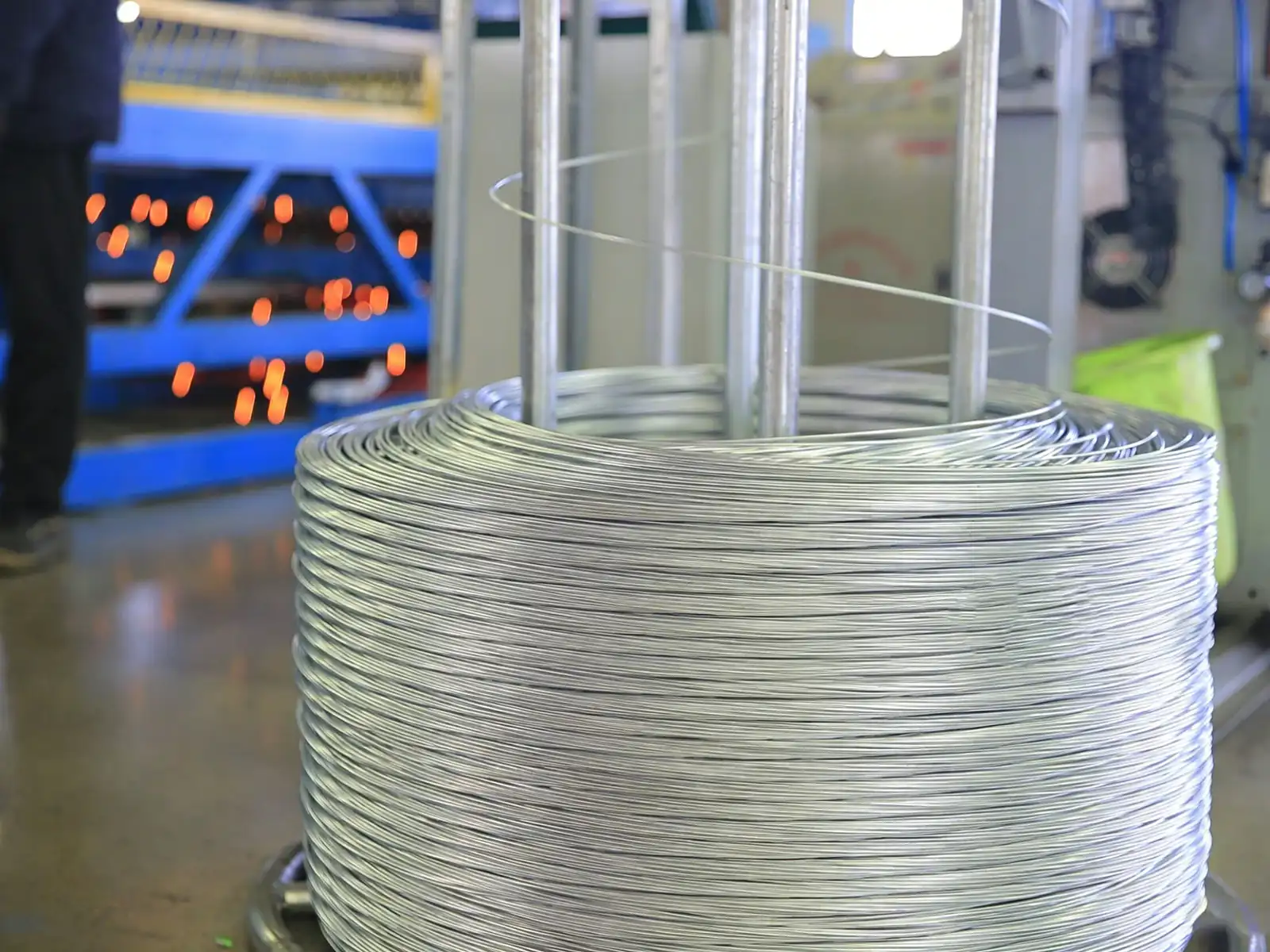
Looking for a procurement channel for high-quality GR1 titanium wire? Titanium Valley (Titanium Valley Materials) is your ideal choice. Located in the Baoji Titanium Valley Industrial Park, China, we are equipped with Danieli continuous rolling production lines from Italy and fully automated processing equipment, specializing in manufacturing GR1 industrial pure titanium wire with diameters from 0.06 to 10mm. Products comply with the ASTM B863 international standard, purity of 99.5 percent or greater, with clean and bright surfaces. Dimensional accuracy follows ASTM B863 specifications (tolerances shown in the table below), straightness at or below 2mm per meter. Annual capacity of 5,000 metric tons serves aerospace, medical devices, chemical processing, electronics, and new energy industries.
1. Why GR1 Titanium Wire Is the Preferred Material for Precision Manufacturing
Material Purity and Stability Advantages
GR1 titanium wire contains titanium content of not less than 99.5 percent, oxygen content at or below 0.18 percent, and iron content at or below 0.20 percent, representing the highest purity grade among industrial pure titanium. This strict composition control ensures microstructural uniformity and stability. Vacuum melting technology eliminates gas impurities and inclusions, keeping chemical composition variation across individual wires minimal and inter-batch performance differences negligible. This is crucial for manufacturers requiring long-term stable supply, avoiding process adjustments and product quality issues caused by material fluctuation.
Excellent Forming Ductility Performance
Heat Treatment State | Tensile Strength (MPa) | Yield Strength (MPa) | Elongation (%) | Hardness (HV) |
Annealed (O) | >= 240 | >= 170 | >= 24 | 100-140 |
Half-Hard (H1/4) | >= 345 | >= 275 | >= 10 | 140-180 |
Quarter Hard (H1/2) | >= 415 | >= 345 | >= 8 | 180-220 |
Full Hard (H) | >= 480 | >= 415 | >= 5 | 220-280 |
Annealed GR1 titanium wire exhibits elongation of 24 percent or greater with hardness of only 100 to 140 HV, demonstrating superior cold working performance. The material withstands repeated bending, coiling, stretching, and other complex forming operations without fracture. This high ductility, derived from its hexagonal close-packed crystal structure and low interstitial element content, makes titanium wire excel in precision weaving, micro-spring manufacturing, and medical device assembly. Compared with hard-temper or half-hard materials, annealed titanium wire is more suitable for applications requiring secondary processing, reducing tool wear and scrap rates.
Full-Temperature-Range Environmental Adaptability
GR1 titanium wire maintains stable mechanical properties across a temperature range of minus 253 degrees Celsius to 300 degrees Celsius during long-term service, a characteristic particularly prominent under extreme conditions. The material does not embrittle at low temperatures, making it suitable for cryogenic equipment using liquid hydrogen and liquid oxygen. At elevated temperatures, the oxide film demonstrates strong self-healing capability, with short-term tolerance up to 450 degrees Celsius (for durations of tens of minutes). The thermal expansion coefficient of titanium is only 8.4 times 10 to the negative 6th power per degree Celsius, close to glass and ceramics, resulting in minimal dimensional change under thermal cycling conditions, which is critical for precision instruments and sensor components. The non-magnetic characteristic (weak paramagnetism) makes it immune to electromagnetic field interference, ideal for high-frequency circuits.
Diameter Range (mm) | Dimensional Tolerance (mm) | Ovality (mm) | Straightness (mm/m) | Surface Roughness Ra |
0.06 – 0.20 | +/- 0.01 | <= 0.05 | <= 1.0 | <= 0.2 um |
0.20 – 1.00 | +/- 0.02 | <= 0.08 | <= 1.5 | <= 0.3 um |
1.00 – 3.00 | +/- 0.03 | <= 0.10 | <= 2.0 | <= 0.4 um |
3.00 – 10.00 | +/- 0.05 | <= 0.15 | <= 2.0 | <= 0.8 um |
2. Core Technical Parameters and Industry Standards of GR1 Titanium Wire
Dimensional Specifications and Precision Control
Production of ultra-fine specifications from 0.06 to 0.4mm presents difficulty in controlling surface defects and cross-sectional ovality. Multi-pass cold drawing combined with roller-die wire drawing process controls area reduction rate per pass at 15 to 25 percent, with dedicated lubricants preventing die sticking. For specifications above phi 6.0mm, ovality is controlled within 0.15 to 0.2mm, far superior to the industry common standard of 0.3mm. This precision improvement directly translates to higher material utilization and fewer post-processing operations.
Mechanical Properties and Heat Treatment States
Heat treatment temperature and holding time directly influence grain size and dislocation density. Annealing temperature is typically controlled at 650 to 750 degrees Celsius with holding for 1 to 2 hours under inert atmosphere protection, producing uniform equiaxed grain microstructure. Half-hard state is achieved by controlling cold working deformation, retaining partial work hardening effects while maintaining adequate ductility reserve. Customers can select appropriate states based on final product stress conditions and deformation requirements; Titanium Valley provides full-state customization services.
Surface Quality and Inspection Standards
Surface roughness directly affects titanium wire welding quality, biocompatibility, and service life. Pickled surface with Ra at or below 0.8 micrometers removes oxide scale and surface contamination, presenting a silver-gray matte finish. Bright-drawn surface with Ra at or below 0.4 micrometers is achieved through precision dies and controlled drawing speed, presenting a mirror gloss suitable for high-end medical and electronic applications. Surface inspection includes microscopic examination (50 to 200x magnification), roughness measurement, and Kodak gray-spot grading (at or below Level 3). Each batch is accompanied by complete surface quality reports and metallographic photographs ensuring traceability.
3. Production Advantages and Quality Assurance of Titanium Valley
Technical Breakthroughs of Danieli Production Line
The Italian Danieli continuous rolling production line, representing the world’s highest level of titanium and titanium alloy bar and wire manufacturing, features GCC short-stress mill configuration (5543 plus 4334 layout) with alternating horizontal and vertical grooves. Each pass achieves uniform deformation, avoiding width spread non-uniformity inherent in conventional 2-roll rolling. Induction heating systems combined with chamber furnaces achieve precise temperature control at 1,200 degrees Celsius with titanium billet heating uniformity within plus or minus 5 degrees Celsius. Reversible slab-moving mills perform initial breakdown of large titanium ingots; the continuous rolling main achieves high-precision continuous rolling; online cut-to-length shearing ensures head and tail processing precision.
Intelligent Automation Control System
The Danieli full-line automation control system performs closed-loop control over thousands of process points without manual intervention for stable production. Temperature, speed, tension, and dimensional parameters are monitored in real time with automatic deviation compensation. Rolling speed dynamically adjusts based on material temperature and deformation resistance, preventing overheating or cracking from insufficient temperature. Online detection equipment includes laser diameter gauges, infrared thermometers, and surface defect detectors.
5. Evaluating Comprehensive Strength of GR1 Titanium Wire Suppliers
Production Equipment and Technical Level
Top-tier suppliers should possess internationally advanced specialized equipment rather than generic metal processing machinery. Continuous rolling lines from Danieli and SMS group, designed specifically for titanium and superalloys, precisely control deformation temperature, strain rate, and cooling speed, overcoming industry challenges of titanium stick-slip, rapid cooling, and difficult deformation. Suppliers equipped with vacuum melting furnaces, roller-die drawing machines, online annealing furnaces, and laser diameter gauges can stably produce high-precision products. When visiting facilities, focus on equipment automation level, online detection configuration, and environmental control including temperature, humidity, and cleanliness.
Quality Certifications and Customer Cases
Authoritative certification systems provide external verification of quality assurance. Verify whether suppliers have passed ISO 9001 quality management system, ISO 13485 medical device quality system, and AS9100 aerospace quality system certifications. Request third-party test reports from institutions such as SGS and TÜV, rather than relying solely on self-inspection data. Diversity of customer cases reflects technical adaptability: suppliers serving aerospace, medical devices, chemical anti-corrosion, and electronics manufacturing across multiple high-end industries demonstrate ability to meet different standards and operating conditions.
Customization Response and Supply Stability
Large-scale production capacity determines stable supply. Suppliers with annual capacity above 5,000 metric tons possess raw material procurement advantages and production scheduling flexibility, unaffected by single orders impacting delivery. Inquire about minimum order quantities, conventional stock specifications, and emergency order response time. Customization services include special diameters, surface treatments, and packaging methods; assess supplier process flexibility and technical reserves. Long-term cooperative customers accounting for over 60 percent indicates product quality and service stability. Written commitments on delivery cycles, quality guarantees, and after-sales technical support policies should be required.
Conclusion
Procuring high-quality GR1 titanium wire requires comprehensive evaluation of material performance, supplier capability, and service assurance. Titanium Valley, leveraging Danieli production lines, 5,000-metric-ton annual capacity, and full-process quality systems, provides stable and reliable titanium wire supply for global precision manufacturing. From 0.06mm ultra-fine wire to 10mm structural wire, from annealed to hard-temper states, from pickled to bright-drawn surfaces, we meet the stringent requirements of aerospace, medical, chemical, and electronics industries, helping customers reduce costs, improve efficiency, and expand application boundaries.
Application Field | Wire Diameter (mm) | Key Requirement | Benefit of GR1 |
Medical Implants | 0.1 – 2.0 | Biocompatibility | ISO 5832-2 compliant, no cytotoxicity |
Electroplating Racks | 1.0 – 6.0 | Corrosion resistance | 24+ month service life vs 3-6 months for SS |
Fuel Cell Bipolar Plates | 0.06 – 0.5 | Conductivity + corrosion | Thin gauge with stable contact resistance |
Aerospace Fasteners | 1.0 – 4.0 | Strength + lightweight | High strength-to-weight ratio, non-magnetic |
FAQ
Q1: What is the main difference between GR1 and GR2 titanium wire?
GR1 has lower oxygen content (up to 0.18 percent versus up to 0.25 percent for GR2), higher purity, and better ductility with elongation of 20 percent or greater, making it particularly suitable for applications requiring deep cold working and high biocompatibility. GR2 has slightly higher strength but somewhat lower ductility and more economical cost, suitable for general corrosion-resistant structures. Select the appropriate grade based on specific operating conditions.
Q2: What are the production challenges for ultra-fine titanium wire (0.06 to 0.2mm)?
Main challenges include wire breakage risk during drawing, surface micro-defect control, ovality precision assurance, and hydrogen embrittlement prevention. Special alloy dies, dedicated lubrication systems, multi-pass small-deformation processes, and rigorous intermediate annealing are required. Superior suppliers achieve ultra-fine wire breakage rates below 0.5 percent with surfaces free of scratches and oxidation spots.
Q3: How do you verify the true material composition of GR1 titanium wire?
Reputable suppliers provide EN 10204 Type 3.1 certificates containing third-party tested chemical composition and mechanical property data. Independent laboratory retesting can be commissioned: spectral analysis verifies titanium content and impurity elements, tensile testing measures strength and elongation, metallographic analysis observes grain structure, and corrosion testing evaluates resistance. Verify that the laser-etched heat number on the wire surface matches the certificate.
Contact Titanium Valley Immediately for Customized Solutions
As a professional GR1 titanium wire manufacturer and supplier, Titanium Valley offers direct factory supply eliminating intermediary margins, providing highly competitive pricing and fast delivery. Our technical team is ready to provide material selection, process optimization, and application support. Send your specific requirements to sales@titaniumvalleys.com for detailed quotations and free samples.
For a broader view of available grades, supply forms, and related specifications, explore our Titanium Wire category.
For product-level details and supply options, you can also review our ASTM F67 Medical Gr1 Titanium Wire page.
References
Standardization Administration of China. GB/T 3623-2007 Titanium and Titanium Alloy Wire. Beijing: Standards Press of China, 2007.
General Administration of Quality Supervision, Inspection and Quarantine of the People’s Republic of China. GB/T 3620.1-2007 Titanium and Titanium Alloy Grades and Chemical Composition. Beijing: Standards Press of China, 2007.
Zhang Xiyan, Zhao Yongqing, Bai Chenguang. Titanium Alloys and Their Applications. Beijing: Chemical Industry Press, 2005.
Zhu Zufang. Processing Technology of Nonferrous Metal Materials. Beijing: Metallurgical Industry Press, 2008.