
Why Do Aerospace Engineers Prefer GR5 Titanium Foil?
- Gr5 Titanium Foil
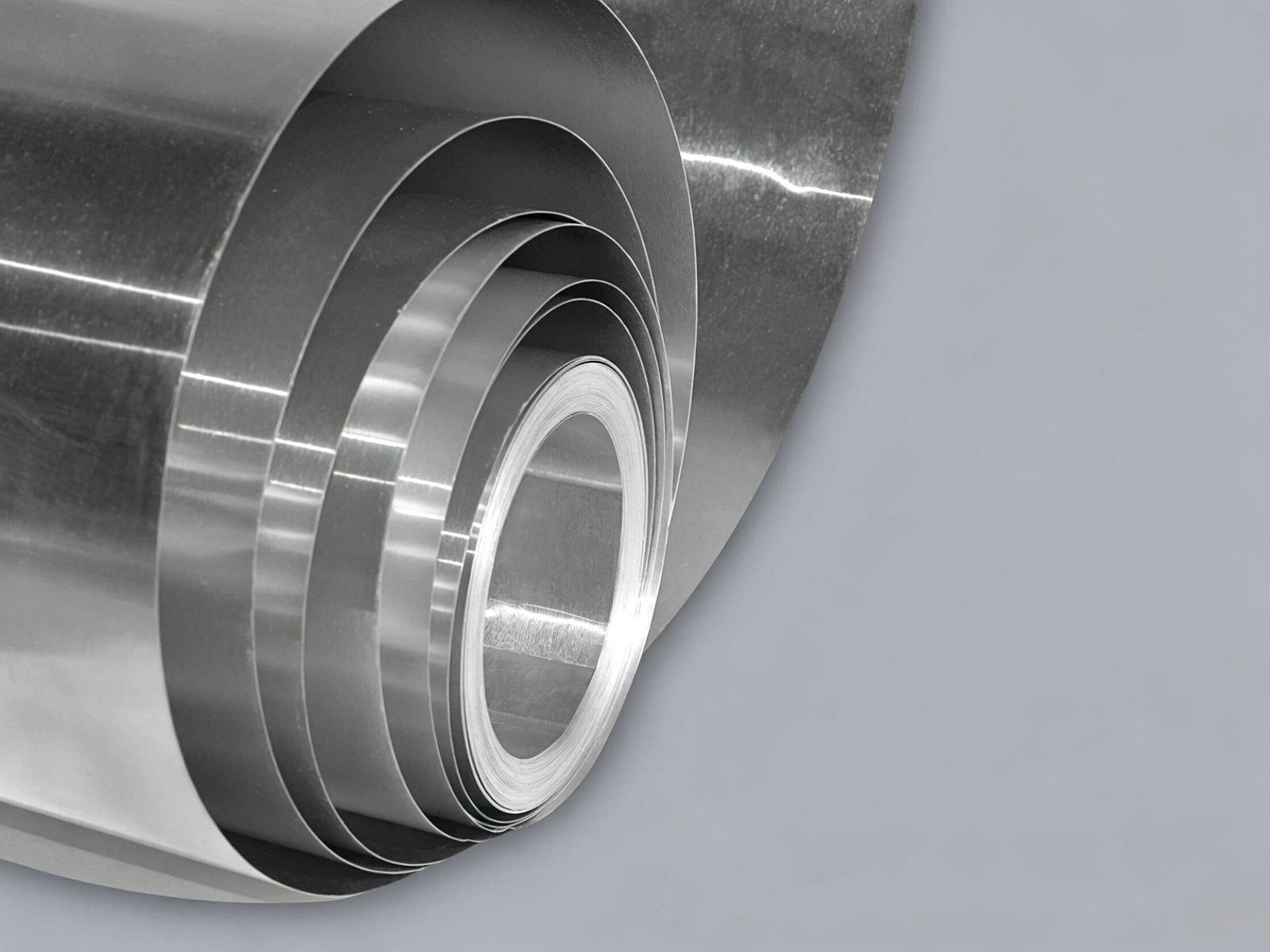
The core reason aerospace engineers prefer GR5 titanium foil lies in its unique balance of material properties: Ti-6Al-4V alloy provides tensile strength of 895 MPa or greater, far exceeding commercial pure titanium grades, while maintaining a low density of only 4.43 g/cm3, approximately 60 percent that of steel. This high specific strength enables aircraft structures to achieve 30 to 40 percent weight reduction under equivalent load conditions, directly translating to improved fuel efficiency and increased payload capacity. More critically, GR5 titanium foil demonstrates superior corrosion resistance, fatigue life, and wide-temperature-range stability, making it the optimal material for solving the high-strength versus lightweighting contradiction in aerospace structural design.
1. Materials Science Advantages of GR5 Titanium Foil: Why It Surpasses Traditional Aerospace Materials
Strength Breakthrough from Alpha-Beta Dual-Phase Microstructure
Property | GR5 (Ti-6Al-4V) | GR2 (CP Ti) | 7075 Aluminum | 304 Stainless Steel |
Tensile Strength (MPa) | 895-1100 | 345-450 | 570 | 515 |
Yield Strength (MPa) | 825+ | 275-420 | 505 | 205 |
Elongation (%) | 10-15 | 20+ | 8-12 | 40+ |
Density (g/cm3) | 4.43 | 4.51 | 2.81 | 7.93 |
Specific Strength | 210 kN-m/kg | 100 kN-m/kg | 203 kN-m/kg | 64 kN-m/kg |
Fatigue Strength (MPa) | 500 (10^7 cycles) | 200 | 180 | 140 |
Max Service Temp (C) | 350 | 300 | 150 | 500 |
The microstructure of Ti-6Al-4V consists of alpha phase (hexagonal close-packed) and beta phase (body-centered cubic). This dual-phase structure achieves synergistic strengthening through alpha and beta phase interaction, reaching tensile strength of 930 to 1,100 MPa and stable yield strength above 825 MPa. Compared with GR2 commercial pure titanium at 345 MPa tensile strength, GR5 achieves nearly three-fold improvement. Aluminum stabilizes the alpha phase providing solid-solution strengthening, while vanadium stabilizes the beta phase enhancing toughness.
Engineering Significance of Specific Strength Advantage
Density of 4.43 g/cm3 gives GR5 titanium foil a specific strength (strength-to-density ratio) of 210 kN-m/kg, far exceeding 7075 aluminum alloy at 203 kN-m/kg and stainless steel at approximately 64 kN-m/kg. In fuselage skin applications, replacing 0.8mm aluminum alloy sheet with 0.3mm GR5 titanium foil achieves approximately 38.5 percent weight reduction while increasing load-bearing capacity by 20 percent. The lower elastic modulus (110 GPa for GR5 versus 70 GPa for aluminum) provides better damping characteristics, reducing vibration-induced fatigue in aircraft structures.
Reliability Assurance from Fatigue Resistance Performance
Alternating loads on aerospace structural components make fatigue failure the primary risk. GR5 titanium foil achieves fatigue strength of 500 MPa at stress ratio R equals negative 1 (10 to the 7th power cycles), with crack propagation rate only one-third that of aluminum alloys. Alpha laths in the alpha-beta structure effectively deflect crack paths, while beta phase provides plastic buffering that delays crack propagation. This microscopic damage tolerance mechanism makes GR5 titanium foil particularly suitable for high-cycle applications such as landing gear doors and flap guide rails.
2. Extreme Environment Adaptability: The Material Touchstone for Aviation Conditions
Wide-Temperature-Range Performance Stability
Cruise altitude temperatures of minus 56 degrees Celsius and engine compartment temperatures of 300 degrees Celsius present bidirectional challenges to aerospace materials. GR5 titanium foil shows 15 percent strength increase at minus 100 degrees Celsius while maintaining toughness, avoiding low-temperature embrittlement. During long-term service at 300 degrees Celsius, strength attenuation is only 8 to 10 percent, far superior to the 50 percent attenuation of aluminum alloys. This thermal stability derives from the stable crystal structure of the alpha phase at elevated temperatures and the fixing effect of vanadium on the beta phase. Turbine engine heat shields and exhaust system components benefit from this wide-temperature capability.
Long-Term Guarantee from Corrosion Resistance Performance
Marine environments and chemical medium exposure represent invisible threats to aerospace materials. The TiO2 passive film that spontaneously forms on GR5 titanium foil reaches 2 to 7 nanometers thickness, achieving pitting potential as high as plus 600 mV (versus SCE) in seawater with 3.5 percent chloride concentration, with corrosion rate below 0.01mm per year, far lower than 0.15mm per year for 2024 aluminum alloy. This enables key load-bearing structures of maritime patrol aircraft and naval aircraft to operate maintenance-free for over 20 years. The superior corrosion resistance eliminates the need for protective coatings, reducing manufacturing complexity and lifecycle maintenance costs.
Non-Magnetic and Electromagnetic Compatibility Characteristics
Modern aircraft with densely distributed radar, communication, and navigation systems are highly sensitive to electromagnetic interference. GR5 titanium foil, with paramagnetic properties (magnetic susceptibility chi equals plus 1.8 times 10 to the negative 6th power) and high resistivity (170 microhm-cm), serves as a natural electromagnetic shielding material. Constructing a Faraday cage with 0.08mm thick GR5 titanium foil in avionics equipment compartments achieves shielding effectiveness above 60 dB across the 1 to 10 GHz frequency band, while weighing only 40 percent of equivalent copper foil solutions.
3. Precision Manufacturing Capability: Engineering Realization of Ultra-Thin Wide-Format Specifications
20-Roll Finishing Technology Breaking Through Thickness Limits
Conventional 4-roll or 6-roll mills face challenges of excessive rolling force and loss of flatness control when processing high-strength titanium alloys. The 750mm 20-roll Sendzimir mill distributes pressure through multi-point support from intermediate and backup rolls, achieving single-pass reduction rates of 15 to 20 percent and cumulative reduction above 98 percent, enabling stable production at the 0.03mm thickness. Combined with online thickness gauges (precision plus or minus 0.002mm) and hydraulic AGC systems, full-length thickness deviation is controlled within plus or minus 0.002mm, ensuring uniform mechanical properties across the entire sheet width.
Flatness Control and Surface Quality Assurance
Parameter | Standard Range | Aerospace Premium | Control Method |
Thickness Tolerance | +/- 0.005mm | +/- 0.002mm | Hydraulic AGC |
Width Tolerance | +/- 0.5mm | +/- 0.1mm | Laser feedback slitting |
Surface Roughness Ra | <= 0.8 um | <= 0.4 um | Ultrasonic cleaning |
Flatness | <= 5 mm/m | <= 3 mm/m | Stretch leveling |
Batch Variation | <= 5% | <= 3% | Full-process SPC |
Wide-format titanium foil of 350 to 670mm is prone to edge wave and center wave flatness defects during rolling, severely affecting subsequent stamping and welding quality. Through roll cross-angle adjustment, segmented cooling control, and stretch leveling (tension 800 to 1200N), flatness is controlled at 3mm per meter or less (Level 1 precision). Laser flatness detection systems monitor full-width fluctuations in real time, with closed-loop feedback regulating roll gap pressure distribution, ensuring suitability for honeycomb core stamping and precision welding operations.
Surface Quality and Cleanliness Control
Aerospace titanium foil has extremely low tolerance for surface defects, with individual inclusions above 0.1mm serving as fatigue crack initiation sites. Four-stage ultrasonic cleaning (alkaline wash, acid wash, pure water rinse, drying) removes rolling oil and oxide scale, achieving surface roughness Ra of 0.4 micrometers or less. Continuous vacuum annealing furnaces (vacuum level below 10 to the negative 3rd power pascals) prevent high-temperature oxidation, with alpha-beta phase transformation completed in inert atmosphere and oxygen content controlled below 0.18 percent. Before shipment, 100 percent surface inspection ensures zero defect delivery for aerospace applications.
4. In-Depth Analysis of Aerospace Application Scenarios
Core Material for Honeycomb Sandwich Structures
Application | Foil Thickness (mm) | Key Requirement | Weight Saving vs Alternative |
Honeycomb Cores | 0.03-0.05 | High shear strength | 70% vs solid plate |
Thermal Shields | 0.1-0.3 | High-temp stability | 60% vs ceramic fiber |
EM Shielding | 0.05-0.15 | 60dB+ shielding | 60% vs copper |
Structural Panels | 0.3-0.8 | High specific strength | 38% vs aluminum |
Aerospace honeycomb sandwich structures consist of top and bottom facesheets with a central honeycomb core. GR5 titanium foil of 0.03 to 0.05mm thickness is stamped into hexagonal or other configurations, expanded, and bonded to form the core material. Compared with aluminum honeycomb, titanium honeycomb shows 60 percent higher shear strength and 80 percent higher compressive strength, with no performance attenuation at 300 degrees Celsius. A fighter aircraft intake using titanium honeycomb sandwich (0.04mm foil plus 0.3mm facesheet) achieved 70 percent weight reduction compared to solid plate while maintaining equivalent structural stiffness.
Thermal Protection Systems and Insulation Barriers
Aerodynamic heating from high-speed flight and engine radiation heat require effective isolation. Corrugated or pleated insulation screens made from GR5 titanium foil of 0.1 to 0.3mm thickness utilize the low thermal conductivity of air gaps (combined thermal conductivity below 0.15 W per meter-Kelvin) to reduce hot-side temperatures of 300 degrees Celsius to below 80 degrees Celsius on the back side. Supersonic aircraft leading edges and fuselage hot-spot areas employ multi-layer titanium foil insulation systems (3 to 5 layers with 2 to 5mm interlayer spacing), weighing only 40 percent of equivalent ceramic fiber blankets while providing superior mechanical durability.
Precision Instrument Compartments and Electronic Equipment Protection
Avionics systems and flight control computers are highly sensitive to vibration and electromagnetic environments. Equipment mounting frames and shielding enclosures manufactured from GR5 titanium foil of 0.05 to 0.15mm thickness provide dual advantages of stiffness (bending stiffness approximately 57 percent higher than same-thickness aluminum alloy) and damping (vibration decay 15 percent faster). An electro-optical pod housing for a certain UAV model, manufactured from 0.08mm titanium foil spinning, weighs only 180 grams yet withstands 12g overload without deformation, combined with titanium foil woven electromagnetic shielding achieving complete electromagnetic isolation.
5. Supply Chain Capability and Quality Assurance System
Scaled Production with 3,000-Metric-Ton Annual Capacity
Baoji Titanium Valley invested 36.2 million USD in an automated foil production line, breaking through seven technical bottlenecks in wide-format high-strength titanium alloy manufacturing: surface color control (Delta E below 1.5), thickness tolerance control (plus or minus 0.002mm), annealing microstructural uniformity (grain size deviation at or below 1 grade), high-precision slitting (burr below 0.02mm), flatness stability (Level 1), surface cleanliness (particle count below specified limits), and batch-to-batch consistency (performance variation below 3 percent). This production capacity serves 50 to 80 medium-sized aerospace manufacturers with stable supply.
Aerospace-Grade Quality Certification System
Products fully comply with ASTM B265, AMS 4911, EN 2876, and other international standards. Chemical composition analysis employs ICP-OES (precision 0.001 percent), mechanical property testing follows ASTM E8 standards (5 parallel samples), and metallographic inspection executes ASTM E112 and E1382. ISO 9001 and AS9100D dual-certified quality management system establishes 18 quality control points at critical processes, with complete traceability from raw material melting through final delivery. Each batch is accompanied by EN 10204-3.1 material certificates and full test reports.
Customized Services and Technical Support
Full-process customization for special aerospace projects: thickness range from 0.02 to 1.0mm with any specification (tolerance plus or minus 0.002mm), precision slitting to width within plus or minus 0.5mm, cut-to-length or contour cutting per drawings. Surface treatments include sandblasting (Ra 0.8 to 1.2 micrometers), electrolytic polishing (Ra below 0.1 micrometers), and anodizing (film thickness 5 to 15 micrometers). Material formability assessment services include cupping tests, bend tests, and fatigue testing. Technical teams provide application engineering support for structural design optimization and manufacturing process consultation.
Conclusion
GR5 titanium foil, through the intrinsic strength advantage of Ti-6Al-4V alloy, microscopic regulation of alpha-beta dual-phase structure, precision manufacturing of ultra-thin wide-format specifications, and wide-temperature-range environmental adaptability, has become the optimal material for aerospace engineers solving the high-strength versus lightweighting contradiction. Its specific strength achieved through 930 MPa class strength combined with 4.43 g/cm3 density directly translates to 15 to 25 percent structural weight reduction and corresponding fuel economy improvement. From honeycomb sandwich structures and thermal protection systems to avionics shielding and precision instrument housings, GR5 titanium foil continues to expand its application boundaries in the aerospace industry.
FAQ
Q1: What is the main difference between GR5 titanium foil and commercial pure titanium foil in aerospace applications?
GR5 titanium foil uses Ti-6Al-4V alloy with tensile strength of 895 MPa or greater, 2.6 times that of commercial pure GR2, and yield strength more than 3 times higher, making it suitable for primary load-bearing structures. Commercial pure titanium foil has lower strength but better ductility, suitable for deep drawing. GR5 high-temperature performance (stable at 300 degrees Celsius long-term) and fatigue life (above 10 to the 7th power cycles) far exceed commercial pure titanium, but costs approximately 40 percent more and cold forming is more difficult.
Q2: How is strength maintained in 0.03mm ultra-thin GR5 titanium foil?
Uniform deformation is achieved through 20-roll finishing, avoiding local thinning. Vacuum annealing precisely controls temperature in the alpha-beta phase transformation range (880 to 920 degrees Celsius for 1 to 2 hours), forming fine uniform dual-phase microstructure. Oxygen content is strictly controlled below 0.18 percent to prevent embrittlement. Grain refinement at ultra-thin specifications actually increases strength through the Hall-Petch effect, with 0.03mm foil achieving measured tensile strength of 950 to 1,050 MPa, meeting honeycomb core load-bearing requirements.
Q3: What are the delivery lead time and minimum order quantity for aerospace-grade GR5 titanium foil?
Standard specifications (0.05 to 0.5mm thickness) have 2 to 3 week delivery, custom specifications require 6 to 8 weeks. Minimum order quantity starts at 50kg (approximately 200 to 500 square meters depending on thickness). Sample trial service is supported (10 to 20kg, 5 to 7 working days) for formability verification and welding process evaluation. Bulk orders above 1 ton can negotiate dedicated production scheduling ensuring delivery stability and batch consistency, with consignment inventory and VMI services available for key aerospace customers.
Finding a Reliable GR5 Titanium Foil Manufacturer
Titanium Valley, as a global leading GR5 titanium foil manufacturer and supplier, leverages a 36.2 million USD automated production line and 3,000 metric tons annual capacity to provide aerospace customers with high-precision titanium alloy foil in specifications from 0.03 to 0.8mm by 350 to 670mm. Products comply with ASTM B265 and AMS 4911 standards, certified under AS9100D aerospace quality management system. We support customized batch supply with complete material traceability. Contact us: sales@titaniumvalleys.com
For a broader view of available grades, supply forms, and related specifications, explore our Titanium Foil category.
For product-level details and supply options, you can also review our Aerospace Gr5 Titanium Foil page.
References
Zhang Baochang. Nonferrous Metals and Their Heat Treatment. Xi an: Northwestern Polytechnical University Press, 1993.
Zhao Yongqing, Xi Zhengping, Qu Henglei. Titanium Alloys and Their Processing Technology. Beijing: Metallurgical Industry Press, 2010.
Li Chenggong, Fu Hengzhi, Yu Qiao. Aerospace Materials. Beijing: National Defense Industry Press, 2002.
Liu Dong, Wang Yonghong. Applications and Development Trends of Titanium Alloys in Aircraft Engines. Journal of Aerospace Materials, 2010, 30(1): 1-8.