
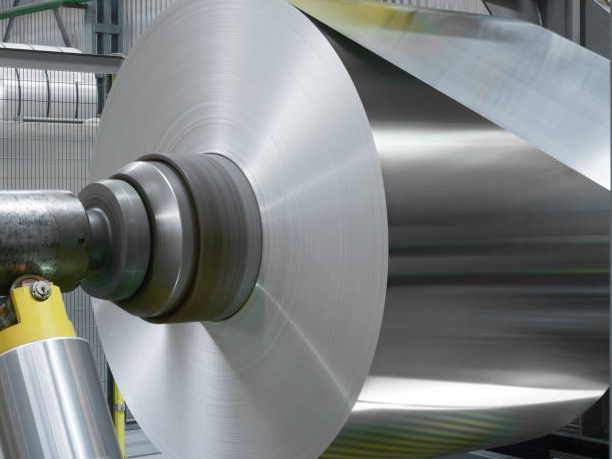
Gr2 titanium foil ranks among the most widely used commercially pure titanium materials. It delivers strong corrosion resistance, moderate strength and good workability. It serves as a key material for chemical production, marine engineering, new energy, aerospace and many other sectors. Its titanium content exceeds 99.2%. The thickness ranges from 0.02 mm to 1.0 mm, and the maximum width reaches 680 mm. It meets diverse demands for precision electronic parts and large chemical equipment. Compared with Gr1 titanium foil, Gr2 titanium foil retains excellent ductility and offers higher structural strength. It works well in moderately corrosive environments and structural support applications.
1. Why Chemical Industry Chooses Gr2 Titanium Foil for Corrosion Protection
1.1 Material Stability in Highly Corrosive Media
Chemical production often uses sulfuric acid, hydrochloric acid, lye and other harsh corrosive fluids. Common metals corrode and fail quickly in such working conditions. A dense titanium dioxide passivation film forms rapidly on Gr2 titanium foil surfaces. This film is only several nanometers thick, yet it effectively blocks corrosive ions.
When the temperature stays below 60 °C, the corrosion rate stays below 0.01 mm per year in sulfuric acid with concentration under 10% or hydrochloric acid with concentration under 40%. Under the same conditions, 316 stainless steel has a corrosion rate of 0.1 mm to 0.5 mm per year. The exact value changes with solution temperature and flow speed. The passivation film features self-healing performance. It reforms quickly in oxygen-rich environments even after minor damage, so the material runs stably for a long time.
1.2 Application Advantages for Equipment Lining and Reaction Vessels
Traditional anti-corrosion linings for chemical equipment use rubber lining, enamel or multi-layer welded structures. These solutions have too many joints, complex installation and frequent leakage points. People use Gr2 titanium foil with thickness from 0.3 mm to 0.8 mm to make integrated linings. Precision rolling and argon arc welding create designs with few joints or even seamless surfaces. Weld joints reach over 90% of the base metal strength and greatly lower the risk of stress corrosion cracking.
Wide Gr2 titanium foil, up to 670 mm wide, cuts the number of longitudinal welds for reaction vessels. It reduces welding work by more than 30% and improves overall sealing performance.
1.3 Economic Analysis of Maintenance Cost and Service Life
Gr2 titanium foil costs more than ordinary stainless steel or plastic-lined materials at the initial purchase stage. It shows obvious economic advantages when calculating the total life cycle cost. Data from a domestic chlor-alkali enterprise shows electrolytic cells with Gr2 titanium foil liners work for more than 15 years. Traditional nickel alloy liners need replacement every 3 to 5 years.
When counting equipment shutdown maintenance, material replacement and labor costs, Gr2 titanium foil cuts total operating costs by around 40%. Its long-term stability suits continuous production lines and avoids output loss from frequent shutdowns. The total cost index in the table takes Gr2 titanium foil as the benchmark value 100, based on full life cycle costs including purchase, installation, maintenance and replacement.
| Corrosion Resistant Material | Gr2 Titanium Foil | 316 Stainless Steel | Nickel Alloy | Plastic / Rubber Lining |
| Acid and Alkali Resistance | Excellent | Moderate | Excellent | Good |
| Service Life (Year) | 15+ | 5 ~ 8 | 8 ~ 12 | 3 ~ 5 |
| Weldability | Excellent | Good | Poor | Non-weldable |
| Maintenance Frequency | Low | Moderate | Moderate | High |
| Total Cost Index | 100 | 130 | 150 | 180 |
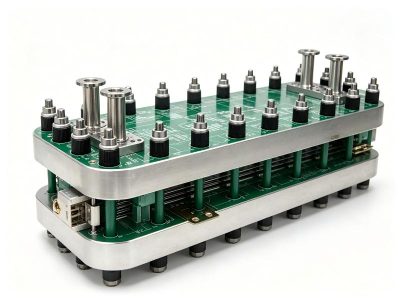
2. How Gr2 Titanium Foil Meets Requirements of Marine Engineering and Seawater Desalination
2.1 Long-term Corrosion Resistance in Seawater
Seawater is a complex electrolyte solution with high chloride ions. It causes severe pitting and crevice corrosion on most metals. Gr2 titanium foil has a natural potential of about -0.05 V relative to the saturated calomel electrode, and stays within the passivation range. Its corrosion rate remains below 0.001 mm per year even when seawater flows at 3 m/s. The rate is low enough to ignore in actual use.
Heat exchangers made of Gr2 titanium foil have run for over 20 years in the Jubail seawater desalination plant in Saudi Arabia. No perforation or obvious thickness loss appears during operation. Copper-nickel alloys and super duplex stainless steel cannot match this performance.
2.2 Material Selection for Seawater Desalination Equipment
Multi-effect distillation and multi-stage flash evaporation systems for seawater desalination need large quantities of high-efficiency heat transfer tubes. Manufacturers process Gr2 titanium foil into heat exchange tubes with thickness from 0.4 mm to 0.6 mm via precision forming. Its thermal conductivity is lower than copper alloys, but it needs no extra thickness to resist corrosion. It thus provides larger effective heat transfer area.
A seawater desalination project in Fujairah, the United Arab Emirates, uses heat exchangers made of Gr2 titanium foil. The equipment cleaning cycle extends from once a month to once every three months. The system operating efficiency rises by 12%, and annual maintenance costs drop by more than 150,000 US dollars.
2.3 Lightweight Application for Offshore Platforms and Shipbuilding
Marine engineering has growing demand for lightweight materials. Gr2 titanium foil has a density of 4.51 g/cm³, about 60% of steel. It cuts equipment weight sharply while keeping structural strength. An offshore platform replaces traditional steel pipes with pipes made of Gr2 titanium foil for seawater circulation systems. The total weight drops by about 35%. It reduces foundation load and simplifies hoisting and installation work.
In shipbuilding, ultra-thin Gr2 titanium foil with thickness from 0.02 mm to 0.1 mm serves as shielding layers for sonar devices. It resists seawater corrosion and does not interfere with sound wave transmission.
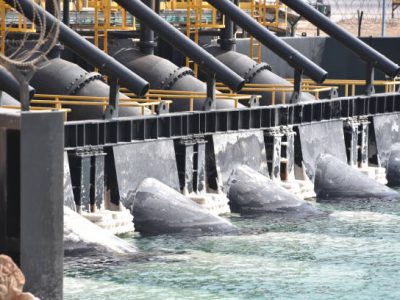
3. Roles of Gr2 Titanium Foil in New Energy Industry
3.1 Technical Advantages as Substrates for Water Electrolysis Hydrogen Production
Hydrogen energy is a major clean energy source, and water electrolysis technology develops rapidly. Both proton exchange membrane electrolyzers and alkaline electrolyzers need electrode substrates with strong corrosion resistance and good conductivity. Gr2 titanium foil has a resistivity of 0.56 μΩ·cm. Its conductivity is not as good as copper or aluminum, but it works far more stably than ordinary metals in strong alkaline or acidic electrolytes.
People coat its surface with precious metals like platinum and iridium, or conductive ceramic layers. The finished products act as high-performance bipolar plates with a service life over 50,000 hours. A domestic electrolysis equipment maker uses Gr2 titanium foil with thickness from 0.1 mm to 0.3 mm. The electrode weight falls by 40%, and the power density of the electric stack increases by 18%.
3.2 Current Collector for Lithium Batteries and Fuel Cells
Copper foil is the traditional current collector for lithium battery anodes. It tends to oxidize under high voltage or high temperature. Gr2 titanium foil features outstanding oxidation resistance, so it is an ideal current collector for special battery systems such as lithium titanate batteries. Its tensile strength stays above 345 MPa. It withstands volume change stress during charging and discharging and avoids fracture.
For fuel cells, workers grind ultra-thin Gr2 titanium foil with thickness from 0.02 mm to 0.05 mm. Its surface dyne value exceeds 40. It fits tightly with proton exchange membranes, lowers contact resistance and improves battery output efficiency.
3.3 Weather-resistant Parts for Photovoltaic and Wind Power Equipment
New energy devices work outdoors all year round and face high temperature, high humidity, salt spray and other corrosive factors. Stamped parts made of Gr2 titanium foil connect photovoltaic brackets and fasten components on offshore wind turbine platforms. These parts run maintenance-free for more than 20 years.
The salt spray corrosion rate of Gr2 titanium foil in coastal areas is only 1/50 of hot-dip galvanized steel. It greatly extends equipment service life. An offshore wind farm in Rudong, Jiangsu Province uses gaskets made of Gr2 titanium foil. Regular inspections show no obvious rust on fasteners, and the torque retention rate stays above 95%. It cuts maintenance work and potential safety risks.
| New Energy Application | Thickness (mm) | Core Advantages | Typical Usage |
| Water Electrolysis for Hydrogen | 0.1 ~ 0.3 | Resist strong acid and alkali, support catalytic coating | Bipolar plate, electrode substrate |
| Lithium Battery | 0.02 ~ 0.08 | Anti-oxidation, stable conductivity | Anode current collector |
| Fuel Cell | 0.02 ~ 0.05 | High surface activity, low contact resistance | Gas diffusion layer substrate |
| Photovoltaic Equipment | 0.3 ~ 0.8 | Strong weather resistance, light weight | Connector, shielding part |
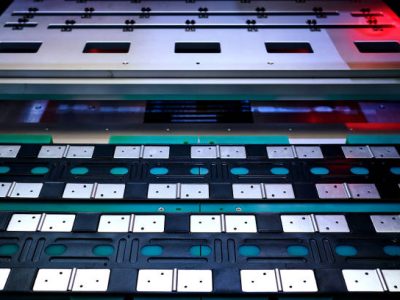
4. Special Requirements for Gr2 Titanium Foil in Aerospace and Precision Electronics
4.1 Material Standards for Lightweight Structural Parts in Aerospace
Aerospace industry attaches great importance to weight control. Every one kilogram of weight reduction saves thousands of US dollars in fuel costs. Gr2 titanium foil has higher specific strength than aluminum alloy. It is the top choice for non-load-bearing structural parts that need corrosion resistance and medium strength.
People use Gr2 titanium foil with thickness from 0.3 mm to 0.5 mm for hydraulic pipes, fuel tank liners and heat exchangers of environmental control systems on aircraft. The material meets FAA and EASA airworthiness standards and achieves weight reduction goals. A commercial aircraft replaces part of its stainless steel pipes with Gr2 titanium foil components. The single aircraft weight drops by about 25 kilograms. Over its 20-year service life with 3,000 flight hours each year, the total fuel cost saves more than 300,000 US dollars.
4.2 Electromagnetic Shielding and Radio Frequency Interference Suppression
Precision electronic devices set strict rules for electromagnetic interference control. Gr2 titanium foil has good conductivity and non-magnetic properties. Its shielding effectiveness reaches 60 dB to 80 dB within the frequency range of 100 MHz to 1 GHz. It suits shielding covers for high-frequency circuits.
Unlike copper foil and aluminum foil, Gr2 titanium foil does not lose shielding performance due to oxidation. It keeps stable grounding resistance in high-humidity environments. A 5G base station manufacturer uses 0.05 mm ultra-thin Gr2 titanium foil as shielding layers for radio frequency modules. The products pass MIL-STD-461 military electromagnetic compatibility tests, and the customer return rate drops by 70%.
4.3 Stability Assurance for Sensors in Precision Instruments
Sensors for aerospace equipment need steady size and consistent signal within the temperature range from -55 °C to +150 °C. Gr2 titanium foil has a thermal expansion coefficient of 8.6×10⁻⁶/°C, close to most ceramic materials. It works as elastic substrates for strain gauges and pressure sensors.
Diaphragm pressure sensors made of 0.08 mm Gr2 titanium foil run continuously for more than 5 years on satellite attitude control systems. The zero drift stays below 0.1% full scale, and the measurement accuracy remains within ±0.5%. Beryllium copper and phosphor bronze cannot reach such long-term stability.

5. Improve Application Value of Gr2 Titanium Foil via Process Innovation
5.1 Breakthrough in Ultra-thin and Wide Rolling Technology
Traditional titanium foil production struggles to control flatness when rolling ultra-thin products. Baoji Titanium Valley Titanium Nickel Zirconium Material Processing Co., Ltd. builds production lines with 20-high precision rolling mills. The lines adopt multi-pass low-tension rolling and online flatness detection systems. They realize stable production of 0.02 mm ultra-thin foil.
The rolling speed hits 400 meters per minute, and the thickness tolerance stays within ±0.001 mm. The precision is far better than traditional 4-high or 6-high rolling mills. Optimized roller design and edge thinning compensation technology expand the maximum rolling width to 670 mm. The material meets demands for wide-size products used in large chemical equipment and electronic devices.
5.2 Functional Upgrade through Surface Treatment
Surface conditions directly affect coating adhesion and welding quality of Gr2 titanium foil. Combined ultrasonic cleaning and alkaline washing remove micron-scale oil stains and oxide layers, and lift the surface dyne value above 40%. Continuous annealing lines use seven-section electric heating control with temperature accuracy of ±2 °C. It unifies material structure and eliminates residual stress from cold rolling.
Controlled grinding creates uniform surfaces with surface roughness Ra from 0.2 μm to 0.8 μm. Such surfaces fit epoxy coating, PVD coating and other surface modification processes. A medical device manufacturer reports that surface-treated Gr2 titanium foil has 3 times higher coating adhesion and passes ISO 10993 biocompatibility tests.
5.3 Precision Slitting and Custom Processing Capacity
Downstream customers require tight width tolerance for titanium foil. Ordinary shearing and slitting leave burrs and unstable width. High-precision circular shear slitting lines match with automatic width feedback systems. They keep width tolerance within ±0.1 mm and produce burr-free edges.
The production line supports custom widths from 15 mm to 680 mm to meet small-batch and multi-specification demands of battery and electronic industries. The minimum order quantity is only 50 kilograms. A Japanese electronic enterprise orders Gr2 titanium foil with fixed 42 mm width for laminated capacitor electrodes. The width consistency reaches ±0.05 mm, and the finished product rate rises to 98.5%. It effectively cuts production costs.
| Process Section | Core Technology | Control Index | Application Value |
| Precision Rolling | 20-high rolling mill + online thickness detection | Thickness tolerance ±0.001 mm | Stable production of ultra-thin materials |
| Surface Cleaning | Ultrasonic cleaning + alkaline washing | Dyne value ≥ 40 | Improve coating adhesion |
| Continuous Annealing | Seven-section temperature control | Temperature accuracy ±2 °C | Uniform structure and stable performance |
| Precision Slitting | Circular shear + automatic width detection | Width tolerance ±0.1 mm | Meet high-precision requirements |
Conclusion
Gr2 titanium foil features unique material properties and advanced processing technologies. It has become an irreplaceable high-performance material for chemical anti-corrosion, marine engineering, new energy, aerospace and other fields.
With the expansion of industries like water electrolysis hydrogen production, seawater desalination and lightweight aerospace manufacturing, the global annual demand for Gr2 titanium foil will exceed 30,000 tons before 2030. The new energy sector contributes around 45% of the total growth. Large-scale production will cut the processing cost of ultra-thin (below 0.05 mm) and extra-wide (above 600 mm) products by 20% to 30%. It will promote wider use of Gr2 titanium foil in mid-end application scenarios. Gr2 titanium foil will create long-term and stable economic benefits for global industrial upgrading and green energy transition.
FAQ
1. How to choose between Gr1 and Gr2 titanium foil in practical use?
Gr2 titanium foil has about 20% higher strength than Gr1, with tensile strength above 345 MPa. It suits scenarios needing structural support, such as liners for chemical equipment and pressure vessels. Gr1 titanium foil has better ductility and fits superplastic forming and ultra-thin wall parts. Make choices based on strength requirements and processing difficulty of actual working conditions.
2. Common problems during welding of ultra-thin Gr2 titanium foil
Materials thinner than 0.1 mm require strict heat input control to avoid burn-through and deformation. Laser welding or micro-plasma welding are the preferred methods. The purity of argon shielding gas should reach 99.99% or higher. Adjust welding speed according to foil thickness. Fully clean surface oil before welding and use special fixtures to reduce thermal deformation.
3. Main factors affecting price changes of Gr2 titanium foil
Sponge titanium raw material price is the key factor, which accounts for 50% to 60% of the total cost. Rolling processing cost links closely with foil thickness and width. Ultra-thin and extra-wide products have higher processing difficulty and higher costs.
The reference price of standard Gr2 titanium foil (0.1 mm thick, standard width) in the domestic market ranges from 80 US dollars to 120 US dollars per kilogram. The final price depends on order quantity, surface treatment requirements and delivery time. Long-term clients can sign framework agreements to lock prices.
Get High-performance Gr2 Titanium Foil Solutions
Baoji Titanium Valley Titanium Nickel Zirconium Material Processing Co., Ltd. is a professional manufacturer and supplier of Gr2 titanium foil. We own advanced production lines with an annual output of 3,000 tons for ultra-thin and wide titanium foil, and provide customized products. All materials comply with ASTM B265 standards and come with complete material test reports. Contact us for technical consultation and sample tests: sales@titaniumvalleys.com.
References
- Wang Jinyou, Ma Yujun, Li Guizhi. Corrosion Behavior and Application of Commercially Pure Gr2Titanium in Chemical Media[J]. Titanium Industry Progress, 2018, 35(2): 15-18.
- Zhang Xiaoming, Liu Wei, Chen Jun. Research on Application of Titanium Foil in Seawater Desalination and Marine Engineering[J]. Rare Metal Materials and Engineering, 2020, 49(6): 2105-2110.
- Zhao Yongqing, Zhou Lian. Application Progress of Titanium Alloys in Water Electrolysis for Hydrogen Production in New Energy Field[J]. Chinese Journal of Rare Metals, 2019, 43(10): 1001-1008.
- Yang Guanjun, Li Tiezhu. Application of Titanium and Titanium Alloys in Weight Reduction Design of Civil Aircraft[J]. Materials Reports, 2017, 31(1): 1-6.