
How Is Gr2 Titanium Foil Processed from Cold Rolling to Welding?
- Gr2 titanium foil
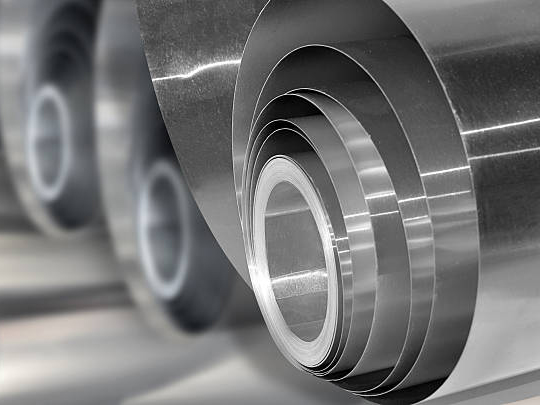
Gr2 titanium foil has six mainstream processing methods, including cold rolling, precision slitting, welding, stamping and bending, surface treatment and composite lamination. As the most popular grade of commercially pure titanium, it comes in thickness from 0.02 mm to 1.0 mm. It features good ductility, strong corrosion resistance and moderate strength. People widely use it in chemical corrosion protection, seawater desalination, electronic shielding and new energy electrode production.
Proper processing methods can bring out the full performance of the material. They also raise production efficiency, cut reject rates and help products meet strict standards in aerospace, medical devices and precision electronics. This article explains the working principles, key parameter settings and practical application scenarios of each processing technology.
1. Cold Rolling Technology and Thickness Control
Cold rolling is the core process to make ultra-thin Gr2 titanium foil. Workers roll thick titanium plates repeatedly to produce ultra-thin foil. This process decides the final thickness tolerance, surface quality and mechanical properties of finished products.
1.1 Technical Advantages of 20-High Precision Rolling Mill
A 750 mm 20-high precision rolling mill keeps thickness tolerance within ±0.001 mm. This is the top precision for finish rolling of 0.02 mm ultra-thin foil. The value may change due to equipment condition and working environment in mass production.
Compared with traditional 4-high or 6-high rolling mills, the 20-high design uses multiple backup rolls and work rolls. These parts share rolling force and reduce roll deformation. Its maximum rolling force reaches 3500 KN, and rolling speed hits 400 m/min. It supports stable production of 0.02 mm ultra-thin products. This equipment works well for wide foil with width from 350 mm to 670 mm and solves common flatness problems of old rolling machines.
1.2 Accurate Design of Reduction Rate for Each Pass
Cold rolling of Gr2 titanium foil usually needs 8 to 15 passes. The reduction rate stays between 15% and 25% for each pass. Too high reduction rate causes edge cracks and poor surface quality. Too low reduction rate slows down production.
Workers carry out intermediate annealing at 650 °C to 750 °C after each rolling pass. This step removes work hardening and restores material ductility. The final pass uses a small reduction rate for finish rolling. It ensures even thickness and smooth surface, which is critical for electronic shielding films and battery separators.
1.3 Flatness Control and Residual Stress Management
High-precision leveling lines correct foil flatness. The maximum running speed is 150 m/min. For foil of 0.02 mm to 0.1 mm, set the speed from 80 m/min to 120 m/min to avoid deformation. Hydraulic roll bending and axial roll shifting technologies keep flatness deviation below 1 mm per meter.
Seven-section electric heating systems on continuous annealing lines control temperature within ±2 °C and fully release residual stress. Good flatness and low residual stress prevent springback during secondary processing like stamping and bending. The material fits well for heat exchanger corrugated sheets and precision instrument parts.
| Rolling Parameters | Rough Rolling | Intermediate Rolling | Finish Rolling |
| Reduction Rate | 20 ~ 25 % | 15 ~ 20 % | 8 ~ 12 % |
| Rolling Temperature | Room temperature | Room temperature | Room temperature |
| Rolling Speed | 150 ~ 250 m/min | 250 ~ 350 m/min | 300 ~ 400 m/min |
| Intermediate Annealing Temperature | 700 ~ 750 °C | 650 ~ 700 °C | — |
| Thickness Tolerance | ±0.01 mm | ±0.005 mm | ±0.001 mm (limit value) |
2. Precision Shearing and Slitting
Slitting wide titanium foil rolls into required widths is a key step to meet customized orders. Precision slitting directly affects material utilization and edge quality.
2.1 Equipment Performance of High-Precision Slitting Line
Special slitting lines use multiple circular cutters. They process foil from 0.02 mm to 1.0 mm thick and keep width tolerance within ±0.1 mm. Servo motor systems maintain constant tension during operation. They stop wrinkles and tensile deformation on thin foil.
Workers use cemented carbide for cutter blades and grind blades regularly. Sharp blades create straight edges without burrs. This feature is essential for safe use of electrolytic electrodes and medical devices.
2.2 Edge Quality Control
Edge quality after slitting influences welding performance and application safety. Set blade gap to 5% to 8% of material thickness and cutting angle to 6° to 10°. These settings keep burr height below 0.02 mm.
Use laser cutting or water jet cutting for foil thinner than or equal to 0.05 mm. These methods avoid micro cracks caused by mechanical force. Conduct edge passivation after cutting to remove sharp edges. The finished products allow safe installation for chemical equipment liners and seawater desalination components.
2.3 Fast Response for Custom Width
Slitting lines support custom widths from 15 mm to 680 mm. Tool change time is less than 30 minutes, so manufacturers deliver small-batch and multi-specification orders quickly. Online width detectors monitor dimensions in real time and offset size errors from blade wear.
The annual production capacity reaches 3000 tons for stable large-batch supply. The lines suit mass production of large thin-walled aerospace parts and current collectors for new energy batteries.
3. Welding Technology and Joint Performance
Welding is a necessary process to make large-area anti-corrosion liners, complex structural parts and sealed containers. Gr2 titanium foil has good weldability. Weld joints reach over 90% of the base metal strength.
3.1 Parameter Optimization for TIG Welding
Gas tungsten arc welding (TIG) is the most common method for thin titanium foil. Adjust welding current according to foil thickness. Use 5 A to 15 A micro-beam welding for 0.02 mm to 0.1 mm foil. Set current from 15 A to 50 A for 0.1 mm to 0.5 mm foil. Use 50 A to 100 A for 0.5 mm to 1.0 mm foil.
Set argon flow rate to 12 L/min to 15 L/min on the top side and 8 L/min to 10 L/min on the back side. Full argon protection stops oxidation of the weld pool. Keep welding speed between 150 mm/min and 300 mm/min. Excessively fast speed causes incomplete fusion. Excessively slow speed burns through the foil. This process works well for on-site repair of chemical equipment liners and production of seawater desalination evaporators.
3.2 Precision Application of Laser Welding
Laser welding creates small heat affected zones and controls deformation accurately. It is the top choice for 0.02 mm to 0.2 mm ultra-thin foil. Use fiber laser with power from 200 W to 800 W. The welding speed ranges from 1 m/min to 3 m/min.
Control defocus distance and shielding gas flow properly. The weld depth-to-width ratio exceeds 3:1. Weld width stays between 0.3 mm and 0.8 mm. Weld tensile strength reaches 85% to 95% of the base metal strength. Manufacturers widely use this technology for sealing welding of electronic component packages, precision sensor housings and medical implants.
3.3 Weld Inspection and Defect Control
Workers use X-ray testing or ultrasonic testing to check internal defects after welding. They check surface oxidation color with naked eyes. Qualified welds show silvery white or light golden yellow color. Blue or black color means severe oxidation and requires rework.
Combine ultrasonic cleaning and alkaline cleaning before welding. The surface dyne value rises above 40 mN/m, which greatly reduces pores and slag inclusions. Conduct vacuum annealing at 600 °C to 650 °C for 30 to 60 minutes after welding. This step relieves welding stress and improves joint ductility. The welds maintain long-term reliability in highly corrosive environments.
| Welding Method | Applicable Thickness | Welding Speed | Joint Strength | Typical Application |
| TIG Welding | 0.1 ~ 1.0 mm | 150 ~ 300 mm/min | 90 ~ 95% of base metal strength | Chemical equipment liners, heat exchangers |
| Laser Welding | 0.02 ~ 0.5 mm | 1000 ~ 3000 mm/min | 85 ~ 95% of base metal strength | Electronic packages, medical devices |
Note: Electron beam welding sees limited use for ultra-thin titanium foil. This article does not cover it in detail. Refer to professional documents for related information.
4. Stamping and Bending Technology
Gr2 titanium foil has elongation above 20% and good ductility. Stamping and bending with dies allow mass production of parts with complex shapes.
4.1 Key Points for Stamping Die Design
Use hardened steel with HRC 58-62 hardness or cemented carbide to make stamping dies. These materials resist wear during long-term operation. Set die gap to 8% to 12% of material thickness. Too small gap leads to edge tearing. Too large gap creates excessive burrs.
Set stamping frequency from 30 strokes per minute to 80 strokes per minute. High speed prevents full plastic deformation and causes cracks. Use special drawing oil for titanium foil to avoid surface scratches. This process fits mass production of chemical valve gaskets, electronic shielding covers and heat insulation sheets for automobile exhaust systems.
4.2 Bending Radius and Springback Compensation
The minimum bending radius of Gr2 titanium foil is 2 to 3 times its thickness. Smaller radius will cause cracks. Reserve 3° to 5° allowance to offset bending springback. Choose V-bending or rotary bending to avoid indentation and surface damage.
Carry out intermediate annealing after repeated bending to restore material ductility. The angle tolerance of precision bent parts stays within ±0.5°, which meets assembly requirements of precision instrument housings and medical equipment brackets.
4.3 Deep Drawing and Crack Prevention
Hydraulic drawing machines with adjustable blank holders form parts with spherical and conical surfaces. The maximum drawing depth reaches 30% to 40% of part diameter. Use multiple drawing processes for deeper shapes.
Optimize blank size and drawing paths with finite element simulation. This method lowers risks of wrinkling and cracking. Finished parts have even thickness. People use this technology to make thin-walled storage tanks for aerospace equipment, cone parts for seawater desalination evaporators and inner liners of chemical mixing tanks.
5. Surface Treatment and Functional Modification
Surface treatment improves cleanliness and adjusts surface roughness of Gr2 titanium foil. It also adds special functions to fit different application demands.
5.1 Ultrasonic Cleaning and Alkaline Cleaning
Ultrasonic cleaning lines run at a maximum speed of 30 m/min. They use multi-frequency generators from 28 kHz to 80 kHz and special degreasing agents. The process fully removes rolling oil, metal powder and other surface contaminants. The surface dyne value rises above 40 mN/m after cleaning. It ensures strong bonding force for subsequent coating, adhesion and welding work.
Alkaline cleaning uses sodium hydroxide solution. The recommended concentration ranges from 5% to 10%, and working temperature is 60 °C to 80 °C. This process removes oxide layers and activates titanium surfaces. It works as pre-treatment for electrolytic electrodes and electroless plating. High concentration solution may over-etch titanium, so verify parameters before formal use.
5.2 Grinding, Polishing and Roughness Control
Grinding lines use abrasive belts or polishing wheels to create different surface states. The surface roughness Ra can be adjusted from 0.2 μm to 1.6 μm. Mirror finish with Ra ≤ 0.2 μm suits medical devices and optical reflectors. Matte surface with Ra 0.4 μm to 0.8 μm acts as ideal base for coatings. Frosted surface with Ra 1.0 μm to 1.6 μm improves adhesion performance.
Uniform surface texture keeps consistent interface for composite laminates and stops delamination and bubble defects.
5.3 Anodization and Functional Coatings
Anodization runs at 80 V to 120 V for 30 to 90 minutes. It forms colored oxide films with thickness from 0.5 μm to 3 μm on foil surfaces. These films provide decorative effects and extra corrosion protection. Adjust electrolyte composition and process parameters to get golden yellow, blue, purple and other colors.
Common functional coatings include conductive coatings for electromagnetic shielding, hydrophobic coatings for self-cleaning surfaces and biocompatible coatings for medical implants. These coatings expand the application scope of Gr2 titanium foil.
| Surface Treatment Method | Treatment Purpose | Key Parameters | Typical Application |
| Ultrasonic Cleaning | Remove oil and contaminants | Frequency 28 ~ 80 kHz, line speed ≤ 30 m/min | Pre-treatment for welding and coating |
| Alkaline Cleaning | Remove oxide film, activate surface | NaOH concentration 5 ~ 10 %, temperature 60 ~ 80 °C | Pre-treatment for electrolytic electrodes and electroless plating |
| Mechanical Grinding | Adjust surface roughness | Ra 0.2 ~ 1.6 μm adjustable | Coating base, composite lamination |
| Anodization | Form colored oxide film, improve corrosion resistance | Voltage 80 ~ 120 V, film thickness 0.5 ~ 3 μm | Decorative parts, marking for medical devices |
6. Composite Lamination and Multi-Layer Structure Manufacturing
Workers combine Gr2 titanium foil with other materials via diffusion welding, adhesive bonding or mechanical compounding. The finished products have multiple functions.
6.1 High-Temperature Solid-State Joining by Diffusion Welding
Diffusion welding takes place in vacuum or protective atmosphere. Set temperature to 850 °C to 950 °C, pressure to 5 MPa to 15 MPa and holding time to 60 to 180 minutes. This method creates metallurgical bonding between titanium foil and titanium plates, stainless steel or nickel alloys.
The joint strength is close to base metal strength. No melting zone or heat affected zone appears on the joint, so the material keeps good corrosion resistance. This technology produces composite plates such as titanium-steel plates for chemical pressure vessels. It also makes heat exchanger cores with titanium-copper composite structures for higher thermal conductivity.
6.2 Flexible Composite with Structural Adhesive
Use epoxy resin, polyurethane or modified acrylate adhesives to bond titanium foil with polymer films, glass fiber cloth or ceramic sheets. Grind surfaces and apply primer before bonding to raise bonding strength above 8 MPa.
This method produces flexible circuit board substrates, explosion-proof diaphragms and lightweight armor plates. The adhesive layer thickness stays between 0.05 mm and 0.2 mm. Use pressure rollers or hot presses for curing to ensure even thickness and no bubbles inside the layer.
6.3 Mechanical Compounding and Corrugated Structure Production
Roll forming, explosive compounding or ultrasonic welding combine titanium foil with aluminum foil or copper foil. The composite materials have titanium’s corrosion resistance and other metals’ good electrical and thermal conductivity.
Rolling machines make corrugated titanium foil. The corrugation height ranges from 0.5 mm to 3 mm, and corrugation pitch ranges from 3 mm to 10 mm. Corrugated foil forms core parts of plate heat exchangers. It improves heat transfer efficiency and pressure resistance. People widely use this structure for seawater desalination equipment, chemical condensers and HVAC systems.
Conclusion
The full processing flow of Gr2 titanium foil includes cold rolling, precision slitting, welding, stamping and bending, surface treatment and composite lamination. Every process requires strict control of key parameters to give full play to the material’s strength, ductility and corrosion resistance.
Advanced equipment such as 20-high rolling mills, ultrasonic cleaning lines and continuous annealing lines enable stable mass production of ultra-thin and wide titanium foil. High-quality titanium foil products deliver reliable material solutions for high-end industries including chemical corrosion protection, seawater desalination, new energy electrodes and precision electronics.
FAQ
1. Can 0.02 mm ultra-thin Gr2 titanium foil complete crack-free stamping?
Multi-pass cold rolling with small reduction rate and intermediate annealing keep the elongation of ultra-thin foil above 20%. Match with optimized die gap (8% to 12% of material thickness) and special lubricants. The foil can reach stamping depth of 15% to 20% of part diameter without cracks. It fits mass production of electronic shielding covers and chemical sealing gaskets.
2. How to guarantee edge quality after slitting wide titanium foil?
Use cemented carbide circular cutters. Set blade gap to 5% to 8% of foil thickness and cutting angle to 6° to 10%. Cooperate with constant tension servo control systems. These measures keep burr height below 0.02 mm. Choose laser cutting for foil thinner than or equal to 0.05 mm. It completely avoids micro cracks from mechanical force and meets strict edge standards for medical devices and electronic packages.
3. How to remove discoloration and oxidation after welding Gr2 titanium foil?
Conduct ultrasonic cleaning and alkaline cleaning before welding to raise surface dyne value above 40 mN/m. Keep argon flow at 12 L/min to 15 L/min on the weld top and 8 L/min to 10 L/min on the back during welding for full protection. Carry out vacuum or argon atmosphere annealing at 600 °C to 650 °C for 30 to 60 minutes after welding. The finished weld shows silvery white or light golden color with tensile strength over 90% of base metal. The products work well for chemical equipment liners and heat exchangers.
About Titanium Valley
Baoji Titanium Valley Titanium Nickel Zirconium Material Processing Co., Ltd. is a professional manufacturer and supplier of Gr2 titanium foil. We own production lines with annual output of 3000 tons for ultra-thin and wide titanium foil. We provide customized processing service for foil from 0.005 mm to 0.02 mm thick. Contact us for technical consultation and bulk orders: sales@titaniumvalleys.com.
References
- Zhang Baozhu, Wang Zhenqiang. Titanium and Titanium Alloy Processing Technology[M]. Beijing: Metallurgical Industry Press, 2015.
- Li Jingchun, Chen Lin. Plastic Processing Technology and Equipment for Titanium Materials[M]. Beijing: Chemical Industry Press, 2018.
- Liu Guoquan, Zhang Kai. Research Progress on Preparation Technology of Cold Rolled Titanium Alloy Sheets[J]. Rare Metal Materials and Engineering, 2020, 49(3): 1056-1064.
- Zhao Yongqing, Yang Guanjun. Welding Technology and Quality Control of Titanium Alloys[M]. Beijing: Science Press, 2016.
- Wang Jianzhong, Li Ming. Surface Treatment Technology and Application of Titanium Foil[J]. Materials Protection, 2019, 52(7): 89-95.