
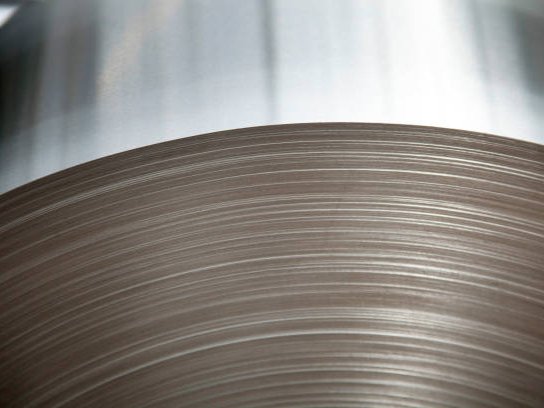
Material selection directly decides product performance and service life in high-end manufacturing and precision industries. Gr1 and Gr2 titanium foil are typical commercially pure titanium products. They have strong corrosion resistance and good processability, so manufacturers widely use them in aerospace, new energy, chemical anti-corrosion and other fields.
Gr1 titanium foil has titanium content above 99.5%. It features top plasticity and fits complex forming work. Gr2 titanium foil delivers higher strength while retaining good ductility and works well for load-bearing parts. Both grades resist acid, alkali and chloride ion corrosion. They run stably in harsh environments for a long time. They also support secondary processing such as welding and bending, and provide reliable material solutions for high-end manufacturing.
1. Material Properties and Essential Differences Between Gr1 and Gr2 Titanium Foil
1.1 Different Standards for Chemical Composition and Purity Control
Gr1 titanium foil has titanium content over 99.5%. It keeps strict limits on oxygen, iron, carbon, nitrogen, hydrogen and other impurities. Its oxygen content is no more than 0.18%, and iron content is no more than 0.20%. High purity creates a pure crystal lattice. It reduces resistance to dislocation movement caused by impurity atoms.
Gr2 titanium foil allows oxygen content up to 0.25% and iron content up to 0.30%. Moderate interstitial elements distribute evenly and raise material strength. Both grades follow the ASTM B265 standard. Precise composition grading meets different working requirements from ultra-high plasticity to balanced strength and ductility.
1.2 Gradient Design Logic of Mechanical Properties
Under the ASTM B265 standard for annealed state, Gr1 titanium foil has tensile strength from 240 MPa to 345 MPa, yield strength from 170 MPa to 275 MPa and elongation above 24%. Its typical elongation ranges from 28% to 35%, and hardness falls between 100 HB and 180 HB. The single-phase alpha structure brings excellent plastic deformation ability. It suits deep drawing, repeated bending and other complex forming processes.
Gr2 titanium foil has tensile strength from 345 MPa to 480 MPa, yield strength from 275 MPa to 410 MPa and elongation above 20%. Its typical elongation stays at 20% to 25%. It gains higher strength and still reserves enough room for processing. This performance gradient makes Gr1 the first choice for thin-walled structures that need excellent formability. Gr2 balances load capacity and processability.
| Performance Parameter | Gr1 Titanium Foil | Gr2 Titanium Foil |
| Tensile Strength (MPa) | 240 ~ 345 | 345 ~ 480 |
| Yield Strength (MPa) | 170 ~ 275 | 275 ~ 410 |
| Elongation (%) | ≥ 24 (Typical: 28 ~ 35) | ≥ 20 (Typical: 20 ~ 25) |
| Hardness (HB) | 100 ~ 180 | 120 ~ 200 |
1.3 Essential Influence of Microstructure on Processability
Both types of titanium foil have single-phase alpha structure. Moderate oxygen atoms exist in the form of uniform interstitial distribution inside Gr2 titanium foil. This structure slightly refines alpha grains and increases dislocation density. Multi-roll precision rolling and repeated argon atmosphere annealing ensure uniform microstructure.
The pure crystal lattice of Gr1 titanium foil allows easy movement and rearrangement of dislocations. It has a high work hardening index and rarely cracks during continuous bending. The strengthened phase inside Gr2 titanium foil improves tensile strength while keeping ductility. It fits elastic parts and support structures that need proper rigidity.
2. Mechanism and Application Verification of Corrosion Resistance
2.1 Physical and Chemical Principle of Passive Film Self-healing
Titanium foil quickly forms a dense TiO₂ passive film in air or aqueous solution. The film thickness ranges from 1 nm to 10 nm. It has a stable rutile structure and strong electrochemical inertness. If local damage occurs on the film, the titanium base reacts with surrounding oxygen right away. The film rebuilds in a very short time and stops corrosive media from penetrating the base material.
Gr1 titanium foil has fewer impurities. Its passive film has better integrity and faster self-healing speed, so it adapts to environments with changing corrosive concentration. Gr2 titanium foil also shows outstanding corrosion resistance in the pH range of 2 to 12. It works well for regular industrial conditions such as chemical production and seawater desalination.
2.2 Corrosion Resistance Comparison in Different Media
Both grades perform well in oxidizing acid and neutral salt solutions. In 35 g/L sodium chloride solution that simulates marine environments, neither grade develops pitting corrosion or intergranular corrosion. They also pass salt spray tests with good results. Their passive films remain stable in alkaline media.
Choose Gr1 titanium foil for medical devices and food processing fields that demand high medium purity. Choose Gr2 titanium foil for chemical equipment liners and anti-corrosion layers in marine engineering.
| Corrosion Environment | Performance of Gr1 Titanium Foil | Performance of Gr2 Titanium Foil | Performance of 316L Stainless Steel |
| Dilute Sulfuric Acid (Room Temperature) | Good corrosion resistance | Good corrosion resistance | Fair corrosion resistance |
| 35 g/L Salt Water (Room Temperature) | No pitting corrosion | No pitting corrosion | Likely to have local pitting corrosion |
| Strong Alkaline Solution (High Temperature) | Excellent corrosion resistance | Excellent corrosion resistance | Fair corrosion resistance |
Note: Actual corrosion rate relates to medium concentration, temperature and flow speed. Conduct tests under real working conditions for final verification.
2.3 Stability and Economic Analysis for Long-term Service
Titanium foil has a density of 4.51 g/cm³, about 57.5% of steel. It greatly cuts structural weight while meeting the same load requirements. It is non-magnetic and stays free from electromagnetic interference, so it suits shielding parts and sensor substrates for precision electronics. Its good oxidation resistance needs no extra surface coating. It avoids secondary corrosion risks caused by aging and peeling coatings.
Practical engineering cases prove its economic value. A chemical plant replaces nickel alloy liners with Gr2 titanium foil. The equipment runs in acidic media with chloride ions. Its maintenance cycle extends obviously and total operating costs drop. A coastal power plant uses Gr1 titanium foil for heat exchangers. The surface stays in good condition after long operation, which proves its advantages over the whole service life.
3. Process Adaptability and Forming Performance
3.1 Plastic Properties for Cold Forming and Deep Processing
Gr1 titanium foil has typical elongation from 28% to 35% and yield ratio between 0.70 and 0.80. It distributes strain evenly. A 0.1 mm thick foil can form with a small bending radius and stay intact in 180° bending tests. It meets the production needs of complex 3D curved parts. Combined ultrasonic cleaning and alkaline cleaning create ultra-clean surfaces. This improves coating adhesion and follow-up electroplating quality.
Gr2 titanium foil has higher strength. Precise annealing control keeps its elongation at 20% to 25%. It completes regular processes such as 90° bending and stretch forming. It is a good choice for elastic components and shrapnel structures that need proper rigidity.
3.2 Weldability and Process Control for Weld Quality
Titanium foil has good welding compatibility. Gas tungsten arc welding, laser welding and resistance welding all produce high-quality joints. Gr1 titanium foil has excellent ductility. It fully releases stress in the weld heat affected zone. Its weld joints reach high strength and retain good elongation.
Use argon or helium for shielding during welding. The protective gas prevents hydrogen and oxygen absorption at high temperature, which will lead to material brittleness. Foil with thickness from 0.02 mm to 1.0 mm achieves full penetration with single-side welding and reduces welding deformation. Manufacturers use Gr1 titanium foil as bipolar plate substrates in fuel cells. Laser welding delivers excellent air tightness to adapt to sealed hydrogen environments.
3.3 High-precision Slitting and Flatness Control
High-precision slitting equipment processes wide foil from 350 mm to 670 mm into required sizes and keeps good edge quality. Leveling processes remove residual stress and flatness defects generated during rolling. Surface treatment adjusts surface roughness to a proper range. It ensures uniform effect in follow-up coating and etching work.
Automatic production lines equip with online thickness detectors and surface defect inspection systems. The whole process supports data traceability and meets strict standards of electronics and medical industries.
4. Solutions and Technical Features for Key Application Scenarios
4.1 Material Application for Lightweight Aerospace Structures
Extra-wide foil reduces weld joints on large thin-walled parts and improves structural integrity. Titanium foil features light weight, corrosion resistance and heat resistance, so it serves many structural components in aerospace industry.
Manufacturers use Gr1 titanium foil for inner liners of space station fuel tanks. It maintains good toughness at low temperature and prevents low-temperature brittleness. Precision rolling controls thickness tolerance and removes hidden risks of stress failure at weak areas.

4.2 Performance Application for New Energy Batteries and Electrolysis Equipment
Thin Gr1 titanium foil makes battery tabs for lithium batteries. It has good conductivity and resists corrosion from electrolyte, so it improves overall battery performance. Wide Gr2 titanium foil forms bipolar plates for proton exchange membrane fuel cells. Integrated stamping cuts joint numbers and makes current distribution more uniform.
Surface-treated Gr1 titanium foil acts as anode substrates for water electrolysis hydrogen production devices. It boosts catalyst loading performance.
4.3 Anti-corrosion Solutions for Chemical and Marine Engineering
Workers lay full-width titanium foil as inner liners for large reaction kettles. Fewer weld joints extend equipment service life. Gr2 titanium foil makes tube sheets for evaporators in seawater desalination units. It strongly resists chloride pitting corrosion and keeps high heat transfer efficiency.
Gr1 titanium foil forms electromagnetic shielding covers for offshore platforms. Its non-magnetic property eliminates interference to navigation equipment. The parts run maintenance-free for a long time in salt spray environments. Custom-slit wide foil raises installation efficiency and cuts total costs in practical projects.
| Application Field | Recommended Grade | Typical Size (mm) | Core Advantages |
| Aerospace Skin | Gr2 Titanium Foil | 0.3 ~ 0.8 × 500 ~ 670 | Light weight, heat resistance, high strength |
| Battery Tab | Gr1 Titanium Foil | 0.05 ~ 0.1 × 350 ~ 500 | Good conductivity, corrosion resistance |
| Fuel Cell Bipolar Plate | Gr2 Titanium Foil | 0.1 ~ 0.2 × 500 ~ 670 | Integrated forming, uniform current distribution |
| Chemical Equipment Liner | Gr1 Titanium Foil | 0.5 ~ 1.0 × 400 ~ 670 | Excellent corrosion resistance, long service life |
Conclusion
Gr1 and Gr2 titanium foil have high purity, outstanding corrosion resistance and reliable processability. They become essential materials for high-end manufacturing industries. Advanced precision equipment and innovative technologies realize stable mass production of ultra-thin and wide foil and optimize material performance. The two products provide solid material solutions for aerospace, new energy, chemical anti-corrosion and other sectors. They also drive traditional metal materials to develop toward lighter weight, longer service life and lower maintenance needs.
FAQ
1. How to choose between Gr1 and Gr2 titanium foil in practical use?
Gr1 titanium foil has higher purity and top plasticity. It suits complex forming, deep drawing and fields with strict medium purity requirements, such as medical devices and food processing. Gr2 titanium foil has higher strength and good ductility. It fits load-bearing structural parts including chemical equipment components and fuel cell bipolar plates. Make choices based on corrosion level, load demand and forming difficulty of actual working conditions.
2. What practical advantages do extra-wide titanium foil have over narrow strip materials?
Wide foil from 350 mm to 670 mm greatly reduces weld joints on large components. It lowers stress concentration and potential corrosion weak points and improves structural integrity. Industry practice proves wide foil speeds up installation and cuts total costs from welding work, construction period and routine maintenance. It is the ideal choice for large-area applications such as aerospace skin, chemical liners and electromagnetic shielding parts.
3. How to verify surface quality and processing consistency of titanium foil?
Reliable suppliers provide third-party test reports including surface roughness Ra value, thickness tolerance and tensile performance data. Complete traceability systems record rolling parameters and annealing curves of each foil coil. Conduct sample trial production to test welding performance, bending limit and coating adhesion. These steps ensure stable batch quality to match application requirements. Select suppliers with certifications such as ASTM B265 and ISO standards.
Find Trusted Titanium Foil Manufacturer and Supplier
Baoji Titanium Valley Titanium Nickel Zirconium Material Processing Co., Ltd. is a professional titanium foil manufacturer. We own advanced multi-roll precision rolling lines. We supply ultra-thin and wide Gr1 and Gr2 titanium foil with size 0.02 ~ 1.0 mm × 15 ~ 680 mm, and support customized production. Our complete quality traceability system and international certifications meet demands of global high-end markets.Contact us for technical consultation and bulk orders: sales@titaniumvalleys.com.
References
- Li Zhigang, Wang Ming. Application and Economic Analysis of Titanium Foil in Chemical Corrosion Protection [J]. Corrosion & Protection, 2019, 40(5): 36-40.
- Chen Qiang, Zhao Xiaodong. Lightweight Design of Titanium Alloys for Aerospace Structures [J]. Journal of Aeronautical Materials, 2020, 40(3): 15-22.
- Zhang Wei, Liu Tao. Research on Efficiency Improvement of Wide Titanium Foil in Chemical Equipment Installation [J]. Chemical Equipment Technology, 2021, 42(2): 28-33.
- Zhou Jianping, Sun Zhiqiang. Welding Technology and Quality Control of Titanium and Titanium Alloys [M]. Beijing: Metallurgical Industry Press, 2018.
- Wang Jian, Li Hua. Research on Rolling Process, Microstructure and Properties of Commercially Pure Titanium Foil [J]. Rare Metal Materials and Engineering, 2022, 51(7): 2450-2456.