
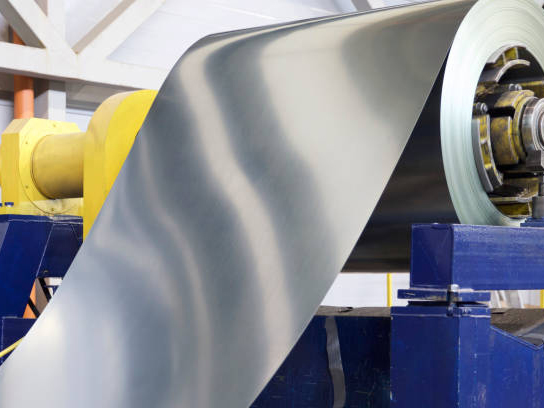
Material selection directly decides final product performance in high-end manufacturing and precision engineering. Gr4 titanium foil ranks as the strongest grade among commercially pure titanium. It has outstanding mechanical properties and great corrosion resistance. It becomes a top choice for aerospace, chemical equipment, new energy and medical device industries. This ultra-thin metal material keeps the excellent chemical stability of pure titanium. Precision rolling processes lift its tensile strength above 550 MPa. It delivers irreplaceable value for working conditions that require both structural load bearing and corrosion resistance.
1. Core Properties and Material Advantages of Gr4 Titanium Foil
1.1 Mechanical Properties: Strength Benchmark for Commercially Pure Titanium
Gr4 titanium foil holds the highest strength level across all commercially pure titanium products. Its tensile strength exceeds 550 MPa, yield strength ranges from 480 MPa to 540 MPa, and elongation stays above 15%. Gr1 titanium foil has tensile strength over 240 MPa, and Gr2 titanium foil has tensile strength over 345 MPa. Gr4 material sees a strength increase of more than 60%, so it handles larger structural loads. Moderately raised oxygen content ≤ 0.40% and iron content ≤ 0.30% create this high strength. These interstitial elements strengthen the lattice structure while retaining basic features of pure titanium.
1.2 Corrosion Resistance: Reliable Performance in Extreme Environments
Gr4 titanium foil has high strength and keeps the excellent corrosion resistance of pure titanium. It works steadily in seawater, salt spray, acid and alkaline media. It adapts well to nitric acid with concentration below 65% and dilute sulfuric acid with concentration below 10%. It also performs reliably in chloride-rich environments. The natural oxide film on titanium repairs itself quickly after damage. This feature stops pitting and stress corrosion cracking during long-term service. This combination of properties makes Gr4 titanium foil ideal for working conditions with high stress and heavy corrosion.
1.3 Physical Properties: Balance between Light Weight and Functional Performance
Gr4 titanium foil has a density of 4.51 g/cm³, around 60% of steel density. It cuts product weight greatly while maintaining high strength. Its melting point reaches 1668 °C, and it runs stably for long periods under 350 °C. Its resistivity stands at 50 μΩ·cm or 0.5 μΩ·m. The material is non-magnetic, so it fits precision electronics and magnet-sensitive equipment. These physical features lay a solid material foundation for lightweight aerospace structures, deep-sea detection devices and high-temperature chemical units.
Performance Comparison of Gr1, Gr2 and Gr4 Titanium Foil
| Performance Index | Gr1 Titanium Foil | Gr2 Titanium Foil | Gr4 Titanium Foil |
|---|---|---|---|
| Tensile Strength | ≥ 240 MPa | ≥ 345 MPa | ≥ 550 MPa |
| Yield Strength | 140 ~ 310 MPa | 275 ~ 450 MPa | 480 ~ 540 MPa |
| Elongation | ≥ 24 % | ≥ 20 % | ≥ 15 % |
| Machining Difficulty | Easy to form | Fairly easy | Moderate |
| Typical Application | Extreme forming parts | General corrosion-resistant parts | Load-bearing structural parts |
2. Precision Manufacturing Processes and Technical Breakthroughs
2.1 20-High Precision Rolling Mill: Guarantee for Ultra-thin and Wide Foil Production
Manufacturers use a 750 mm 20-high cold rolling mill to produce Gr4 titanium foil. Multiple rolling passes gradually reduce material thickness from millimeter level down to 0.02 mm. This equipment offers maximum rolling force of 3500 KN and rolling speed up to 200 m/min. A real-time thickness monitoring system keeps thickness tolerance within ±0.001 mm. The 20-high structure uses backup rolls to reduce work roll deflection. It ensures flatness for wide foil with width from 350 mm to 670 mm and meets top international standards.
2.2 Continuous Annealing and Microstructure Control: Key to Stable Performance
Cold rolling creates internal stress inside the material. Continuous annealing removes stress and adjusts microstructure. The production line adopts a 7-section electric heating system with maximum working temperature of 1100 °C and temperature control accuracy of ±2 °C. Argon shielding gas prevents oxidation at high temperatures. Non-stop continuous annealing keeps uniform microstructure across the whole foil coil. This process balances high strength and proper ductility of Gr4 titanium foil. The material bears structural loads well and retains stamping and bending capabilities.
2.3 Surface Treatment and Quality Control: Meet Standards for High-end Applications
The ultrasonic cleaning line runs at 30 m/min. It raises surface dyne value above 40 dyn/cm and removes grease and tiny particles. Self-developed degreasing formulas further improve surface cleanliness to satisfy strict rules for electronic packaging and medical implants. High-precision leveling lines operate at 150 m/min. Tension control eliminates residual stress. Grinding processes deliver bright or matte surface options. These surfaces improve adhesion for subsequent coating and lamination work.
Key Equipment Parameters for Gr4 Titanium Foil Production
| Equipment Name | Core Parameters | Technical Effect |
|---|---|---|
| 20-high Precision Rolling Mill | Rolling force 3500 KN, speed 200 m/min | Thickness tolerance ±0.001 mm |
| Continuous Annealing Line | 7-section heating, temperature control ±2 °C, max 1100 °C | Uniform microstructure, stable performance |
| Ultrasonic Cleaning Line | Running speed 30 m/min, dyne value > 40 | Qualified surface cleanliness |
| Slitting Line | Width tolerance ±0.1 mm | High-precision trimmed edges |
3. Industrial Application Scenarios and Solutions
3.1 Chemical and Marine Engineering: Reliable Choice for Extreme Corrosive Environments
Gr4 titanium foil works for electrolyzer anode foil, seawater desalination membrane components and electrodes for deep-sea sensors. These parts face high salinity, strong acid, strong alkali and mechanical stress at the same time. The high strength of Gr4 titanium foil stops fatigue failure of thin-walled structures under pressure fluctuation. Its strong resistance to chloride corrosion ensures long stable service in marine environments. One coastal seawater desalination project replaced traditional stainless steel with Gr4 titanium foil. Customers report 40% longer service life and 30% lower maintenance costs.

3.2 Aerospace Industry: Strength Support for Lightweight Structures
Aerospace honeycomb core materials, thin-walled sealing gaskets and lightweight frames need materials with high specific strength and good fatigue resistance. Gr4 titanium foil has a density of 4.51 g/cm³. Products with the same load capacity cut weight by around 25% compared with 6061 aluminum alloy honeycomb structures. The weight reduction exceeds 60% when compared with stainless steel. Its non-magnetic property makes it suitable for shielding layers in avionics cabins. One drone model used Gr4 titanium foil honeycomb structure to replace original aluminum alloy parts. Third-party tests show 25% lighter structure and much better impact resistance.

3.3 New Energy and Electronic Industry: High-reliability Functional Material
Lithium battery current collectors, flexible shielding materials and sensor packages need materials with good conductivity, mechanical strength and chemical stability. The high strength of Gr4 titanium foil lowers fatigue fracture risks for flexible electronic parts under repeated bending. Its great corrosion resistance extends battery service life in high-temperature and high-humidity conditions. One battery maker in South Korea adopted Gr4 titanium foil. Accelerated laboratory tests show 15% longer cycle life and top-tier safety performance.

3.4 Medical Devices: Material Base for High-strength Implants
Orthopedic fixation plates, surgical tools and minimally invasive medical devices require materials with good biocompatibility and sufficient mechanical support. Gr4 titanium foil complies with ASTM F67 standards for unalloyed titanium used in surgical implants. It is non-magnetic and high-strength, so it fits MRI-compatible implants. One medical device maker used 0.05 mm Gr4 titanium foil to make minimally invasive surgical scissors. The tools gain 30% higher rigidity and much better operation accuracy.
Typical Application Fields and Solutions of Gr4 Titanium Foil
| Application Field | Core Requirements | Solutions with Gr4 Titanium Foil |
|---|---|---|
| Chemical / Marine Engineering | High strength + Corrosion resistance | Load-bearing structure + Long-term anti-corrosion performance |
| Aerospace | Light weight + High strength | 40% weight reduction + Good fatigue resistance |
| New Energy & Electronics | Conductivity + Weather resistance | Flexible support + Stable cycle performance |
| Medical Devices | Biocompatibility + High strength | Non-magnetic property + High-rigidity support |
4. Customized Services and Supply Chain Capacity
4.1 Full-range Customization: Flexible Solutions from Ultra-thin to Wide Foil
Standard Gr4 titanium foil has thickness from 0.02 mm to 1.0 mm and width from 15 mm to 680 mm. We produce ultra-thin foil down to 0.005 mm per customer requests. Available delivery forms include coils, strips and cut-to-size sheets. Customers can choose bright or matte surface. Material delivery states cover annealed (M) and cold-worked (Y). This high flexibility matches diverse demands from microelectronic packaging, precision stamping and large-area cladding applications.
4.2 Quality System and International Standard Certification
All products follow international standards including ASTM B265, JIS H4600 and EN 10263-4. We supply material test reports and mechanical performance certificates for every batch. A full-process traceability system from melting and rolling to inspection guarantees consistent quality across batches. Our team breaks seven key technical barriers. These include surface color difference control with ΔE ≤ 0.3, thickness tolerance within ±0.002 mm, uniform annealed microstructure with ASTM grain size 7, high-precision slitting with burr below 0.005 mm and advanced cleaning technology with surface dyne value ≥ 42 dyn/cm. Our product quality reaches world-class level.
4.3 Production Capacity and Global Supply Chain Layout
Automatic production lines deliver annual output of 3000 tons to support stable mass supply. We adjust delivery cycles according to order volume. We provide local technical support and fast response services for key markets such as aerospace and medical sectors in the United States, high-end manufacturing in Germany, precision electronics in Japan and battery industry in South Korea. We build advanced production lines to solve problems like springback control, shape stability and performance consistency for ultra-thin wide foil. Our products replace imported materials for domestic users.
5. Performance Optimization and Cost-benefit Analysis
5.1 Engineering Balance between Strength and Toughness
Gr4 titanium foil keeps elongation above 15% while tensile strength stays over 550 MPa. Precise control of oxygen and nitrogen content and optimized annealing processes create this performance balance. The material meets structural load requirements and retains stamping and bending capabilities. Gr4 pure titanium has better weldability than titanium alloys. Weld zones rarely form brittle phases. This feature lowers production difficulty and failure risks for complex structural parts.
5.2 Full Life Cycle Cost Advantages
Gr4 titanium foil has higher initial purchase cost than ordinary titanium materials. Its high strength allows thinner product design, so actual material consumption drops by 20% to 30%. Excellent corrosion resistance extends equipment maintenance cycles by 2 to 3 times and cuts overall operating costs greatly. One chemical plant upgraded electrolyzer anodes from Gr2 to Gr4 titanium foil. Major maintenance intervals extended from 18 months to 36 months, and annual maintenance expenses fell by more than 40%.
5.3 Improved Environmental Adaptability and Operational Reliability
Gr4 titanium foil maintains stable performance from -253 °C ultra-low temperature to 350 °C high temperature. It has a low thermal expansion coefficient and minimal dimensional change. Its non-magnetic property avoids electromagnetic interference, so it works well for precision instruments and medical equipment. It has outstanding fatigue resistance. Crack growth rate under alternating load is much lower than aluminum alloy and stainless steel. These features raise safety margins for key equipment in extreme working conditions and reduce sudden failure risks.
Conclusion
Gr4 titanium foil combines the highest strength among commercially pure titanium, great corrosion resistance and prominent lightweight performance. It becomes an indispensable key material for high-end manufacturing. Precision rolling technology and strict quality control help this ultra-thin metal material deliver unique value in aerospace, chemical, new energy and medical industries. With technological progress and expanding application scope, Gr4 titanium foil will play a core role in more extreme working conditions and precision scenarios.
FAQ
1. How to choose between Gr4 titanium foil and Gr2 titanium foil for actual use?
Choose Gr2 titanium foil for applications that focus on corrosion resistance with low load, such as inner liners for chemical pipes. Gr4 titanium foil has more than 60% higher strength. Select it for parts that bear structural loads and need corrosion resistance at the same time, such as anodes for high-pressure electrolyzers and aerospace structural components. Prioritize Gr4 if equipment endures continuous stress or impact load.
2. What common problems appear during processing of ultra-thin Gr4 titanium foil (0.02 ~ 0.05 mm)?
Ultra-thin foil tends to wrinkle or tear during stamping. Use precision molds and control stamping speed. Keep thickness tolerance within ±0.001 mm and uniform annealed equiaxed grains. Maintain clean surface to reduce friction. Laser cutting may cause local hardening in heat-affected zones, so optimize cutting parameters. Store the material in dry environments and keep surfaces free of contamination. Surface dirt affects later welding and coating quality.
3. What is the service life of Gr4 titanium foil in seawater environments?
Gr4 titanium foil runs steadily for more than 20 years in standard seawater with chloride concentration below 35000 ppm. Its self-repairing oxide film prevents pitting even after surface scratches. Add material thickness or apply surface strengthening treatment if the foil faces high-speed water flow or sand abrasion, to extend service life.
Find Reliable Gr4 Titanium Foil Manufacturers?
Baoji Titanium Valley Titanium Nickel Zirconium Material Processing Co., Ltd. runs automatic production lines with annual output of 3000 tons. We provide customized Gr4 titanium foil with thickness from 0.02 mm to 1.0 mm and maximum width of 680 mm. Our products comply with ASTM B265 and other international standards and serve global clients in aerospace, medical and electronic industries. Contact us for technical solutions: sales@titaniumvalleys.com
References
- Liu Shiyou. Application of Titanium and Titanium Alloys in Chemical Industry[J]. Chemical Equipment Technology, 2012, 33(2): 45-48.
- Zhao Yongqing, Hong Quan, Ge Peng. Titanium and Titanium Alloy Materials [M]. Beijing: Science Press, 2018.
- Chen Jun, Li Xianmin. Research Progress on Application of Titanium Foil in New Energy Batteries[J]. Rare Metal Materials and Engineering, 2020, 49(7): 2501-2507.