
Why Gr1 Commercially Pure Titanium Foil Is the Ideal Choice for Deep Drawing: Which Grade Offers the Best Formability?
- Gr1 Titanium Foil
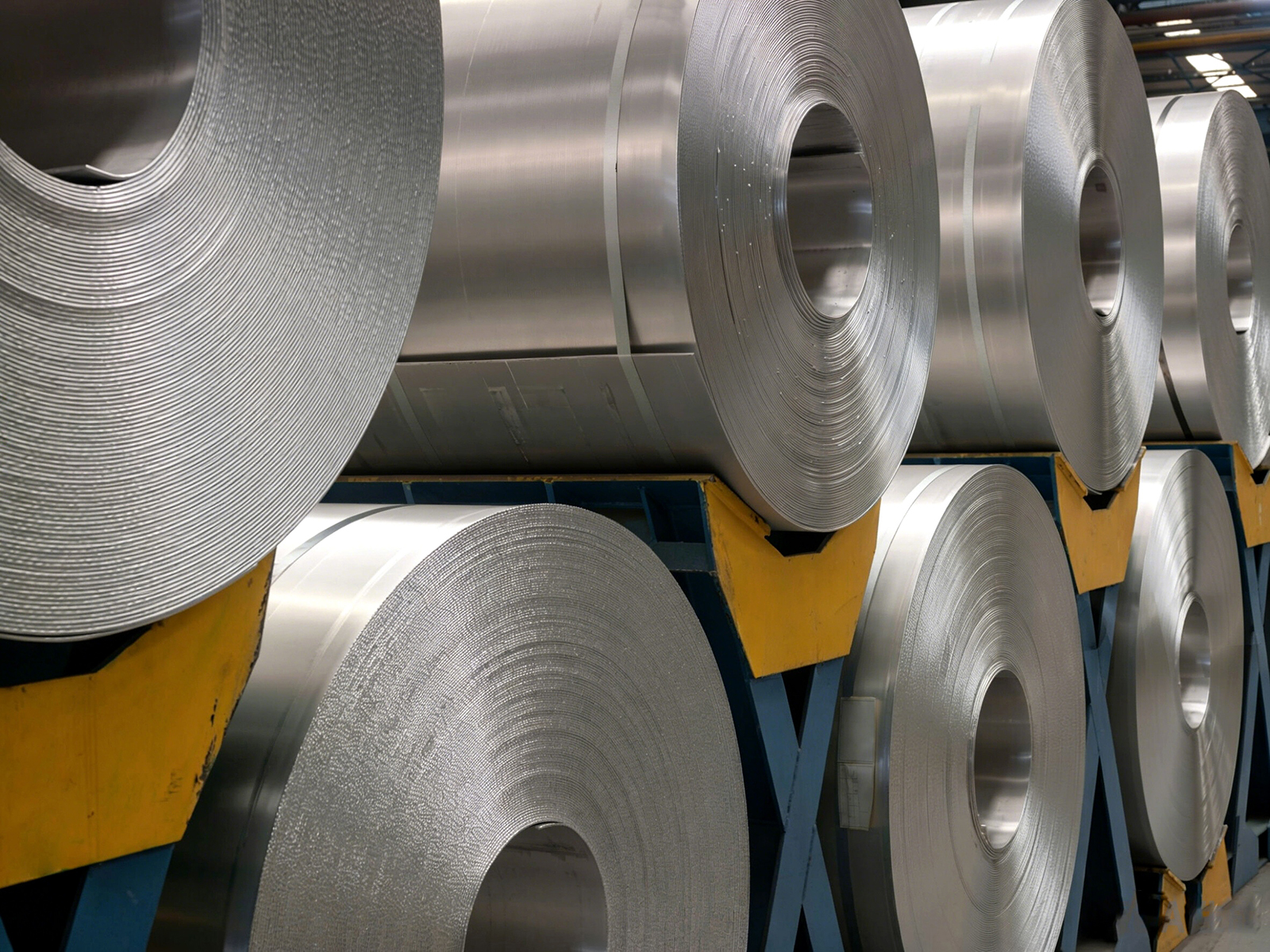
Gr1 Titanium Foil Deep drawing is a critical metal forming process used to manufacture complex-shaped components from sheet metal. Gr1 commercially pure titanium foil, with its exceptional ductility, low yield strength, and excellent formability, has emerged as the premier material for deep drawing applications in aerospace, automotive, medical device, and architectural industries. This article examines why Gr1 titanium foil is the ideal choice for deep drawing and compares its formability with alternative titanium grades.
1. Deep Drawing Fundamentals
(1) Process Overview and Key Parameters
Deep drawing involves forcing a flat sheet metal blank into a die cavity using a punch, transforming the 2D blank into a 3D hollow component. Key process parameters include draw ratio (component depth-to-diameter), punch radius, blank holder force, lubrication, and strain rate. The success of the deep drawing operation depends critically on the material formability, which is quantified by the plastic strain ratio (r-value) and earing behavior.
(2) Formability Metrics for Titanium Foil
Gr1 titanium foil exhibits a plastic strain ratio (r-value) of 1.8-2.2, indicating superior resistance to thinning during forming compared to Gr2 (r-value 1.5-1.8) and Gr5 (r-value 1.2-1.5). The high r-value enables deeper draws without necking or fracture, making Gr1 the preferred material for complex deep drawing geometries.
| Property | Gr1 CP Titanium | Gr2 CP Titanium | Gr5 Ti-6Al-4V |
|---|---|---|---|
| Yield Strength (MPa) | 170-240 | 240-345 | 828-880 |
| Tensile Strength (MPa) | 240-345 | 345-485 | 895-995 |
| Elongation (%) | 25-32 | 20-25 | 10-15 |
| r-value (Plastic Strain Ratio) | 1.8-2.2 | 1.5-1.8 | 1.2-1.5 |
| n-value (Strain Hardening) | 0.20-0.25 | 0.15-0.20 | 0.10-0.15 |
2. Why Gr1 Titanium Foil Excels in Deep Drawing
(1) Low Yield Strength and Reduced Forming Forces
Gr1 titanium foil yield strength of 170-240 MPa is significantly lower than Gr2 (240-345 MPa) and Gr5 (828-880 MPa). This low yield strength translates to reduced forming forces, lower press tonnage requirements, and decreased tool wear during deep drawing operations. The material flows more readily into die cavities, producing smoother surface finishes and tighter dimensional tolerances.
(2) High Ductility and Uniform Elongation
Gr1 titanium foil elongation of 25-32% provides substantial strain accommodation before necking or fracture occurs. This high ductility enables deep drawing ratios of 2.0-2.5 (single draw) and multi-stage drawing with intermediate annealing for complex geometries. Gr1 also exhibits excellent uniform elongation, delaying the onset of localized necking and enabling deeper draws without thinning failures.
(3) Consistent Microstructure and Anisotropy Control
Gr1 titanium foil produced by controlled rolling and annealing exhibits a uniform equiaxed alpha grain structure (ASTM grain size 7-9) with minimal texture intensity. This microstructural consistency ensures predictable forming behavior and minimizes earing (non-uniform rim formation) around drawn cup perimeters, reducing secondary trimming operations and material waste.
3. Industrial Deep Drawing Applications
(1) Aerospace Components
Gr1 titanium foil deep drawing is used to manufacture aircraft engine cowling panels, wing skin stiffeners, fuel tank components, and structural fairings. The material formability enables complex curved geometries with wall thicknesses as low as 0.05 mm, while maintaining excellent corrosion resistance and fatigue performance.
(2) Medical Device Manufacturing
In medical device production, Gr1 titanium foil deep drawing produces surgical instrument housings, implant casings, diagnostic equipment components, and sterile packaging. The material biocompatibility (ISO 10993 compliant) and ability to withstand repeated sterilization cycles make Gr1 ideal for medical applications requiring stringent cleanliness and safety standards.
(3) Architectural and Consumer Products
Gr1 titanium foil deep drawing is employed for architectural cladding panels, decorative trim, consumer electronics enclosures, and jewelry components. The material ability to accept various surface finishes (brushed, polished, colored anodization) after deep drawing enables aesthetically pleasing final products with excellent durability.
4. Process Optimization and Best Practices
Successful deep drawing of Gr1 titanium foil requires proper lubrication (polyalphaolefin or polymer-based lubricants), controlled forming temperatures (room temperature to 200 degrees C for warm drawing), and appropriate blank holder forces (0.5-2.0 MPa). Intermediate annealing at 600-700 degrees C restores ductility between drawing stages for complex geometries requiring severe deformation.
5. Quality Control and Inspection
Deep drawn Gr1 titanium foil components must be inspected for dimensional accuracy (per GD&T tolerances), surface quality (Ra <= 0.8 micrometers), wall thickness uniformity ( +/- 5% of nominal), and absence of cracking or wrinkling. Non-destructive testing per ASTM E572 (liquid penetrant) verifies surface integrity.
Conclusion
Gr1 commercially pure titanium foil is the ideal material for deep drawing applications, offering unmatched combination of ductility, formability, and low forming forces. Its superior plastic strain ratio, uniform elongation, and consistent microstructure enable complex geometries with excellent surface quality and dimensional accuracy.
FAQ
Q1: What is the maximum draw ratio achievable with Gr1 titanium foil?
Single-stage draw ratios of 2.0-2.5 are achievable; multi-stage drawing with intermediate annealing enables effective draw ratios exceeding 4.0.
Q2: Can Gr1 titanium foil be deep drawn at room temperature?
Yes, Gr1 titanium foil can be deep drawn at room temperature. Warm drawing at 150-200 degrees C further improves formability for complex geometries.
Q3: How does Gr1 compare to stainless steel 304 for deep drawing?
Gr1 offers superior corrosion resistance and lower density, while 304 stainless steel provides higher strength but requires higher forming forces.
Contact Us
Baoji Titanium Valley Titanium Nickel Zirconium Material Processing Co., Ltd. supplies Gr1 titanium foil optimized for deep drawing applications. Contact us at sales@titaniumvalleys.com.
References
[1] Dieter G.E. Mechanical Metallurgy[M]. 3rd Edition. McGraw-Hill, 2022.
[2] ASTM B265/B265M-23. Standard Specification for Titanium and Titanium Alloy Sheet and Plate.
[3] Hosford W.F. Mechanical Behavior of Materials[M]. 2nd Edition. Cambridge University Press, 2023.