
Cold Working Performance and Operating Guide for Industrial Pure Gr1 Titanium Bar: Which Process Offers the Best Formability?
- Gr1 Titanium Bar
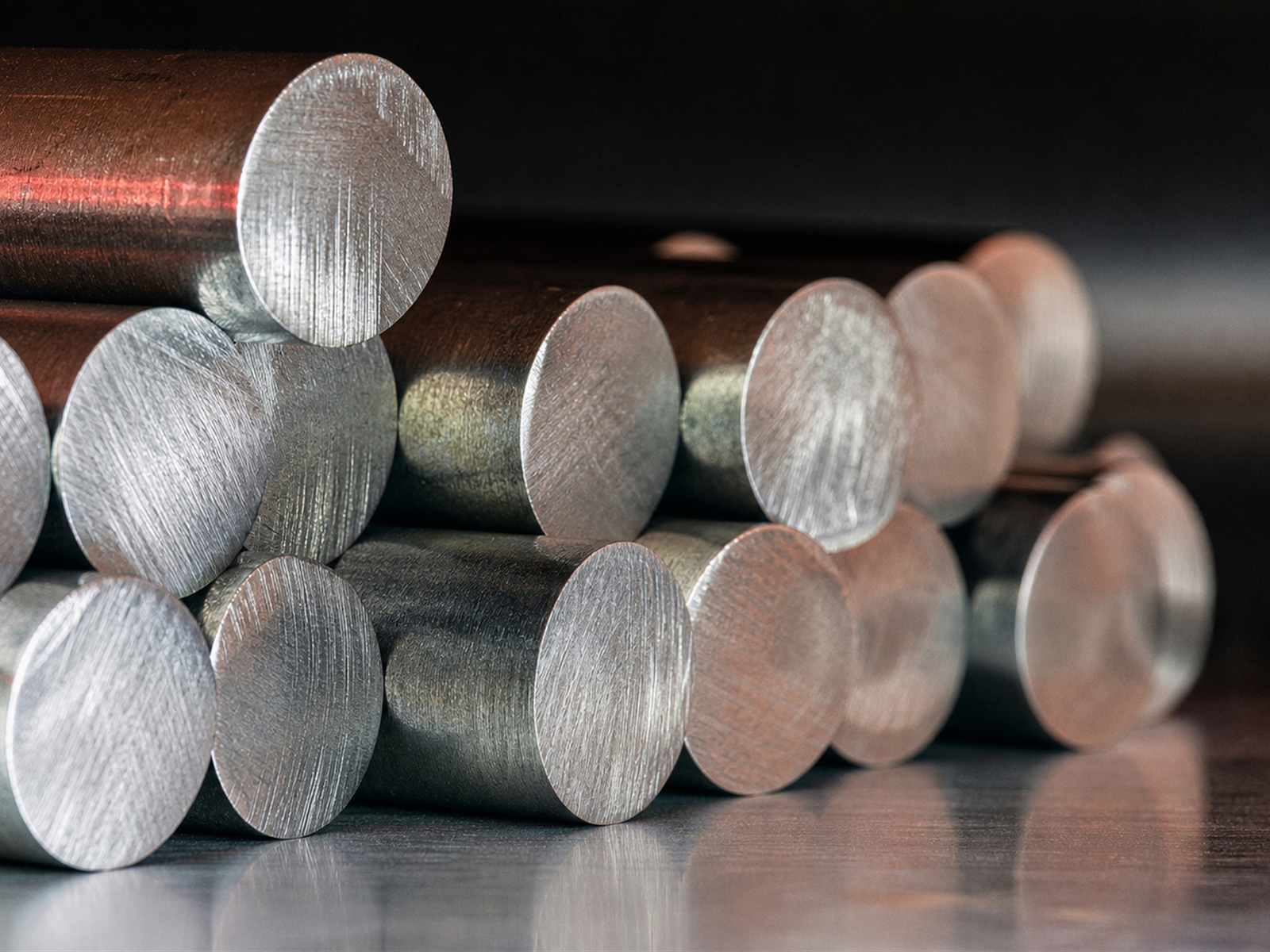
Gr1 Titanium Bar Gr1 commercially pure titanium bar exhibits excellent cold working performance due to its high ductility, low yield strength, and favorable strain hardening characteristics. This article provides a comprehensive guide to cold working Gr1 titanium bar, covering drawing, extrusion, forging, and rolling operations with practical recommendations for process optimization.
1. Gr1 Titanium Bar Cold Working Fundamentals
(1) Mechanical Properties Supporting Cold Working
Gr1 titanium bar tensile strength of >= 240 MPa, yield strength of >= 170 MPa, and elongation of >= 25% provide excellent cold formability. The strain hardening exponent (n-value) of 0.20-0.25 enables uniform deformation and delays necking during cold working operations.
| Operation | Reduction per Pass | Interpass Anneal | Lubrication |
|---|---|---|---|
| Drawing | 10-30% | 600-700 C, 30-60 min | Polyalphaolefin or wax-based |
| Extrusion | 5:1 to 20:1 ratio | 700-800 C before extrusion | Glass lubricant (borosilicate) |
| Forging | 20-50% per strike | 650-750 C between strikes | None (dry forging) |
| Rolling | 15-35% per pass | 600-700 C after 40-50% total | Emulsion or synthetic oil |
(2) Strain Hardening and Recovery
Each 10% cold work increment increases Gr1 titanium bar yield strength by approximately 15-20 MPa while reducing elongation by 2-3%. Interpass annealing at 600-700 degrees C for 30-60 minutes restores ductility by recovering dislocation structures and initiating recrystallization.
2. Cold Drawing Operations
(1) Process Parameters
Gr1 titanium bar cold drawing through tungsten carbide or diamond dies achieves diameter reductions of 10-30% per pass. Drawing speeds of 0.5-2.0 m/s with proper lubrication produce surface finishes of Ra 0.4-0.8 micrometers. Multi-stage drawing with intermediate annealing enables reductions from 50 mm to 2 mm diameter.
(2) Die Design and Wear
Die entrance angle of 6-12 degrees and bearing length of 1-3 mm optimize drawing force and surface quality. Die life of 5000-10000 meters is achievable with proper lubrication and drawing speed control.
3. Cold Extrusion and Forging
Gr1 titanium bar cold extrusion requires higher forces than steel due to titanium lower thermal conductivity and higher friction coefficient. Backward extrusion achieves better dimensional control than forward extrusion. Cold forging of Gr1 titanium bar produces fasteners, fittings, and structural components with excellent surface finish and tight tolerances.
4. Surface Quality and Defect Prevention
Cold working of Gr1 titanium bar requires clean surfaces and proper lubrication to prevent galling, scoring, and surface cracking. Regular die inspection and replacement prevent defect propagation. Ultrasonic cleaning before drawing removes contaminants that cause surface defects.
Conclusion
Gr1 titanium bar delivers exceptional cold working performance with high ductility, favorable strain hardening, and excellent surface quality retention. Proper process control, lubrication, and interpass annealing enable complex geometries with tight tolerances and superior surface finish.
FAQ
Q1: What is the maximum cold work reduction per pass for Gr1 titanium bar?
Maximum reduction of 30% per pass is achievable with proper lubrication and die design. Larger reductions require intermediate annealing.
Q2: Can Gr1 titanium bar be cold forged at room temperature?
Yes, Gr1 titanium bar can be cold forged at room temperature. Warm forging at 200-300 degrees C reduces forming forces by 20-30%.
Q3: How does cold working affect Gr1 titanium corrosion resistance?
Cold working does not significantly affect corrosion resistance. Post-working annealing at 600-700 degrees C restores any minor surface oxide variations.
Contact Us
Baoji Titanium Valley Titanium Nickel Zirconium Material Processing Co., Ltd. supplies Gr1 titanium bar for cold working applications. Contact us at sales@titaniumvalleys.com.
References
[1] ASM Handbook Volume 14A: Forming and Forging[M]. ASM International, 2023.
[2] ASTM B348/B348M-23. Standard Specification for Titanium and Titanium Alloy Bars and Billets.
[3] Dieter G.E. Mechanical Metallurgy[M]. 3rd Edition. McGraw-Hill, 2022.