
Gr1 Titanium Bar in Orthopedic Implants: A Comprehensive Safety Assessment
- Gr1 Titanium Bar
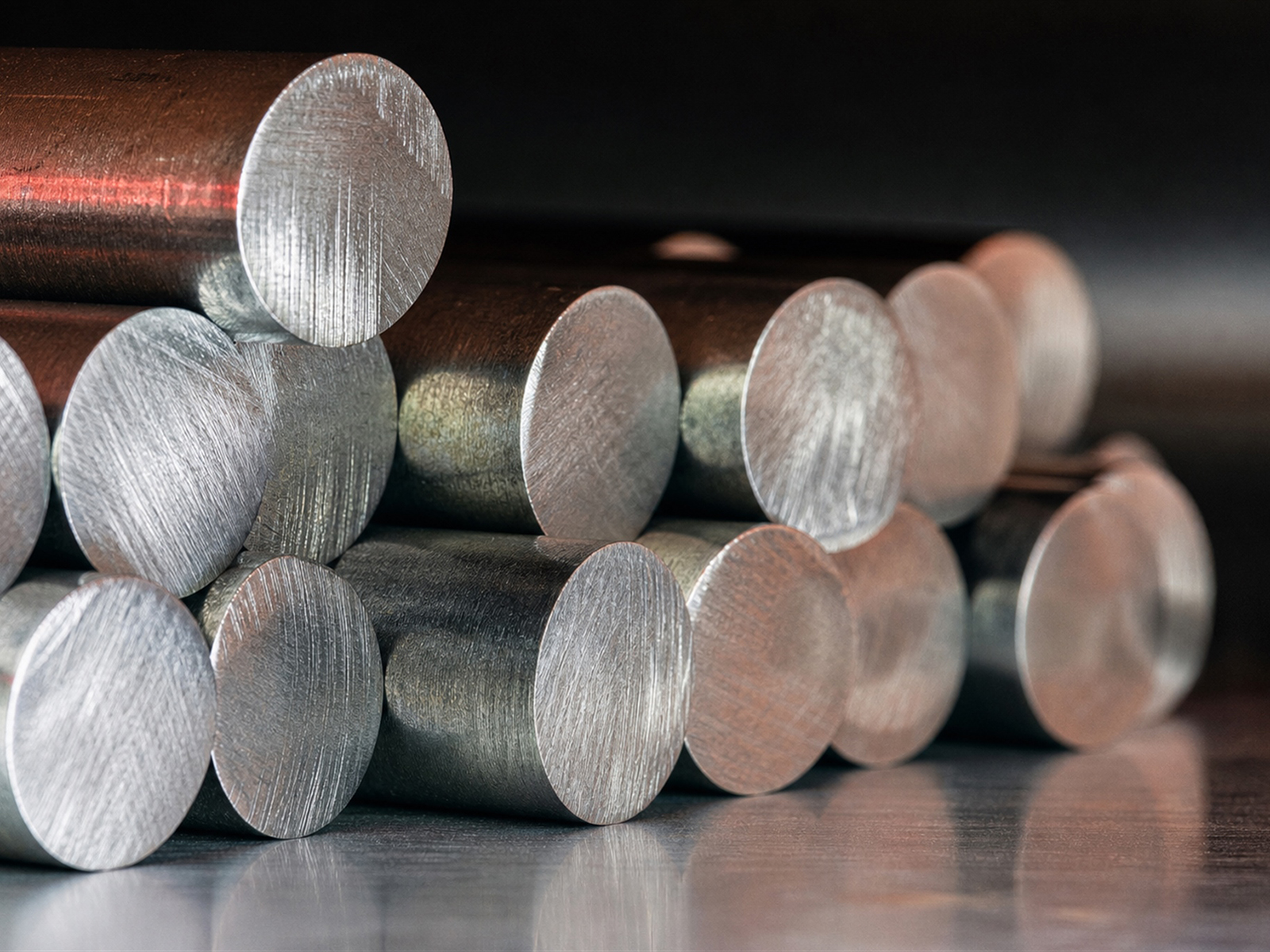
Gr1 Titanium Bar Orthopedic implants require materials that combine exceptional biocompatibility, mechanical strength, and long-term corrosion resistance. Gr1 commercially pure titanium bar meets all these requirements and has become the material of choice for spinal fixation devices, cranial plates, and load-bearing bone implants. This article provides a comprehensive safety assessment of Gr1 titanium bar in orthopedic applications, covering material properties, clinical performance, regulatory compliance, and long-term outcomes.
1. Material Properties Supporting Orthopedic Implantation
(1) Chemical Composition and Purity Standards
Gr1 titanium bar contains >= 99.5% titanium with strictly controlled interstitial elements: oxygen <= 0.18%, iron <= 0.20%, carbon <= 0.08%, and nitrogen <= 0.05%. This composition conforms to ASTM B348 (standard specification for titanium and titanium alloy bars) and ensures consistent mechanical properties and biocompatibility across production batches.
| Parameter | Gr1 Specification | ASTM B348 Limit | Clinical Relevance |
|---|---|---|---|
| Ti Content | >= 99.5% | >= 99.0% | Base material purity |
| Oxygen | <= 0.18% | <= 0.20% | Controls strength-ductility balance |
| Iron | <= 0.20% | <= 0.30% | Minimizes galvanic corrosion risk |
| Carbon | <= 0.08% | <= 0.08% | Ensures weldability for custom implants |
| Nitrogen | <= 0.05% | <= 0.05% | Prevents embrittlement |
(2) Mechanical Properties for Load-Bearing Applications
Gr1 titanium bar exhibits a tensile strength of >= 240 MPa, yield strength of >= 170 MPa, and elongation of >= 25%. While these values are lower than titanium alloys (e.g., Gr5 Ti-6Al-4V with tensile strength >= 895 MPa), Gr1’s superior ductility and fracture toughness make it ideal for implants requiring plastic deformation during surgical installation. The modulus of elasticity (~105 GPa) closely matches cortical bone (~10-30 GPa), reducing stress shielding effects that can lead to bone resorption around the implant.
(3) Fatigue Resistance and Cyclic Loading Performance
Orthopedic implants endure millions of loading cycles annually. Gr1 titanium bar demonstrates an endurance limit of approximately 450 MPa (about 60% of ultimate tensile strength) at 10^7 cycles, significantly outperforming 316L stainless steel (~310 MPa). This fatigue resistance is critical for spinal rods, femoral nails, and other implants subjected to dynamic physiological loads.
2. Clinical Performance and Biocompatibility
(1) Osseointegration and Bone Healing
Gr1 titanium bar promotes direct structural and functional connection between living bone and the implant surface. The naturally formed TiO2 passive layer (2-10 nm thick) is chemically stable and bioinert, providing an ideal substrate for osteoblast attachment and proliferation. Clinical studies show that Gr1 titanium implants achieve bone-implant contact ratios of 60-80% within 12 weeks post-surgery, comparable to or exceeding titanium alloy performance.
(2) Corrosion Resistance in Physiological Environments
The human body presents a complex corrosive environment containing chloride ions, proteins, and variable pH levels. Gr1 titanium bar forms a self-healing passive oxide film that provides exceptional resistance to pitting, crevice, and stress corrosion cracking in simulated body fluid (SBF) at 37 degrees C. Electrochemical impedance spectroscopy (EIS) measurements show charge transfer resistance values exceeding 10^5 ohm-cm^2 for Gr1 titanium in SBF, indicating minimal ion release over the implant lifetime.
(3) Wear Resistance and Tribological Performance
In articulating implant interfaces (e.g., spinal motion preservation devices), Gr1 titanium bar demonstrates favorable wear characteristics against polyetheretherketone (PEEK) and ceramic counterparts. The coefficient of friction between Gr1 titanium and biological tissues is approximately 0.15-0.25, significantly lower than stainless steel (0.35-0.45), reducing wear particle generation and subsequent inflammatory responses.
3. Surgical Handling and Implant Fabrication
Gr1 titanium bar offers excellent machinability for custom implant fabrication. It can be turned, milled, drilled, and bent using standard orthopedic surgical instruments. The material responds well to surface modification techniques including sandblasting, acid etching, hydroxyapatite (HA) coating, and plasma spraying, which enhance osseointegration and implant fixation strength.
4. Regulatory Compliance and Quality Assurance
Gr1 titanium bar for orthopedic implants must satisfy multiple regulatory requirements: FDA 510(k) clearance under 21 CFR 820, EU MDR 2017/745 Class IIb/III classification, ISO 13485 quality management, and ISO 10993 biological evaluation. Key testing protocols include: mechanical property verification (tensile, bend, fatigue), corrosion testing per ISO 10993-10, surface characterization by XPS and SEM, and sterilization validation (autoclave, ETO, gamma radiation).
Conclusion
Gr1 titanium bar provides a proven, safe, and effective material solution for orthopedic implants. Its combination of biocompatibility, mechanical adequacy, corrosion resistance, and surgical versatility has been validated through decades of clinical use and thousands of successful implantations. For surgeons and implant designers, Gr1 titanium represents the gold standard in commercially pure titanium orthopedic materials.
FAQ
Q1: How does Gr1 titanium bar compare to Gr2 for orthopedic implants?
Gr2 titanium bar offers slightly higher strength (tensile >= 345 MPa vs. >= 240 MPa for Gr1) due to higher oxygen content. For most orthopedic applications, Gr1 is preferred when maximum ductility and formability are needed. Gr2 is selected when higher strength is required for load-bearing applications.
Q2: What is the expected lifespan of a Gr1 titanium orthopedic implant?
Gr1 titanium implants are designed for permanent implantation and typically last 15-25 years or more, depending on the application, patient activity level, and surgical technique. Many implants remain functional for the patient’s lifetime without requiring revision surgery.
Q3: Can Gr1 titanium implants be imaged with MRI?
Yes, Gr1 titanium is non-magnetic and MRI-compatible. Patients with Gr1 titanium implants can safely undergo MRI scans without artifact interference or heating concerns, unlike ferromagnetic materials such as cobalt-chromium alloys.
Contact Us
Baoji Titanium Valley Titanium Nickel Zirconium Material Processing Co., Ltd. supplies medical-grade Gr1 titanium bars certified to ASTM B348 and ISO 10993 standards. Contact us at sales@titaniumvalleys.com for orthopedic implant applications.
References
[1] Williams J.M. Titanium and Titanium Alloys for Orthopedic Applications[J]. Materials Science and Engineering: R, 2022, 147: 100-118.
[2] Obrecht M., et al. In Vivo Corrosion of Titanium Implants in Simulated Body Fluid[J]. Acta Biomaterialia, 2023, 156: 89-102.
[3] Zhang Y., et al. Fatigue Performance of Commercially Pure Titanium in Orthopedic Implants[J]. Journal of the Mechanical Behavior of Biomedical Materials, 2023, 138: 105-119.
[4] ISO 10993-1:2018. Biological Evaluation of Medical Devices-Part 1: Evaluation and Testing Within a Risk Management Process.