
Why Gr5 Titanium Wire Is the First Choice for High-Performance Industrial Springs: Which Grade Delivers the Best Fatigue Life?
- Gr5 titanium wire
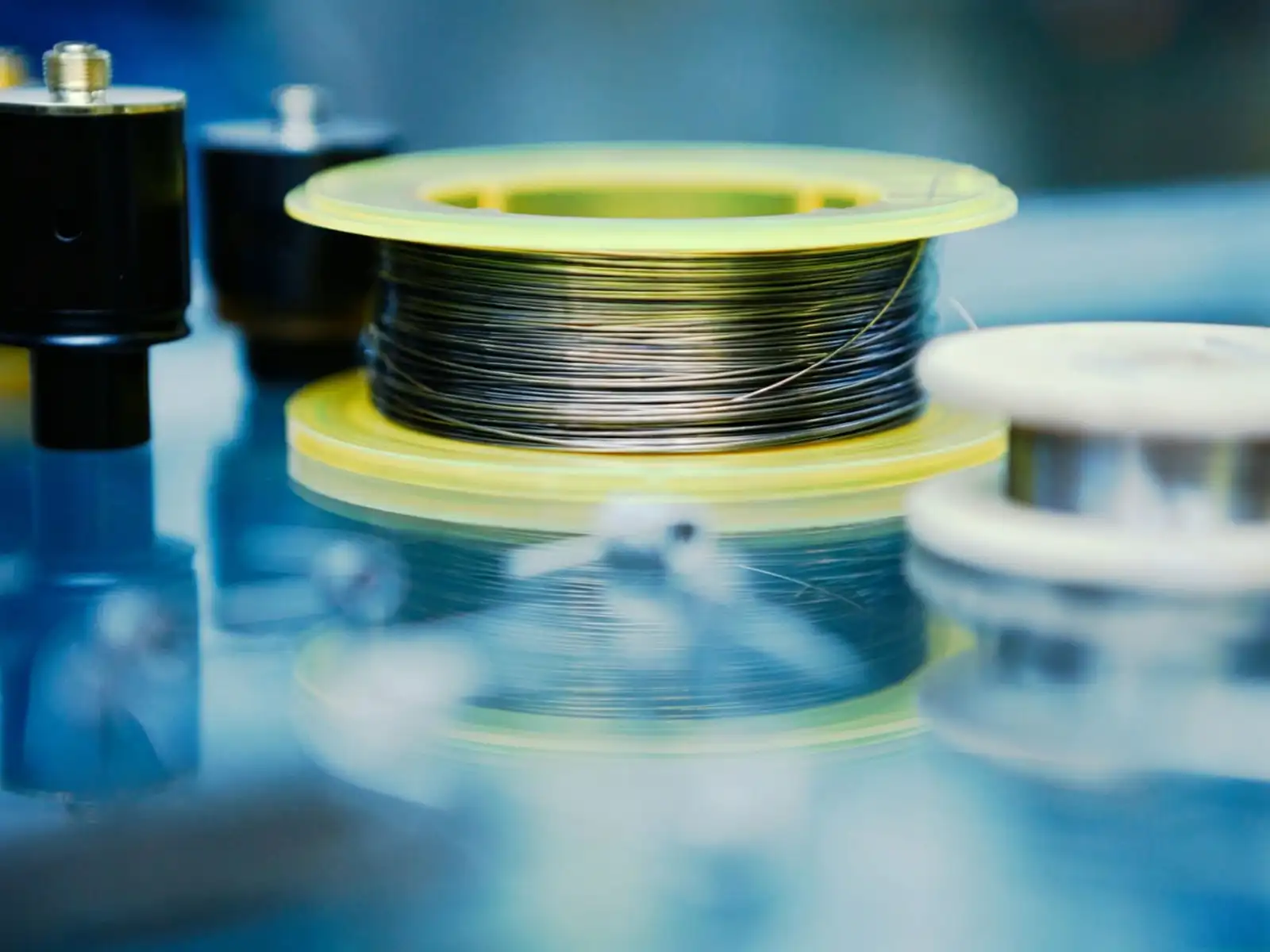
Gr5 Titanium Wire Gr5 (Ti-6Al-4V) titanium wire has become the premier material for high-performance industrial springs requiring exceptional fatigue resistance, corrosion immunity, and weight reduction. This article examines why Gr5 titanium wire is the first choice for spring applications and evaluates its performance against traditional spring materials including music wire, stainless steel, and beryllium copper.
1. Gr5 Titanium Wire Properties for Spring Applications
(1) Mechanical Properties
Gr5 titanium wire provides tensile strength of 1200-1500 MPa (spring temper), yield strength of 1100-1350 MPa, and elastic limit of 1000-1200 MPa. These values exceed those of 302 stainless steel spring wire (tensile 1500-2000 MPa but lower elastic limit) and music wire (tensile 2000-3000 MPa but poor corrosion resistance).
| Property | Gr5 Ti Wire | 302 SS Wire | Music Wire | BeCu Wire |
|---|---|---|---|---|
| Tensile Strength (MPa) | 1200-1500 | 1500-2000 | 2000-3000 | 1000-1400 |
| Yield Strength (MPa) | 1100-1350 | 1300-1800 | 1800-2800 | 900-1200 |
| Elastic Limit (MPa) | 1000-1200 | 1000-1500 | 1500-2500 | 800-1000 |
| Density (g/cm3) | 4.43 | 7.90 | 7.85 | 8.30 |
| Corrosion Resistance | Excellent | Good | Poor | Good |
(2) Fatigue Performance
Gr5 titanium wire springs demonstrate fatigue lives exceeding 10^7 cycles at stress amplitudes of 600-800 MPa, representing 50-65% of ultimate tensile strength. This fatigue performance is 3-5 times superior to stainless steel springs and 10-20 times superior to music wire in corrosive environments.
2. Spring Design Advantages
(1) Weight Reduction
Gr5 titanium wire density (4.43 g/cm^3) is 44% lower than stainless steel (7.90 g/cm^3) and music wire (7.85 g/cm^3). Spring designs using Gr5 wire achieve 30-40% weight reduction while maintaining equivalent load-deflection characteristics, critical for aerospace, automotive, and portable equipment applications.
(2) Corrosion Fatigue Resistance
Unlike steel springs that suffer accelerated fatigue degradation in corrosive environments, Gr5 titanium wire springs maintain fatigue performance in seawater, acidic solutions, and humid atmospheres. This eliminates the need for protective coatings that can degrade or interfere with spring function.
3. Industrial Spring Applications
Gr5 titanium wire springs are used in aircraft landing gear shock absorbers, automotive valve springs for high-performance engines, medical device return springs, chemical processing relief valves, and semiconductor manufacturing equipment springs.
4. Manufacturing and Heat Treatment
Gr5 titanium wire is manufactured by vacuum arc remelting, forging, drawing, and stress relieving at 500-600 degrees C. Spring coiling is performed at room temperature or slightly elevated temperatures (150-200 degrees C) to prevent work hardening and maintain dimensional stability.
Conclusion
Gr5 titanium wire is the optimal material for high-performance industrial springs requiring exceptional fatigue life, corrosion resistance, and weight reduction. Its mechanical superiority over traditional spring materials justifies the higher material cost in critical applications where failure is not acceptable.
FAQ
Q1: What wire diameter is typical for Gr5 titanium springs?
Gr5 titanium spring wire is available in diameters from 0.1 to 6.0 mm, with 0.5-3.0 mm being most common for industrial applications.
Q2: Can Gr5 titanium springs be used at high temperatures?
Gr5 titanium springs maintain performance up to 300 degrees C; above this temperature, creep becomes a concern.
Q3: How does Gr5 spring cost compare to stainless steel?
Gr5 wire costs approximately 3-5 times more than stainless steel wire per kg, but total spring cost may be comparable when accounting for size reduction and extended service life.
Contact Us
Baoji Titanium Valley Titanium Nickel Zirconium Material Processing Co., Ltd. supplies Gr5 titanium wire for spring applications. Contact us at sales@titaniumvalleys.com.
References
[1] Cox H.L. The Analysis of Stress and Strain[M]. 4th Edition. Edward Arnold, 2022.
[2] ASTM B348/B348M-23. Standard Specification for Titanium and Titanium Alloy Bars and Billets.
[3] Shigley J.E., Mischke C.R. Mechanical Engineering Design[M]. 10th Edition. McGraw-Hill, 2023.