
Why Is a Comprehensive Guide to UNS R60702 Foils, Characteristics, Applications and Purchasing Advice Important?
- UNS R60702 Foil
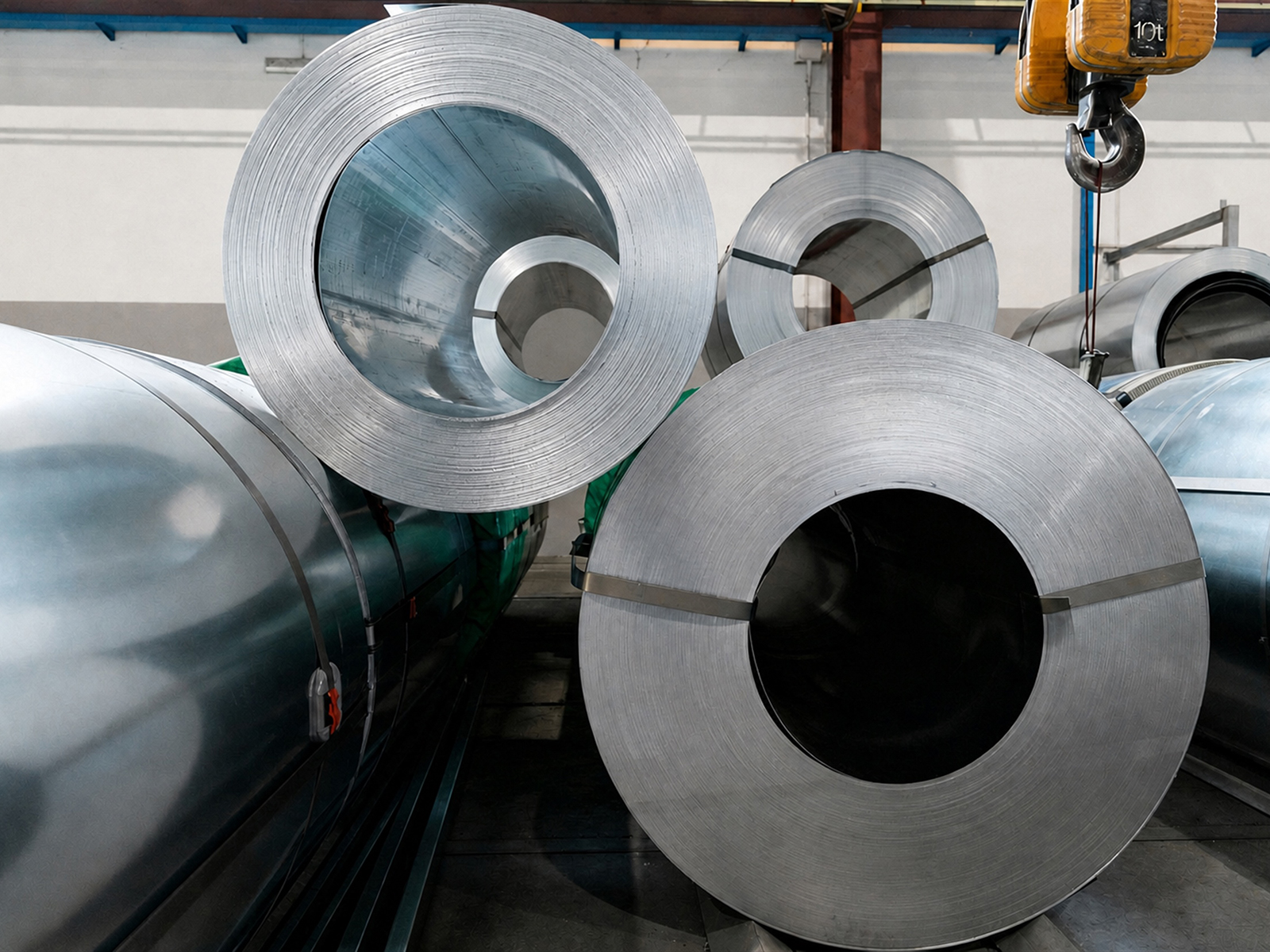
UNS R60702 foil is an industrial pure zirconium thin material. With the high purity composition of Zr+Hf≥ 99.2%, it shows better corrosion resistance than titanium alloy and stainless steel in strong acid environments such as hydrochloric acid and sulfuric acid (corrosion rate is less than 0.125 mm/year, see the text for test conditions). This ultra-thin metal material (0.02-1.0mm) is produced through vacuum melting and 20-roller precision rolling processes, with a thickness tolerance of up to ± 0.002mm and a width covering 15-680mm. Its physical properties of density 6.51 g/cm³ and melting point 1852℃, combined with excellent formability and weldability, make it a core material for high-reliability systems such as chemical anti-corrosion, electrolytic plating, and new energy batteries. The fully automated production line has an annual production capacity of 3, 000 tons (including multi-specification zirconium products), which can meet the demand for stable supply of large quantities.
1. What Should You Know About UNS R60702 Foil Material Properties and Technical Specifications?
(1) What Should You Know About Chemical Composition and Purity Control Standards?
The core competitiveness of UNS R60702 foil stems from its strict composition control system. The total content of the main elements zirconium and hafnium is not less than 99.2%, and the hafnium content is controlled below 0.01% to ensure that the material’s neutron absorption properties are suitable for nuclear industry applications. Strict restrictions on impurity elements are the key to its corrosion resistance: the total iron and chromium content does not exceed 0.20% to avoid local electrochemical corrosion, the oxygen content is ≤ 0.16% to prevent embrittlement, and the carbon and nitrogen content are controlled below 0.05% and 0.025% respectively to maintain the ductility of the material. This purity level requires a smelting process that combines vacuum induction melting and electron beam remelting, coupled with spectral analysis and mass spectrometry to ensure batch stability.
(2) What Should You Know About Physical Performance Parameter Analysis?
The physical properties of materials directly affect processing suitability and service performance. The density of 6.51 g/cm³ is between titanium (4.5 g/cm³) and nickel (8.9 g/cm³), ensuring structural strength while avoiding excessive weight gain. The high melting point of 1852℃ gives it structural stability under medium and high temperature conditions, far exceeding the recrystallization temperature of titanium alloy (about 700℃). The non-magnetic characteristics make it suitable for shielding structures of precision instruments and electronic equipment without interfering with magnetic field sensitive components. The thermal conductivity is moderate (about 22 W/m·K) and is suitable for electrolysis electrodes and other application scenarios that require both conductivity and corrosion resistance.
(3) What Should You Know About Mechanical Properties and Processing Status?
The tensile strength of the annealed (M-state) UNS R60702 foil is controlled below 380 MPa, and the elongation is ≥ 16% (test gauge length 50mm, suitable for thicknesses above 0.1mm; 0.02mm ultra-thin foils are tested non-standard, data for reference). This soft-state characteristic makes it easy to stamp, bend and deep-draw. The cold working state (H state) can increase the strength to 450-550 MPa by controlling the amount of deformation, but the elongation is correspondingly reduced to 8-12% (in this state, it has a fibrous structure and no grain structure), which is suitable for structural parts that require higher rigidity. The combined process of multi-pass cold rolling and intermediate annealing can eliminate residual stress (stress relief after annealing) and avoid deformation and rebound of ultra-thin foils during storage and transportation. Controlling the annealed grain size at 15-25um can balance strength and plasticity. Too coarse grains will cause surface orange peel effect, and too fine grains will increase the tendency of work hardening.
Performance indicators | Annealed state (M) | Cold working state (H) | Test standards |
tensile strength | ≤ 380 MPa | 450-550 MPa | ASTM B551 |
Elongation | ≥ 16% | 8-12% | ASTM E8 (gauge length 50mm) |
Hardness(HV) | 130-160 | 180-220 | ASTM E384 |
Grain size | 15-25 um | Fibrous tissue (not measurable) | ASTM E112 |
2. Why Is Key Application Scenarios and Technical Requirements Important?
(1) What Should You Know About Sealing Components in the Field of Chemical Anti-corrosion?
In hydrochloric acid (≤ 37%, temperature ≤ boiling point), sulfuric acid (≤ 70%, temperature ≤ 100℃) and mixed acid systems, the corrosion rate of UNS R60702 foil is less than 0.125 mm/year (test conditions: 20% hydrochloric acid, 80℃, 168 hours of immersion, ASTM G31), which is better than the pitting corrosion tendency of titanium alloys in chloride ion environments. Gaskets, flange liners and expansion joints in chemical equipment require materials to maintain long-term sealing performance under temperature and pressure fluctuations of 150-200℃. After stamping and forming of 0.05-0.3mm thick foil, the surface roughness Ra≤ 0.4um can achieve metal-to-metal sealing contact. The surface dyne value after ultrasonic cleaning and alkali treatment is stable above 40, ensuring the reliability of subsequent coating or bonding processes.
(2) What Should You Know About Electrode Structure of Electrolysis and Plating Systems?
The anode and cathode components in electrolyzers need to withstand high current densities (5000-15000 A/m²) and strong redox environments. The electrical conductivity of UNS R60702 foil is about 2.4 MS/m (20℃), which is lower than nickel (14.6 MS/m), but its excellent corrosion resistance can significantly extend the electrode life to 3-5 times that of nickel-based materials. The electrode foil with a thickness of 0.1-0.5mm is fixed on the titanium or zirconium substrate through spot welding or laser welding, forming a composite structure that not only ensures conductivity but also reduces costs. The thickness of the oxide film on the surface needs to be controlled at 20-50 nanometers. If it is too thick, it will increase the contact resistance, and if it is too thin, it will sacrifice corrosion resistance.
(3) What Should You Know About Current Collector and Packaging of New Energy Batteries?
The electrolytes in lithium-ion batteries and fuel cells place extreme demands on metallic materials. Organic electrolyte will decompose under high voltage to produce corrosive products such as HF. The stability of UNS R60702 foil in this environment is better than that of aluminum foil and copper foil. 0.02-0.05mm ultra-thin foil can be used as a current collector to reduce the internal resistance of the battery, and wide-width products (≥ 350mm) can increase material utilization by 15-20% through the slitting process. The sealing rings and explosion-proof discs used in battery packaging require materials with both ductility and fatigue resistance. The annealed foil material has no cracks after 500 bending tests.
Application scenarios | Typical thickness | key performance requirements | Comparing Competitive Materials |
Chemical sealing gasket | 0.1-0.3 mm | Resistant to hydrochloric acid/sulfuric acid, Ra≤ 0.4um | Better than titanium Gr2 (corrosion rate is more than 10 times lower) |
electrolytic cell electrode | 0.2-0.5 mm | Resistant to strong oxidation, low contact resistance | The service life is 3-5 times that of Ni200 |
battery current collector | 0.02-0.05 mm | HF corrosion resistance, low internal resistance | Better than Al/Cu foil (no HF corrosion failure) |
Vacuum equipment shielding | 0.05-0.15 mm | Non-magnetic, low outgassing rate | Better than stainless steel (no magnetic interference) |
3. What Should You Know About Production Process Difficulties and Technological Breakthroughs?
(1) What Should You Know About Precision Control of Ultra-Thin Wide Width Rolling?
Rolling zirconium ingots to a thickness of 0.02mm requires overcoming the dual challenges of the material being prone to oxidation and intense work hardening. The 750mm 20-high precision rolling mill achieves stable control of the single-pass reduction rate of 8-12% by optimizing the work roll diameter (Φ20-30mm) and strengthening the support roll stiffness. The flatness gauge monitors transverse thickness fluctuations in real time and cooperates with the hydraulic AGC system to stabilize the tolerance within the range of ± 0.002mm. The edge thinning of wide-format products (≥ 500mm) is a pain point in the industry. Using CVC roller profile correction and tension zone control technology, the edge thickness difference can be controlled within ± 3% of the center thickness.
(2) What Should You Know About Structural Uniformity of Annealing Process?
Cold-rolled zirconium foil has severe work hardening and residual stress. Improper annealing will lead to abnormal grain growth or incomplete recrystallization. Vacuum annealing furnace (vacuum degree ≤ 5×10⁻³ Pa) and inert atmosphere protection furnace are the mainstream choices. The heating temperature is controlled at 600-700℃, and the holding time depends on the thickness (0.1mm takes 1-2 hours, 0.02mm only takes 20-30 minutes). The accuracy requirement of temperature uniformity ± 2℃ requires multi-point thermocouple monitoring and PID adaptive control. Slow cooling (≤ 10℃/min) and segmented cooling strategy are used to balance the tissue and stress state and avoid thermal stress caused by rapid cooling.
(3) What Should You Know About Surface Cleanliness and Defect Control?
Ultra-thin foil has zero tolerance for surface defects. Pinholes, scratches and inclusions can all become sources of corrosion or fatigue cracks. Ultrasonic cleaning (frequency 28-40 kHz) combined with alkaline solution (pH 10-12) can remove rolling oil and metal powder. After cleaning, pure water rinsing and hot air drying are used to avoid water stain residue. The online surface inspection system (CCD camera + AI recognition) can achieve 100% full-frame scanning, defect detection rate ≥ 95%, and problem areas are automatically marked for easy removal during slitting. The slitting tool is made of carbide material and ground regularly. The edge roughness Ra≤ 0.2um can reduce edge burrs and micro-cracks.
How Should Purchasing Recommendations and Supplier Evaluation Criteria?
What Should You Know About Matching Analysis of Specification Parameters?
When purchasing UNS R60702 foil, you need to clearly understand the core requirements of the application scenario. For chemical sealing components, priority is given to thickness tolerance (within ± 0.005mm) and surface flatness (≤ 1mm/m). For electrolytic electrodes, the measured conductivity value and oxide film thickness need to be verified. The subsequent processing loss should be considered when selecting the width, and leaving a margin of 5-10% can improve material utilization. The annealed state is suitable for parts that require deep processing, and the cold working state is used for structural parts with high rigidity requirements. Customizing ultra-thin specifications (≤ 0.01mm) requires confirming the minimum order quantity and delivery time with the supplier. The low yield rate of such products leads to a significant increase in costs.
What Should You Know About Quality Certification and Testing Report Requirements?
Qualified suppliers should provide a material certificate (MTC) that complies with ASTM B551 standards, including chemical composition spectral analysis, mechanical property tensile testing and grain size metallographic inspection data. Corrosion resistance needs to provide an immersion test report in a specific medium (such as 20% hydrochloric acid, 50% sulfuric acid, with temperature and time conditions). The corrosion rate data should be based on the weight loss method (ASTM G31) or electrochemical testing. Ultrasonic testing (UT) and eddy current testing (ET) reports can verify the internal defects of materials, and critical applications also require certification documents from third-party testing agencies.
What Should You Know About Supply Stability and Technical Support Capabilities?
Large-volume purchases require assessment of supplier production capacity and inventory turnover. A production line with an annual production capacity of more than 3, 000 tons (including multi-specification zirconium products) can ensure the stability of the delivery cycle and avoid the risk of delay caused by shortage of raw materials or equipment failure. The technical support team should be able to provide molding process parameter suggestions, welding parameter optimization and failure analysis services. Customized requirements (special width, surface treatment, composite structure) need to confirm the supplier’s secondary processing capabilities, such as slitting accuracy, cleaning cleanliness level and packaging protection measures. Long-term cooperation can require suppliers to establish a VMI (Vendor Managed Inventory) model to reduce the purchaser’s inventory costs and capital occupation.
Assessment Dimensions | key indicators | Verification method |
Material consistency | Chemical composition deviation between batches ≤ 0.02% | Compare multi-batch MTC reports |
Processing capability | Thickness tolerance ± 0.002mm, width ≤ 680mm | Physical sampling + size measurement |
Quality system | ISO 9001 certification, ASTM standard implementation | Validity period of audit certification certificate |
Response speed | Delivery for regular specifications ≤ 4 weeks, customization ≤ 8 weeks | Historical order delivery records |
Technical services | Provide process parameters and failure analysis support | Sample testing and technical exchange |
4. What Are the Differences in Performance Comparison with Competitive Materials and Selection Logic?
What Should You Know About Limitations of Titanium Foil in Strong Acid Environments?
Although titanium Gr2 foil has excellent strength-to-weight ratio and biocompatibility, it will corrode rapidly in reducing acids (hydrochloric acid, dilute sulfuric acid). Chloride ion concentrations exceeding 200 ppm can cause pitting corrosion, and the corrosion rate increases exponentially when the temperature rises above 80℃. The risk of stress corrosion cracking of titanium alloys in dry chlorine or high-temperature chloride environments limits their application in the chlor-alkali industry and PVC production. The corrosion rate of UNS R60702 foil under the same working conditions is only 1/10-1/20 of that of titanium foil, and there is no pitting corrosion sensitivity.
What Should You Know About Nickel-based Material Cost Versus Suitability Trade-offs?
Ni200 foil performs well in alkaline and reducing media, and its conductivity (14.6 MS/m) and welding performance are superior to zirconium materials. However, in oxidizing acids (nitric acid, chromic acid) and high-temperature chloride environments, the corrosion resistance of nickel drops sharply. The high density of 8.9 g/cm³ increases the structural load, and the magnetic characteristics preclude its application in precision instruments. Nickel prices fluctuate violently (with a fluctuation range of ± 40% in recent years), while zirconium prices are relatively stable. In scenarios where corrosion resistance, non-magnetic properties and cost control are required, UNS R60702 foil becomes an ideal alternative.
What Should You Know About Corrosion Failure Modes of Stainless Steel Foils?
Although 316L stainless steel foil has low cost and excellent processability, crevice corrosion and stress corrosion cracking in chlorine-containing media cannot be avoided. The dissolution of chromium-nickel alloy elements will contaminate high-purity process media and is not suitable for the production of pharmaceutical and electronic grade chemicals. Although the magnetic permeability of stainless steel (μr=1.02-1.05) is lower than that of ordinary steel, it will still cause interference in a strong magnetic field environment. In contrast, the impurity dissolution of UNS R60702 foil is below the 1 ppb level (ICP-MS detection, standard reference ASTM E1614), fully meeting the requirements of high-purity environments.
5. What Should You Know About Conclusion?
Relying on the intrinsic corrosion resistance of the high-purity zirconium matrix, the dimensional stability guaranteed by the precision rolling process, and the full-process quality control system, UNS R60702 foil has become the material of choice for strong acid environments, high-purity processes, and special electrochemical applications. When purchasing, it is necessary to match the specifications and parameters according to the specific working conditions, give priority to suppliers with large-scale production capacity and complete technical support, and ensure long-term service reliability through strict quality verification.
FAQ
Q1: What is the difference in corrosion resistance between UNS R60702 foil and titanium Gr2 foil in hydrochloric acid environment?
Under the conditions of 20% hydrochloric acid and 80℃, the corrosion rate of titanium Gr2 is about 1.2-1.8 mm/year and is accompanied by the risk of hydrogen embrittlement, while the corrosion rate of UNS R60702 foil is less than 0.1 mm/year (test conditions: 80℃, 168 hours, ASTM G31), without hydrogen embrittlement, and the service life can be extended by more than 10 times.
Q2: How to verify whether the surface cleanliness of UNS R60702 foil meets the battery application requirements?
The contact angle test is used to verify that the dyne value is ≥ 40, the surface metal ion residue is detected by ICP-MS to be ≤ 10 ppb, and the electrochemical impedance spectroscopy (EIS) test is performed to confirm that the oxide film thickness is in the range of 20-50 nanometers, and the impedance value should be > 1 MΩ·cm².
Q3: What quality risks should you focus on when purchasing 0.02mm ultra-thin zirconium foil?
Focus on checking the thickness uniformity (lateral fluctuation ≤ ± 3%), pinhole density (≤ 0.5/m²) and edge quality (no burrs, micro-cracks). Require suppliers to provide ultrasonic flaw detection reports and batch stability data to avoid early failures caused by internal defects.
6. What Should You Know About High Quality UNS R60702 Foil Required?
As a professional manufacturer and supplier, Baoji Titanium Valley Titanium Nickel Zirconium Materials Processing Co., Ltd. is equipped with a world-class 20-roll precision rolling mill with an annual production capacity of 3, 000 tons (including multi-specification zirconium products). It can provide customized products with thicknesses of 0.02-1.0mm and widths of 15-680mm. Contact us for technical solutions and quotations: sales@titaniumvalleys.com
References
- Zhang Wei, Li Ming. Research on the application of zirconium and zirconium alloys in the chemical industry [J]. Rare Metal Materials and Engineering, 2021, 50(6): 2101-2108.
- Wang Jianguo, Liu Haifeng. Precision rolling process and microstructure property control of ultra-thin zirconium foil [J]. Journal of Plastic Engineering, 2020, 27(4): 85-92.
- Chen Xiaodong. Corrosion resistance of industrial pure zirconium and its application in strong acid media [J]. Corrosion Science and Protection Technology, 2019, 31(3): 289-295.
- Liu Jinghui, Zhao Jianhua. Research on the application of UNS R60702 zirconium foil in electrolysis electrodes [J]. Electrochemistry, 2018, 24(5): 456-462.