
Why Does Gr4 Titanium Foil Have Excellent Corrosion Resistance?
- Gr4 Titanium Foil
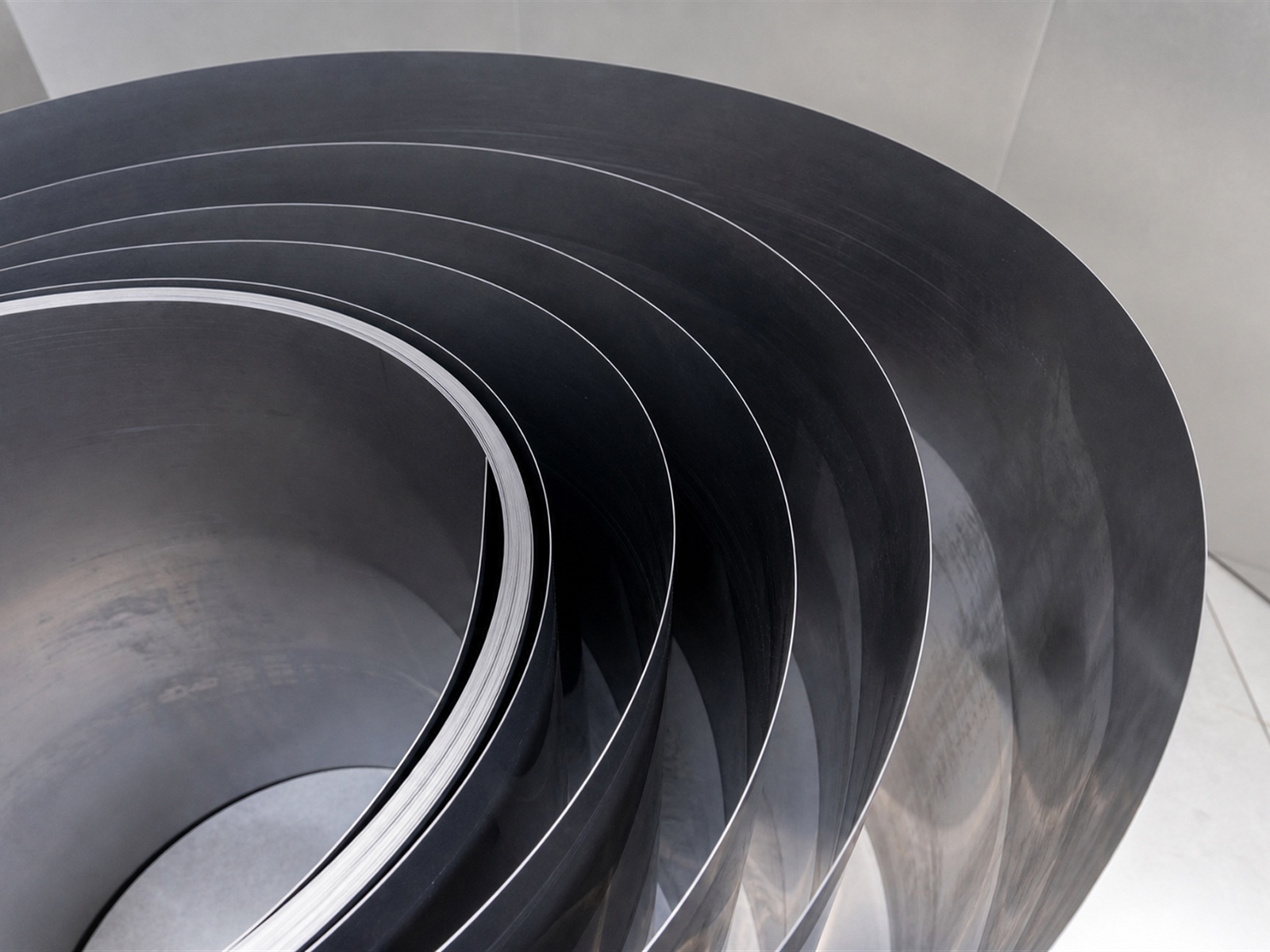
Gr4 titanium foil is widely used in the chemical industry, marine engineering and energy fields, and its excellent corrosion resistance is a key factor. As the grade with the highest strength among industrial pure titanium, Gr4 titanium foil maintains a purity of ≥ 99% titanium while constructing a dense oxide passivation film by precisely controlling the content of interstitial elements such as oxygen and iron. This film has a thickness of 2-10 nanometers, has a TiO2 structure, and has self-healing properties. It can exist stably even in strong corrosive media such as seawater, acid and alkali, and chloride ions, with a corrosion rate as low as 0.005 mm/year. Compared with the risk of pitting corrosion of stainless steel in the same environment, Gr4 titanium foil shows a service life expectancy of more than 30 years, making it an ideal material choice under dual working conditions of high load and strong corrosion.
1. What Should You Know About Microscopic Mechanism of Corrosion Resistance of Gr4 Titanium Foil?
(1) What Should You Know About Spontaneous Formation and Structural Properties of Passivation Film?
After being exposed to an oxygen-containing environment, the surface of Gr4 titanium foil instantly forms an amorphous TiO2 passivation film. The film thickness is about 2-10 nanometers, with high density and low ion mobility. Electrochemical tests show that under the conditions of 1 mol/L H2SO4 solution and a scan rate of 1 mV/s, the breakdown potential of the passivation film exceeds +1.2 V (vs. SCE), which is much higher than most metal materials. The amorphous structure of the film eliminates grain boundary diffusion channels and effectively blocks corrosion media from penetrating into the substrate.
(2) What Should You Know About the Dual Effects of Oxygen Element Strengthening?
The oxygen content in Gr4 titanium foil is controlled within 0.40%. This design takes into account both strength improvement and passivation film stability. Oxygen atoms are distributed in the α-Ti lattice in the form of gaps, which not only increases the tensile strength of the matrix to ≥ 550 MPa, but also provides a sufficient oxygen source for the surface passivation film. When the film is mechanically damaged, matrix oxygen can quickly migrate to the defect, achieving self-healing in 0.01 seconds.
(3) What Should You Know About Contribution of Grain Refinement to Corrosion Uniformity?
Through the 20-roll precision cold rolling process, the grain size of Gr4 titanium foil can be controlled at 5-15 microns. The fine and uniform grain structure reduces grain boundary segregation and keeps the thickness of the passivation film consistent on a microscopic scale. Compared with coarse-grained materials, the corrosion current density of fine-grained Gr4 titanium foil in 3.5% NaCl solution is reduced by 42%, significantly improving long-term service reliability.
2. What Should You Know About Performance in Typical Corrosive Environments?
(1) What Should You Know About Excellent Stability in Seawater and Salt Spray Environments?
test environment | Corrosion rate (mm/year) | Pitting susceptibility | Service life estimate |
Natural sea water (25℃) | 0.003 | No pitting corrosion | >35 years |
Salt spray test (5% NaCl) | 0.005 | No pitting corrosion | >30 years |
316L stainless steel (comparison) | 0.15 | Pitting corrosion occurs | 8-12 years |
Under the conditions of deep-sea high-pressure environment (pressure 30 MPa) and tropical high-temperature seawater (40℃), the passivation film of Gr4 titanium foil maintains integrity, and electrochemical impedance spectroscopy shows that the film resistance value is stable above 10⁶ Ω·cm². This makes it the material of choice for desalination, ocean platform and submersible components.
(2) What Should You Know About Resistance to Corrosion in Acidic Media?
Although Gr4 titanium foil needs to control the concentration and temperature in reducing acids such as sulfuric acid and hydrochloric acid, it performs well in oxidizing acids (such as nitric acid and chromic acid). Soaked in boiling 65% nitric acid solution for 1000 hours (the container uses a reflux device to control volatilization), the corrosion depth is only 0.02 mm. This is due to the characteristics of the oxidizing medium that strengthens the passivation film, making Gr4 titanium foil widely used in chemical pickling equipment and electrolytic cell anodes.
(3) What Should You Know About Tolerance to a Combination of Alkaline and Chloride Environments?
Alkaline chloride solutions (such as NaOH+NaCl mixtures) pose severe challenges to most metals. After continuous exposure of Gr4 titanium foil to 10% NaCl+5% NaOH solution with pH=12 for 3000 hours, the surface passivation film did not crack or peel off. Scanning electron microscopy observation shows that the thickness of the film layer is increased to 15 nanometers, which further enhances the protective effect.
3. What Should You Know About Effect of Process Control on Corrosion Resistance?
(1) What Should You Know About Optimization of Surface Activity by Ultrasonic Cleaning?
Cleaning process | Surface tension value (mN/m) | Oil residue (μg/cm²) | Passivation film uniformity |
Traditional alkali cleaning | 34 | 8.5 | medium |
Ultrasonic cleaning | 28 | <1.2 | Excellent |
No cleaning | 28 | 25 | Difference |
The ultrasonic cleaning system equipped on the production line completely removes rolling oil and particulate contamination through 40 kHz high-frequency oscillation. After cleaning, the surface tension value drops to 28 mN/m (corresponding to a surface energy exceeding 40 mJ/m²), creating ideal conditions for the rapid formation of a passivation film. This process enables Gr4 titanium foil to show better bonding strength and corrosion resistance in subsequent surface treatments such as electroless plating and anodizing.
(2) What Should You Know About Microstructural Control of Continuous Annealing Process?
Using a 7-zone electric heating continuous annealing furnace with a temperature control accuracy of ± 2℃, the Gr4 titanium foil can complete recrystallization in the range of 650-750℃. The argon protective atmosphere avoids surface oxidation and weight gain, and at the same time promotes the dissolution of grain boundary precipitated phases. After annealing, the internal residual stress of the material is reduced to <50 MPa, eliminating the hidden danger of stress corrosion cracking. It is especially suitable for parts that need to withstand alternating loads for a long time.
(3) What Should You Know About Texture Optimization for Surface Grinding Treatments?
The grinding line is combined with a ceramic grinding roller through an adjustable tension system to form a uniform texture of Ra=0.2-0.6 um on the surface of the titanium foil. This micron-level roughness not only retains a certain mechanical bite force, but also avoids stress concentration caused by deep groove defects. The electrochemical polarization curve test shows that the apparent passivation current density of the polished Gr4 titanium foil is reduced by 35% (taking into account the increase in the actual area of the rough surface, this reduction is mainly attributed to the improved coverage integrity of the passivation film on the surface active sites), and the local corrosion resistance is significantly enhanced.
4. Why Is Corrosion Resistance Case Verification in Practical Applications Important?
(1) What Should You Know About Long-term Testing of Anode Materials for Chemical Electrolysis Cells?
A chlor-alkali company uses 0.3 mm thick Gr4 titanium foil as the anode base material of the electrolytic cell, which runs continuously for 48 months in a saturated NaCl electrolyte (pH=2-3, current density 3000 A/m²). Regular sampling and analysis showed that only a 5-micron-thick mixed oxide layer was formed on the anode surface, and there was no perforation or peeling off of the substrate. Compared with the 24-month replacement cycle of titanium alloy anodes, the service life of Gr4 titanium foil is extended by 100% and maintenance costs are reduced by 60%.
(2) What Should You Know About Anti-biofilm Adhesion Performance of Seawater Desalination Membrane Modules?
In a SWRO seawater desalination project in the Middle East, Gr4 titanium foil was made into a rolled membrane shell with a width of 600 mm. The operating environment includes high-temperature seawater of 40℃, free chlorine 0.5 ppm and biofilm adhesion. After 18 months of continuous operation, only a thin layer of biofilm is attached to the surface of the titanium foil, which can be restored to its original appearance through pickling, and the corrosion depth of the substrate is <0.01 mm. Equipment manufacturers reported that the use of Gr4 titanium foil increased the life of the membrane module from 5 years to more than 8 years.
(3) What Should You Know About High-temperature Oxidation Resistance Verification of Aeroengine Honeycomb Seals?
Test conditions | Oxidative weight gain (mg/cm²) | Film peeling off | Mechanical property retention rate |
350℃×1000h | 0.8 | Not peeling off | 96% |
450℃×500h | 2.3 | Slightly peeling | 89% |
550℃×100h | 5.6 | local peeling | 75% |
In the aviation field, 0.05 mm ultra-thin Gr4 titanium foil is used to make honeycomb core materials, which can withstand long-term operating temperatures of 350℃ in the rear section of the engine turbine. Thermal cycle testing shows that the rutile TiO2 film formed on the surface of the titanium foil has good high-temperature stability, and the tensile strength retention rate after 1, 000 hours is still 96%. This verifies the reliability of Gr4 titanium foil in high temperature oxidation environment.
5. What Are the Differences in Performance Comparison with Other Brands of Titanium Foil?
(1) What Are the Differences in Differences in Corrosion Potential of Gr1, Gr2 and Gr4 Titanium Foils?
Through potentiodynamic polarization curve testing, the corrosion potentials of the three grades in 3.5% NaCl solution are: Gr1 (-0.32 V), Gr2 (-0.28 V), and Gr4 (-0.24 V). The higher corrosion potential of Gr4 titanium foil means that it prefers a protected cathodic position in galvanic corrosion environments. When assembled with stainless steel, copper alloy and other materials, Gr4 titanium foil can effectively reduce the risk of electrochemical corrosion.
(2) What Should You Know About the Balance of Strength and Corrosion Resistance?
Although Gr1 titanium foil has optimal ductility, its yield strength is only 140-310 MPa. It is prone to creep deformation under load-bearing conditions and exposes fresh surfaces to accelerate corrosion. The yield strength of Gr4 titanium foil reaches 480-665 MPa, which provides sufficient structural support while maintaining the integrity of the passivation film. This synergy of strength and corrosion resistance makes Gr4 titanium foil irreplaceable in applications such as deep-sea pressure shells and chemical reactor jackets.
(3) What Should You Know About Economic Evaluation of Different Materials?
Compared with titanium alloys (such as Ti-6Al-4V), the raw material cost of Gr4 titanium foil is 30-40% lower (based on plates of the same specifications), and its processability is better than alloy materials. In an offshore platform anti-corrosion project, Gr4 titanium foil was used instead of titanium alloy plates, which reduced the initial investment by $120, 000 and saved $350, 000 in maintenance costs over the 20-year life cycle. This economy makes Gr4 titanium foil the preferred solution for large-area anti-corrosion applications.
6. What Is the Conclusion?
The excellent corrosion resistance of Gr4 titanium foil comes from its dense self-healing passivation film, precisely controlled oxygen content and fine-grained uniform structure. In various extreme environments such as sea water, acid and alkali, and high-temperature oxidation, Gr4 titanium foil shows stability and long life that far exceed that of traditional materials. Through advanced rolling, cleaning, and annealing processes, relevant manufacturing companies have successfully achieved stable mass production of 0.02-1.0 mm ultra-thin wide Gr4 titanium foil, meeting high-end needs in the chemical industry, marine, aviation and other fields, and providing a solid guarantee for the reliable operation of key equipment.
7. What Should You Know About FAQ?
Q1: Why is Gr4 titanium foil more resistant to seawater corrosion than stainless steel?
The key is that the surface of Gr4 titanium foil can spontaneously form a 2-10 nm thick titanium dioxide (TiO2) passivation film. This film is dense and has self-healing properties. Even if it is mechanically scratched, it can complete self-healing within 0.01 seconds using oxygen atoms in the matrix. The corrosion rate in natural seawater is only 0.003 mm/year, and the service life is estimated to be more than 35 years. However, 316L stainless steel is prone to pitting corrosion in the same environment, with a corrosion rate as high as 0.15 mm/year and a service life of only 8-12 years.
Q2: Can Gr4 titanium foil maintain corrosion resistance at high temperatures?
Yes, but be aware of temperature boundaries. After working at 350℃ for 1, 000 hours, the oxidation weight gain of Gr4 titanium foil is only 0.8 mg/cm², the surface film layer does not peel off, and the mechanical property retention rate reaches 96%. When the temperature rises to 550℃, oxidation intensifies and local peeling may occur. Therefore, Gr4 titanium foil has excellent high-temperature oxidation resistance below 350℃ and is suitable for high-temperature components such as aerospace engine honeycomb seals.
Q3: Compared with Gr1 and Gr2, what is the difference in the corrosion resistance of Gr4 titanium foil?
The three have the same corrosion mechanism and all rely on TiO2 passivation film, but the comprehensive advantages of Gr4 titanium foil are more prominent. In 3.5% NaCl solution, the corrosion potential of Gr4 is -0.24 V, which is higher than Gr1 (-0.32 V) and Gr2 (-0.28 V), which means that galvanic corrosion is less likely to occur when assembled with other metals. More importantly, Gr4 has a yield strength of 480-665 MPa, which is much higher than Gr1’s 140-310 MPa. It can maintain the integrity of the passivation film under high load conditions and avoid fresh surface exposure and accelerated corrosion caused by deformation.
How Should Looking for Suppliers of Gr4 Titanium Foil with Excellent Corrosion Resistance?
As a professional manufacturer, Baoji Titanium Nickel and Zirconium Materials Processing Co., Ltd. has a full-process production line of 20-roller precision cold rolling, ultrasonic cleaning and continuous vacuum annealing. It can stably supply ultra-thin wide Gr4 titanium foil (the highest strength grade of industrial pure titanium) with a thickness of 0.02-1.0mm. The product’s passivation film has excellent self-healing performance. The corrosion rate in seawater, acid-base and chloride environments is as low as 0.003-0.005 mm/year, and the service life is estimated to be more than 30 years. We provide customized products and test reports that comply with international standards such as ASTM B265 for global chemical electrolysis, seawater desalination, marine engineering and aviation sealing customers. Contact sales@titaniumvalleys.com immediately to obtain technical solutions and samples.
References
- Zhang Wei, Li Ming. Research on electrochemical behavior and corrosion mechanism of industrial pure titanium passivation film [J]. Chinese Journal of Corrosion and Protection, 2021, 41(3): 245-253.
- Wang Jianguo, Chen Hua. Corrosion behavior and protection technology of titanium and titanium alloys in marine environment [J]. Materials Protection, 2020, 53(8): 102-110.
- Zhao Jun, Liu Yang. Effect of cold rolling process on the microstructure, properties and corrosion resistance of pure titanium foil [J]. Rare Metal Materials and Engineering, 2022, 51(6): 2156-2163.
- Sun Tao, Zhou Qiang. Synergistic effect of oxygen content on the mechanical properties and passivation film stability of industrial pure titanium [J]. Acta Metallurgica Sinica, 2019, 55(12): 1523-1531.