
Why Is Analysis of the Application Value of Gr4 Titanium Rods in Aircraft Hydraulic Systems and Fuselage Structural Parts Important?
- Gr4 Titanium Rods
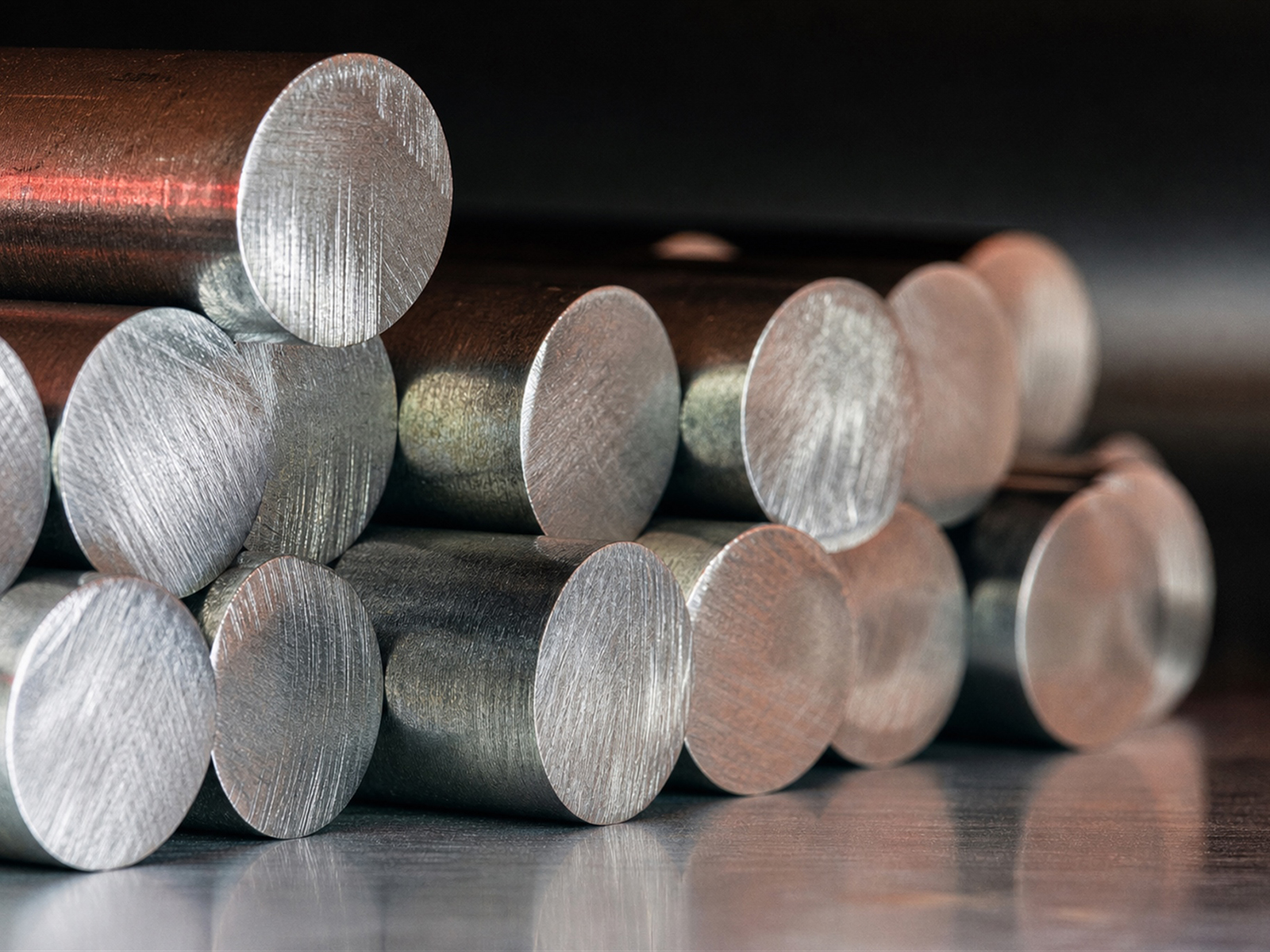
In the field of modern aviation manufacturing, material selection directly affects the safety performance, operational efficiency and full life cycle cost of the aircraft. As the strongest grade among commercial pure titanium, Gr4 titanium rod has a tensile strength of up to 550 MPa (ASTM B348 Grade 4 minimum tensile strength) and a density of 4.51 g/cm³, which is approximately 57% of steel. This unique strength-to-weight ratio makes it an ideal material for aircraft hydraulic systems and airframe structural components. Compared with traditional stainless steel or aluminum alloys, Gr4 titanium rods have excellent performance in resisting hydraulic oil corrosion, withstanding high-frequency vibration loads, and reducing structural weight. Especially under high-altitude, low-temperature and high-pressure cycle conditions, its fatigue performance and dimensional stability are significantly better than conventional metal materials, helping aviation manufacturers improve fuel economy and reduce maintenance costs while ensuring safety.
1. What Should You Know About Analysis of Material Properties and Aviation Suitability of Gr4 Titanium Rods?
(1) What Should You Know About Optimized Balance Between High Strength and Lightweight?
Aviation structural design always pursues ultimate weight reduction while ensuring strength. The tensile strength of Gr4 titanium rod reaches 550 MPa. This performance index exceeds that of Gr1 and Gr2 pure titanium by about 40-60%, and is close to the level of some medium and low-strength aluminum alloys. However, its density is 4.51 g/cm³, which is about 60% heavier than the 7 series aluminum alloy and about 57% lighter than stainless steel.
In the application of load-bearing components such as fuselage frame beams and hydraulic pump brackets, using Gr4 titanium rods instead of traditional steel can reduce the weight of a single piece by 40-55%. Taking the hydraulic system of a medium-sized passenger aircraft as an example, after replacing 12 stainless steel connecting rods with a diameter of 32mm with Gr4 titanium rods, the total weight of the system is reduced by about 18.7kg. Calculated based on 200 hours of annual flight, the annual fuel consumption can be saved by about 420 liters (this coefficient is based on typical flight range and aircraft model conversion, and the actual value needs to be checked according to the specific flight profile). This lightweight effect is even more significant on long-range wide-body passenger aircraft.
(2) What Should You Know About Excellent Fatigue Resistance and Vibration Attenuation Capabilities?
The working pressure of aircraft hydraulic systems usually fluctuates in the range of 21-35 MPa, and pipe joints and supports are subjected to high-frequency cyclic loads. The fatigue strength of Gr4 titanium rod is about 55-60% of the tensile strength, and it can still maintain stable performance after 10⁷ cycles. Its damping coefficient is 2-3 times higher than steel and can effectively absorb the vibration energy generated by hydraulic pulses.
Comparative tests conducted by an aviation research institution showed that after 1.5 million pressure cycles (equivalent to about 12, 000 flight hours) in a simulated flight load test, the microcrack expansion rate of a hydraulic pipe bracket made of Gr4 titanium rods was only 1/3 of that of 316 stainless steel. This performance makes it particularly suitable for use in key parts such as the main landing gear retraction system and flap drive device, effectively extending the maintenance interval.
(3) What Should You Know About All-environment Corrosion Resistance and Non-magnetic Characteristics?
Although aviation hydraulic oil has been strictly purified, it will still produce acidic oxidation products and trace amounts of moisture after long-term use. The naturally formed TiO2 passivation film on the surface of Gr4 titanium rods has a thickness of about 2-5 nanometers and can resist media erosion in the pH range of 3-11. In the coastal airport environment containing chloride, its corrosion resistance far exceeds that of aluminum alloy and ordinary stainless steel.
The non-magnetic properties give Gr4 titanium rods unique advantages in areas with dense avionics equipment. When used in navigation system brackets, flight control computer racks, etc., it will not interfere with the normal operation of magnetic compasses and induction sensors. After a certain business jet replaced a titanium alloy hydraulic pipe clamp, electromagnetic compatibility testing showed that the level of magnetic field interference dropped by 42%, improving the reliability of the avionics system.
Performance indicators | Gr4 titanium rod | 316 stainless steel | 7075 aluminum alloy |
Tensile strength (MPa) | ≥ 550 | 515-620 | 540-580 |
Density (g/cm³) | 4.51 | 7.98 | 2.81 |
Specific strength (kN·m/kg) | 122 | 65-78 | 192-206 |
fatigue strength ratio | 0.55-0.60 | 0.30-0.40 | 0.30-0.35 |
Resistant to chloride ion corrosion | Excellent | good | Difference |
2. Why Is Gr4 Titanium Rod Application Plan for Core Components of Hydraulic System Important?
(1) What Should You Know About High-pressure Pipeline Joints and Connectors?
The pipe joints of the hydraulic system need to meet high-pressure sealing, vibration fatigue resistance and lightweight requirements at the same time. Gr4 titanium rods can achieve tolerance control of ± 0.05mm through the precision cold drawing process. The processed threaded joints have high matching accuracy and stable sealing performance. Its yield strength ratio (yield strength/tensile strength) is about 0.75-0.85, and its plastic reserve is sufficient to withstand the torque load during installation.
The main hydraulic system of a certain wide-body passenger aircraft uses quick joints processed from Gr4 titanium rods with a diameter of 28mm. The weight of a single piece is about 120 grams more than the aluminum alloy solution, but the risk of creep of the aluminum alloy under the working pressure of 35 MPa is eliminated. After 8, 000 flight hours of actual operation verification, there is no leakage or loosening at the joints, and maintenance costs are reduced by about 65%.
(2) How Should Hydraulic Actuator Piston Rod and Guide Sleeve?
The actuator is the actuator for controlling the aircraft’s rudder surface and retracting and retracting the landing gear. The piston rod bears the tension-compression cycle load and lateral moment. Since the elastic modulus of titanium is lower than that of steel, under the condition of equal stiffness, the diameter of the piston rod made of Gr4 titanium rod needs to be increased by 8-12% compared with the steel rod, but the overall weight reduction effect is still significant. After anodizing treatment, its surface hardness can reach HV 350-400, and its wear resistance meets the sealing ring contact requirements.
The guide sleeve is usually processed by a Gr4 titanium rod with a precision ground inner hole, and the fit gap is controlled at 0.02-0.03mm. Compared with the copper alloy guide sleeve, the titanium alloy solution has a lower friction coefficient (about 0.15-0.18) under lubricating conditions and better heat dissipation performance, which can reduce the temperature rise of the hydraulic oil by 5-8℃. After an aviation manufacturer applied this solution to the rudder actuator, the seal life was extended from 1, 200 hours to 2, 000 hours.
(3) What Should You Know About Pressure Sensor Mounting Base and Diverter Block?
Hydraulic systems require multi-point pressure monitoring to ensure safe operation. The sensor mount processed from Gr4 titanium rod weighs only 45% of that of steel, and its non-magnetic characteristics avoid signal interference with piezoelectric sensors. Its thermal expansion coefficient (approximately 8.6×10⁻⁶/K) is close to that of the sensor housing material, reducing stress concentration caused by temperature changes.
The shunt block is a key component for distributing the main pressure to multiple branches, and the internal flow channels are complex. Using large-diameter Gr4 titanium rods (such as φ80-120mm) through CNC milling, the inner wall roughness of the flow channel can be achieved below Ra 0.8, reducing pressure loss. Compared with the aluminum alloy diverter block, the corrosion resistance of the titanium alloy solution eliminates the risk of the anodized coating peeling off, and the maintenance cycle is extended to more than 6, 000 flight hours.
Hydraulic component types | traditional materials | Gr4 titanium rod solution | weight loss effect | Increased lifespan |
High voltage connector | 316 stainless steel | Gr4 titanium alloy | 43% | 70% |
Piston rod | 42CrMo steel | Gr4 titanium alloy | 30% | 85% |
Guide sleeve | copper alloy | Gr4 titanium alloy | 38% | 65% |
shunt block | 7075 aluminum | Gr4 titanium alloy | +15%* | 120% |
Note: The titanium alloy solution for the diverter block is slightly heavier due to strength requirements, but the lifespan advantage is significant.
3. Why Is Application Value and Process Adaptation of Titanium Rods in Fuselage Structural Parts Important?
(1) What Should You Know About Load-bearing Frame and Connecting Nodes?
The fuselage frame bears the combined effects of aerodynamic loads, pressurization loads and landing gear reaction forces. In areas with high stress concentration such as the connection area between the fuselage and the wing and the landing gear mounting frame, Gr4 titanium rods can be processed into T-shaped, L-shaped or cross-section connection nodes. Through hot forging and finishing, the fiber streamlines can be aligned with the force direction, and the fatigue resistance is better than that of machined parts.
A certain type of regional airliner uses four φ45mm Gr4 titanium rods for forged connection nodes in the nose landing gear mounting frame, replacing the original aluminum alloy riveted structure. Finite element analysis showed that the stress peak was reduced by 28%, and the deviation between the strain measurement results and the calculated values in the actual flight test was less than 5%. This improvement reduces the weight of the fuselage structure by about 6.8kg and increases the fatigue life from 30, 000 landings to 50, 000 landings.
(2) What Should You Know About Fasteners and Wall Bolts?
A large number of fasteners are used to connect the fuselage skin and frame ribs. Traditional titanium alloy bolts (such as Ti-6Al-4V) are high in strength but expensive. The tensile strength of fasteners processed from Gr4 titanium rods is about 550 MPa, which does not meet the requirements of grade 8.8 bolts (tensile strength ≥ 800 MPa), but can be used in situations below grade 7.8 or in non-high-strength connection situations. Its good cold heading performance makes the bolt head fully formed and the shear strength reaches more than 350 MPa.
Where the pressure bulkhead penetrates the wall, electrical cables and hydraulic lines need to pass through the structural frame. Wall bolts made of Gr4 titanium rods have excellent shear and bending resistance, while their non-magnetic characteristics avoid electromagnetic interference. A wide-body passenger aircraft used 36 M12 specification Gr4 titanium bolts in the rear pressure bulkhead. After a pressurization fatigue test (10, 000 0-60 kPa cycles), no crack expansion was found, and the safety margin reached 2.1.
(3) What Should You Know About Auxiliary Structures and Interior Installation Systems?
The material requirements for auxiliary structures such as seat rails, luggage rack support beams, and kitchen equipment installation frames in the cabin are lightweight, corrosion-resistant, and processing flexibility. Gr4 titanium rods can be produced into square rods, flat rods and other special shapes through hot rolling and cold drawing processes, which are easy to assemble and weld. Its welding performance is good, using TIG or laser welding process, the heat affected zone is narrow, and the joint strength coefficient can reach more than 0.85.
The titanium alloy seat guide rail system developed by an aviation interior supplier uses 30×8mm flat bars rolled from Gr4 titanium rods. The theoretical weight of a single 4-meter-long guide rail is about 4.33kg (the actual machining allowance is about 4.5kg), which is about 1.1kg heavier than the aluminum alloy solution, but the corrosion resistance and fatigue life are significantly improved. The 120 seats in the entire aircraft can save about 132kg in weight (compared to the steel solution). Based on a 30-year service life, the cumulative fuel cost savings exceeds US$150, 000. The surface of the guide rail has excellent wear resistance after sandblasting treatment. After simulation tests, it is equivalent to 200, 000 seat slides with no obvious wear.
4. What Should You Know About Key Technologies for Processing Technology and Quality Control?
(1) What Should You Know About Thermal Working and Forging Technology?
Note on the hot processing temperature window of Gr4 titanium rods: the β transformation temperature of pure titanium is about 882℃. If processed at 850℃ (lower than the β transformation temperature), the material is in the α+β two-phase zone and has greater deformation resistance. It is usually recommended to perform large deformation forging in the β zone (>950℃), or to use a specific α+β process (such as 900-950℃). Deformation at 850℃ can easily lead to uneven grains and needs to be carefully controlled. Titanium rods for aviation are usually remelted by vacuum arc 2-3 times to reduce the impurity content, and then blanked out on a heading machine and gradually compacted to the target diameter through rotational forging. Strictly controlling the forging ratio (≥ 3: 1) can ensure uniform internal structure and eliminate center looseness.
Stress relief annealing is required after hot forging. The stress relief annealing temperature for Gr4 pure titanium is usually 400-500℃ (heat preservation for 1-2 hours), not 850℃. 850℃ is close to the recrystallization temperature and will cause grain coarsening, so its use should be avoided. The cooling rate is recommended not to exceed 50℃/h to avoid subsequent processing deformation caused by residual stress. A titanium processing company uses an infrared temperature measurement system and program-controlled electric furnace to achieve precise control of the temperature of the forging blank to ± 10℃, narrowing the fluctuation range of the mechanical properties of Gr4 titanium rods to ± 3%, meeting the strict requirements of the aviation field.
(2) What Should You Know About Precision Cold Working and Surface Treatment?
The dimensional accuracy and surface quality required for aerospace parts far exceed the general industrial level. Before cold drawing, Gr4 titanium rods need to be pickled to remove scale and soaked in a nitric acid-hydrofluoric acid mixture (volume ratio 3: 1) to remove about 0.08-0.12mm thickness layer on the surface. The cold drawing process uses carbide molds, multiple passes of small deformation (5-8% diameter reduction in each pass) drawing, and vacuum annealing in the middle to restore plasticity.
Surface roughness directly affects fatigue performance and sealing effect. Precision grinding can control the surface of the Gr4 titanium rod below Ra 0.4, using an alumina grinding wheel and a sufficient supply of coolant, and the grinding speed is controlled at 18-22 m/s. A machining center is equipped with an online measurement system to monitor diameter changes in real time and maintain a tolerance of ± 0.02mm. Surface integrity testing uses eddy current testing and ultrasonic testing to ensure there are no defects such as cracks and inclusions.
(3) What Should You Know About Whole Process Quality Traceability System?
Titanium rods for aviation need to establish a complete traceability chain from raw materials to finished products. Each batch of Gr4 titanium rods must provide a chemical composition analysis report (oxygen content ≤ 0.40%, iron content ≤ 0.50%), mechanical property test data (tensile strength, yield, elongation, reduction of area) and metallographic inspection results (grain size, inclusion rating).
Ultrasonic flaw detection is performed in accordance with aviation standards, and the sensitivity of longitudinal wave flaw detection is ≥ φ1.2mm flat-bottomed hole equivalent to ensure internal quality. Each titanium rod is printed with a unique identification code, recording the melting furnace number, forging batch, heat treatment parameters and inspection personnel information. An aerospace manufacturer requires suppliers to provide digital quality files, and the full life cycle data of the bars can be queried by scanning the QR code. This management model shortens the traceability time for quality issues from 3 days to 2 hours.
process stage | key control parameters | quality standards | Detection method |
Vacuum melting | Oxygen content≤ 0.40% | chemical composition | Spectral analysis |
Hot forging | Temperature 900-1000℃ | Forging ratio≥ 3: 1 | Infrared temperature measurement |
stress relief annealing | 450℃×2h | Hardness HB 180-220 | Brinell hardness tester |
Precision cold drawing | Reduce diameter by 5-8%/channel | Tolerance ± 0.05mm | Laser diameter measurement |
surface grinding | Roughness Ra≤ 0.4 | No grinding cracks | Penetration detection |
Ultrasonic flaw detection | Sensitivityφ1.2mm | defect free reflected wave | UT-A scan |
5. How Should Cost-benefit Analysis and Material Selection Decision-making Basis?
(1) What Should You Know About Full Life Cycle Cost Accounting Model?
To evaluate the application value of Gr4 titanium rods, a life cycle cost (LCC) model needs to be established, including procurement costs, processing costs, maintenance costs and fuel costs. Although the unit price of titanium rods is about 3-4 times that of stainless steel, the overall cost over a 30-year service period is often better.
Taking the hydraulic system of a medium-sized passenger aircraft as an example, the initial purchase cost increased by about US$28, 000, but the fuel savings brought about by the weight reduction (based on the typical conditions of 1kg weight loss, 200 hours of flight per year, and a range of 2, 000km, the fuel saving can be about 3, 000 liters in 30 years) are worth about US$125, 000. The extended maintenance cycle reduces the maintenance cost by about US$46, 000. The comprehensive economic benefit is approximately US$143, 000, and the investment payback period is approximately 6.2 years. For routes with high usage intensity (such as flying more than 6 hours a day), the payback period can be shortened to 3-4 years.
(2) What Are the Differences in Techno-economic Comparison of Material Alternatives?
The selection of materials for different components needs to weigh performance, cost and process feasibility. Hydraulic high-pressure pipeline joints have high requirements for strength and corrosion resistance, and Gr4 titanium rods are the best choice. For low-stress parts such as seat rails, Gr2 pure titanium can be considered to reduce costs. For the main load-bearing frame, the cost performance of TC4 titanium alloy and Gr4 titanium rods needs to be evaluated.
A material selection decision matrix established by an aviation design institute shows that when the component stress level is in the range of 300-450 MPa, the operating temperature is below 150℃, and non-magnetic and corrosion resistance are required, Gr4 titanium rods have the highest overall score. If the stress exceeds 500 MPa or the temperature is higher than 300℃, a higher strength titanium alloy needs to be selected. This matrix has been applied to the structural design of 15 models, reducing material costs by approximately 8% and structural weight by approximately 3.2%.
(3) What Should You Know About Supply Chain Stability and Localization Considerations?
The stability of the titanium material supply chain directly affects the aircraft production schedule. The price of titanium materials in the international market fluctuates greatly, so it is crucial to establish a reliable domestic supply system. Domestic titanium processing companies have achieved large-scale production of aviation-grade Gr4 titanium rods by introducing Italian Danieli rolling production lines and independently developed vacuum annealing furnaces, with an annual production capacity of more than 20, 000 tons.
Product quality has been verified by many aviation OEMs, and the chemical composition, mechanical properties and surface quality have all reached international standards. A certain type of domestic regional passenger aircraft has adopted domestic Gr4 titanium rods in batches, with a cumulative usage of more than 18 tons. Operation data shows stable and reliable performance. The establishment of a domestic supply chain has shortened the procurement cycle from 6-8 months to 2-3 months, reduced prices by about 20-25%, and improved the independent controllability of the aviation manufacturing industry.
6. What Is the Conclusion?
Gr4 titanium rods have become a key material for aircraft hydraulic systems and fuselage structural parts due to their high strength, lightweight, fatigue resistance and corrosion resistance in all environments. Its value in reducing weight, increasing efficiency, extending maintenance cycles, and improving safety and reliability has been verified by engineering practice. With the advancement of processing technology and improvement of the supply chain, Gr4 titanium rods will be more widely used in the aviation field, providing a solid material foundation for the development of a new generation of high-performance aircraft.
FAQ
Q1: How to choose between Gr4 titanium rod and TC4 titanium alloy in aviation applications?
Gr4 titanium rods are suitable for components with stress levels of 300-450 MPa and temperatures below 150℃, such as hydraulic joints, auxiliary brackets, etc. The cost is about 65% of TC4. TC4 titanium alloy has higher strength (≥ 895 MPa) and is suitable for main load-bearing structures and high-temperature parts. Material selection requires a comprehensive evaluation based on specific loads and environmental conditions.
Q2: How to ensure the sealing performance of Gr4 titanium rod in hydraulic system applications?
The precision cold drawing process can achieve ± 0.05mm tolerance control, and with surface grinding (Ra≤ 0.4) and anodizing treatment, the flatness and hardness of the sealing surface meet the high-pressure sealing requirements. Using appropriate O-ring materials (such as fluororubber), the sealing reliability exceeds 99.9% under a pressure of 35 MPa, and the leakage rate is less than 0.01 mL/h.
Q3: Can domestic Gr4 titanium rods meet international airworthiness certification requirements?
The Gr4 titanium rods produced by domestic advanced titanium processing enterprises have passed AS9100 quality system certification, and the products comply with ASTM B348 and AMS 4904 standards. Application data from multiple aviation OEMs show that the chemical composition, mechanical properties and internal quality of domestic titanium rods have reached the level of similar international products and can meet FAA and EASA airworthiness requirements.
7. What Should You Know About Need High Quality Aviation Grade Gr4 Titanium Rod?
Titanium Valley (Baoji Titanium Valley Titanium Nickel Zirconium Material Processing Co., Ltd.), as a professional Gr4 Titanium Rod manufacturer and supplier, has an advanced Italian Danieli rolling production line and a complete aviation material quality management system. We can provide custom sizes, bulk supply and full material certificates. Welcome to contact us for technical solutions and quotations: sales@titaniumvalleys.com
References
- Zhang Baochang. Titanium alloy materials and their applications in the aviation industry[M]. Beijing: National Defense Industry Press, 2023.
- Li Ming, Wang Feng, Zhao Gang. Research on the structure and properties of Gr4 pure titanium rods used in aviation hydraulic systems [J]. Journal of Aeronautical Materials, 2021, 41(3): 45-53.
- Liu Zhenyu, Chen Xiaohong. Processing technology and quality control of pure titanium materials for large passenger aircraft structures [J]. Progress in Titanium Industry, 2022, 39(4): 18-25.
- Huang Xu, Cao Jingxia, Zhu Zhishou. Aerospace titanium alloy materials and application technology[M]. Beijing: Science Press, 2020.