
Why Is Detailed Explanation of TB13 Titanium Alloy Rod, Characteristics, Applications and Advantages Important?
- TB13 Titanium Alloy Rod
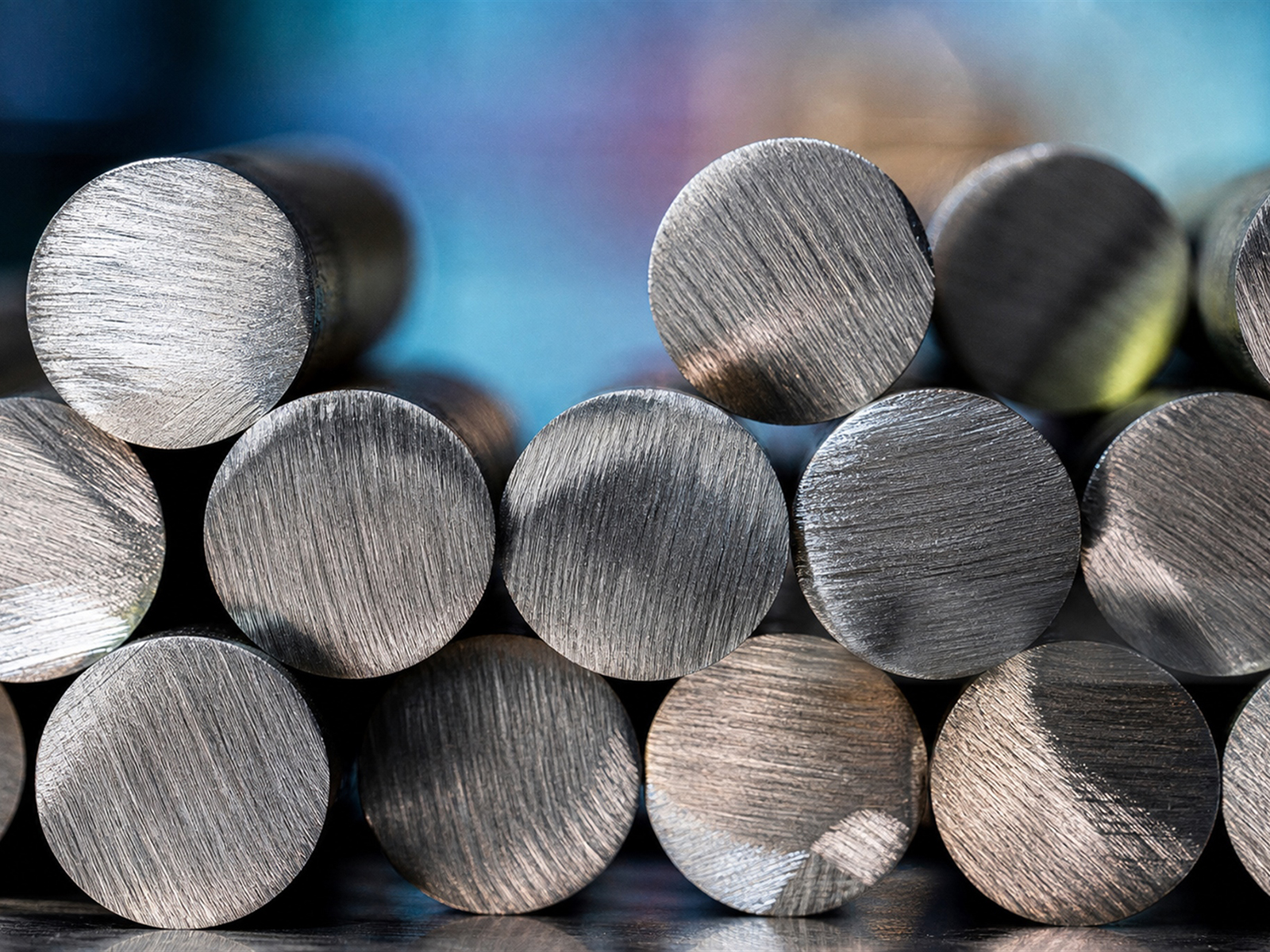
TB13 titanium alloy rod, as a near-beta titanium alloy material independently developed in China, has become an ideal material for high-end eyeglass frames, medical equipment and precision elastic components due to its excellent superelasticity, excellent cold working performance and low elastic modulus characteristics. This alloy is produced through vacuum consumable smelting, precision forging and solution treatment processes, showing a unique balance of high strength and toughness. The density is only about 4.5g/cm³, which is about 44% lighter than traditional stainless steel. Its controlled low-nickel composition design effectively reduces the risk of allergies, and its non-magnetic characteristics make it irreplaceable in the field of precision instruments. After appropriate heat treatment, TB13 titanium alloy rods can achieve flexible control of strength and plasticity to meet diverse engineering needs from complex molding to high stress bearing.
1. What Should You Know About Material Properties and Organizational Structure of TB13 Titanium Alloy Rod?
(1) What Should You Know About Chemical Composition and Phase Composition Characteristics?
The core component system of TB13 titanium alloy consists of Ti matrix, 3.0%-4.5% aluminum and 20.0%-23.0% vanadium. Aluminum, as an α-phase stabilizing element, improves the high-temperature strength and oxidation resistance of the material; vanadium, as a β-phase stabilizing element, ensures that the alloy maintains a single β-phase or metastable β-phase structure at room temperature. This phase composition gives the material unique cold working capabilities, and the deformation can reach 80% without cracking. Impurity elements are strictly controlled at low levels: iron content does not exceed 0.20%, carbon content does not exceed 0.10%, nitrogen content does not exceed 0.05%, hydrogen content does not exceed 0.015%, and oxygen content does not exceed 0.20%. This precise composition design ensures that the material is both strong and ductile.
(2) What Should You Know About Mechanical Properties and Strength Control Mechanism?
The mechanical properties of TB13 titanium alloy rods can be widely adjusted through heat treatment. Under solution treatment, the material exhibits excellent plasticity and an elongation of 20%-30%, making it suitable for complex bending and stretching. After aging treatment, fine α-phase strengthening phases precipitate, the tensile strength can be increased to 900-1100MPa, and the yield strength can reach 800-950MPa. The elastic modulus is about 70-80GPa (the test condition is room temperature tensile), which is much lower than the 200GPa of stainless steel. This low modulus characteristic allows the material to produce a larger rebound stroke after being deformed by force. The fatigue strength can reach 50%-60% of the tensile strength, showing excellent durability under cyclic stress environments, and is suitable for precision components that bear alternating loads for a long time.
(3) What Should You Know About Superelastic Behavior and Shape Memory Properties?
The most striking feature of TB13 titanium alloy is its superelastic behavior, and the associated shape memory properties also appear under certain conditions. Superelasticity originates from the stress-induced martensitic phase transformation mechanism: when the material is subjected to external force, the metastable β phase undergoes a stress-induced phase transformation, producing a reversible large strain; after unloading, the phase transformation is reversed and the material returns to its original shape. The elastic strain can reach 6%-8%, which is 5-8 times that of ordinary stainless steel. This super-elasticity keeps the frame stable in shape during repeated bending and avoids permanent deformation. The material has excellent damping properties and can effectively absorb vibration energy and reduce the risk of resonance. Temperature has little effect on superelasticity, its performance is stable within the range of -20℃ to 80℃, and it is suitable for diversified use environments.
2. What Should You Know About Production Process and Quality Control of TB13 Titanium Alloy Rod?
(1) What Should You Know About Vacuum Melting and Forging Technology?
The production of TB13 titanium alloy rods begins with the vacuum consumable arc melting (VAR) process. The raw materials are made into electrodes after strict proportioning, and are melted multiple times in a vacuum or in an inert atmosphere to ensure the uniformity and purity of the ingredients. After the ingot undergoes ultrasonic flaw detection, it enters the forging process. The forging temperature is controlled in the beta phase zone of 850-950℃, the as-cast structure is eliminated through multi-directional forging, and the grains are refined to ASTM grade 5-7. The production company uses imported rolling production lines to ensure the uniformity of the bar structure and the consistency of mechanical properties by precisely controlling the deformation amount and temperature gradient.
(2) What Should You Know About Cold Working and Heat Treatment Processes?
The hot-forged bars are further reduced in diameter through cold drawing or cold rolling, and the cold working rate can reach 50%-80%. During the cold working process, the material undergoes work hardening, which increases the strength but decreases the plasticity. Heat treatment is a key step to restore plasticity and activate superelasticity: heat the rod to 750-850℃ and keep it for 30-60 minutes to completely transform the structure into β phase, and then use water cooling or oil cooling to rapidly cool it to inhibit the precipitation of α phase and retain the metastable β phase structure. After heat treatment, the material hardness is reduced to HRC 28-35, and the elongation is restored to more than 25%, providing ideal process performance for subsequent precision processing and complex molding.
(3) What Should You Know About Surface Treatment and Non-destructive Testing Standards?
Surface quality directly affects the performance and appearance quality of TB13 titanium alloy rods. Polishing treatment can achieve a mirror effect of Ra≤ 0.4um, and pickling and passivation removes the surface oxide layer and forms a dense passivation film to improve corrosion resistance. Electrochemical coloring or anodizing can give materials decorative appearances such as gold, blue, and black to meet the needs of high-end consumer products. The quality control system covers the entire process: ultrasonic flaw detection to detect internal defects, eddy current flaw detection to detect surface cracks, spectral analysis to verify chemical composition, and tensile testing and hardness testing to confirm mechanical properties. The full-process quality system established by the production company ensures that each batch of products meets international advanced standards, with a pass rate of over 99.5% (based on industry statistics and company internal quality audit data).
3. Why Is Application Practice of TB13 Titanium Alloy Rod in High-end Manufacturing Field Important?
(1) What Should You Know About Technological Breakthrough in Optical Spectacle Frame Manufacturing?
TB13 titanium alloy has achieved revolutionary applications in the eyewear manufacturing industry. Traditional nickel-chromium alloy frames weigh about 20-25 grams, while TB13 titanium alloy frames only weigh 12-15 grams, a weight reduction of 40%-50%. The super-elastic properties allow the temples to withstand 180-degree bending without breaking, with a recovery rate of over 95%. The material’s low elastic modulus gives the frame a “memory” function that automatically rebounds after slight deformation, reducing the frequency of manual adjustments. The nickel-free ingredients completely eliminate the risk of allergies and are suitable for people with sensitive skin to wear for a long time. After anodizing treatment, a colored oxide film is formed on the surface of the frame, the wear resistance is increased by 3-5 times, and the color retention time is extended to more than 5 years. After high-end eyewear brands adopt TB13 alloy, the product premium space will increase by 30%-50%, and the after-sales repair rate will decrease by 70%.
(2) Why Is Medical Device and Biological Implant Applications Important?
The biocompatibility and fatigue resistance of TB13 titanium alloy make it widely used in the medical field. Orthodontic archwires utilize their super-elastic properties to provide sustained and gentle correction force, reducing patient discomfort and shortening the treatment cycle by 15%-20%. The surgical instrument handles and support structures are made of TB13 alloy, which reduces the doctor’s operating burden and improves surgical accuracy. Orthopedic implants, such as intramedullary nails and bone plates, use their low elastic modulus properties to reduce stress shielding effects and promote bone tissue healing. The material has excellent corrosion resistance in body fluid environments, the passivation film has high stability, and the service life of the implant can reach more than 20 years. Medical device manufacturers in the United States and Germany have included TB13 titanium alloy in the list of standard materials for high-end products.
(3) What Should You Know About Precision Electronic and Instrumentation Components?
The non-magnetic and low-density properties of TB13 titanium alloy have unique value in the field of precision instruments. The smart watch case and strap are made of TB13 alloy, which is 40% lighter than stainless steel and significantly improves wearing comfort. Micro switches and leaf springs utilize their high cycle times (up to more than 1 million times) to ensure long-term reliable operation of electronic equipment. The connector and buckle components maintain stable contact force during repeated plugging and unplugging, and the contact resistance is low and stable. Sensor housings and mounting brackets in the aerospace field use the high specific strength and seismic resistance of TB13 alloy to reduce the weight of the entire machine and improve system reliability. Electronic manufacturing companies in Japan and South Korea use TB13 alloy extensively in precision connectors and micro elastic components, increasing product life by 2-3 times.
(4) Why Is Marine Engineering and Anti-corrosion Equipment Applications Important?
TB13 titanium alloy exhibits excellent corrosion resistance in marine environments. In seawater containing chloride ions, a stable TiO2 passivation film is formed on the surface of titanium alloy, and its resistance to pitting corrosion and crevice corrosion is far superior to that of stainless steel. After using TB13 alloy for marine engineering fasteners, valve components and pipeline connectors, the maintenance cycle is extended by 3-5 times and the replacement frequency is reduced by 80%. Ship propeller shaft and rudder system components utilize their high strength and fatigue resistance to maintain structural integrity under the dual effects of alternating stress and corrosion. The corrosion-resistant transmission shafts and stirring blades in chemical equipment can operate stably for a long time in acid and alkali media, and their service life is 5-10 times that of ordinary alloys. With the development of the marine economy and the rise of the hydrogen energy industry, the annual growth rate of demand for high-performance corrosion-resistant titanium alloys in the European and American markets has reached 12%-15%.
4. Why Is Performance Advantages and Cost-benefit Analysis of TB13 Titanium Alloy Rods Important?
(1) What Are the Differences in Comprehensive Mechanical Properties Comparison?
Performance indicators | TB13 titanium alloy | Stainless steel 316L | Nichrome | Pure titanium TA1 |
Density (g/cm³) | 4.5 | 8.0 | 8.5 | 4.51 |
Tensile strength (MPa) | 900-1100 | 520-680 | 600-750 | 340-540 |
Modulus of elasticity (GPa) | 70-80 | 200 | 210 | 103 |
Elongation (%) | 20-30 | 30-40 | 15-25 | 20-30 |
Fatigue strength (MPa) | 500-600 | 250-320 | 280-350 | 180-240 |
Elastic strain (%) | 6-8 | 0.2-0.3 | 0.3-0.5 | 0.5-1.0 |
It can be seen from the data that TB13 titanium alloy has significant advantages in specific strength, elastic strain and fatigue performance. Under the same strength, the weight is reduced by 40%-45%, the elastic deformation capacity is 20-30 times that of stainless steel, and the fatigue life is increased by 2-3 times. These combined properties make TB13 the material of choice for lightweight, high-reliability applications.
(2) What Should You Know About Corrosion Resistance and Environmental Adaptability?
corrosive environment | TB13 titanium alloy corrosion rate | Stainless steel 316L corrosion rate | Lifespan comparison |
3.5% sodium chloride solution | <0.001 mm/year | 0.02-0.05mm/year | 20-50 times |
5% hydrochloric acid solution (room temperature) | <0.01 mm/year | 1-5mm/year | 100-500 times |
human sweat environment | Virtually corrosion-free | slight discoloration | More than 10 times |
Marine Atmospheric Environment | completely stable | Mild pitting corrosion | 5-8 times |
Note: Lifetime comparison data is based on laboratory accelerated testing, and specific lifespan varies depending on usage conditions.
The corrosion resistance of TB13 titanium alloy comes from the self-healing ability of the surface TiO2 passivation film. Even if the film is partially damaged, it can be repaired instantly in an oxidizing environment. This characteristic allows the material to maintain stable appearance and performance for a long time in environments such as salt spray, sweat, acid and alkali, and significantly reduces maintenance costs and replacement frequency.
(3) Why Is Whole Life Cycle Cost Advantage Analysis Important?
Although the initial purchase price of TB13 titanium alloy is 2-3 times higher than that of stainless steel, the full life cycle cost advantage is obvious:
Weight reduction benefits: Lightweight spectacle frames improve user experience, reduce return rates by 60%-70% (based on industry application case statistics), and increase brand premium capabilities by 30%-50%.
Durability benefits: The service life of marine engineering components is extended by 3-5 times, maintenance frequency is reduced by 80%, and labor and spare parts costs are significantly reduced.
Processing efficiency: Excellent cold working performance, bending and cutting yields increased by 15%-20%, and waste loss reduced.
Health and safety value: Nickel-free anti-allergic properties eliminate allergy disputes, improve the safety of medical and personal products, and reduce legal risks.
Brand differentiation: High-end material attributes support product positioning upgrades and get rid of low-price competition.
5. What Should You Know About Market Trends and Technological Development Directions of TB13 Titanium Alloy Rods?
(1) What Should You Know About Global Market Demand Growth Drivers?
The global high-performance titanium alloy market is experiencing a period of rapid growth. The demand for lightweight materials in the U.S. aerospace field has an annual growth rate of 8%-10%, and a large number of new generation aircraft and satellite systems use beta titanium alloys to reduce weight. Germany’s high-end manufacturing industry uses TB13 alloys in key transmission components in the fields of automobile lightweighting and industrial robots. Japan’s precision electronics industry has seen a surge in demand for non-magnetic high-strength materials in 5G communication equipment and wearable devices. The Korean battery industry requires materials with both corrosion resistance and high specific strength in fuel cell stacks and hydrogen pipeline systems. Driven by the carbon neutrality policy, the annual demand for corrosion-resistant titanium alloys for hydrogen energy infrastructure construction in Europe has increased by more than 15%.
(2) What Should You Know About Processing Technology and Surface Modification Innovation?
Additive manufacturing (3D printing) technology has opened up new application areas for TB13 titanium alloy. Selective laser melting (SLM) and electron beam melting (EBM) processes can directly form complex structures, and the material utilization rate increases to more than 90%. Surface modification technology continues to advance: laser surface strengthening increases the hardness to HV 600-800, plasma nitriding improves wear resistance by 3-5 times, and micro-arc oxidation forms a multifunctional ceramic layer, while also imparting additional properties such as antibacterial and self-cleaning. Nanoscale surface treatment technology improves the osseointegration ability of TB13 alloy in the field of medical implants by 40%-60%. Companies in the industry have invested in automated production lines to overcome the problem of stable production of ultra-thin wide foils and provide high-quality substrates for the electronics and new energy fields.
(3) What Should You Know About Customized Services and Supply Chain Collaboration?
There is a growing demand for material customization in high-end manufacturing. Manufacturing companies provide full-process services from ingredient fine-tuning, performance customization to surface treatment. For the glasses industry, we develop ultra-fine diameter (Φ1.0-3.0mm) high-precision wire with a diameter tolerance of ± 0.02mm and a surface roughness of Ra≤ 0.2um. Medical device customers can receive certified materials that comply with ISO 5832-3 and ASTM F1813 standards, complete with complete material traceability documentation. Electronics manufacturers can select specific combinations of elastic modulus and fatigue properties to match product design requirements. In terms of supply chain collaboration, we have established strategic cooperation with major users to provide JIT delivery and VMI inventory management services. The delivery cycle has been shortened to 2-4 weeks, and response efficiency has increased by 50%.
6. What Is the Conclusion?
TB13 titanium alloy rod has become a core material in high-end fields such as eyewear manufacturing, medical equipment, and precision electronics due to its comprehensive advantages such as super elasticity, lightweight, corrosion resistance, and biocompatibility. As the global manufacturing industry transforms towards high performance, lightweight and environmental protection, the application scope of TB13 alloy will continue to expand. Relying on advanced technology and strict quality systems, manufacturing companies provide stable and reliable high-quality products to global customers, helping industrial upgrading and technological innovation.
FAQ
Q1: What are the performance advantages of TB13 titanium alloy rods compared with pure titanium rods?
TB13 titanium alloy is alloyed by adding aluminum and vanadium. Its strength is 60%-80% higher than that of pure titanium, its superelastic strain reaches 6%-8% (pure titanium is only 0.5%-1.0%), and its fatigue life is increased by 2-3 times. The low elastic modulus characteristics make it perform better in the application of precision elastic components, and is suitable for occasions requiring high resilience and long life.
Q2: How many times can TB13 titanium alloy rod withstand bending without failure?
Under a reasonable bending radius (usually ≥ 5 times the wire diameter), TB13 titanium alloy rods can withstand tens of thousands to millions of cyclic bending. In spectacle frame applications, after 100, 000 180-degree bending tests, the residual deformation is less than 5%. The fatigue limit is about 50%-60% of the tensile strength, far exceeding the 30%-40% level of ordinary stainless steel.
Q3: How to choose the heat treatment status of TB13 titanium alloy rod? ?
The solution treated state (M state) is suitable for applications requiring complex molding and high ductility, such as eyeglass frame bending molding. The aged condition is suitable for high-strength load-bearing applications such as aerospace fasteners and high-stress springs. Customers can choose the appropriate state according to the strength requirements and processing technology of the final parts, or semi-finished products can be provided for heat treatment by the customer themselves.
7. What Should You Know About Looking for a Professional TB13 Titanium Alloy Rod Manufacturer?
As a professional manufacturer, Baoji Titanium Nickel and Zirconium Materials Processing Co., Ltd. has a full-process production line of vacuum consumable arc melting (VAR), precision forging and solution heat treatment. It can stably supply TB13 near-β titanium alloy rods of φ1.0-150mm, and provides multiple supply states of solution treated state (M state) and aging state. The product has excellent superelasticity (elastic strain 6%-8%), low elastic modulus (70-80GPa) and excellent cold working properties, with an elongation of 20%-30%. The nickel content is strictly controlled to reduce the risk of allergies. We provide customized products and complete material certificates that comply with international standards such as ASTM F1813 for global high-end eyewear frames, medical devices, precision electronics and marine engineering customers. Contact sales@titaniumvalleys.com immediately to obtain technical solutions and samples.
References
- Zhao Yongqing, Ge Peng. Research status and development trends of β-titanium alloys [J]. Progress in Titanium Industry, 2020, 37(3): 1-7.
- Li Miaoquan, Zhang Xiaoyong, Zhou Liang. Superelastic behavior and stress-induced martensite transformation mechanism of nearly β-type titanium alloy [J]. Rare Metal Materials and Engineering, 2021, 50(6): 2156-2163.
- Liu Jiang, Chen Zhiqiang, Wang Tao. Application status and prospects of titanium alloys in medical devices [J]. Journal of Biomedical Engineering, 2020, 37(2): 345-352.
- Zhang Hua, Li Ming. Cold working properties and microstructure evolution of high-performance beta titanium alloys [J]. Journal of Materials Heat Treatment, 2019, 40(8): 89-96.
- Wang Zhigang, Liu Yang. Research progress on titanium alloy surface modification technology [J]. Surface Technology, 2021, 50(5): 123-131.
- Chen Fei, Zhao Qiang. Research on the corrosion resistance of titanium alloys in marine engineering [J]. Corrosion Science and Protection Technology, 2022, 34(1): 67-74.