
Why Is Efficient Machining of Gr5 Titanium Rods, Professional Advice on Tool Selection and Coolant Use Important?
- Gr5 Titanium Rods
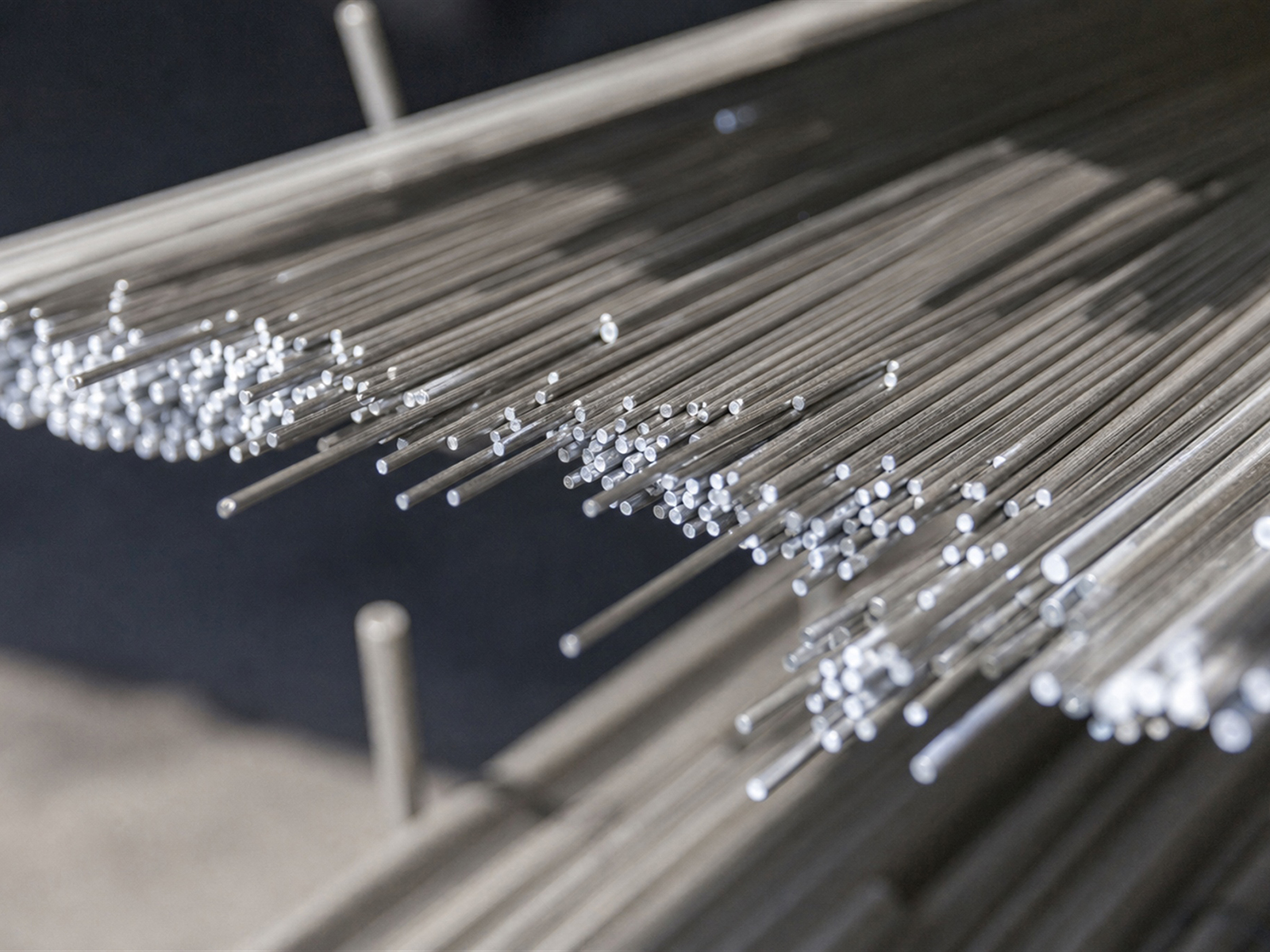
The core challenges faced when processing Gr5 titanium rod (Ti-6Al-4V) are its low thermal conductivity, high chemical activity and work hardening properties. Using carbide or ceramic tools, combined with a high-pressure coolant system, can effectively control cutting temperature, extend tool life and improve surface quality. This article will provide practical process parameters and practical suggestions from four dimensions: tool material selection, geometric parameter optimization, coolant formula selection and supply method, helping precision manufacturing companies reduce tool loss costs by more than 30%, while achieving a stable output of surface roughness Ra≤ 0.8um.
1. What Should You Know About Difficulties in Processing Gr5 Titanium Rods and Tool Failure Mechanism?
(1) Why Is Processing Bottlenecks Caused by Material Properties Important?
The density of Gr5 titanium rod is only 60% of steel, but the tensile strength exceeds 895MPa. This high specific strength characteristic allows the cutting force to be concentrated on a very small area at the tool tip. The thermal conductivity of titanium alloy is about 1/4 that of stainless steel, and cutting heat cannot diffuse quickly, causing the temperature in the tool-workpiece contact area to soar to 800-1000℃. In a high-temperature environment, diffusion bonding occurs between the titanium element and the tool material, causing crater wear. In severe cases, the tool can be scrapped within 5 minutes.
(2) Why Is Tool Corrosion Caused by Chemical Activity Important?
During the cutting process, fresh titanium chips will be instantly oxidized when they come into contact with air, and the titanium oxide particles produced have extremely high hardness (HV 900-1200). These hard particles are embedded in the tool surface and cause abrasive wear. Titanium alloys will absorb hydrogen, oxygen, and nitrogen elements above 600℃, causing the surface layer to become brittle and prone to edge chipping during cutting. When ordinary high-speed steel tools are used to process Gr5 titanium rods, the tool life is only 1/10 of that of carbon steel.
(3) What Should You Know About Coupling Effect of Work Hardening and Vibration?
Lattice slip is difficult during the plastic deformation process of titanium alloy, and the cutting layer will produce a work hardening rate of 30-40%. The processed surface hardness can reach HBW 380-420, far exceeding the HBW 280-340 of the base material. When the tool cuts in again, it encounters the hardened layer, and a sudden increase in cutting force causes vibration, which in turn aggravates tool wear, forming a vicious cycle. Data from aviation companies show that abnormal tool wear caused by work hardening accounts for 42% of total failure cases.
2. What Should You Know About Precise Matching of Tool Material and Geometric Parameters?
(1) How Should Grade Selection Strategy for Carbide Cutting Tools?
ISO K type cemented carbide (high cobalt content and excellent toughness) is suitable for rough machining of Gr5 titanium rods with a diameter greater than 50mm. Fine-grained carbide (grain size <0.8um) combines hardness and toughness and is recommended for semi-finishing. Coated tools need to choose TiAlN or AlCrN coating. The oxidation temperature can reach 800℃, which can form an aluminum oxide protective layer in high temperature areas. A medical device factory uses AlCrN-coated tools to process φ12mm titanium rods, and the tool life is increased from 45 minutes to 160 minutes.
(2) Why Is Application Boundaries of Ceramic and CBN Cutting Tools Important?
Silicon nitride ceramic tools have a heat resistance temperature of up to 1200℃ and are suitable for high-speed finishing (cutting speed >80m/min) of titanium rods with a diameter less than 30mm. However, ceramics are very brittle, so it is necessary to ensure that the machine tool has good rigidity and no impact load. Cubic boron nitride (CBN) tools are second only to diamond in hardness and are suitable for processing titanium rods with a surface hardened layer thickness exceeding 0.5mm, with cutting speeds up to 120m/min. A Japanese precision bearing company uses CBN tools to process φ8mm titanium rods, and the surface roughness is stable at Ra0.4um.
(3) What Should You Know About Optimization Principles of Tool Geometric Angle?
Tool parameters | Recommended values for roughing | Recommended values for finishing | Design basis |
Front angle (γ) | 8°-12° | 5°-8° | Reduce the rake angle to reduce cutting temperature and avoid insufficient tool tip strength. |
Back angle (α) | 10°-12° | 8°-10° | Ensure chip removal space and prevent friction between the flank surface and the workpiece |
Main deflection angle (κr) | 45°-60° | 75°-90° | Increase the main angle to disperse the cutting heat and extend the tool-work contact length |
Tool tip arc radius (rε) | 0.4-0.8mm | 0.2-0.4mm | Small rounded corners reduce cutting force, but attention must be paid to strength matching |
Excessive rake angle will lead to insufficient tool tip strength and the edge will easily chip when work hardening is severe; too small rake angle will increase the cutting force and the cutting temperature. An aviation company found through finite element simulation that after the rake angle was optimized from 15° to 10°, the cutting temperature was reduced by 80℃ and the tool life was increased by 55%.
3. What Should You Know About Coolant Formula and Supply System Design?
(1) What Are the Differences in Performance Comparison of Water-based and Oil-based Coolants?
Coolant type | cooling performance | Lubricating properties | Applicable scenarios | Concentration/pressure requirements |
emulsion | ★★★★☆ | ★★★☆☆ | Rough machining, large allowance cutting | 5-8% concentration, 1.5-3MPa pressure |
Semi-synthetic liquid | ★★★★★ | ★★★★☆ | Semi-finishing, general process | 3-5% concentration, 2-4MPa pressure |
Fully synthetic fluid | ★★★★★ | ★★★☆☆ | High-speed finishing and deep hole processing | 2-4% concentration, 5-8MPa pressure |
Extreme pressure cutting oil | ★★☆☆☆ | ★★★★★ | Thread processing, low speed cutting | Use pure oil, 0.5-1MPa pressure |
Fully synthetic coolant contains extreme pressure additives (sulfur, phosphorus, chlorine compounds), which can form a chemical reaction film on the tool surface and reduce the friction coefficient to 0.08-0.12. Tests by a German machine tool factory have shown that when using a fully synthetic fluid containing 5% extreme pressure additives to process Gr5 titanium rods, the tool wear rate is reduced by 40%. However, it should be noted that chloride may cause stress corrosion of titanium materials.
(2) What Should You Know About Technical Points of High Pressure Cooling System?
The flow rate of the traditional cooling method is only 20-40L/min, and it cannot penetrate the steam layer to reach the cutting area. The high-pressure cooling system (5-10MPa) can atomize the coolant into 5-10um droplets, which directly impact the tool-chip interface. A battery equipment factory in South Korea used an 8MPa internal cooling system to process φ20mm titanium rods. The cutting temperature was reduced from 720℃ to 480℃, and the tool life was extended by 2.3 times. The internal cooling channel is designed in a spiral shape with an outlet diameter of 1.5-2mm and a distance of 3-5mm from the tool tip to ensure that the coolant impacts the cutting area at an angle of 30-45°.
(3) Why Is Application Conditions of Minimum Quantity Lubrication (MQL) Technology Important?
The MQL system atomizes vegetable-based oil to 0.5-3um and sprays it into the cutting area at a flow rate of 10-50mL/h, which not only provides lubrication but also avoids heat accumulation. Suitable for finishing of titanium rods with a diameter less than 15mm, the cutting speed needs to be controlled at 60-80m/min. A medical implant company in the United States uses MQL to process φ6mm titanium rods, reducing waste liquid emissions in the workshop by 95%. However, it should be noted that an oil mist collection system must be equipped, otherwise it will affect the operating environment.
4. What Should You Know About Process Parameter Optimization and Practical Cases?
(1) What Should You Know About Matching Logic of Cutting Parameters?
Rough machining pursues material removal rate. The cutting speed is 40-60m/min, the feed rate is 0.2-0.4mm/r, and the back cutting amount is 2-4mm. Finishing emphasizes surface quality, the cutting speed is increased to 70-90m/min, the feed rate is reduced to 0.08-0.15mm/r, and the back cutting amount is controlled at 0.3-0.8mm. An aerospace engine factory processes φ100mm titanium rod connecting rods using a three-stage strategy of “rough turning (50m/min) → semi-finishing (70m/min) → finishing (85m/min)”. The processing time of a single piece is shortened by 18 minutes, and the tool cost is reduced by 32%.
(2) What Should You Know About Process Plan for Titanium Rods with Different Diameters?
Diameter range | Tool recommendations | Cutting speed (m/min) | Cooling method | Surface quality expected |
φ4-φ10mm | CBN cutting tools/carbide | 80-120 | MQL or high pressure internal cooling | Ra≤ 0.4um |
φ10-φ30mm | coated carbide | 60-90 | High pressure external cooling + internal cooling | Ra≤ 0.8um |
φ30-φ100mm | ISO K type carbide | 40-70 | high flow emulsion | Ra≤ 1.6um |
φ100-φ300mm | Indexable inserts | 30-50 | high pressure coolant | Ra≤ 3.2um |
Titanium rods with a diameter less than 10mm are prone to bending and deformation and need to be supported by a tool rest or center rest. The cutting length should not exceed 8 times the diameter. For forged titanium rods with a diameter greater than 100mm, the surface hardened layer is 1-2mm thick. The hardened layer needs to be removed with a ceramic tool before regular processing.
(3) What Should You Know About Quality Control of Surface Integrity?
Cutting temperatures exceeding 600℃ will cause the α phase to precipitate on the surface of the titanium rod, forming an oxidized layer (depth 0.05-0.15mm), which needs to be removed by grinding or chemical milling. Residual stress testing shows that the surface compressive stress generated by high-speed cutting (>90m/min) is beneficial to improving fatigue life, while low-speed cutting easily produces tensile stress. A marine engineering company processes titanium shafts for seawater desalination equipment. By controlling the final cutting speed at 80m/min, the fatigue limit is increased from 480MPa to 520MPa.
(4) What Should You Know About Integration Experience in Automated Production Lines?
Equipped with a tool monitoring system (power sensor + vibration sensor), when the cutting force fluctuation exceeds 15% or the vibration frequency peaks at 500Hz, the tool change program is automatically triggered. The titanium rod processing production line of a Japanese precision machinery factory integrates robot loading and unloading, online measurement and tool life management systems. It can process 120 φ12-φ25mm titanium rods unmannedly in a single shift (8 hours). The pass rate reached 98.7%, and the tool utilization rate increased to 92% of the rated life.
5. What Should You Know About Tool Life Management and Cost Control Strategies?
(1) What Should You Know About Quantitative Indicators for Wear Monitoring?
The flank wear zone width VB is a key parameter to determine tool life. Roughing allows VB≤ 0.4mm, and finishing needs to control VB≤ 0.2mm. When the crater depth KT (KT is the maximum depth of the crater) exceeds 0.15mm, the cutting force increases sharply and the tool needs to be changed immediately. Use a tool preset instrument to measure the tool tip arc. When the actual arc radius is less than 80% of the designed value, the tool has failed. A medical device company established a tool database to record the processing parameters and failure modes of 200 tools, with a prediction accuracy of 89%.
(2) What Should You Know About Regrinding and Coating Repair Technology?
Carbide tools can be regrinded 3-5 times, with a grinding amount of 0.2-0.3mm each time. They need to be re-coated after regrinding. PVD coating repair process: ultrasonic cleaning → vacuum stripping (450℃, 2 hours) → edge passivation (r=0.02mm) → TiAlN coating deposition (thickness 3-5um). After regrinding, the tool life of an aviation company can be restored to 85% of that of a new tool, and the cost of tool procurement is reduced by 60%. Ceramic tools cannot be resharpened, but the cutting edge can be trimmed by laser to extend the use time by 15-20%.
(3) What Should You Know About Full Life Cycle Cost Accounting Model?
Total tool cost = purchase price + tool replacement downtime loss + scrap loss + inventory cost. An auto parts factory compared three tool options: Plan A uses cheap tools (80 yuan/piece), with a lifespan of 25 minutes, and a comprehensive cost of 3.2 yuan/piece; Plan B uses coated tools (280 yuan/piece), with a lifespan of 110 minutes, and a comprehensive cost of 1.8 yuan/piece; Plan C uses CBN tools (1, 200 yuan/piece), with a lifespan of 480 minutes, and a comprehensive cost of 1.5 yuan/piece. Although the unit price of high-performance tools is high, the amortized processing cost is the lowest.
6. What Should You Know About Conclusion?
Efficient processing of Gr5 titanium rods requires systematic process design. From tool material selection, geometric parameter optimization to coolant formula matching, every link directly affects processing quality and cost. Using coated carbide cutting tools combined with a 5-8MPa high-pressure cooling system can increase tool life by more than 150%, and the surface roughness is stably controlled within Ra0.8um, providing reliable technical support for high-end manufacturing fields such as aerospace medicine and precision machinery.
FAQ
Q1: Why does the tool wear so quickly when processing Gr5 titanium rods?
The low thermal conductivity of titanium alloy causes cutting heat to concentrate on the tool tip. At high temperatures, diffusion bonding occurs between the titanium element and the tool material, causing crater wear. At the same time, the hard particles produced by the oxidation of fresh titanium chips cause abrasive wear. It is necessary to use heat-resistant coating tools and cooperate with high-pressure cooling system.
Q2: How to deal with vibration marks on the surface when processing small diameter titanium rods (φ6-φ10mm)?
Chatter marks are caused by insufficient workpiece rigidity or improper cutting parameters. Use the tool rest support to reduce the overhang length to less than 5 times the diameter; reduce the feed rate to 0.06-0.10mm/r; increase the spindle speed and increase the cutting speed to 80-100m/min; use tools with a small tip arc radius (rε=0.2mm).
Q3: What effect does high-pressure coolant have on machining accuracy?
Coolant pressure above 8MPa will produce radial thrust on the workpiece, and slender parts with a diameter less than 20mm may deform 0.02-0.05mm. Use symmetrically arranged multiple nozzles (120° intervals) to balance thrust; reduce the pressure to 3-5MPa during the finishing stage; use minimal lubrication for the last cut to reduce hydraulic impact.
7. What Should You Know About Looking for Professional Gr5 Titanium Rod (Ti-6Al-4V) Precision Processing Solutions?
As a professional service provider, Baoji Titanium Valley Titanium Nickel Zirconium Material Processing Co., Ltd. has a full-process process system targeting the low thermal conductivity, high chemical activity and work hardening properties of titanium alloys. We provide aerospace medical, high-end equipment and precision electronics customers with one-stop technical services covering tool selection, parameter optimization and high-pressure cooling. Contact sales@titaniumvalleys.com immediately to obtain exclusive cost reduction and efficiency improvement solutions.
References
- Li Minghui, Wang Jianhua. Titanium alloy cutting processing technology[M]. Beijing: Machinery Industry Press, 2021.
- Zhang Guohua, Liu Xiaodong. Research on the wear mechanism of high-speed cutting tools of Ti-6Al-4V titanium alloy [J]. Journal of Aeronautical Materials, 2020, 40(3): 112-119.
- Chen Zhiqiang, Zhao Yongsheng. Application of high-pressure cooling technology in titanium alloy processing [J]. Tool Technology, 2022, 56(8): 45-52.
- Sun Jianguo, Li Wei. Handbook of cutting technology for difficult-to-machine materials[M]. Shanghai: Shanghai Science and Technology Press, 2019.
- Liu Guoping, Yang Ming. Tool life prediction and optimization for titanium alloy cutting [J]. Manufacturing Technology and Machine Tools, 2021, (5): 78-84.
- Zhao Jun, Zhou Hua. High-temperature alloy and titanium alloy cutting processing technology[M]. Beijing: National Defense Industry Press, 2020.