
Why Is Learn About the Advantages of Gr12 Titanium Wire in Chemical Production Important?
- GR12 Titanium Wire
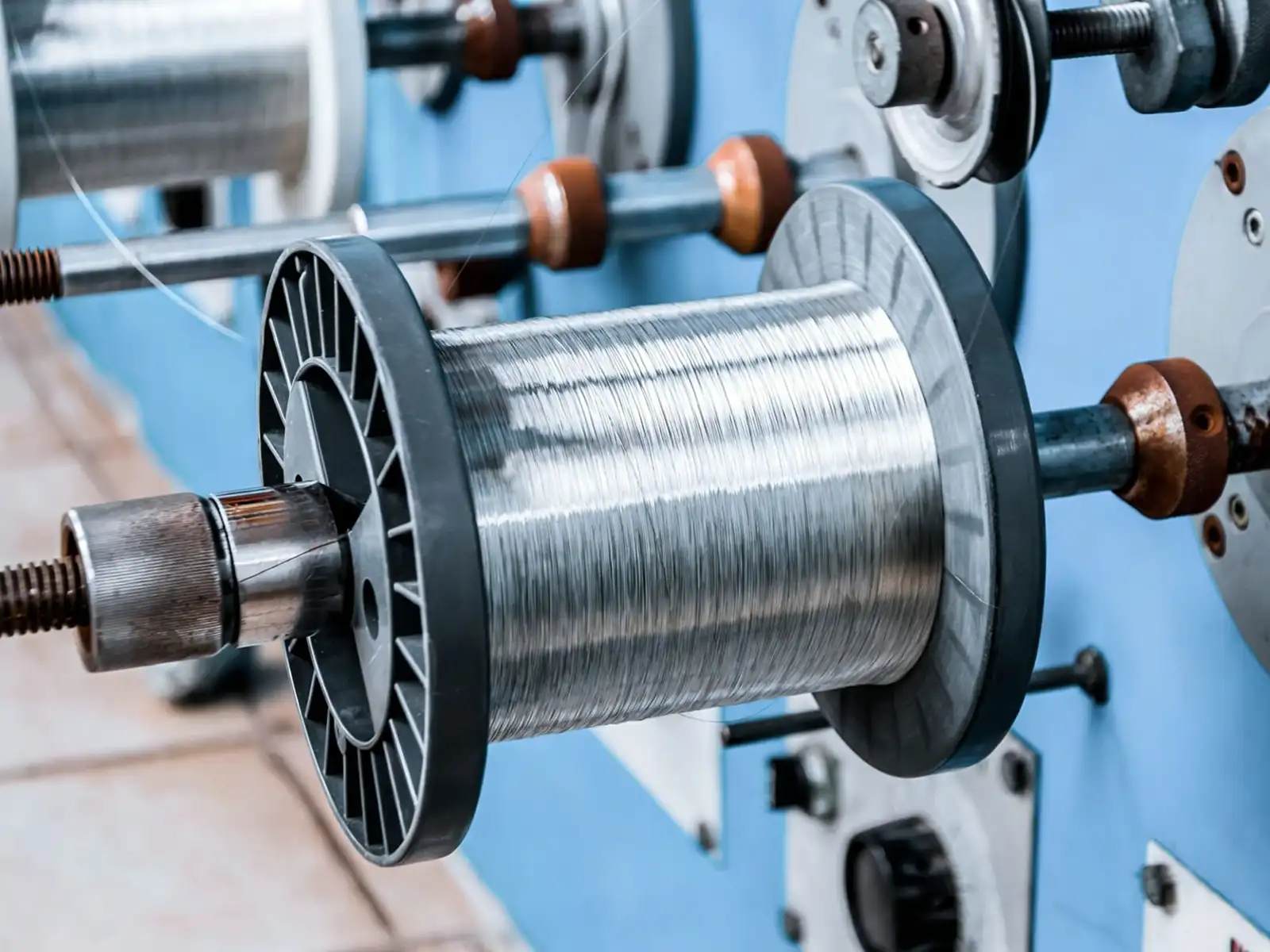
In the chemical production environment, equipment materials often face multiple challenges: extreme working conditions such as strong acid, strong alkali, high temperature, chloride ion erosion, and crevice corrosion. Gr12 titanium wire (corresponding to ASTM Grade 12, domestic brand TA10) relies on its unique Mo-Ni alloy design to demonstrate excellent performance under these harsh conditions. Compared with industrial pure titanium, Gr12 titanium wire has significantly improved resistance to pitting and crevice corrosion, while maintaining medium strength and excellent ductility. This material can not only extend the service life of equipment and reduce the risk of sudden failure, but also reduce production shutdown losses caused by frequent replacement. For chemical companies pursuing long-term stable operation and cost control, Gr12 titanium wire has become an ideal choice under high corrosion conditions.
1. Why Is Material Properties and Chemical Application Basis of Gr12 Titanium Wire Important?
(1) What Should You Know About Unique Features of Alloy Composition Design?
Gr12 titanium wire adopts Ti-0.3Mo-0.8Ni alloy system. The addition of molybdenum element significantly improves the stability of the material in reducing acidic media, while the nickel element strengthens the resistance to pitting corrosion and crevice corrosion. This dual-element synergistic effect enables the material to exhibit corrosion resistance that far exceeds that of industrial pure titanium when faced with sulfuric acid, hydrochloric acid, hot chloride, and complex chemical media containing H₂S/CO₂. The strictly controlled content of interstitial elements such as oxygen, carbon, nitrogen, and hydrogen in the alloy ensures the uniformity and batch stability of the material’s microstructure.
(2) What Should You Know About Physical Performance Meets the Needs of Multiple Scenarios?
Gr12 titanium wire with a density of 4.51 g/cm³ not only maintains the lightweight advantage of titanium alloy, but also has sufficient mechanical strength to support structural applications. The melting point of about 1668℃ gives it structural stability in high-temperature environments, and the thermal conductivity of about 15-16 W/(m·K) ensures that it can effectively transfer heat in heat exchange equipment. The non-magnetic characteristics make it suitable for precision chemical instruments that are sensitive to magnetic fields, while the non-toxicity meets the strict requirements of clean production fields such as pharmaceuticals and food.
(3) What Should You Know About Processing Performance Optimizes Production Efficiency?
Excellent welding performance makes Gr12 titanium wire the first choice for chemical equipment manufacturing. The materials can be firmly connected through argon arc welding, laser welding, etc., with uniform weld structure and no need for complicated post-weld processing. Good cold forming capabilities support various processing techniques such as bending, winding, and drawing, and can produce stable wires from fine to thick wires. This processing friendliness not only reduces the difficulty of equipment manufacturing, but also creates conditions for the integrated molding of complex structural parts.
performance category | Specific indicators | Chemical application value |
Corrosion resistance | Corrosion rate ≤ 0.1 mm/year in ferric chloride solution (ASTM G48 method A) | Extend equipment life and reduce unplanned downtime |
strength | Tensile strength ≥ 480 MPa (ASTM B863, annealed, longitudinal) | Meet the needs of pressure-bearing components and structural parts |
Ductility | Elongation ≥ 18% | Convenient for cold working and complex shape forming |
Weldability | No special post-weld treatment required | Simplify equipment assembly process and reduce costs |
2. What Should You Know About Gr12 Titanium Wire Solves the Core Pain Points in Chemical Production?
(1) What Should You Know About Overcoming the Challenges of Complex Corrosive Media?
Corrosion in chemical production is often the result of the superposition of multiple factors. Chloride ion penetration, severe pH fluctuations, and alternating redox potentials are conditions that can lead to rapid failure of ordinary materials. Gr12 titanium wire can self-repair in these dynamic corrosive environments through the dense passivation film formed by Mo-Ni synergy. Cyclic polarization tests conducted according to ASTM G61 standards show that the pitting corrosion potential of Gr12 titanium wire in 3.5% NaCl solution is more than 200 mV higher than that of industrial pure titanium, which means a longer safe operation period under actual working conditions.
(2) What Should You Know About Coping with the Dual Pressure of High Temperature Corrosion?
Many chemical reactions need to be carried out under high temperature conditions, and an increase in temperature will accelerate the corrosion reaction rate. Gr12 titanium wire can still maintain structural stability in high-temperature corrosive solutions above 150℃, without performance degradation caused by grain boundary embrittlement or phase transformation. This high-temperature corrosion resistance makes it an ideal material for critical components such as heating coils, evaporator internals, and high-temperature filters.
(3) What Should You Know About Eliminating the Risk of Batch Quality Fluctuations?
Chemical projects have extremely high requirements for batch consistency of materials, and performance fluctuations may cause the entire batch of products to be reworked. Gr12 titanium wire adopts vacuum smelting and continuous rolling processes, and each batch is fully tested for chemical composition, mechanical properties, metallographic structure, and non-destructive testing. The automated temperature control system ensures heating uniformity within ± 5℃ in the rolling preheating section, and the finishing rolling unit achieves high-precision dimensional control. This manufacturing precision translates into stable welding performance and processing yield, helping customers avoid construction delays caused by material issues.
(4) What Should You Know About Preventing Local Corrosion Hazards?
Pitting corrosion and crevice corrosion are highly hidden, often forming internal perforations even when the equipment appears to be intact. Gr12 titanium wire eliminates this risk from the source by improving the material’s own resistance to localized corrosion. In the ASTM G48 Method A standard corrosion test (6% FeCl₃ solution, 24 hours), the corrosion rate of Gr12 titanium wire is usually less than 0.1 mm/year, while the typical corrosion rate of industrial pure titanium under the same conditions is about 0.05-0.15 mm/year. This performance difference means a greater safety margin over a 20-year design life.
Pain point type | Traditional material issues | Advantages of Gr12 titanium wire |
Chloride corrosion | Stainless steel is susceptible to pitting and perforation | Mo-Ni alloying provides 3 times more corrosion resistance |
High temperature attenuation | The stability of the passivation film of pure titanium decreases at high temperatures | Maintains excellent corrosion resistance above 150℃ |
batch differences | Manual workmanship leads to performance fluctuations | Automated production control fluctuation <5% |
hidden corrosion | Gap areas are difficult to detect and prevent | Intrinsically strong resistance to crevice corrosion |
3. Why Is Application Practice of Gr12 Titanium Wire in Typical Chemical Industry Scenarios Important?
(1) What Should You Know About Key Role in the Chlor-alkali Industry?
Chlor-alkali production involves highly concentrated chlorine, hypochlorite and sodium chloride solutions, which is the ultimate test of a material’s corrosion resistance. Gr12 titanium wire is widely used in core components such as electrolytic cell anode connection lines, brine preheater tube bundles, and wet chlorine coolers. Its corrosion rate in a wet chlorine environment is less than 0.05 mm/year. According to reports, after a domestic chlor-alkali company replaced key components with Gr12 titanium wire, the maintenance cycle of related equipment was extended by more than 40%.
(2) What Should You Know About Fine Chemical Reactor Internals?
Fine chemical production often involves mixed reactions of multiple solvents, catalysts and intermediates, with complex media composition and synergistic corrosive effects. The agitator shaft seal, temperature sensor protection sleeve, sampling pipeline and other components made of Gr12 titanium wire can withstand the alternate erosion of mixed acids, organic chlorides and sulfides. The non-magnetic nature of the material avoids interference with the reaction process.
(3) What Should You Know About Desalination and Salt Chemical Equipment?
The Cl⁻ concentration in seawater is as high as 19, 000 ppm, coupled with dissolved oxygen and temperature fluctuations, which places extremely high requirements on the material’s resistance to pitting and crevice corrosion. When Gr12 titanium wire is used in multi-effect evaporator heat transfer tube bundles, reverse osmosis membrane module support wires, seawater circulation pump shaft seals, etc., it shows better overall performance than pure titanium and 316 stainless steel. After continuous operation for 10, 000 hours in a chlorine-containing seawater environment at 60℃, only a uniform oxide film was formed on the surface of the material without any corrosion pits or cracks.
(4) What Should You Know About Flue Gas Desulfurization and Environmental Protection Equipment?
The flue gas desulfurization system of coal-fired power plants needs to process condensate containing SO₂, HCl, HF and other acid gases, accompanied by high temperature and particulate matter erosion. Gr12 titanium wire braided mist eliminator mesh, spray pipes and liquid distributors operate stably under such extreme working conditions. The material’s corrosion resistance to sulfuric acid and hydrochloric acid mixtures is better than Hastelloy C-276, and the cost is relatively lower. After a 600 MW unit adopted Gr12 titanium wire material, the desulfurization system overhaul cycle was extended from 2 years to 5 years.
Application scenarios | Typical parts | Service conditions | life expectancy |
Chlor-alkali industry | Electrolyzer connection cable, brine preheater | Wet chlorine gas, 80℃ sodium chloride solution | ≥ 15 years |
Fine chemicals | Agitator parts, sensor bushings | Mixed organic acid, 120℃ reactor | ≥ 10 years |
Desalination | Heat exchange tube bundle, membrane module skeleton | 60℃ seawater, Cl⁻ 19000 ppm | ≥ 20 years |
Flue gas desulfurization | Demister, spray system | Sulfuric acid mist, pH 2-4, 90℃ | ≥ 8 years |
4. Why Is the Economic and Technical Value Brought by Gr12 Titanium Wire Important?
(1) What Should You Know About Whole Life Cycle Cost Optimization?
Although the initial purchase cost of Gr12 titanium wire is higher than carbon steel or ordinary stainless steel, its excellent corrosion resistance greatly extends the equipment replacement cycle. Taking into account comprehensive factors such as material costs, manual installation, downtime losses and safety risks, the full life cycle cost of Gr12 titanium wire can be reduced by 30-50% compared to traditional materials. When selecting specific projects, it is recommended to conduct full life cycle cost calculations based on working conditions.
(2) What Should You Know About Essential Improvements in Device Security?
Leakage accidents caused by material failure cause huge losses in the chemical industry. The high corrosion resistance of Gr12 titanium wire fundamentally reduces the probability of sudden failure. Its uniform corrosion characteristics make the equipment status predictable and facilitate the development of scientific maintenance plans. The non-magnetic and non-sparking properties of the material also increase the level of intrinsic safety in flammable and explosive environments.
(3) What Should You Know About Production Continuity Guarantee?
The core competitiveness of chemical production lies in stable and continuous operation. Key components made of Gr12 titanium wire have a low failure rate, reducing unplanned downtime for maintenance. The material’s excellent weldability and processing properties shorten the spare parts manufacturing cycle and enable quick response in emergencies.
(4) What Should You Know About Compliance and Traceability Assurance?
International chemical projects have strict requirements on material quality documents. The production of Gr12 titanium wire follows international standards such as ASTM B863. Each batch of products comes with complete material certificates, mechanical property reports, corrosion test data and non-destructive testing records. These traceable quality documents not only meet project acceptance requirements, but also provide a reliable basis for equipment insurance claims and liability determination.
(5) What Should You Know About Technology Upgrading Promotes Industrial Progress?
Gr12 titanium wire represents the technological progress direction of chemical materials. Its application promotes the update of equipment design concepts: more compact heat exchange structure, lighter frame system, and longer maintenance-free period. This material innovation is changing the cost structure and competitive landscape of chemical plants.
5. What Should You Know About Key Considerations in Selecting and Applying Gr12 Titanium Wire?
(1) How Should Specification Selection and Customized Services?
Different chemical applications have different requirements for wire diameter, surface state and mechanical properties. For welding applications, annealed wire with a diameter of 1.2-2.4 mm is preferred to ensure the ductility of the welded joint; cold-processed wire with a diameter of 3.0-6.0 mm can be used for structural parts to obtain higher strength. In terms of surface treatment, the pickled state is suitable for general anti-corrosion occasions, and the bright state meets the requirements of clean production. Professional suppliers can provide full technical support from specification recommendation to performance testing.
(2) What Should You Know About Quality Acceptance Standards and Testing Methods?
Chemical projects should establish strict material incoming factory inspection procedures. Chemical composition analysis confirms that the Mo and Ni content are within the standard range; tensile test verifies that the strength and elongation meet the design requirements; metallographic inspection eliminates structural defects such as overburning and coarse grains; eddy current or ultrasonic flaw detection detects internal cracks and inclusions. Key components should also undergo corrosion tests simulating working conditions. Only materials that pass all tests can be put into use.
(3) What Should You Know About Processing Technology Optimization Suggestions?
Although Gr12 titanium wire has good processing performance, it still needs to follow the process characteristics of titanium alloys. Pure argon is used for protection during welding to avoid high-temperature oxidation; cold bending controls the deformation speed to prevent surface cracking; sharp tools and sufficient cooling are used for machining to reduce work hardening. Annealing treatment can eliminate cold working stress and restore the plasticity of the material. The best effect is to control the temperature at 650-700℃ and keep it warm for 1-2 hours. Mastering these process details can give full play to material performance and improve the finished product qualification rate.
(4) Why Is Long-term Use and Maintenance Strategies Important?
Even with high-performance materials, scientific maintenance strategies are still indispensable. Regularly inspect welds and stress concentration areas to detect potential risks in a timely manner; monitor changes in medium composition to avoid exceeding the material’s corrosion resistance range; record equipment operating parameters and establish a corrosion rate database. For key equipment, auxiliary measures such as cathodic protection and corrosion inhibitor addition can be used to further extend the life.
application stage | Key takeaways | expected effect |
Selection design | Select specifications and status according to medium, temperature and stress | Optimal performance matching to avoid excess or deficiency |
Procurement acceptance | Full inspection + working condition simulated corrosion test | Control quality at the source and eliminate batch risks |
Processing and installation | Follow titanium alloy process specifications, argon shielded welding | Maintain material properties and improve assembly quality |
Operation and maintenance | Regular inspection + parameter monitoring + corrosion assessment | Discover hidden dangers in time and achieve predictive maintenance |
6. What Is the Conclusion?
The excellent corrosion resistance of Gr12 titanium wire achieved through Mo-Ni alloying is redefining the material standards for chemical production. From the chlor-alkali industry to seawater desalination, from fine chemicals to environmental protection devices, this material, with its comprehensive technical advantages and economic value, helps companies overcome corrosion problems, reduce operation and maintenance costs, and improve safety levels. Selecting appropriate specifications, strict quality control, optimizing processing technology, and implementing scientific maintenance are the keys to giving full play to the performance of Gr12 titanium wire. As the chemical industry develops towards high-end and green development, the application prospects of Gr12 titanium wire will be broader.
FAQ
Q1: How much is the corrosion resistance of Gr12 titanium wire improved compared to industrial pure titanium?
By adding 0.3% molybdenum and 0.8% nickel, Gr12 titanium wire has significantly improved resistance to pitting and crevice corrosion than industrial pure titanium. It has particularly obvious advantages in chloride ions and reducing acidic environments, and can serve stably for a long time under higher temperatures and harsher working conditions.
Q2: When upgrading chemical equipment, how to evaluate whether it is suitable to use Gr12 titanium wire?
There are three main factors to consider: whether the medium contains chloride ions or reducing acids, whether the working temperature exceeds 80℃, and whether there are gaps or stress concentration locations. If two of the above conditions are met, Gr12 titanium wire can significantly extend the life and reduce the whole life cycle cost compared with ordinary materials. It is recommended to conduct a simulated corrosion test under working conditions to confirm the applicability.
Q3: What special precautions should be taken when welding Gr12 titanium wire?
Argon gas back protection with a purity of ≥ 99.99% must be used to avoid high-temperature oxidation of the weld; the welding current selection needs to be adjusted according to the specific stainless steel type; the interlayer temperature is recommended to be controlled below 100-120℃; natural cooling is required after welding, and no preheating or post-weld heat treatment is required. Following these points will result in high-quality welds with properties comparable to those of the base metal.
How Should Looking for Reliable Gr12 Titanium Wire (TA10/Grade 12) Supplier?
As a professional manufacturer, Baoji Titanium Valley Titanium Nickel Zirconium Material Processing Co., Ltd. has vacuum smelting, continuous rolling and full-process quality control systems. It can stably supply Gr12 titanium wire with φ0.5-6.0mm, and provides various surface treatments such as annealed, cold-processed, pickling, and brightening. We provide corrosion-resistant material solutions to customers in the global chlor-alkali industry, fine chemicals, seawater desalination and flue gas desulfurization. Contact sales@titaniumvalleys.com immediately to obtain technical solutions and samples.
References
- Li Wushen, Zhang Xiyan. Application progress of titanium and titanium alloys in the field of chemical anti-corrosion [J]. Progress in Titanium Industry, 2015, 32(4): 1-6.
- Wang Xiangdong, Hao Bin, Lu Fusheng, et al. Application and development trends of titanium and titanium alloys in chemical equipment [J]. Rare Metals, 2018, 42(10): 1098-1106.
- Zhao Yongqing. Development status and trends of titanium alloy materials at home and abroad [J]. China Materials Progress, 2020, 39(7): 513-520.
- Chen Jun, Zhao Yongqing, Chang Hui. Research progress on the corrosion behavior of titanium alloys in the chemical industry [J]. Corrosion Science and Protection Technology, 2019, 31(3): 325-332.
- Zhang Peng, Wang Lei, Yang Rui. Design, preparation and application of corrosion-resistant titanium alloys [J]. Acta Metallurgica Sinica, 2021, 57(11): 1457-1472.