
Why Is Ni200 Rod Performance Characteristics, Processing Methods and Industrial Application Guide Important?
- Ni200 Rod
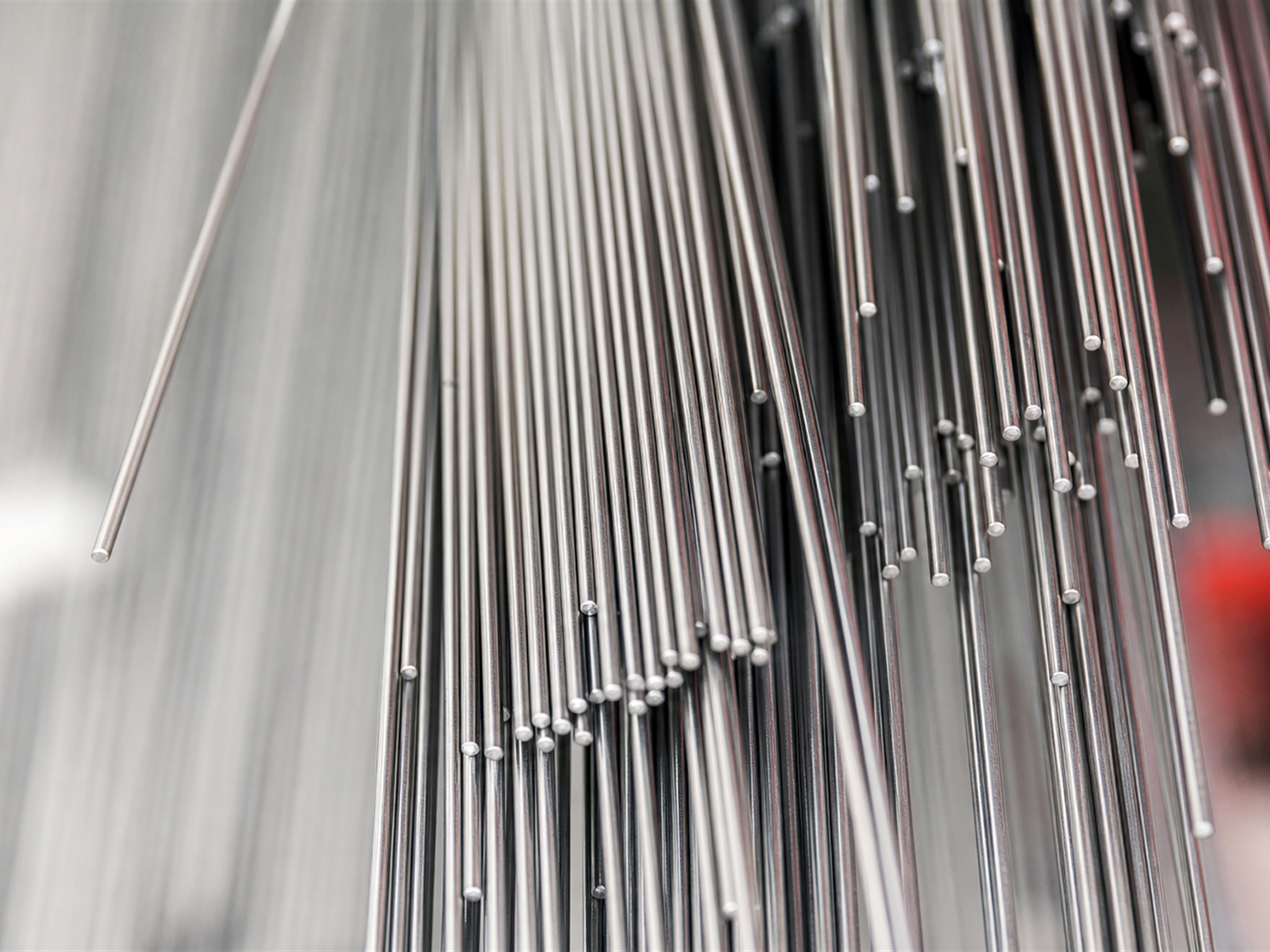
Ni200 rod is a commercial pure nickel material (nickel content ≥ 99.0%). With its excellent alkali corrosion resistance and high purity characteristics, it is widely used in chlor-alkali chemical industry, electronic manufacturing, food and medicine and other industries. The production process covers vacuum smelting, hot forging, cold drawing and annealing, and can be provided in various supply states such as hot-rolled (R), annealed (M) and cold-worked (Y). The material has excellent electrical and thermal conductivity, good hot and cold processing capabilities and extremely low magnetic permeability. It performs well in strong alkaline media, reducing environments and precision electronic equipment. This article will conduct an in-depth discussion on core performance characteristics, precision machining technology paths, and multi-field industrial application practices to provide technical reference for material selection and process optimization.
1. Why Is Core Performance Characteristics and Material Advantages of Ni200 Rods Important?
(1) What Should You Know About High-purity Materials Ensure Media Cleanliness?
The nickel content of Ni200 usually reaches 99.5%~99.6% (in line with UNS N02200 standard), and impurity elements are strictly controlled at extremely low levels. This high purity makes it possible to avoid metal ion precipitation contaminating products in food processing, pharmaceutical manufacturing and semiconductor production. Compared with ordinary stainless steel, Ni200 will not release harmful elements when exposed to strong alkaline solutions, thereby ensuring the chemical stability of the process medium. In the electrolytic soda production process, the purity of the electrode material directly affects the purity grade of caustic soda. Using anode plates processed from Ni200 rods can control the nickel ion content in the product to a few parts per million.
chemical composition | Ni200 standard value | Ordinary 304 stainless steel |
Nickel (Ni+Co) | ≥ 99.6% | 8.0-10.5% |
Iron (Fe) | ≤ 0.40% | margin |
Carbon (C) | ≤ 0.15% | ≤ 0.08% |
Copper (Cu) | ≤ 0.25% | – |
(2) What Should You Know About Super Alkali Corrosion Resistance to Cope with Extreme Working Conditions?
In a sodium hydroxide solution with a concentration of up to 50%, the corrosion rate of Ni200 below 300℃ can be controlled within 0.05 mm/year, which is much better than carbon steel and ordinary stainless steel. This excellent alkali resistance comes from the passivation behavior of nickel in alkaline media – a dense nickel oxide protective film will be formed on the surface, effectively blocking further erosion by corrosive ions. Key components such as evaporator tube bundles and alkali pump shafts in the chlor-alkali industry can achieve a continuous operation cycle of 5 to 8 years after being processed using Ni200 rods, significantly reducing equipment maintenance frequency and downtime losses.
(3) What Should You Know About Excellent Electrical and Thermal Conductivity Properties Improve Energy Efficiency?
The electrical conductivity of Ni200 is about 14.6% IACS (International Annealed Copper Standard), and the thermal conductivity reaches 67 W/(m·K), which is second only to copper and aluminum among pure metal materials. This makes it an ideal electrode material for the electrochemical industry – ensuring uniform current distribution in the electrolyzer and reducing energy consumption. In the field of battery manufacturing, the negative electrode current collector of nickel-metal hydride batteries processed from Ni200 rods can withstand high-rate charge and discharge (such as rates above 5℃) while maintaining good heat conduction efficiency. In heat exchange equipment, pure nickel heat exchange tubes can increase heat exchange efficiency by 15% to 20% compared with ordinary steel tubes.
(4) What Should You Know About Full Temperature Range Mechanical Properties and Non-magnetic Properties?
Annealed Ni200 maintains stable plasticity and toughness in the range of -200℃ to 400℃, with a tensile strength of about 380 to 550 MPa and an elongation of more than 40%. Brittle transformation does not occur in low temperature environments, so this material is often used in liquid hydrogen delivery pipelines in the aerospace field. The magnetic permeability of Ni200 after annealing is close to 1 (comparable to air). This property is crucial in precision electronic equipment, magnetically shielded enclosures and non-magnetic fasteners. In vacuum chambers for semiconductor manufacturing, supports machined from Ni200 rods can avoid interference with magnetic field-sensitive process steps.
2. What Should You Know About Precision Processing Technology and Quality Control of Ni200 Rods?
(1) What Should You Know About Vacuum Melting and Electrode Preparation Process?
The production of Ni200 rods begins with vacuum induction melting (VIM) of high-purity nickel raw materials. Oxygen and nitrogen are isolated through a vacuum environment, and the nickel ingot is heated to more than 1500℃ to form a homogeneous melt. Vacuum arc remelting (VAR) technology is then used for secondary refining. This process is performed under a vacuum level of 10⁻³ Pa, which can further remove gas impurities and inclusions. The grain structure of the remelted electrode ingot is dense and uniform, and the oxygen content can be controlled below 30 ppm, providing a high-quality foundation for subsequent processing.
(2) What Should You Know About Thermal Processing Forming and Structure Control?
The electrode ingot is forged at a high temperature of 1100 to 1200℃ to break the as-cast structure and initially form fibrous streamlines. In the hot rolling stage, a multi-pass small reduction process is used to roll the blank into bars of different diameters, and the deformation temperature is controlled between 950 and 1100℃. This process requires strict monitoring of the heating furnace atmosphere to prevent the nickel surface from oxidizing to form a NiO layer. The grain size of the bar after hot processing is generally ASTM 5 to 7, and a small amount of annealing twins can be seen in the structure. This structure is beneficial to subsequent cold processing performance.
(3) What Should You Know About Cold Drawing Finishing and Surface Treatment Technology?
In order to meet high-precision dimensional requirements, hot-rolled bars need to be pickled, lubricated and then cold drawn in multiple passes. During the cold drawing process, the compression rate of a single pass is usually controlled at 15% to 25% (flexibly adjusted according to the initial state of the material and final size requirements, the cumulative deformation can reach more than 60%), and the bar diameter tolerance can reach ± 0.05 mm. The tensile strength of Ni200 after cold work hardening can be increased to more than 700 MPa, but the plasticity is reduced. Depending on the application requirements, annealing can be performed at 800 to 900℃ to restore plasticity – bright annealing (under the protection of hydrogen or inert gas) can obtain a smooth surface with a roughness Ra value as low as 0.4 um.
Processing status | Tensile strength (MPa) | Elongation (%) | Vickers hardness (HV) |
Annealed state (M) | 380-550 | ≥ 40 | 90-140 |
Cold working state (Y) | 650-750 | 8-15 | 180-220 |
Semi-hard state | 520-620 | 20-30 | 140-180 |
(4) What Should You Know About Non-destructive Testing and Quality Traceability System?
The finished bars must undergo strict ultrasonic flaw detection (UT) testing. The testing standards refer to ASTM E213, and the equivalent diameter of the flaw must be less than Φ1.0 mm. The surface quality adopts magnetic particle inspection or liquid penetrant inspection to ensure that there are no defects such as cracks and folds. Each batch of materials is equipped with a Material Certificate (MTC), which records the chemical composition, mechanical properties, heat treatment parameters and testing data in detail. The batch number traceability system can be traced back to the source of raw materials and process parameters, meeting the traceability requirements of the aerospace and medical device industries.
3. Why Is Key Applications of Ni200 Rods in the Chemical and Energy Fields Important?
(1) What Should You Know About Core Components of Chlor-alkali Industrial Electrolysis Equipment?
The chlor-alkali electrolysis process needs to operate in an environment where high-concentration sodium hydroxide solution (30% to 50%) and chlorine gas coexist. The anode material of the electrolytic cell withstands the dual test of temperatures of 90 to 105℃ and strong corrosion. Anode hooks and conductive rods processed from Ni200 rods can work stably for a long time. Compared with titanium-based materials, they are cheaper and easier to weld and repair. The pump shaft and impeller of the alkali circulation pump are made of Ni200 to avoid stress corrosion cracking. According to industry estimates, about 35% of key components of electrolytic cell equipment in global chlor-alkali production capacity use pure nickel materials.
(2) What Should You Know About Petrochemical Hydrogenation Reaction System?
The hydrogen environment in the hydrorefining unit is a reducing medium, and carbon steel is prone to hydrogen embrittlement. Ni200 has excellent resistance to hydrogen penetration in high-temperature and high-pressure hydrogen gas, and is often used in the manufacture of thermocouple protection sleeves, internal component support rods, etc. in hydrogenation reactors. The hydrocracking unit of a refinery uses a distributor made of Ni200 rods. It has been operating continuously for 4 years at 350℃ and 15 MPa hydrogen partial pressure without any failure record, and has outstanding resistance to hydrogen sulfide corrosion.
(3) What Should You Know About Special Tooling for New Energy Battery Manufacturing?
The production of nickel-metal hydride batteries and nickel-cadmium batteries requires high-purity nickel materials as current collector substrates. Ni200 rods are peeled and drawn into thin wires, and then porous electrodes are prepared through foaming or sintering processes. Battery-grade nickel materials have extremely high requirements for impurity content (copper <50 ppm, iron <100 ppm), and vacuum-smelted Ni200 fully meets this requirement. According to industry estimates, about 60% of the negative electrode materials for large-capacity nickel-metal hydride batteries used in energy storage power stations worldwide are made of commercial pure nickel.
(4) What Should You Know About Desalination and Heat Exchange System?
The high-pressure pump plunger, valve seat and other parts of the reverse osmosis desalination device need to withstand the corrosive environment containing chloride ions. The corrosion resistance of Ni200 in neutral chloride solution is better than that of 316 stainless steel, and the pitting corrosion potential is higher. The use of Ni200 tube bundles in marine plate heat exchangers can extend the maintenance cycle to more than 8 years. The seawater desalination system of an offshore platform uses Ni200 pump shaft, and the corrosion depth during the five-year operation period was only 0.03 mm, which was far lower than the design expectation.
4. Why Is Technical Application of Ni200 Rods in Electronics and Precision Manufacturing Important?
(1) What Should You Know About Core Components of Semiconductor Process Equipment?
Chemical vapor deposition (CVD) equipment for semiconductor wafer manufacturing has extremely strict requirements on material purity and non-magnetic properties. The reaction chamber support column and gas distribution ring processed from Ni200 rods can withstand high temperatures of 400 to 600℃ without releasing contaminants that affect film quality. The edge of the electrostatic chuck of the plasma etching machine is made of Ni200 material to avoid magnetic field interference and ensure etching dimensional accuracy.
(2) What Should You Know About Electronic Packaging and Lead Frame Materials?
The lead frame of integrated circuit packaging requires good solderability and conductivity. Ni200 rods are widely used in high-reliability chip packaging after surface gold plating. The heat dissipation substrate of the power device is stamped and formed from Ni200 sheet, using its high thermal conductivity to quickly conduct heat. After a certain radio frequency power amplifier module uses Ni200 lead frame, the thermal resistance is reduced by 18%, and the device operating temperature is reduced by 12℃.
(3) What Should You Know About Vacuum Tubes and X-ray Equipment?
The X-ray tube anode target support for medical X-ray machines and industrial flaw detectors is turned from Ni200 bar stock, taking advantage of its low gas release rate and thermal stability in vacuum environments. The grid wire of high-power microwave tubes requires ultra-fine specifications of 0.1 to 0.5 mm, which is obtained through multi-pass drawing of Ni200 rods. The surface finish directly affects the uniformity of electron emission.
(4) What Should You Know About Precision Instrument Non-Magnetic Fasteners?
It is strictly prohibited to use magnetic materials inside precision measurement equipment such as aviation gyroscopes and magnetometers. Bolts and pins processed from Ni200 annealed rods can meet non-magnetic requirements (relative magnetic permeability μr < 1.02) and have sufficient mechanical strength. After using Ni200 fasteners in a certain geophysical exploration equipment, the magnetic field background noise was reduced to less than 0.5 nT, significantly improving the measurement sensitivity.
5. How Should Ni200 Bar Processing Selection and Working Condition Adaptation Guidance?
(1) What Are the Differences in Comparison of Performance Differences Between Different Supply States?
Annealed (M) Ni200 has the best plasticity and is suitable for parts that require cold deformation processing such as deep drawing and bending, such as flanges and discs. In the cold working state (Y), the strength increases but the plasticity decreases. It is suitable for parts such as shafts and pins that require strength. The semi-hard state is between the two, taking into account certain strength and workability. When selecting materials, a comprehensive trade-off must be made based on the difficulty of molding the part and the stress conditions – the annealed state is preferred for complex shapes, and the cold-worked state is preferred for load-bearing structures.
Application scenarios | Recommended status | Typical dimensions |
Chlor-alkali electrolysis anode rod | Annealed state (M) | Φ30-80mm |
Petrochemical pump shaft | Cold working state (Y) | Φ50-120 mm |
Battery current collector wire | Annealed state (M) | Φ0.5-2.0 mm |
heat exchange tube bundle | Annealed state (M) | Φ10-25 mm |
(2) What Should You Know About Material Matching Strategies for High and Low Temperature Conditions?
When the operating temperature exceeds 300℃, you need to pay attention to the oxidation behavior of nickel – NiO oxide scale will be generated on the surface in the air environment. It is recommended to use inert gas protection or regular surface treatment. Sulfur corrosion may occur when the temperature of the sulfur-containing atmosphere exceeds 315℃. At this time, nickel-based alloys should be considered instead of pure nickel. Low-temperature applications (below -100℃) need to verify the material impact toughness. Although Ni200 has no low-temperature brittleness, the welded joint may become a weak link, and argon arc welding and annealing heat treatment are required.
(3) What Should You Know About Principles for Determining Compatibility of Corrosive Media?
Ni200 has good corrosion resistance in reducing acids (such as dilute hydrochloric acid, dilute sulfuric acid), but will dissolve quickly in oxidizing acids (such as concentrated nitric acid, chromic acid). Neutral solutions with a chloride ion concentration exceeding 1000 ppm may cause pitting corrosion, which needs to be verified experimentally. Strong alkaline solution is the best suitable working condition, but it is necessary to avoid mixing oxidants (such as hypochlorite) in the alkaline solution. In engineering practice, it is recommended to conduct coupon corrosion experiments first and obtain corrosion rate data under actual working conditions before using them in batches.
(4) What Should You Know About Technical Key Points of Welding Processing and Post-processing?
Ni200 has excellent welding performance and can be used with tungsten arc welding (TIG), plasma welding and other methods. It is recommended to use ERNi-1 welding wire. Oil dirt and scale must be thoroughly removed before welding to avoid weld pores and inclusions. The welding heat input is controlled between 8 and 15 kJ/cm. If it is too high, it will cause coarse grains. After welding, stress annealing treatment at 800℃ × 1 hour should be performed to eliminate residual stress and restore corrosion resistance. During machining, the cutting speed should be controlled at 30 to 50 m/min. Carbide or ceramic tools are recommended as tool materials. Adequate supply of coolant can extend tool life by more than 30%.
6. What Is the Conclusion?
Ni200 rod has become the core material of choice in key industries such as chemical industry, energy, and electronics due to its super alkali corrosion resistance, high purity, excellent electrical and thermal conductivity, and full temperature stability. The precise melting and rolling process ensures the uniformity of material structure and performance consistency, and the diversified supply status meets different processing needs. Correct identification of working condition characteristics, reasonable selection of material status and adoption of standardized processing techniques can give full play to the technical value of Ni200 and achieve long-term stable operation of the equipment and optimization of comprehensive costs.
FAQ
Q1: Can Ni200 rod be used in high temperature nitric acid environment?
Not suitable. Ni200 will undergo violent corrosion and dissolution in oxidizing acids (such as concentrated nitric acid). Titanium or nickel-based high alloys (such as Hastelloy C series) should be used in this working condition. Ni200 only has certain corrosion resistance under dilute nitric acid and room temperature conditions, and its actual application needs to be verified by corrosion experiments.
Q2: How to choose between cold-worked and annealed Ni200 according to parts requirements?
For parts that require large deformation such as cold stamping and deep drawing, choose the annealed state (M) to obtain the best plastic elongation; for load-bearing shafts and fasteners that require strength, choose the cold-worked state (Y) to increase the tensile strength by about 40%. Parts with complex shapes can be formed in an annealed state first, and then the local strength can be improved through cold working.
Q3: Does Ni200 bar require heat treatment after welding?
Stress annealing at 800 to 900℃ after welding is highly recommended. The residual stress introduced by welding may lead to stress corrosion cracking. Annealing treatment can eliminate welding stress, restore the grain boundary structure and improve the corrosion resistance of the joint. After treatment, the corrosion rate of the joint can be reduced to the level of the base metal.
7. What Should You Know About Get Professional Ni200 Bar Technical Support?
Baoji Titanium Nickel Zirconium Material Processing Co., Ltd., as a professional manufacturer and supplier of Ni200 nickel rods, has a complete melting-rolling-finishing production line and a full-process quality control system, and can provide customized specification processing and batch supply services. To obtain technical parameters or inquire, please contact: sales@titaniumvalleys.com
References
- Zhao Wenzhen, Zhong Yuexian. Nickel and nickel alloy material processing technology[M]. Beijing: Metallurgical Industry Press, 2007.
- Chen Guoliang, Wang Fuhui. Corrosion and protection of nickel-based corrosion-resistant alloys[M]. Beijing: Chemical Industry Press, 2005.
- Liu Jun. Properties of pure nickel materials and their application in the chlor-alkali industry [J]. Chlor-Alkali Industry, 2018, 54(3): 12-17.
- Zhang Haitao, Li Ming. Research on the application of Ni200 nickel rods in petrochemical hydrogenation units [J]. Petrochemical Equipment, 2020, 49(5): 45-50.