
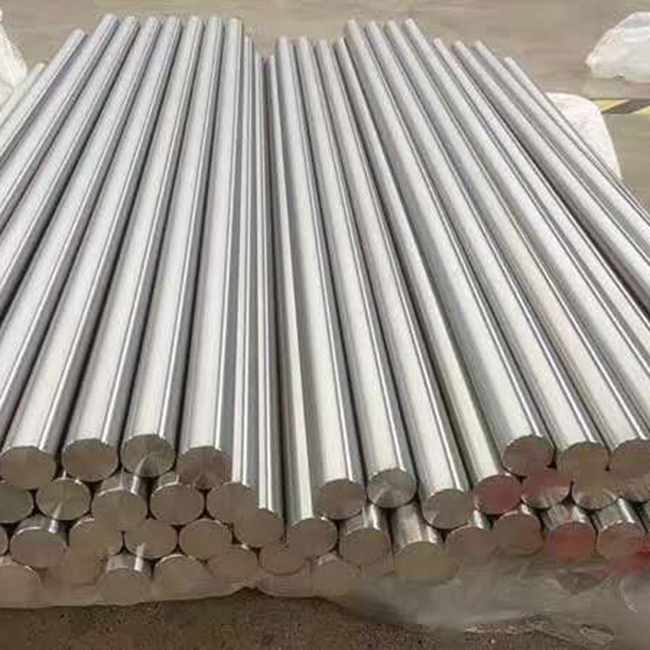
In the selection of commercially pure titanium for industrial use, Gr1 and Gr2 titanium rods are the two most common options. Both are commercially pure titanium, but they differ greatly in chemical composition, mechanical properties and application scenarios. Gr1 titanium rods have a titanium content of no less than 99.5% with extremely low impurities. They offer the best ductility among similar pure titanium products, so they work well for complex forming, precision welding and highly corrosive working conditions. Gr2 titanium rods keep good corrosion resistance. Its higher oxygen and iron content delivers greater strength, making it a cost-effective general-grade material for industrial use. Understanding their core differences helps engineers pick the right material for medical implants, chemical equipment, marine engineering, electronic manufacturing and other fields.
1. Chemical Composition and Purity: Fundamental Factors of Material Performance
1.1 Comparison of Titanium Content and Impurity Control
Gr1 titanium rods are the purest commercial titanium materials for industrial use, with titanium content above 99.5%. Its iron content stays at 0.20% or lower, and oxygen content is no more than 0.18%. The total amount of carbon, nitrogen, hydrogen and other impurities is kept to a minimum. This pure composition brings high chemical stability and good biocompatibility. Gr2 titanium rods have slightly lower titanium content. Its maximum oxygen content reaches 0.25% and maximum iron content is 0.30%. This composition change reduces purity a little but greatly improves mechanical strength, so it suits load-bearing structural parts better.
1.2 How Interstitial Elements Affect Material Properties
Oxygen, nitrogen and other interstitial elements dissolve in titanium lattices and change mechanical properties obviously. Gr1 titanium rods contain very few interstitial elements, so their lattice structures stay intact. This gives the material excellent plastic deformation ability. It rarely cracks during cold working, deep drawing and complex bending. Gr2 titanium rods have more oxygen atoms. These atoms block dislocation movement and raise tensile strength and yield strength, yet ductility drops accordingly. Carbon has very low solubility (below 0.01%) in alpha-titanium at room temperature. Its impact on material performance mainly comes from carbide precipitation instead of atomic embedding strengthening in the base material.
1.3 How Purity Affects Corrosion Resistance
Both materials form dense titanium dioxide passive films on their surfaces automatically for long-lasting corrosion protection. They show similar corrosion resistance in regular chemical environments. In extreme corrosive conditions, Gr1 titanium rods have fewer impurities and maintain more stable passivation. It has lower pitting tendency and better crevice corrosion resistance in high-temperature acidic media with chloride ions. The performance gap is not large in most cases. Conduct corrosion tests under actual working conditions to confirm material suitability.
2. Mechanical Properties and Machinability: Key Points for Engineering Applications
2.1 Comparison of Strength and Ductility Parameters
| Performance Index | Gr1 Titanium rod | Gr2 Titanium rod |
| Tensile Strength (MPa) | 240 ~ 345 | 345 ~ 480 |
| Yield Strength (MPa) | 170 ~ 275 | 275 ~ 410 |
| Elongation (%) | ≥ 24 | ≥ 20 |
| Reduction of Area (%) | ≥ 30 | ≥ 25 |
Gr2 titanium rods are 25% to 40% stronger than Gr1, so they fit structural parts under moderate loads. Gr1 titanium rods have clear advantages in ductility. Its high ductility is ideal for stamping, drawing, spinning and other processes requiring large deformation. Reduction of Area is listed in ASTM standards, but elongation is the main ductility index for practical engineering acceptance.
2.2 Cold Working Performance and Forming Limit
Gr1 titanium rods have outstanding ductility, so they are the top choice for complex special-shaped parts. They can withstand large cold deformation without cracking at room temperature. Manufacturers often use them to make bellows, deep cavity containers and precision elastic components. Its low yield strength lowers requirements for forming equipment and reduces mold wear. Material status, mold design and forming speed all affect the maximum cold deformation. Intermediate annealing is necessary for processes with large deformation. Gr2 titanium rods have weaker cold working performance. Intermediate annealing is more often needed to restore ductility after heavy deformation. Its high strength helps finished parts keep size stability and resist deformation during service.
2.3 Welding Performance and Weld Quality
Both materials have good weldability. Workers can use TIG welding, plasma welding, electron beam welding and other welding methods. Gr1 titanium rods have fewer impurities, so weld metal is purer. Grains in the heat-affected zone do not grow easily, and welded joints retain good ductility. This feature is important for welded structures under cyclic stress and vibration. Welded joints of Gr2 titanium rods have higher strength. The heat-affected zone may harden without post-weld annealing, so designers need to take this into account. The joint efficiency of both materials ranges from 0.85 to 0.95. The exact value depends on welding parameters and joint design.
3. Corrosion Resistance and Environmental Adaptability: Material Performance in Harsh Conditions
3.1 Corrosion Resistance in Acid Media
| Corrosion Environment | Suitability of Gr1 Titanium rod | Suitability of Gr2 Titanium rod | Recommendations |
| 10% Boiling Sulfuric Acid | Poor resistance, corrosion rate > 0.125 mm/year | Poor resistance, corrosion rate > 0.125 mm/year | Not recommended |
| 20% Hydrochloric Acid at 60 ℃ | Poor resistance, corrosion rate > 0.125 mm/year | Poor resistance, corrosion rate > 0.125 mm/year | Not recommended |
| Concentrated Nitric Acid at Room Temperature | Excellent resistance, corrosion rate < 0.005 mm/year | Excellent resistance, corrosion rate < 0.005 mm/year | Suitable for use |
| Dilute Nitric Acid at Room Temperature | Excellent resistance, corrosion rate < 0.005 mm/year | Excellent resistance, corrosion rate < 0.005 mm/year | Suitable for use |
The two materials perform similarly in oxidizing acid. Neither works well in reducing acid such as dilute sulfuric acid and hydrochloric acid. Hydrofluoric acid causes severe corrosion to titanium even at low concentrations. People only use it for short-term pickling with strictly controlled ratio and temperature. Gr1 titanium rods show slight advantages in a few special corrosive environments. Choose higher-grade titanium alloys or apply surface treatment for severely corrosive working conditions.
3.2 Long-term Stability in Seawater and Salt Spray Environments
Marine projects and coastal facilities face high chloride content, biological fouling and temperature changes. Both Gr1 and Gr2 titanium rods have strong corrosion resistance in seawater. Their surface passive films stay complete after long-term immersion with no obvious pitting. They pass thousands of hours of ASTM B117 salt spray tests without rust. Reasonable structural design such as wider gaps and elastic seals can lower crevice corrosion risks on threaded connections and gasket contact surfaces.
3.3 Performance in Alkali and Organic Media
Both titanium rods form protective oxide films in sodium hydroxide, potassium hydroxide and other alkaline solutions. The corrosion rate is usually below 0.01 mm/year. In hot and highly concentrated alkaline liquid for alkali production, Gr1 titanium rods contain less iron and have lower risks of electrochemical corrosion. The difference is small in actual use. In organic solvents, pharmaceutical intermediates and biological fermentation liquid, the high purity of Gr1 titanium rods prevents material dissolution and product contamination. It is the best choice for scenarios requiring strict cleanliness.
4. Application Scenarios and Selection Strategies: Match Materials with Industrial Requirements
4.1 Material Selection for Medical and Biomedical Fields
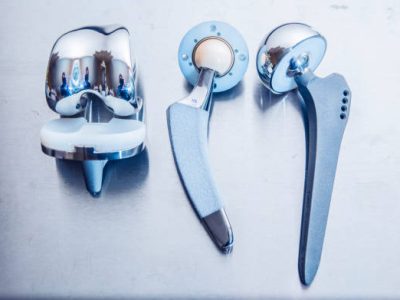
Gr1 titanium rods feature high purity, non-magnetism and good biocompatibility for medical devices. Load-bearing orthopedic implants such as hip stems and bone screws need higher strength, so manufacturers usually use Gr4 pure titanium or Ti-6Al-4V alloys. Gr1 titanium rods apply to non-load or light-load implants like craniomaxillofacial repair plates and cardiovascular stent substrates, as well as surgical tool handles. Its high ductility helps make complex thread structures and precision micro-pores. Dental implants mostly use Gr4 pure titanium or titanium alloys for better strength and osseointegration.
4.2 Material Selection for Chemical and Environmental Protection Equipment
Chemical anti-corrosion equipment needs materials with good corrosion resistance and reasonable cost. Gr1 and Gr2 titanium rods both work for heat exchanger tubes, agitator shafts and tower internals under low load and corrosion. Medium property, temperature, flow speed and oxidizing ability all affect service life. Carry out corrosion tests to confirm material performance. Pick Gr2 titanium rods for pump shafts, valve rods and flange bolts that bear load and resist corrosion at the same time. Both materials are widely used in desulfurization, denitrification, waste gas treatment and electroplating equipment. Choose according to stress level and cost.

4.3 Differentiated Needs in Marine Engineering and Electronic Manufacturing
Marine platforms, seawater desalination units and marine condensers work in seawater and bear wave impact. Pipes and tie rods made of Gr1 and Gr2 titanium rods have good pitting resistance and fatigue resistance. Fasteners such as bolts and nuts need high strength, so Gr2 titanium rods or high-strength titanium alloys are more suitable. Semiconductor, vacuum coating and precision instrument industries set strict rules for non-magnetism, low outgassing and size stability. High-purity Gr1 titanium rods keep stable performance in high vacuum and clean rooms. Cold drawn and polished rods reach H7/H8 precision with surface roughness Ra ≤ 0.8 μm to meet precision positioning and sealing needs.
5. Cost Analysis and Purchasing Decisions: Life Cycle Value Evaluation
5.1 Raw Material Price and Machining Cost
Gr1 titanium rods require stricter purity control and complex smelting processes, so their raw material prices are higher than Gr2. The price gap changes with market supply, order quantity and production technology. Gr1 titanium rods have good ductility. They reduce defective rates during forming and cut down intermediate annealing steps. The total cost may be lower for small-batch production of complex parts. Gr2 titanium rods have lower unit prices. Put technical requirements first for working conditions with extreme corrosion.
5.2 Maintenance Cost of Equipment in the Whole Service Life
For chemical, marine and power industries, production loss caused by equipment shutdown is often higher than material purchase cost. Proper titanium materials for key anti-corrosion parts extend maintenance cycles and cut costs on labor and spare parts. Gr1 titanium rods keep stable performance inside human bodies for long-term medical implants, but it cannot bear heavy load. Gr2 titanium rods balance strength and corrosion resistance well for general industrial equipment. Its mature supply chain also lowers purchasing and technical risks.
5.3 Supply Chain Stability and Custom Machining Capacity
Major titanium production bases in China provide complete industrial chain support. They stably supply Gr1 and Gr2 titanium rods with diameters from 4 mm to 300 mm. Precision cold drawing and polishing lines produce mass products with H7/H8 precision. Factories supply black forged rods, turned rods, polished rods and pickled rods. Product sizes range from precision shafts with diameter tolerance ±0.05 mm to 6-meter fixed-length rods. These products serve aerospace, medical implant and electronic manufacturing industries.
Conclusion
Gr1 and Gr2 titanium rods have their own advantages. Match material performance with actual use requirements during selection. Gr1 titanium rods feature high purity, excellent ductility and reliable corrosion resistance. They fit medical devices, precision processing and fields with strict purity standards. Gr2 titanium rods deliver balanced strength and corrosion resistance with good cost performance, so they are widely used in general chemical and marine equipment. Engineers shall take medium corrosivity, stress level, machining process and life cycle cost into account to make the best material choice.
FAQ
1. Can Gr1 titanium rods be used for load-bearing structural parts?
Gr1 titanium rods have a yield strength of 170 ~ 275 MPa. It suits light-load parts that mainly resist corrosion. Choose Gr2 titanium rods or high-strength titanium alloys for high-stress load-bearing structures to ensure safety factor and fatigue life.
2. Do welded titanium rods need heat treatment?
Heat treatment is not mandatory for regular welded joints. Conduct stress relief annealing at 540 ~ 650 ℃ for parts under cyclic load or stress corrosion. This process removes residual stress, optimizes microstructure and improves joint reliability. Adjust temperature according to material grade and service requirements.
3. How to identify the actual grade of titanium rods?
Formal suppliers shall provide material test reports with chemical composition, mechanical properties and ASTM standard compliance data. Use spectral analysis to check chemical composition and hardness test for auxiliary identification. The Vickers hardness of Gr1 titanium rods ranges from HV 120 to 140, while Gr2 titanium rods range from HV 140 to 180 (test load: 98 N, holding time: 15 s). Hardness test is a fast identification method.
Looking for Reliable Gr1 and Gr2 Titanium rod Manufacturers?
Baoji Titanium Valley Titanium Nickel Zirconium Material Processing Co., Ltd. is a professional supplier with full-process quality control. We provide products complying with ASTM B348 standards and customized processing services. Contact us for technical datasheets and quotations: sales@titaniumvalleys.com
References
- Liu Jing, Xie Yongsheng. Production Technology of Titanium and Titanium Alloy Sheets and Strips [M]. Beijing: Metallurgical Industry Press, 2011.
- Huang Yan, Li Meishuan. Corrosion and Protection of Titanium Alloys [M]. Beijing: Chemical Industry Press, 2014.
- Wang Guisheng. Titanium Handbook [M]. Beijing: Chemical Industry Press, 2012.
- Zhang Yansheng, Yang Guanjun. Application and Corrosion Research of Titanium Alloys in Chemical Equipment [J]. Chemical Equipment and Piping, 2018, 55(3): 60-64.
- Zhao Yongqing, Xi Zhengping. Application and Development of Titanium Alloys in Medical Field [J]. Rare Metal Materials and Engineering, 2015, 44(10): 2357-2363.
- Li Defu, Li Wei. Material Selection and Corrosion Behavior of Titanium Alloys for Marine Engineering [J]. Chinese Journal of Corrosion and Protection, 2020, 40(4): 289-296.