
Why Is Ti-15V-3Al-3Cr-3Sn Titanium Foil Suitable for Aerospace Applications?
- Ti-15V-3Al-3Cr-3Sn Titanium Foil
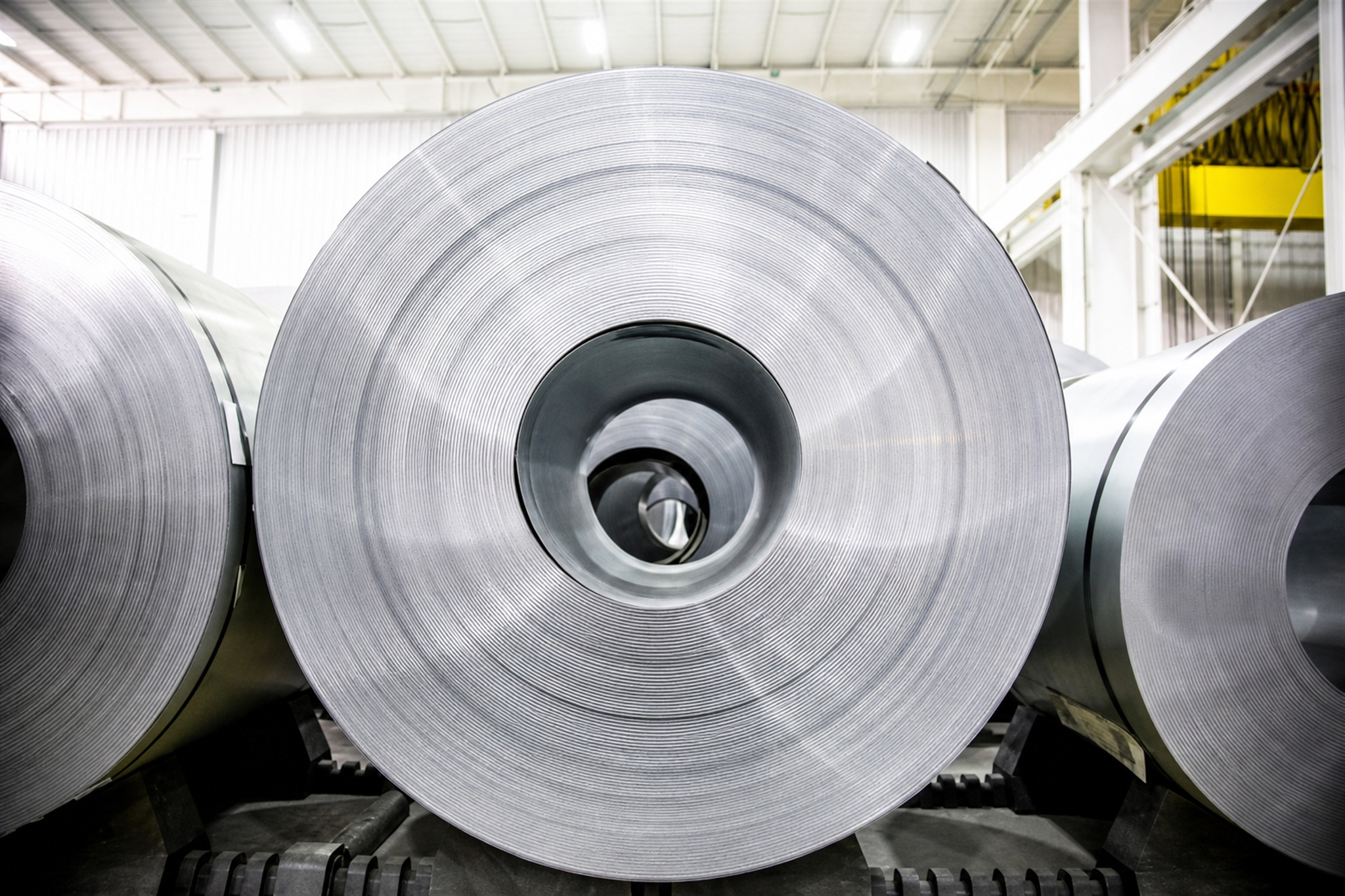
Ti-15V-3Al-3Cr-3Sn titanium foil is used in aerospace applications because it offers a practical two-stage property-control route. In the softened condition, this near-beta titanium alloy provides excellent cold formability for plastic forming of complex curved parts. After forming, aging treatment increases the strength to a level comparable with Gr5 titanium alloy. This form first and strengthen later processing route helps solve the common difficulty of combining high strength with manufacturability in conventional high-strength titanium alloys. With a supply range of 0.03 to 1.0 mm thickness and 15 to 680 mm width, the material supports integrated forming of large thin-wall structures, reduces welded joints, and improves structural reliability. Its density of 4.51 g/cm3, nonmagnetic behavior, and corrosion resistance make it suitable for lightweight aerospace designs.
What Metallurgical Features Support Its Aerospace Performance?
How Does the Near-Beta Microstructure Improve Formability?
Ti-15V-3Al-3Cr-3Sn is a near-beta titanium alloy. Its composition contains approximately 15% vanadium, combined with chromium, aluminum, and tin. This alloy design retains a large amount of metastable beta phase at room temperature. The beta-rich structure provides low resistance to slip and dislocation motion, so very thin foil can be cold rolled through multiple passes with reduced risk of microcracking. Compared with alpha-beta Gr5 titanium alloy, its cold work-hardening rate is lower and springback can be controlled more easily during precision forming.
How Does Heat Treatment Control Final Strength?
Vacuum melting helps control oxygen pickup, and multi-pass precision rolling stores deformation energy for later aging. Annealing is commonly performed in a broad processing window around 750 to 850 °C, depending on the target condition. Aging promotes fine alpha-phase precipitation and can increase tensile strength from the 800 MPa range in the annealed condition to the 1100 MPa range.
Which Physical Properties Matter in Engineering Design?
A density of 4.51 g/cm3 provides more than 40% mass reduction compared with steel. Titanium alloys melt at about 1668 °C, but the practical service temperature must account for oxidation; around 600 °C normally requires protective coating. Nonmagnetic behavior with magnetic susceptibility below 1.005 reduces electromagnetic interference risk for avionics. Thermal conductivity is about 7.5 W/(m·K), and the low coefficient of thermal expansion of approximately 9 × 10^-6/°C supports dimensional stability during thermal cycling.
What Technical Requirements Do Aerospace Titanium Foils Need to Meet?
How Can Weight Reduction and Load Capacity Be Balanced?
Modern aircraft designs seek high thrust-to-weight ratio. Thin-wall components such as skins and fairings commonly require 0.3 to 0.8 mm material with both low mass and impact resistance. Conventional fabrication from multiple small sheets increases weld count and fatigue-risk locations. Ti-15V-3Al-3Cr-3Sn foil can be supplied as wide coil, increasing single-piece coverage area and reducing welds.
Why Is Integrated Forming Important for Complex Curves?
Fighter aircraft inlet ducts and satellite antenna reflectors may require small curvature radii. Conventional high-strength titanium alloys often need repeated intermediate annealing. Annealed Ti-15V-3Al-3Cr-3Sn can provide elongation above 25%, allowing deep drawing, stretch forming, and incremental forming before aging restores the required yield strength.
What Service Environments Must Be Considered?
Table 1: Performance requirements for titanium foil in typical aerospace service environments
| Application | Temperature Range (°C) | Corrosive Medium | Key Performance Requirements |
|---|---|---|---|
| Engine-bay heat shield | -50 to 600 | Fuel vapor, salt spray | Oxidation resistance and thermal-fatigue strength; oxidation-resistant coating required at 600 °C |
| Avionics shielding enclosure | -40 to 85 | Humid air | Shielding effectiveness >80 dB and nonmagnetic behavior |
| Cryogenic fuel tank liner | -253 liquid hydrogen | Cryogenic hydrogen environment | Low-temperature toughness and hydrogen-permeation barrier |
| Marine cruise-missile shell | -20 to 50 | Chloride ions in seawater | Pitting potential >400 mV vs. SCE; 3.5% NaCl at 25 °C |
In 3.5% NaCl solution, the passive film on Ti-15V-3Al-3Cr-3Sn shows strong self-repair behavior, and corrosion rates below 0.01 mm/year after long immersion are consistent with low-maintenance service requirements when the alloy is properly processed.
How Does It Compare with Other Titanium Foils?
How Is It Different from Commercially Pure Titanium Foil?
Gr1 titanium foil can provide elongation up to about 40%, but its tensile strength is only about 240 MPa. Gr2 offers balanced properties but is typically limited to about 390 MPa, while Gr4 reaches about 550 MPa but becomes more difficult to cold form. Ti-15V-3Al-3Cr-3Sn uses a soft-state forming and aged-state service strategy, combining a usable processing window with tensile strength up to about 1100 MPa after aging.
Why Is It More Economical to Form than Gr5 Foil?
Table 2: Key comparison between Ti-15V-3Al-3Cr-3Sn and Gr5 titanium foil
| Comparison Item | Gr5 Alpha-Beta Alloy | Ti-15V-3Al-3Cr-3Sn Near-Beta Alloy |
|---|---|---|
| Annealed elongation | 8 to 12% | 20 to 28% |
| Minimum bend radius | 5T, where T is thickness | 1.5T |
| Intermediate anneals after forming | 3 to 5 times | Not normally required |
| Stable wide-width supply | <=450 mm | Up to 680 mm |
| Batch property variation | ±8% | ±3% with continuous annealing |
| Estimated total cost per unit area | Baseline | About 18% lower, based on reduced processing steps versus conventional Gr5 processing |
The key advantage over Gr5 is excellent room-temperature cold formability. For formed aerospace skins and shells, cold forming or stretch forming followed by aging is generally more economical than repeated hot-forming operations.
How Does the Foil Support Advanced Manufacturing?
The foil can be used as a substrate layer for hybrid additive and subtractive manufacturing, helping reduce base-plate distortion in titanium additive manufacturing. After ultrasonic cleaning, surface energy above 40 dyne/cm can improve diffusion-bonding and coating adhesion.
What Manufacturing Challenges Need to Be Controlled?
How Is Shape Controlled in Ultra-Thin Wide Foil?
Because the company supply range begins at 0.03 mm, ultra-thin foil process analysis should use 0.03 mm as the lower industrial reference. At this thickness, stiffness is very low and edge wave or buckling defects can occur during rolling. A 750 mm twenty-high Sendzimir mill, precision roll support, and S-type tension leveling can control micrometer-scale thickness variation and improve flatness.
How Is Oxygen Contamination Controlled?
Increasing surface oxygen can reduce fatigue resistance. Continuous electric annealing under 99.99% protective atmosphere, oxygen below 10 ppm, and temperature uniformity of ±2 °C help limit oxide growth. Ultrasonic cleaning at line speeds around 30 m/min removes rolling oil, and vacuum packaging helps keep the surface ready for welding or coating.
What Aging Window Is Used?
Aging strengthens the alloy through fine alpha precipitation. A typical reference process is 480 °C for 8 hours, but this is not universal. Higher temperatures, such as 500 to 550 °C, may shorten aging time while reducing peak strength. Foil thickness affects aging response and should be verified experimentally for each final condition.
Where Is Ti-15V-3Al-3Cr-3Sn Titanium Foil Used?
How Can It Improve Large Transport-Aircraft Skins?
Wide Ti-15V-3Al-3Cr-3Sn coil can reduce the number of longitudinal joints in large fuselage sections. Annealed material can be stretch formed into double-curvature skins, then aged to restore high yield strength. Welded joints in 0.5 to 0.8 mm foil require strict process qualification and inspection.
How Can It Upgrade Satellite Solar-Array Substrates?
A 0.15 mm Ti-15V-3Al-3Cr-3Sn face sheet in a honeycomb panel can provide low areal density, improved stiffness, and dimensional stability during ±150 °C thermal cycling.
How Is It Used in Aircraft Engine Acoustic Liners?
Perforated titanium foil bonded to a honeycomb core is widely used in acoustic liners. In the annealed condition, Ti-15V-3Al-3Cr-3Sn can be laser perforated with clean hole edges, then aged to improve resistance to hot airflow distortion.
Table 3: Application parameters for Ti-15V-3Al-3Cr-3Sn titanium foil in aerospace components
| Component | Typical Thickness (mm) | Key Process | Core Performance Requirements |
|---|---|---|---|
| Fuselage skin | 0.5 to 0.8 | Cold forming or stretch forming plus aging | Yield strength >=1000 MPa after aging; elongation >=10% after aging, typically about 10 to 15% for 0.5 to 0.8 mm foil |
| Electromagnetic shielding enclosure | 0.05 to 0.15 | Photoetching and chemical milling | Shielding effectiveness 80 to 100 dB, to be verified for 0.05 mm foil; thickness tolerance ±0.01 mm |
| Cryogenic tank liner | 0.3 to 0.5 | Spinning | Impact toughness >=40 J at -253 °C; helium leak rate <10^-9 Pa·m3/s |
| Fairing stiffener | 0.4 to 0.6 | Superplastic forming | Fatigue strength >=600 MPa at 10^7 cycles; 1000 h salt-spray resistance |
What Opportunities Exist in New-Energy Aircraft?
Hydrogen aircraft tanks require resistance to cryogenic embrittlement. Ti-15V-3Al-3Cr-3Sn can retain useful ductility at -253 °C. Electric vertical takeoff and landing aircraft require lightweight, flame-resistant battery enclosures, where titanium foil combined with insulation coating can reduce mass.
What Is the Engineering Conclusion?
Ti-15V-3Al-3Cr-3Sn titanium foil combines near-beta alloy design, precision rolling, and post-form aging to achieve high strength and high formability in the same material system. Application-specific aging, welding, and forming parameters should be validated for the actual thickness and service environment.
What Questions Do Buyers Commonly Ask?
Does Aging Affect Dimensional Accuracy After Forming?
Aging is usually performed at 450 to 550 °C, below the recrystallization range. Dimensional change in complex curved parts can be kept low with compensation allowances and verified by final inspection.
Is There a Low-Temperature Brittleness Risk?
Near-beta titanium alloys do not show the same ductile-brittle transition behavior as many body-centered cubic steels. Low-temperature impact testing should still be specified for cryogenic aerospace components.
How Good Is the Weldability Compared with Conventional Titanium Alloys?
The relatively low aluminum equivalent supports a more uniform heat-affected zone. Electron-beam welding and laser welding can produce high joint strength when shielding gas purity and oxygen pickup are controlled.
How Can You Source Ti-15V-3Al-3Cr-3Sn Titanium Foil?
Baoji Titanium Valley Titanium Nickel Zirconium Material Processing Co., Ltd. manufactures Ti-15V-3Al-3Cr-3Sn titanium foil with automated ultra-thin and wide-width foil capacity of 3000 tons per year. Custom thicknesses from 0.03 to 1.0 mm are available. For technical support and sample evaluation, contact sales@titaniumvalleys.com.
References
1. Qu Henglei, Zhu Zhishou, Wang Xinnan. Research Progress on Microstructure and Properties of Near-Beta Titanium Alloy Ti-15V-3Cr-3Sn-3Al[J]. Journal of Materials Engineering, 2019, 47(6): 12-24.
2. Zhao Yongqing, Zeng Weidong, Wang Qingjuan. Current Status and Prospects of Titanium Alloy Materials Technology for Aerospace Applications[J]. Journal of Aeronautical Materials, 2020, 40(5): 1-20.
3. Zhang Lijun, Chen Jun, Yang Xiaoming. Study on Cold Rolling Process, Microstructure, and Properties of Titanium Alloy Foil[J]. Rare Metal Materials and Engineering, 2018, 47(3): 891-897.
4. Zhou Yigang, Liu Wei, Li Hui. Review of Manufacturing Technologies for Aerospace Titanium Alloy Thin-Wall Structures[J]. Aeronautical Manufacturing Technology, 2017, 60(10): 48-55.
5. Li Qiang, Zhang Xiaodong, Wang Zhihong. Application Status and Development Trends of Titanium Alloys in Aeroengines[J]. Materials Reports, 2019, 33(15): 2586-2593.