
What Does ASTM B550 Specify for Zirconium Wire?
- ASTM B550 Zirconium Wire
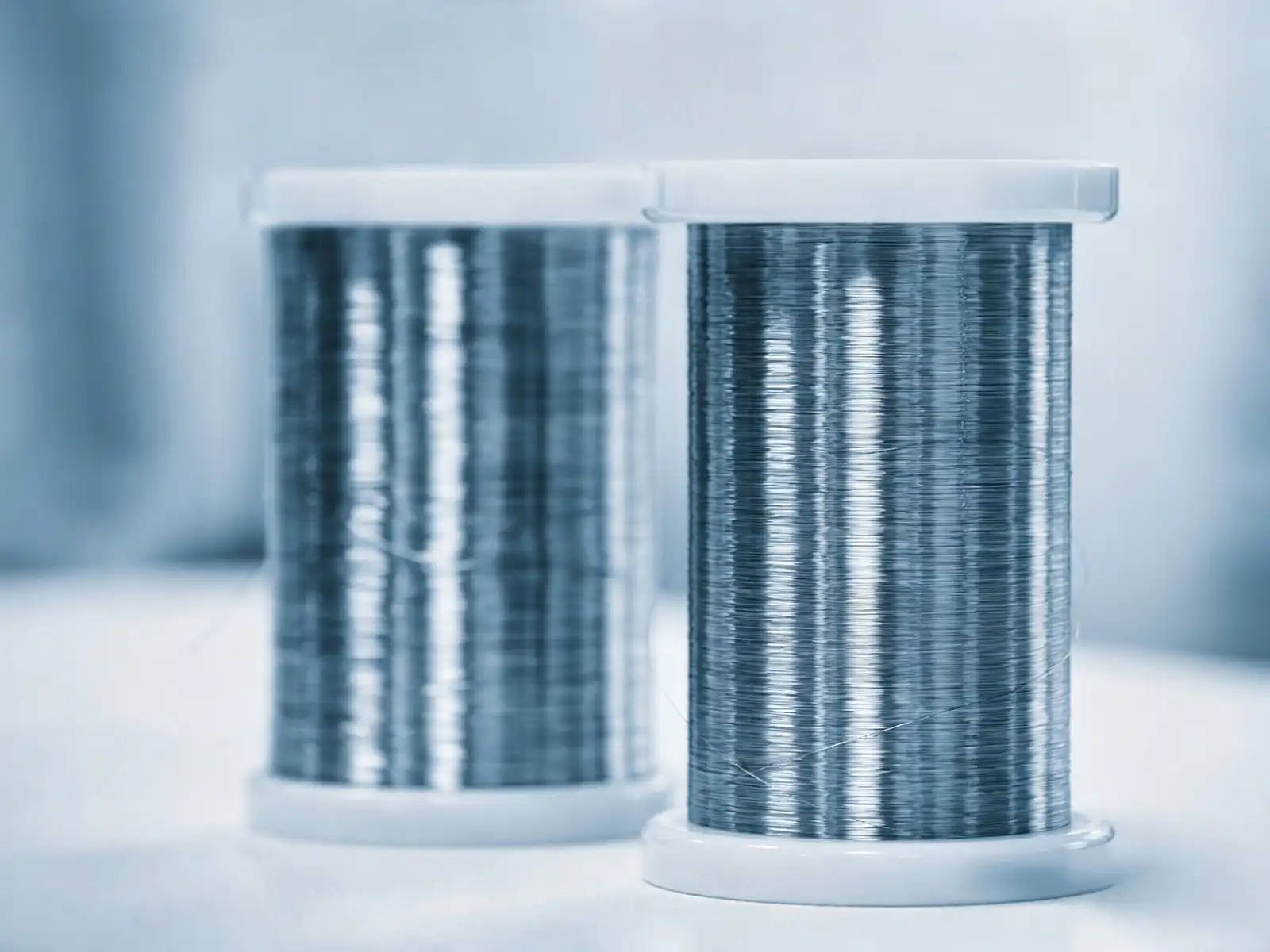
, providing authoritative basis for material selection for high-end industries such as chemical industry, nuclear power, and medical care. This standard covers multiple grades such as R60702 pure zirconium, R60704 zirconium tin alloy, R60705 zirconium niobium alloy, etc. Each grade has its own characteristics in terms of corrosion resistance, mechanical strength and processing performance. ASTM B550 Zirconium Wire has become an ideal alternative to titanium alloy and stainless steel due to its excellent resistance to hydrochloric acid and wet chlorine corrosion, as well as its ability to maintain stable mechanical properties and corrosion resistance below 350?C. This article will provide an in-depth analysis of the technical requirements, performance parameters, grade differences of the ASTM B550 standard and its application value in highly corrosive conditions.
1. ASTM B550 standard core technical requirements and material classification system
(1) Standard application scope and material form definition
ASTM B550 specifically stipulates the manufacturing and inspection requirements for zirconium and zirconium alloy rods and wires. The wire part covers coiled wire and straight wire with diameters from 0.1 mm to 10 mm, which are widely used in welding, springs, fasteners and precision electronic leads. The standard clarifies different supply states such as annealed state and cold working state to ensure that the material maintains good ductility and stable mechanical properties during subsequent processing.
(2) Chemical composition control and impurity limit standards
ASTM B550 has strict requirements on the chemical composition of zirconium alloys. Taking R60705 as an example, the niobium content needs to be controlled between 2.0 and 3.0%, the hafnium content does not exceed 4.5%, the oxygen content is ?0.18%, and the hydrogen content is ?0.005%. These strict composition controls directly affect the corrosion resistance and mechanical strength of the material. The low oxygen content ensures the toughness of the material, and the addition of niobium significantly improves the ability to resist stress corrosion cracking, making it perform well in high-pressure, high-temperature acidic environments.
Table 1: Comparison of chemical composition of main ASTM B550 grades (wt%)
(3) Mechanical performance indicators and testing methods
The standard stipulates key mechanical indicators such as tensile strength, yield strength, and elongation of different grades of zirconium wire. The tensile strength of R60702 annealed wire is ?380 MPa, and the elongation is ?20%; due to the strengthening effect of niobium, the tensile strength standard of R60705 stipulates that the minimum value is not less than 550 MPa, while maintaining an elongation of more than 15%. These performance parameters need to be verified through standard tensile tests to ensure that the material can not only withstand high stress under actual working conditions, but also have sufficient plastic deformation ability to avoid brittle fracture.
2. Performance characteristics and material selection logic of different grades of ASTM B550 Zirconium Wire
(1) R60702 pure zirconium wire: the benchmark choice for general-purpose corrosion-resistant materials
, showing excellent corrosion resistance in most inorganic acids (nitric acid, sulfuric acid), organic acids and strong alkali. Its surface can quickly form a dense oxide film. This self-healing passivation film can quickly regenerate even after scratches, ensuring long-term and stable protection. R60702 zirconium wire is often used to manufacture chemical pump shafts, valve stems, heat exchanger accessories and spray pipelines for environmental protection equipment. The cost is relatively low and it is the first choice for general anti-corrosion scenarios.
(2) R60704 zirconium tin alloy wire: a balanced solution to improve strength and high temperature stability
By adding 1.0~2.0% tin element, R60704 significantly improves the material’s tensile strength and high-temperature creep resistance while maintaining good corrosion resistance. The strengthening effect of tin enables it to maintain high mechanical properties in environments above 300?C, making it suitable for high-temperature organic acid devices, thermal phosphoric acid production equipment and non-pressure components of nuclear reactors. This grade broadens the use boundaries of zirconium materials without increasing too much cost.
(3) R60705 zirconium-niobium alloy wire: the king of high strength and corrosion resistance under extreme working conditions
R60705 is the grade with the highest strength in the ASTM B550 system. The addition of niobium increases the tensile strength to 550~700 MPa and greatly enhances the resistance to stress corrosion cracking and pitting corrosion. In extremely corrosive media such as hydrochloric acid, wet chlorine, and high-chlorine brine, R60705 performs far better than pure zirconium and titanium alloys. Especially in the presence of tensile stress and chloride ions, it can effectively avoid crevice corrosion and transgranular cracks. This makes it a standard material for common anti-corrosion components around nuclear power plants, hydrometallurgical extraction equipment, and high-pressure desalination pump parts.
Table 2: Comparison of typical mechanical properties of three grades of zirconium wire
3. Analysis of the core corrosion resistance mechanism and working condition adaptability of ASTM B550 Zirconium Wire
(1) The formation mechanism of self-healing oxide film and passivation layer
The ZrO? passivation film with a thickness of 2 to 5 nanometers will be rapidly formed on the surface of the zirconium wire in an oxidizing or neutral medium. This dense oxide film has extremely high chemical stability and self-healing ability. When the film is mechanically damaged or chemically attacked, the zirconium matrix will immediately react with oxygen or water in the environment to regenerate the protective layer. This dynamic balance allows the zirconium wire to maintain a low corrosion rate under long-term immersion or cyclic erosion conditions, and its lifespan can reach 5 to 10 times that of stainless steel.
(2) Corrosion resistance in strong reducing acids and high temperature halogen environments
ASTM B550 Zirconium Wire has better corrosion resistance than titanium and nickel-based alloys in reducing acids (such as hydrochloric acid, dilute sulfuric acid). When the temperature is lower than 100?C, the corrosion rate of zirconium in hydrochloric acid with a concentration of less than 35% is less than 0.1 mm/year; there is almost no obvious corrosion in boiling organic acids (acetic acid, formic acid). Due to the presence of niobium, R60705 has excellent performance in high strength, resistance to stress corrosion cracking and corrosion resistance, and can effectively resist pitting corrosion and intergranular corrosion. This is a performance advantage that ordinary stainless steel and titanium alloys cannot match.
(3) Engineering value of resisting stress corrosion cracking and crevice corrosion
Under the working conditions of high stress and corrosive media, materials are prone to stress corrosion cracking (SCC). Zirconium alloy has natural resistance to SCC due to its characteristics of a close-packed hexagonal lattice structure (? phase) and the stability of a dense passivation film on its surface. R60705 zirconium wire will not cause brittle cracking even if it is subjected to loads close to the yield strength in nuclear-grade water, high-temperature brine, and sulfide-containing oil and gas well environments. Crevice corrosion is common in narrow areas such as gaskets and threaded connections. The self-healing properties of zirconium wire’s passivation film can significantly reduce the risk of such local corrosion and extend the equipment maintenance cycle.
4. Application scenarios and technical value of ASTM B550 Zirconium Wire in high-end industrial fields
(1) Key anti-corrosion components in chemical and petrochemical plants
The biggest challenge facing the chemical industry is frequent equipment failures and high maintenance costs caused by highly corrosive media. ASTM B550 Zirconium Wire is widely used in core parts such as hydrochloric acid synthesis furnaces, anode leads of chlor-alkali electrolyzers, fasteners of urea synthesis towers, and heating tube bundles of phosphoric acid concentration equipment. After a chlor-alkali plant used R60705 zirconium wire instead of nickel-based alloy, the service life of the electrolytic cell anode was significantly extended, maintenance costs were significantly reduced, the risk of nickel ion contamination was eliminated, and product purity was improved.
(2) Peripheral corrosion-resistant components in the nuclear power industry
Zirconium alloy is the standard choice for common anti-corrosion conditions and structural materials around nuclear reactors and nuclear power plants. In nuclear power plants, ASTM B550 Zirconium Wire is widely used in important components such as end plug welding of fuel assemblies and in-reactor structural parts. R60705 exhibits extremely low thermal neutron absorption cross-section, excellent radiation swelling resistance and long-term dimensional stability in high temperature and high pressure water (300 ~ 350 ?, 15MPa) and neutron irradiation environments. Its reliability has been verified for decades and is an irreplaceable material guarantee for nuclear safety.
(3) High-purity, non-magnetic demand for medical equipment and precision electronic leads
Medical implants and surgical devices require materials that are biocompatible, non-magnetic and have zero metal leachability. ASTM B550 Zirconium Wire (especially high-purity R60702) complies with FDA and ISO 5832 standards and is used in the manufacture of pacemaker leads, orthopedic implant screws, dental implant connectors and MRI-compatible surgical tools. It should be noted that such medical devices usually need to comply with special standards such as ASTM F2384 or ISO 5832. The semiconductor and precision electronics industries use ultra-fine zirconium wires (0.06-0.3 mm) as heating elements for high-purity chemical vapor deposition equipment, corrosion-resistant supports for optical fiber drawing furnaces, and non-magnetic shielding wires for OLED evaporation equipment to avoid magnetic interference and metal pollution and ensure product yield and performance consistency.
Table 3: Typical technical requirements for ASTM B550 Zirconium Wire in different industries
*Note: Medical devices need to comply with special standards such as ASTM F2384 or ISO 5832. This is only a reference for typical applications.
(4) Improved durability of marine engineering and desulfurization environmental protection equipment
Seawater and salt spray environments are extremely corrosive to metal materials. Traditional stainless steel and copper alloys are prone to pitting corrosion and stress corrosion under the combined effects of high salinity, dissolved oxygen, and marine metabolites. ASTM B550 Zirconium Wire is used in high-pressure pump plungers of seawater desalination devices, anode protection connectors of submarine pipelines, and key fasteners of offshore platforms, enabling maintenance-free operation for more than 20 years. In the flue gas desulfurization (FGD) system, the spray pipes and demister support rods made of zirconium wire can resist the erosion of sulfuric acid mist, chloride ions and particulate matter in high-temperature flue gas. The service life is 3 to 5 times that of 316L stainless steel, which greatly reduces the frequency of shutdown maintenance and spare parts inventory costs of the power plant.
5. How to choose suitable ASTM B550 Zirconium Wire specifications and suppliers
(1) Determine the matching principle of grade and diameter according to working conditions
When selecting materials, the medium type, temperature, pressure, stress state and service life requirements must be comprehensively considered. R60702 can be used in general anti-corrosion scenarios (dilute acid, alkali, organic solvents), which has lower cost; R60705 should be selected when there is a risk of high stress or pitting corrosion; parts that need to be welded are given priority to annealed coiled wire with a diameter of 1.0~3.0 mm to ensure the toughness of the weld; precision springs and electronic leads require ultra-fine wires of 0.1~0.5 mm, which have extremely high requirements for diameter tolerance and surface finish (?Ra0.4 ?m).
(2) The importance of quality traceability system and third-party testing reports
High-end applications require a complete material certificate for each batch of zirconium wire, including smelting furnace number, chemical composition spectral analysis, mechanical property testing, grain size inspection and non-destructive testing report. Suppliers that comply with ASTM B550 should have vacuum consumable arc furnace (VAR) melting capabilities to ensure material purity and composition uniformity. Third-party certification (such as T?V, SGS) and industry qualifications (ASME, PED, ISO 9001) are important endorsements of quality reliability and avoid engineering accidents and economic losses caused by material defects.
(3) Comprehensive evaluation of processing capabilities and customized services
Top zirconium wire suppliers should have full-process processing capabilities from ingot to finished wire, including forging, rolling, drawing, annealing, pickling, polishing and online testing. Advanced precision drawing equipment can ensure wire dimensional accuracy (?0.01 mm) and surface quality, reducing subsequent processing margins. Customized services cover non-standard diameters, special surface treatments (electropolishing, anodizing), plate weight specifications and specific packaging requirements, which can meet the needs of R&D trial production of small batches and multiple varieties and large-scale stable supply, shorten the project cycle and reduce overall costs.
in conclusion
ASTM B550 Zirconium Wire has become an indispensable material in high-end fields such as chemical industry, nuclear power, medical and marine engineering due to its excellent corrosion resistance, reliable mechanical properties and wide range of grade choices. Correctly understanding standard requirements, rationally selecting brand specifications, and selecting suppliers with full-process quality control capabilities are the keys to ensuring project safety and reducing life-cycle costs. As global requirements for equipment durability and environmental friendliness increase, the application value of ASTM B550 Zirconium Wire will continue to be highlighted.
FAQ
Q1: How to choose between R60705 zirconium wire and pure zirconium R60702 in practical applications?
R60702 is suitable for general acid and alkali corrosive environments and has a lower cost; R60705 contains 2-3% niobium, is more than 50% stronger, has stronger resistance to stress corrosion and pitting corrosion, and is suitable for extreme working conditions such as high pressure, high chlorine, and wet chlorine. Although the cost is slightly higher, the service life can be extended several times, and the overall cost performance is better.
Q2: Can ASTM B550 Zirconium Wire directly replace titanium alloy and 316 stainless steel?
The corrosion resistance of zirconium wire in hydrochloric acid, wet chlorine, and high-chlorine brine far exceeds that of titanium and 316L. It is non-magnetic and has no metal precipitation. It can be directly replaced and significantly extend its service life. However, it should be noted that zirconium is not corrosion-resistant in hydrofluoric acid and hot concentrated sulfuric acid. The specific medium and temperature conditions should be evaluated before material selection.
Q3: How to verify the true quality of ASTM B550 Zirconium Wire?
Suppliers are required to provide traceability of the melting furnace number, third-party chemical composition and mechanical property testing reports, grain size metallographic photos and non-destructive testing certificates. The surface of high-quality zirconium wire is smooth and crack-free, with a dimensional tolerance of ??0.01 mm and an elongation of ?15%. It has authoritative certifications such as ASME and ISO to ensure that the material is stable and reliable.
Looking for a reliable ASTM B550 Zirconium Wire supplier?
Baoji Baoji Titanium Valley Titanium Nickel Zirconium Material Processing Co., Ltd. has a world-class Danieli production line and a complete quality system, with an annual output of 5,000 tons of high-end zirconium wire, and provides R60702/R60704/R60705 full-grade customization services to meet your harsh working conditions. Welcome to inquire: sales@titaniumvalleys.com
References
Liu Jianzhang. Research on the application and corrosion behavior of zirconium alloys in the fields of chemical industry and nuclear energy [J]. Corrosion Science and Protection Technology, 2019, 31(2): 189-196.
Zhang Xiaoming, Zhao Wenjin, Zhou Bangxin. Research progress on irradiation properties of zirconium alloys for nuclear use [J]. Atomic Energy Science and Technology, 2020, 54(Supplement): 112-119.
Zhou Bangxin, Zhao Wenjin. Corrosion and protection of zirconium alloy[M]. Beijing: Metallurgical Industry Press, 2015.