
From Cold Rolling to Annealing: Unveiling the Production Process of High-Quality Gr2 Titanium Foil: Which Process Stage Matters Most?
- Gr2 titanium foil
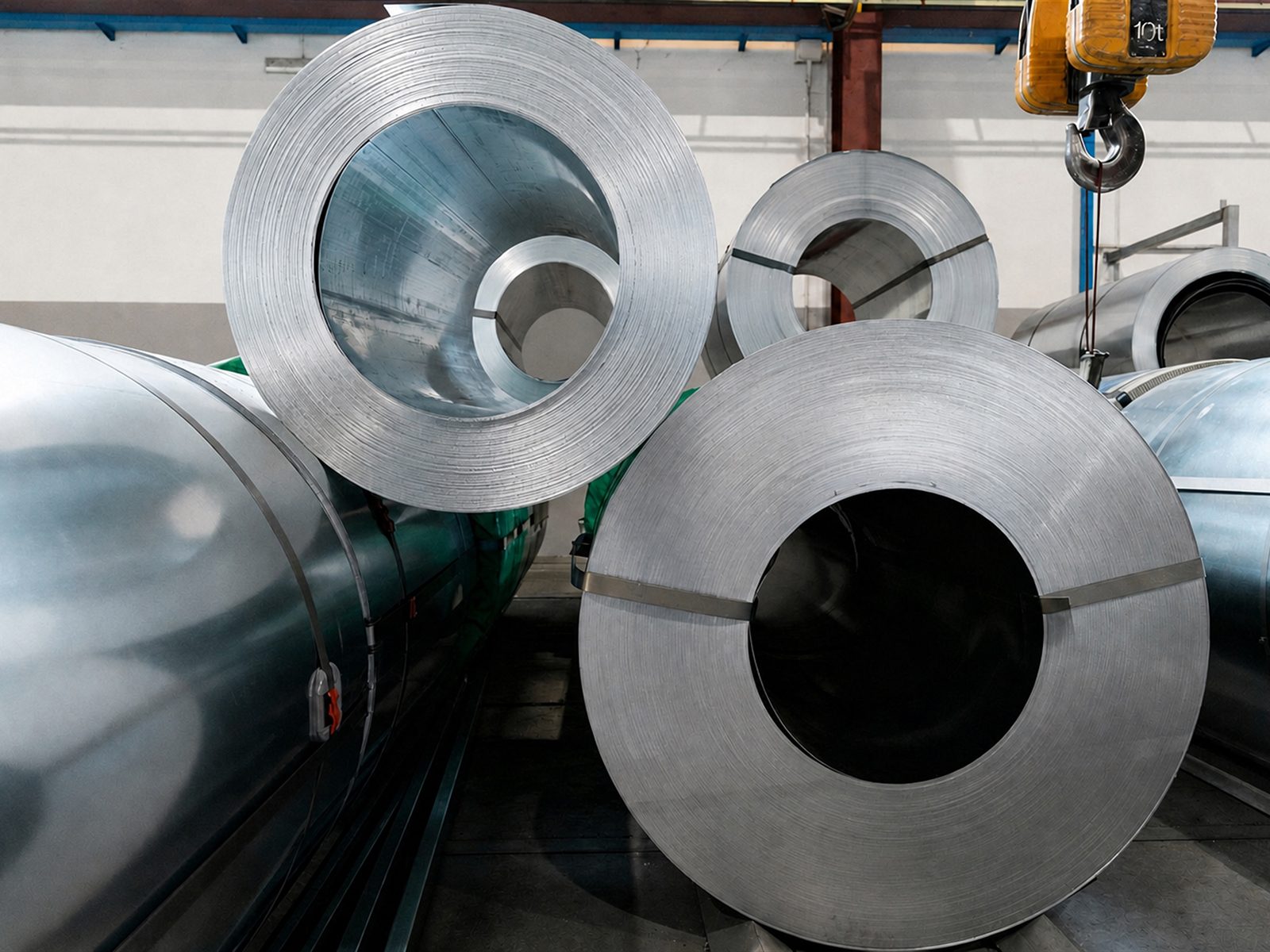
Gr2 Titanium Foil The production of high-quality Gr2 titanium foil involves a carefully controlled sequence of melting, casting, hot rolling, cold rolling, annealing, and surface finishing operations. Each process stage critically influences the final foil mechanical properties, surface quality, and dimensional tolerance. This article provides a comprehensive overview of the Gr2 titanium foil production process from raw material to finished product.
1. Raw Material Preparation
(1) Vacuum Arc Remelting (VAR)
Gr2 titanium foil production begins with VAR ingots weighing 500-2000 kg, produced by remelting titanium sponge and alloying elements under vacuum or inert gas atmosphere. VAR eliminates porosity, segregates impurities, and achieves chemical composition control within +/- 0.01% for oxygen and iron.
(2) Homogenization Annealing
VAR ingots are homogenized at 900-950 degrees C for 4-8 hours to eliminate microsegregation and produce a uniform alpha-phase microstructure. This step is critical for ensuring consistent rolling behavior and final product quality.
2. Hot Rolling Process
(1) Heating and Initial Reduction
Homogenized ingots are heated to 900-950 degrees C and hot rolled on 4-high or 6-high mills to reduce thickness from 100-200 mm to 5-20 mm. Total reduction ratio of 80-90% breaks down the cast structure and refines grain size to ASTM 6-8.
(2) Intermediate Annealing
After 40-50% reduction, hot rolled plate undergoes intermediate annealing at 600-700 degrees C to restore ductility and prepare for further cold rolling. This step prevents cracking during subsequent cold working operations.
3. Cold Rolling and Final Thickness Reduction
Cold rolling on 20-high precision mills reduces foil thickness from 5-20 mm to final gauges of 0.02-2.0 mm. Multiple passes with incremental reductions of 10-30% per pass achieve final thickness with tolerances of +/- 0.005 mm. Interpass annealing at 500-650 degrees C maintains workability.
4. Surface Finishing and Quality Control
Final surface treatment includes pickling (HF-HNO3 solution), mechanical polishing, and electropolishing to achieve surface roughness Ra <= 0.4 micrometers. Quality inspection encompasses dimensional measurement, mechanical testing, surface defect examination, and chemical analysis.
Conclusion
High-quality Gr2 titanium foil production requires precise control of every process stage from VAR melting through cold rolling and annealing. The resulting foil combines excellent mechanical properties, superior surface quality, and tight dimensional tolerances suitable for demanding industrial applications.
FAQ
Q1: What is the minimum thickness achievable for Gr2 titanium foil?
Gr2 titanium foil can be produced down to 0.02 mm thickness with tolerances of +/- 0.002 mm.
Q2: How does annealing affect Gr2 titanium foil properties?
Annealing at 600-700 degrees C restores ductility and reduces hardness, enabling further cold working or final formability.
Q3: What quality standards does Gr2 titanium foil meet?
Gr2 titanium foil complies with ASTM B265, AMS 4904, and GB/T 3621 standards for titanium and titanium alloy sheet and plate.
Contact Us
Baoji Titanium Valley Titanium Nickel Zirconium Material Processing Co., Ltd. manufactures Gr2 titanium foil. Contact us at sales@titaniumvalleys.com.
References
[1] ASM Handbook Volume 14A: Metal Forming[M]. ASM International, 2023.
[2] ASTM B265/B265M-23. Standard Specification for Titanium and Titanium Alloy Sheet and Plate.
[3] Luetjering G., Williams J.C. Titanium[M]. Springer, 2007.