
Selecting the Right Gr2 Titanium Wire: The Key to Ensuring Chemical Pressure Vessel Weld Joint Strength: Which Specification Matters Most?
- Gr2 Titanium Wire
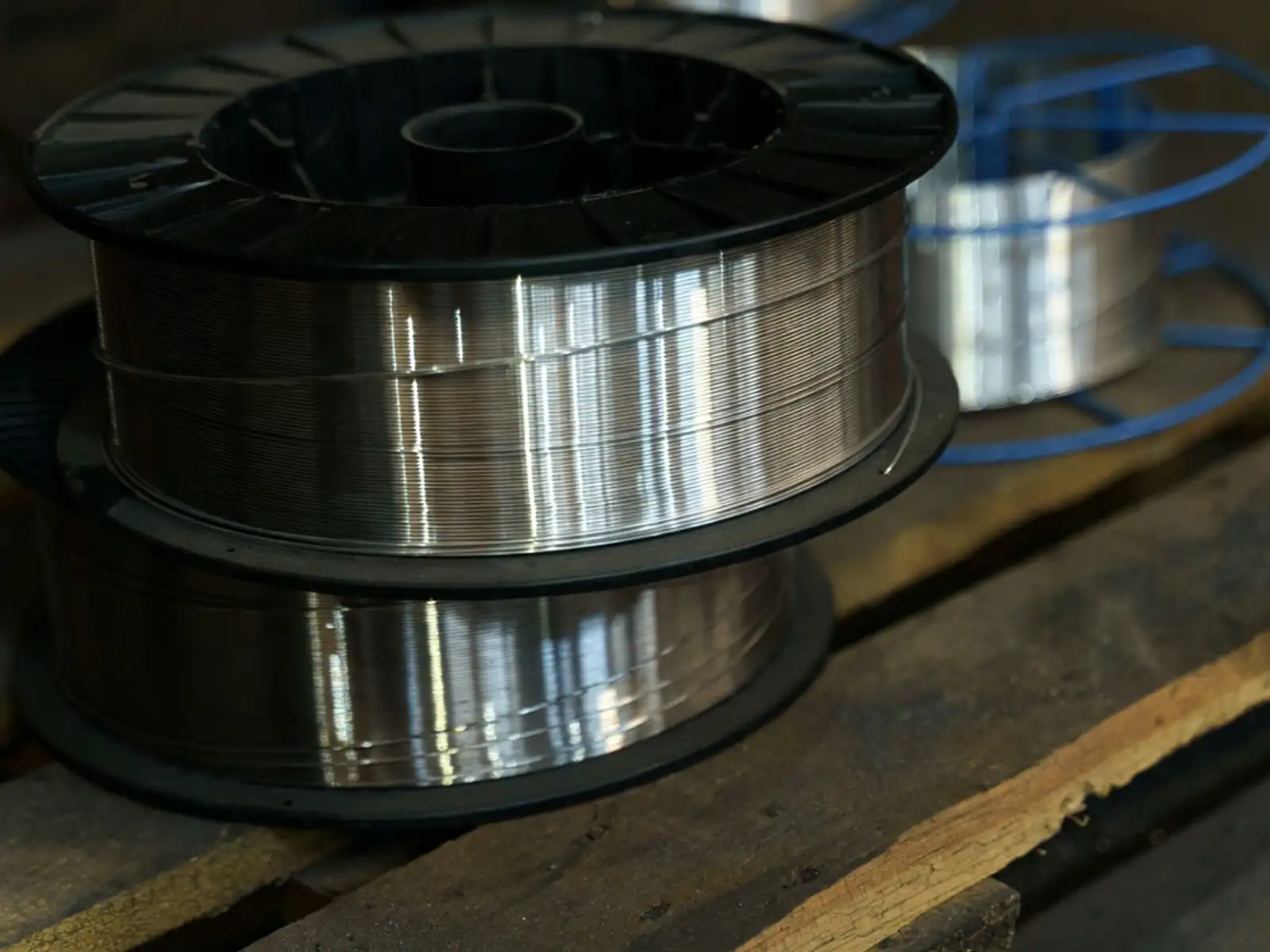
Gr2 Titanium Wire Gr2 commercially pure titanium wire is widely used for welding chemical pressure vessel components requiring exceptional corrosion resistance and mechanical integrity. Selecting the correct Gr2 titanium wire specification is critical for achieving weld joint strength that meets pressure vessel code requirements. This article provides guidance on Gr2 titanium wire selection for chemical pressure vessel welding applications.
1. Gr2 Titanium Wire Specifications for Pressure Vessels
(1) Chemical Composition Requirements
Gr2 titanium wire for pressure vessel welding must conform to AWS A5.11 ER35 or equivalent with titanium content >= 99.2%, oxygen 0.20-0.25%, iron 0.20-0.35%, and interstitial elements (C, N, H) below strict limits. Impurity control prevents weld zone embrittlement and corrosion sensitivity.
| Parameter | AWS A5.11 ER35 | ASTM B348 Gr2 | Recommendation |
|---|---|---|---|
| Ti Content | >= 99.0% | >= 99.2% | >= 99.2% |
| Oxygen | 0.20-0.30% | 0.20-0.25% | 0.20-0.25% |
| Iron | 0.20-0.40% | 0.20-0.35% | 0.20-0.35% |
| Carbon | <= 0.08% | <= 0.08% | <= 0.08% |
| Hydrogen | <= 0.015% | <= 0.0125% | <= 0.0125% |
(2) Wire Diameter and Form
Gr2 titanium wire diameters of 1.0-4.0 mm are suitable for pressure vessel welding using GTAW (TIG) or GMAW (MIG) processes. Wire straightness <= 3 mm/m and surface finish Ra <= 0.8 micrometers ensure consistent feeding and arc stability.
2. Weld Joint Strength Requirements
(1) Tensile Strength
Pressure vessel weld joints must achieve tensile strength >= 485 MPa (Gr2 base metal minimum per ASTM B348) per ASME Section VIII Div.1. Proper heat input control and shielding gas purity ensure weld metal properties equal to or exceeding base metal.
(2) Bend and Impact Testing
Gr2 titanium wire weld joints must pass guided bend tests (face, root, side bends) with no cracks exceeding 3 mm per ASME Section IX. Charpy impact testing at room temperature requires minimum absorbed energy of 35 J (26 ft-lb) for pressure vessel applications.
3. Welding Process Parameters
GTAW welding of Gr2 titanium wire requires argon shielding gas (99.999% purity) with flow rate of 15-25 L/min and trailing cup protection. Heat input of 1.0-2.5 kJ/mm prevents grain growth and maintains corrosion resistance. Interpass temperature <= 150 degrees C avoids sensitization.
4. Quality Assurance and Inspection
Gr2 titanium wire pressure vessel welds require 100% visual inspection, liquid penetrant testing per ASTM E1444, ultrasonic examination per ASTM E213, and radiographic testing per ASTM E94 for critical service applications. Weld procedure qualification per ASME Section IX validates process parameters.
Conclusion
Selecting the correct Gr2 titanium wire specification is fundamental to achieving pressure vessel weld joint strength meeting code requirements. Proper material selection, welding process control, and quality assurance ensure long-term integrity and corrosion resistance of chemical processing equipment.
FAQ
Q1: What welding process is best for Gr2 titanium wire pressure vessels?
GTAW (TIG) welding provides the highest quality welds for Gr2 titanium wire with proper shielding.
Q2: How does wire diameter affect weld joint strength?
Wire diameter 2.0-3.0 mm optimizes heat input distribution and weld pool control for pressure vessel joints.
Q3: Can Gr2 titanium wire be used for dissimilar metal welding?
Gr2 titanium wire is not recommended for dissimilar metal welding; use ERNiCrMo-4 or equivalent nickel-based filler for titanium-to-steel joints.
Contact Us
Baoji Titanium Valley Titanium Nickel Zirconium Material Processing Co., Ltd. supplies welding-grade Gr2 titanium wire. Contact us at sales@titaniumvalleys.com.
References
[1] ASME BPVC Section IX: Welding and Brazing Qualifications[M]. ASME International, 2023.
[2] AWS A5.11/A5.11M-22. Specification for Titanium and Titanium-Alloy Welding Electrodes and Rods.
[3] ASME BPVC Section VIII: Rules for Construction of Pressure Vessels[M]. ASME International, 2023.