
Gr4 Titanium Bar: Pushing the Limits of Mechanical Strength in Industrial Applications
- Gr4 Titanium Bar
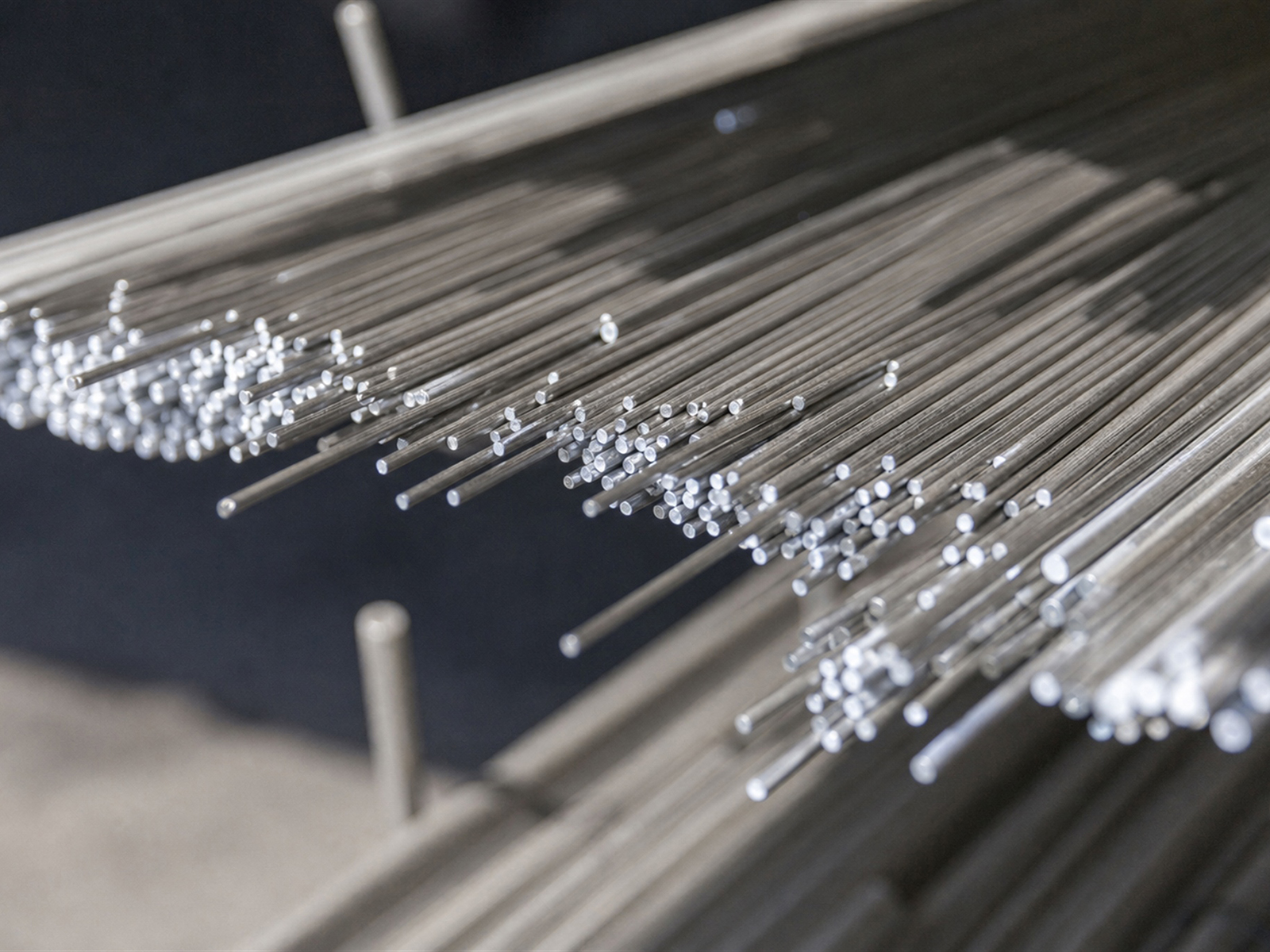
Gr4 Titanium Bar Gr4 titanium bar represents the highest-strength commercially pure titanium grade available, offering a unique combination of enhanced mechanical properties and excellent corrosion resistance. With tensile strengths reaching 485-550 MPa-approximately 40% higher than Gr2-Gr4 titanium bar has become the material of choice for demanding structural applications in aerospace, chemical processing, marine engineering, and medical device manufacturing.
1. Understanding Gr4 Titanium: Composition and Microstructure
(1) Chemical Composition and Strengthening Mechanisms
Gr4 titanium bar contains titanium with oxygen content controlled between 0.20-0.35%, iron content of 0.20-0.40%, and carbon content <= 0.08%. The elevated oxygen level provides solid-solution strengthening through interstitial atom interactions with the alpha-titanium lattice.
| Element | Gr4 Specification | Strengthening Effect |
|---|---|---|
| Ti | Balance | Base matrix |
| O | 0.20-0.35% | Interstitial solid-solution |
| Fe | 0.20-0.40% | Alpha stabilization, grain refinement |
| C | <= 0.08% | Minimal effect |
| N | <= 0.05% | Interstitial strengthening |
(2) Microstructural Characteristics
Gr4 titanium bar typically exhibits an alpha-phase microstructure with equiaxed or lamellar grain arrangements. Hot forging and rolling at 850-950 degrees C produce refined grain structures (ASTM grain size 6-8), contributing to enhanced strength through grain-boundary strengthening (Hall-Petch effect).
2. Mechanical Strength Performance
(1) Tensile and Yield Strength
Gr4 titanium bar achieves minimum tensile strength of 485 MPa and minimum yield strength of 345 MPa per ASTM B348, representing a significant improvement over Gr2 titanium (tensile >= 275 MPa, yield >= 205 MPa). Actual tensile strength typically falls in the range of 520-580 MPa.
(2) Hardness and Wear Resistance
Gr4 titanium bar exhibits hardness of 200-280 HV (approximately 190-260 HB), substantially higher than Gr2 titanium (150-200 HV). This increased hardness translates to improved wear resistance and surface durability.
(3) Fatigue Strength and Cyclic Loading
The fatigue strength of Gr4 titanium bar at 10^7 cycles is approximately 350-400 MPa (70-75% of UTS), compared to 200-250 MPa for Gr2 titanium. This superior fatigue performance makes Gr4 ideal for rotating shafts, spring components, and dynamically loaded structural parts.
3. Applications Requiring Maximum Mechanical Strength
(1) Aerospace Structural Components
Gr4 titanium bar is used for landing gear components, wing spar fittings, engine pylons, and fuselage frames where high strength-to-weight ratio is critical. The material provides approximately 40% higher strength than aluminum alloys (e.g., 7075-T6) at comparable density.
(2) Chemical Processing Equipment
In chemical processing, Gr4 titanium bar serves as shafting, valve stems, pump components, and fastener stock for equipment exposed to corrosive media at elevated temperatures and pressures.
(3) Marine and Offshore Engineering
Gr4 titanium bar is employed for propeller shafts, rudder stocks, mooring hardware, and offshore platform components where resistance to seawater corrosion and high mechanical loads are simultaneously required.
4. Processing and Fabrication Considerations
Gr4 titanium bar can be machined using standard tooling with appropriate speed and feed adjustments. Cutting speeds should be reduced by 20-30% compared to stainless steel. Cold forming requires higher forces than Gr2 titanium, and hot forming should be conducted above 850 degrees C in controlled atmospheres.
5. Quality Control and Certification
Production of Gr4 titanium bar requires rigorous quality control including: chemical analysis by OES, mechanical testing per ASTM E8/E8M, NDE per ASTM E1444 or E213, and microstructural evaluation per ASTM E3 and E45.
Conclusion
Gr4 titanium bar delivers exceptional mechanical strength within the commercially pure titanium family, bridging the gap between CP titanium and alpha titanium alloys. Its combination of high strength, excellent corrosion resistance, and good fabricability makes it optimal for demanding structural applications.
FAQ
Q1: How does Gr4 compare to Ti-6Al-4V (Gr5)?
Gr5 offers significantly higher strength (tensile >= 895 MPa) but Gr4 provides superior ductility (elongation >= 15%) and better corrosion resistance in certain aggressive environments.
Q2: Can Gr4 titanium bar be welded?
Yes, using TIG, MIG, or laser welding with proper inert gas shielding and contamination control.
Q3: What heat treatment improves Gr4 strength?
Solution treating at 800-850 degrees C followed by quenching and aging at 500-600 degrees C can enhance strength by 10-15%.
Contact Us
Baoji Titanium Valley Titanium Nickel Zirconium Material Processing Co., Ltd. manufactures Gr4 titanium bar to ASTM B348 specifications. Contact us at sales@titaniumvalleys.com.
References
[1] Boyer R., Welsch E., Collings E.W. Materials Science and Engineering of Titanium[M]. Wiley-VCH, 2022.
[2] ASTM B348/B348M-23. Standard Specification for Titanium and Titanium Alloy Bars and Billets.
[3] Luetjering G., Williams J.C. Titanium[M]. Springer, 2007.
[4] ISO 2576:2018. Wrought Titanium and Titanium Alloys-Mechanical Properties.