
Detailed Analysis of Ultra-Thin GR1 Titanium Foil Mechanical Properties and Corrosion Resistance
- Gr1 Titanium Foil
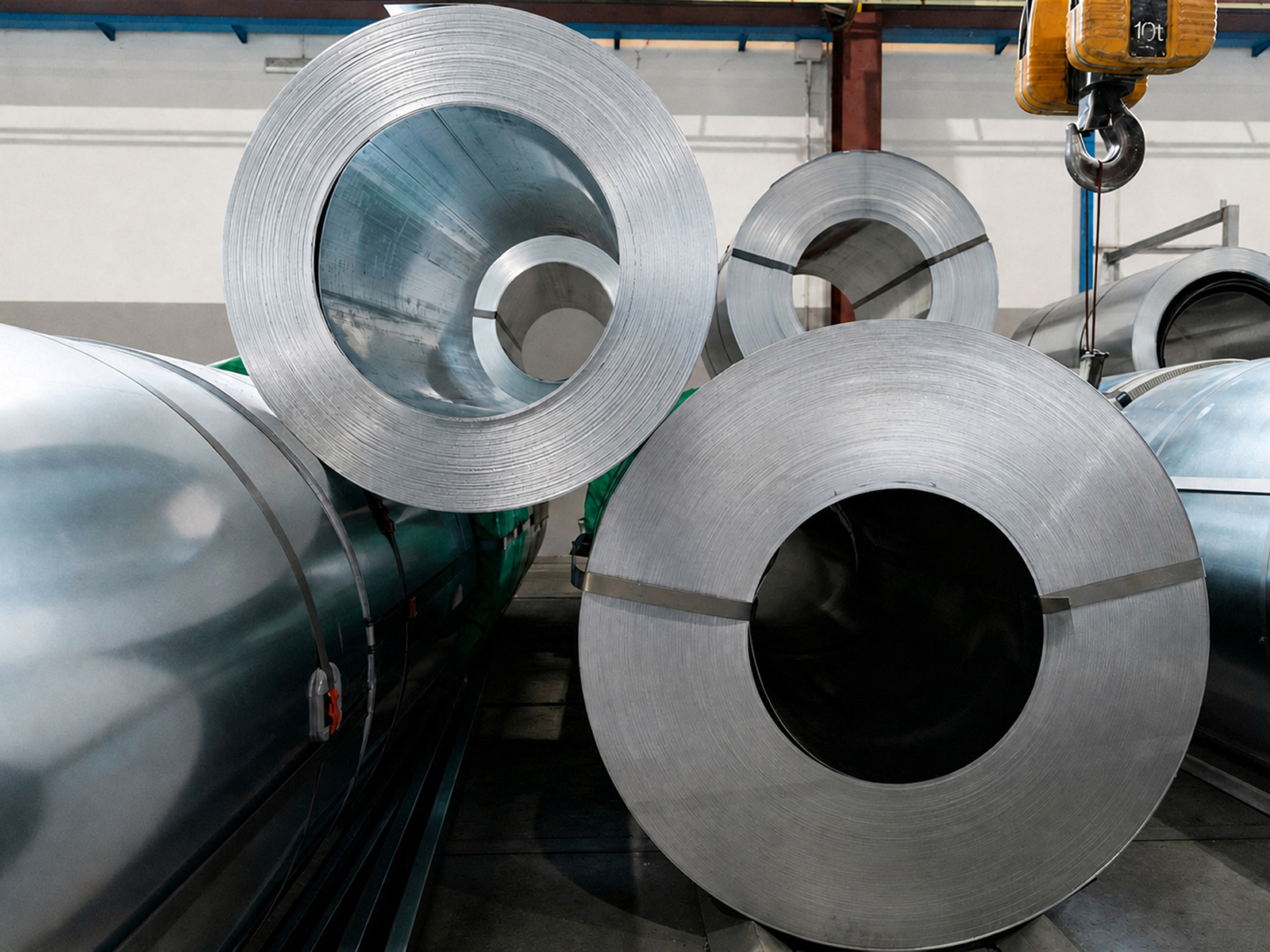
Ultra-thin GR1 titanium foil has become a key material in high-end applications including aerospace, electromagnetic shielding, and new energy, thanks to its superior mechanical properties and corrosion resistance. This industrial pure titanium material with purity of 99.5 percent or greater demonstrates tensile strength of 240 MPa or greater and elongation of 25 percent or greater within the thickness range of 0.02 to 1.0mm, along with long-term protective capability in extreme environments such as strong acids, alkalis, and seawater. Its unique single alpha-phase microstructure endows the material with excellent ductility and formability, while strictly controlled impurity content ensures high consistency of performance across batches. This article provides an in-depth analysis of the mechanical characteristics and corrosion resistance mechanisms of GR1 titanium foil.
Mechanical Property Parameter | GR1 Foil Standard Value | Engineering Significance |
Tensile Strength | >= 240 MPa | Limit capacity to withstand tensile loads |
Yield Strength | >= 170 MPa | Stress threshold for plastic deformation |
Elongation | >= 25% | Indicator of formability margin for processing |
Hardness | 100-150 HB | Resistance to localized indentation deformation |
1. Material Essence and Microstructure of GR1 Titanium Foil
(1) Purity Standards and Composition Control of Industrial Pure Titanium
Temperature Range | Mechanical Property Change | Application Considerations |
Minus 196C to Room Temperature | Strength increased by 10-15%, ductility maintained | Suitable for cryogenic vessels and piping |
Room Temperature to 350C | Stable performance, slight softening | Conventional industrial equipment operating temperature |
350C to 500C | Strength decreased by more than 30% | Oxidation and creep risk must be evaluated |
GR1 titanium foil belongs to the grade with the best ductility among industrial pure titanium, and its chemical composition is strictly specified. Titanium content is maintained at 99.5 percent or greater, oxygen content controlled within 0.18 percent, iron not exceeding 0.20 percent, and interstitial elements such as carbon, nitrogen, and hydrogen limited to 0.08 percent, 0.03 percent, and 0.015 percent respectively. This precise composition directly affects room-temperature ductility and corrosion stability. Oxygen, as an interstitial strengthening element, improves strength when present in appropriate amounts but reduces ductility in excess; iron may form enriched phases at grain boundaries, affecting uniform deformation capability.
(2) Crystallographic Features of Single Alpha-Phase Microstructure
Process Stage | Key Control Parameter | Quality Impact |
Precision Rolling | Roll gap +/- 0.001mm, tension variation < 2% | Thickness tolerance and flatness |
Argon Annealing | Temperature +/- 2C, dew point < -40C | Grain size and property uniformity |
Surface Cleaning | Dyne value 44 +/- 2, roughness Ra < 0.4um | Secondary processing compatibility |
GR1 titanium foil exhibits an alpha-phase microstructure with hexagonal close-packed crystal structure at room temperature. This single-phase state avoids performance fluctuations caused by phase transformations, endowing the material with stable mechanical response. Grain size is typically controlled within the 10 to 30 micrometer range; fine and uniform grains contribute to improved yield strength and fatigue life. Through continuous annealing under argon protection with temperature accuracy of plus or minus 2 degrees Celsius, recrystallized microstructure is homogenized, eliminating residual stresses and texture inhomogeneity from cold rolling.
(3) Breakthroughs in Manufacturing Challenges at Ultra-Thin Specifications
Reducing titanium foil thickness to the 0.02 to 1.0mm range requires overcoming technical barriers including springback, loss of flatness control, and performance variation. Multi-pass rolling on a 750mm 20-roll precision finishing mill achieves thickness tolerance control within plus or minus 0.001mm. Hydraulic automatic gauge control systems and flatness monitors provide real-time surveillance, ensuring flatness is maintained in ultra-thin strip of 350 to 670mm width during high-speed rolling. Combined ultrasonic and alkaline cleaning processes stabilize surface tension at 44 dynes per cm, creating ideal interface conditions for subsequent welding, coating, and other secondary processing operations.
2. In-Depth Analysis of Mechanical Performance Indicators
(1) Tensile Properties and Plastic Deformation Behavior
The high elongation of GR1 titanium foil stems from cooperative activation of prism and pyramidal slip systems in the HCP crystal structure. During room-temperature tensile testing, the material exhibits continuous yielding characteristics with no distinct yield plateau, and a strain hardening exponent of approximately 0.15 to 0.20. This progressive hardening behavior enables excellent springback control in forming processes such as stamping and bending.
(2) Fatigue Strength and Crack Propagation Resistance
The fatigue limit of ultra-thin titanium foil under cyclic loading is approximately 50 to 60 percent of tensile strength. Grain boundary characteristics of the alpha single-phase microstructure determine that cracks preferentially propagate along intergranular paths, but fine grain structure effectively prolongs crack initiation period. By controlling annealing temperature within the 650 to 750 degrees Celsius range, the balance between grain size and dislocation density can be adjusted to achieve optimal matching of fatigue life and ductility. This characteristic is critical for components subjected to vibratory loads such as electronic shielding enclosures and fuel cell bipolar plates.
(3) Low-Temperature and High-Temperature Mechanical Stability
The hexagonal close-packed structure of titanium does not undergo ductile-to-brittle transition at low temperatures. GR1 titanium foil retains good toughness even at liquid nitrogen temperature of minus 196 degrees Celsius. At the high-temperature end, mechanical properties remain stable below 350 degrees Celsius, but strength declines rapidly above 500 degrees Celsius. It should be noted that prolonged exposure above 300 degrees Celsius causes oxide layer thickening; while the oxide film itself provides protection, excessive thickness leads to embrittlement.
3. Core Mechanisms of Corrosion Resistance
(1) Self-Healing Mechanism of the Passive Film
The exceptional corrosion resistance of GR1 titanium foil originates from a dense TiO2 passive film that spontaneously forms on its surface. This oxide layer, only 2 to 7 nanometers thick, remains stable across a pH range of 0 to 12. Even when mechanically scratched and damaged, it instantaneously regenerates in oxygen-containing environments. The amorphous structure of the film blocks diffusion channels for corrosive media toward the substrate, enabling long-term protection in highly corrosive media such as boiling nitric acid, aqua regia, and wet chlorine gas. This performance significantly surpasses that of 304 and 316 stainless steel in chloride ion environments.
(2) Tolerance Capacity in Typical Corrosive Environments
Marine and Salt Spray Environments: After immersion in 3.5 percent NaCl solution for 1,000 hours, GR1 titanium foil exhibits a corrosion rate below 0.0025mm per year, only one ten-thousandth that of carbon steel. Although chloride ions in seawater can destroy the passive films of most metals, they have negligible effect on the TiO2 layer. Titanium foil linings for coastal equipment eliminate localized failure modes such as pitting and crevice corrosion.
Acid Medium Protection: For reducing acids such as sulfuric acid and hydrochloric acid, titanium tolerance depends on the presence of oxidizers. In dilute acids containing trace amounts of oxidizing ions such as Fe3+ and Cu2+, titanium foil demonstrates excellent stability. However, in oxidizer-free concentrated hydrochloric acid (above 10 percent) or moderately concentrated sulfuric acid (40 to 60 percent), corrosion rates increase significantly, requiring evaluation based on specific operating conditions.
(3) Electrochemical Corrosion Behavior Characteristics
The electrochemical nobility of titanium gives it a significant corrosion potential advantage. In galvanic couples with less noble metals, titanium acts as a cathode and is protected from corrosion, but care must be taken to avoid accelerated corrosion of the anodic partner. Electrochemical impedance spectroscopy reveals that the passive film resistance of GR1 titanium foil exceeds 10 ohm-cm2 in neutral solutions, indicating extremely low charge transfer rates. In aggressive environments containing fluoride ions, the passive film is locally dissolved, leading to accelerated corrosion. Therefore, titanium should not be used in hydrofluoric acid or fluoride-containing media regardless of concentration.
4. Advanced Applications Enabled by Ultra-Thin GR1 Titanium Foil
(1) Electromagnetic Shielding for Precision Electronics
The combination of low resistivity at 42 microhm-centimeters and thin gauge as low as 0.02mm makes GR1 titanium foil ideal for electromagnetic shielding in the 30 to 1,000 MHz frequency band, providing shielding effectiveness of 35 to 55 dB. Wide-width configurations eliminate the need for overlapping seams, preventing signal leakage at joints. Continuous conductive shielding layers formed through adhesive bonding remove signal leakage risks inherent in traditional solutions.
(2) Key Components in Electrochemical Energy Systems
Bipolar plates for proton exchange membrane fuel cells require concurrent conductivity, corrosion resistance, and lightweight properties. GR1 titanium foil remains stable in acidic environments of pH 2 to 3 at operating temperatures of 80 to 90 degrees Celsius. Contact resistance can be reduced below 10 mhm-cm2 through surface nitriding or carbiding treatments. Wide-format seamless supply enables individual bipolar plate areas exceeding 500 square centimeters, reducing the number of cells in series within a stack and improving system power density. In battery tab applications, 0.02mm titanium foil is laser-welded to aluminum enclosures, satisfying high-current transmission requirements while avoiding galvanic corrosion between dissimilar metals.
(3) Anti-Corrosion Linings for Chemical Equipment
In chlor-alkali industry electrolytic cell anodes and hydrometallurgical leaching tank linings, long-term exposure to high-concentration chloride ions and strong oxidants occurs. Traditional rubber linings face aging and delamination risks, whereas titanium foil bonded to carbon steel substrates through explosion bonding or roll bonding forms bimetallic composite plates. The 0.5 to 1.0mm titanium layer provides durable protection while the carbon steel layer bears structural loads, with comprehensive costs at only one-third of all-titanium equipment. Large-format supply reduces weld count, with each weld eliminated representing one fewer potential corrosion point.
5. Conclusion
Ultra-thin GR1 titanium foil achieves the integration of excellent mechanical properties and long-term corrosion resistance through strict composition control, precision rolling processes, and scientific heat treatment regimes. Its successful applications in aviation, electronics, energy, and chemical industries validate the value of material design and process innovation. With continuous advancement in manufacturing technology, titanium foil thickness tolerance, surface quality, and batch stability will further improve, providing the material foundation for performance leaps in more high-end equipment.
FAQ
Q1: What are the performance differences between GR1 and GR2 titanium foil?
GR1 titanium foil has lower oxygen content (up to 0.18 percent) and superior ductility compared to GR2 (oxygen content up to 0.25 percent), with elongation reaching above 25 percent, making it more suitable for deep drawing, complex bending, and other cold forming processes. GR2 has slightly higher strength but somewhat lower ductility; both have comparable corrosion resistance. Selection depends on specific forming requirements.
Q2: What precautions should be taken when welding ultra-thin titanium foil?
Titanium has low thermal conductivity at 21.9 W per meter-Kelvin, resulting in a narrow heat-affected zone during welding but susceptibility to oxidation. Argon or helium shielding is mandatory, with back-side protective gas also required. Laser welding or electron beam welding allows precise control of heat input to prevent burn-through. Prior to welding, surfaces must be thoroughly cleaned with acetone or specialized degreasing agents; residual oil causes weld porosity.
Q3: How do you inspect whether titanium foil surface quality meets standards?
Visual inspection should reveal no obvious scratches, indentations, or oxidation discoloration. Surface energy testing with a dyne pen should show uniform wetting with 44-dyne ink. Roughness measurement with a profilometer should yield Ra values below 0.4 micrometers. Ultrasonic testing detects internal delamination defects. Third-party testing laboratories can provide full material reports including spectral analysis and tensile testing.
6. Finding a Reliable GR1 Titanium Foil Manufacturer
If you are seeking a high-quality ultra-thin GR1 titanium foil supplier, Titanium Valley provides GR1 titanium foil products and customized solutions compliant with international standards. We strictly control raw material purity, precision rolling processes, heat treatment procedures, and surface quality to ensure titanium foil possesses superior mechanical properties, stable corrosion resistance, and reliable dimensional accuracy, meeting the demands of high-end applications in aerospace, electronic shielding, new energy, and chemical anti-corrosion. Whether you require different thickness specifications, special surface treatments, precision machining services, or material test reports, we can provide professional support.
References
Zhao Yongqing, Qu Henglei. Organization, Properties and Applications of Industrial Pure Titanium. Beijing: Metallurgical Industry Press, 2018.
Li Miaoquan, Wang Kuelu. Plastic Forming Technology of Titanium Alloys. Beijing: National Defense Industry Press, 2021.
Zhang Xiyan, Zhao Yongqing, Bai Chenguang. Titanium Alloys and Their Applications. Beijing: Chemical Industry Press, 2005.
Liu Jing. Applications and Research Progress of Titanium and Titanium Alloy Materials in the Aerospace Field. Materials Review, 2019, 33(1): 1-8.