
Why Is Nickel 200 Nickel Wire Crucial in Synthetic Fiber Production
- Nickel 200 Nickel Wire
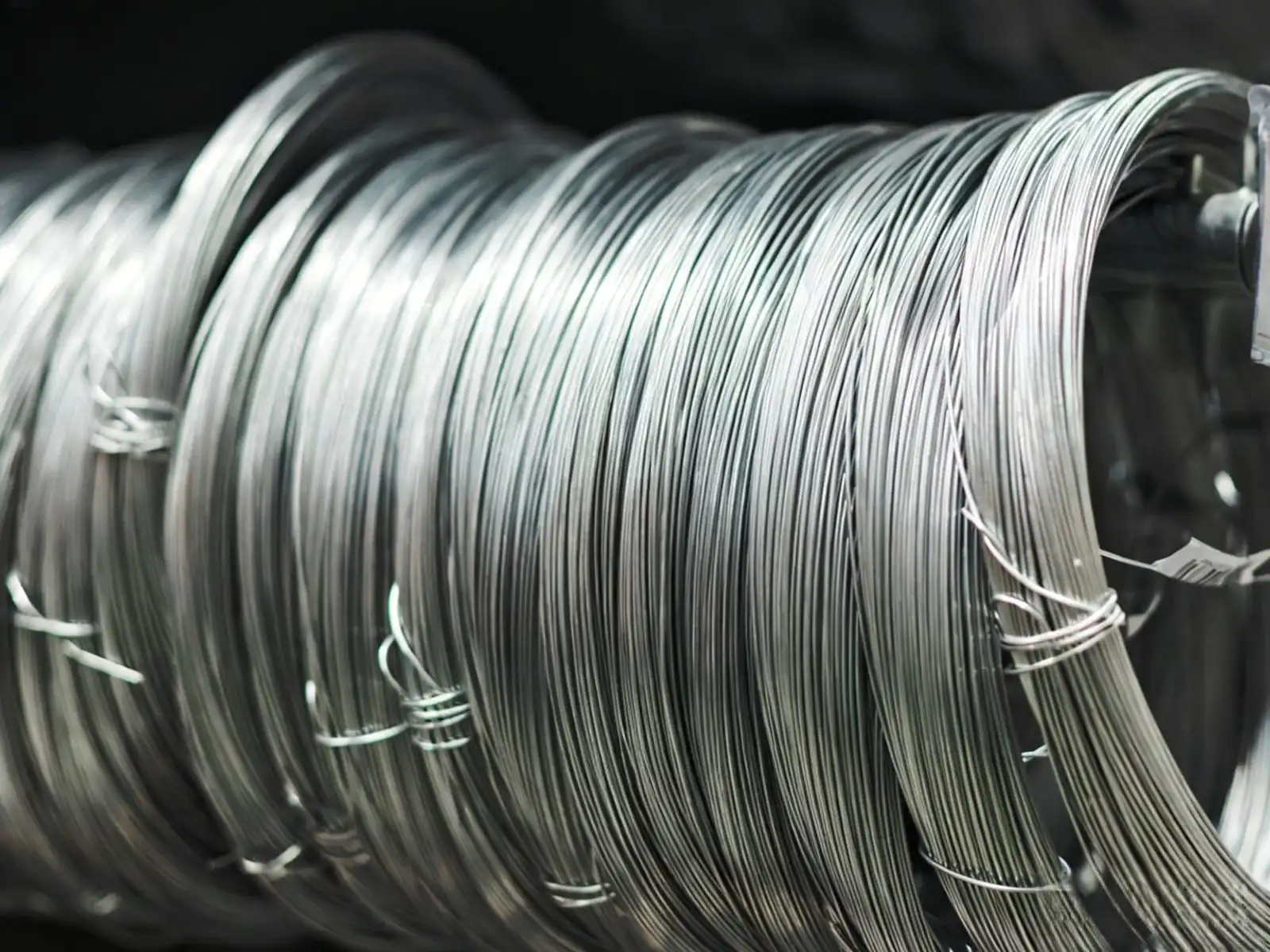
Synthetic fiber production involves complex operating conditions characterized by high temperatures, high pressures, and corrosive chemical media. The corrosion resistance and mechanical stability of equipment materials directly affect production efficiency and product quality. Nickel 200 nickel wire (Ni ≥ 99.0%), with its excellent alkali corrosion resistance, good electrical conductivity, and high-temperature strength, plays an irreplaceable role in multiple key stages of synthetic fiber production. From spinning assemblies to heating elements, from guide rollers to filters, Nickel 200 nickel wire provides reliable material assurance for synthetic fiber manufacturing. This article explores its importance through three aspects: specific applications in synthetic fiber production, performance advantages, and selection recommendations.
1. Key Applications of Nickel 200 Nickel Wire in Synthetic Fiber Production
(1) Spinning Assemblies
Spinning assemblies in synthetic fiber production (spinnerets, distribution plates, filter screens, etc.) must withstand the scouring effect and chemical erosion of high-temperature polymer melts. Filter screens made from Nickel 200 nickel wire offer excellent corrosion resistance and mechanical strength, effectively intercepting impurities in polymers and ensuring the stability of the spinning process and uniformity of fiber quality.
(2) Heating Elements
Nickel 200 nickel wire possesses a relatively high resistivity and good high-temperature oxidation resistance, making it an ideal material for spinning heating elements. At operating temperatures of 200–400 °C, Nickel 200 nickel wire can operate stably for extended periods without oxidation spalling or resistance drift.
(3) Guide Rollers and Tension Control Devices
Guide rollers and tension control springs manufactured from Nickel 200 nickel wire maintain stable elasticity and corrosion resistance under high-speed operating conditions. The non-magnetic property of Nickel 200 also helps reduce electromagnetic interference with precision control systems.
(4) Agitators in Chemical Treatment Tanks
Post-treatment processes in synthetic fiber production (such as oiling, water washing, and heat setting) require the use of chemical solutions. Agitator blades and drive shafts made from Nickel 200 nickel wire exhibit excellent corrosion resistance in acidic, alkaline, or saline solutions.
Application Specifications Summary
Application Component | Nickel 200 Wire Specification | Key Performance Requirements | Expected Service Life |
Spinning Filter Screen | φ0.1–0.5 mm | Corrosion Resistance + High Strength | 5–8 years |
Heating Element | φ0.5–3.0 mm | Electrical Conductivity + Heat Resistance | 8–10 years |
Guide Roller Spring | φ1.0–5.0 mm | Elasticity + Corrosion Resistance | 5–10 years |
Agitator Blade | φ3.0–10.0 mm | Chemical Corrosion Resistance | 8–15 years |
2. Performance Advantages of Nickel 200 Nickel Wire
(1) Alkali Corrosion Resistance
Many chemical treatment liquids in synthetic fiber production are alkaline (e.g., NaOH solutions used for polyester deliquescent treatment). The corrosion rate of Nickel 200 in alkaline solutions is less than 0.01 mm/year, significantly outperforming stainless steel and carbon steel.
(2) High-Temperature Strength
Nickel 200 retains 80–85% of its room-temperature strength even at temperatures below 400 °C, ensuring structural stability of heating elements and high-temperature components.
(3) Good Electrical Conductivity
With a resistivity of approximately 6.84 × 10⁻⁸ Ω·m, Nickel 200 nickel wire provides stable resistance values and uniform heat distribution for heating elements in spinning equipment requiring precise temperature control.
(4) Non-Magnetic Property
As a non-magnetic material, Nickel 200 does not interfere with the precision electronic control systems used in synthetic fiber production.
Performance Comparison
Performance Indicator | Nickel 200 Nickel Wire | 316L Stainless Steel | Inconel 600 |
Resistivity (10⁻⁸ Ω·m) | 6.84 | 74 | 100 |
Alkali Corrosion Resistance | Excellent | Good | Good |
High-Temp. Strength (400 °C) | 80–85% | 70–75% | 90–95% |
Price Coefficient | 1.0 | 0.3 | 2.5 |
3. Selection and Maintenance Recommendations
(1) Diameter Selection
For filter screens: 0.1–0.5 mm; for heating elements: 0.5–3.0 mm; for structural components: 3.0–10.0 mm.
(2) Temper State Selection
Annealed condition (M temper) is suitable for components requiring complex forming; cold-worked condition (Y temper) is suitable for components requiring high strength.
(3) Maintenance and Care
Regularly inspect Nickel 200 nickel wire components for signs of corrosion and mechanical degradation, and replace them promptly if abnormalities are detected. When cleaning, use neutral detergents and avoid chlorine-containing bleach.
Compatibility with Synthetic Fiber Types
Synthetic Fiber Type | Production Temperature | Nickel 200 Suitability | Notes |
Polyester (PET) | 280–300 °C | ★★★★★ | Heat-resistant + Alkali-resistant |
Nylon (PA) | 260–280 °C | ★★★☆☆ | Organic acid resistant |
Acrylic (PAN) | 200–250 °C | ★★★★★ | Oxidizer resistant |
Polypropylene (PP) | 200–230 °C | ★★★☆☆ | Chemical resistant |
4. Conclusion
With its comprehensive performance advantages, Nickel 200 nickel wire plays a crucial role in synthetic fiber production. From spinning assemblies to heating elements, from guiding devices to chemical treatment tanks, Nickel 200 nickel wire provides solid material assurance for stable production and high-quality output in synthetic fiber manufacturing. Proper selection and maintenance of Nickel 200 nickel wire equipment can effectively improve production efficiency, reduce operational costs, and enhance product quality.
FAQ
Q1: What is the service life of Nickel 200 nickel wire in synthetic fiber production?
Under normal operating conditions, the service life of Nickel 200 nickel wire components is typically 5–10 years. The specific lifespan depends on factors such as operating temperature, medium corrosivity, and mechanical load.
Q2: Can Nickel 200 nickel wire be welded?
Yes. Nickel 200 nickel wire can be welded using conventional processes such as TIG, MIG, and resistance welding. Welding should be performed using filler materials of the same composition.
Q3: What is the cost-effectiveness of Nickel 200 nickel wire?
Although the initial cost of Nickel 200 nickel wire is higher than that of stainless steel, its exceptionally long service life and minimal maintenance requirements significantly reduce the total cost of ownership. In highly corrosive synthetic fiber production environments, the economic advantage of Nickel 200 nickel wire becomes even more pronounced.
Finding a Reliable Nickel 200 Nickel Wire Supplier
Baoji Titanium Valley Titanium-Nickel-Zirconium Material Processing Co., Ltd. is a specialized manufacturer of high-end rare metal products. Equipped with an Italian Danieli rolling production line, the company produces over 500 metric tons of nickel wire annually and offers full-size customization along with EN 10204 3.1 certification. Contact us now for technical support and quotation:
Email: sales@titaniumvalleys.com
References
- ASTM International. ASTM B90-21 Standard Specification for Nickel Sheet, Strip, and Foil[S]. West Conshohocken: ASTM International, 2021.
- China Chemical Fiber Industry Association. Synthetic Fiber Production Technology Manual[M]. Beijing: Chemical Industry Press, 2020.