
How Does Heat Treatment Affect the Properties of GR1 Titanium Wire?
- Gr1 Titanium Wire
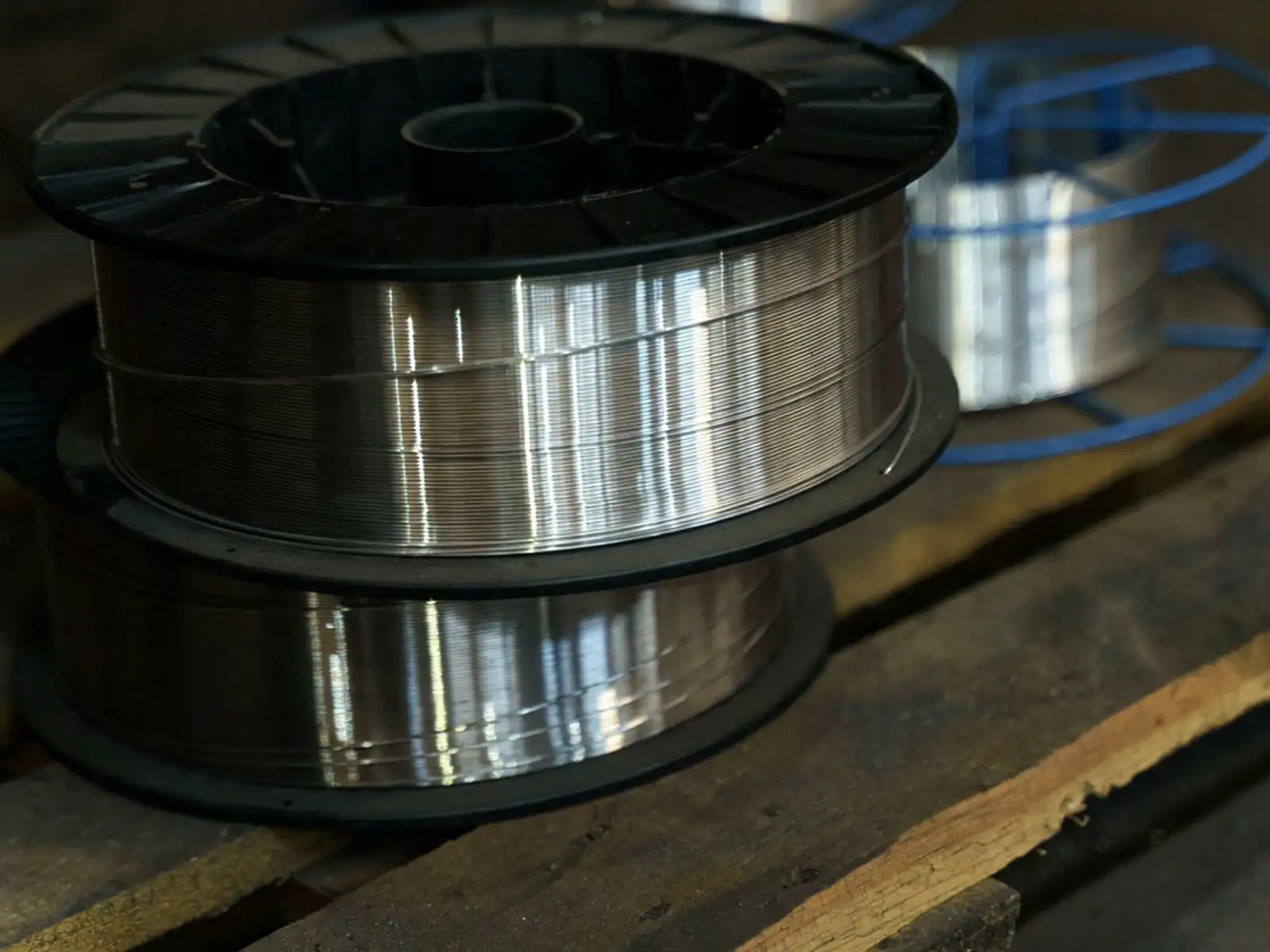
Heat treatment significantly influences the mechanical properties, formability, and application performance of GR1 titanium wire by altering its microstructural organization. Annealing eliminates internal stresses generated during cold working, enabling the wire to achieve superior ductility with tensile strength maintained above 240 MPa and elongation reaching 20 percent or greater, suitable for precision forming processes requiring deep drawing and bending. In contrast, half-hard and hard temper states adjust grain size and dislocation density through controlled cold working deformation and subsequent treatment, increasing wire strength to 480-600 MPa while correspondingly reducing ductility. Heat treatment temperature, holding duration, and cooling method collectively determine the final material characteristics.
Parameter | Annealed State | Half-Hard State | Hard State |
Annealing Temperature | 650-750C | N/A (cold worked) | N/A (cold worked) |
Holding Time | 30-90 min | N/A | N/A |
Cooling Method | Furnace or controlled | Air cool after CW | Air cool after CW |
Surface Finish | Pickled or bright | As-drawn | As-drawn |
1. Fundamental Principles of Heat Treatment and Microstructural Changes in GR1 Titanium Wire
(1) Recrystallization Mechanism During Annealing
After multi-pass cold drawing, GR1 titanium wire accumulates extensive dislocations and lattice distortion, causing work hardening and reduced ductility. Annealing temperature is typically controlled within the 650 to 750 degrees Celsius range with holding for 30 to 90 minutes. During this period, deformed grains begin to rearrange and form fine equiaxed grains. The recrystallization process releases stored deformation energy, eliminating work hardening effects and restoring good ductility. Cooling rate significantly affects the final microstructure: furnace cooling yields uniform fine grains, while air cooling retains partial substructures that moderately increase strength.
(2) Relationship Between Grain Size and Mechanical Properties
Grain refinement is the key pathway to improving comprehensive properties of titanium wire. For every 50 degrees Celsius increase in heat treatment temperature, average grain size grows by approximately 15 to 25 percent, with corresponding decrease in yield strength. After annealing at 700 degrees Celsius, GR1 titanium wire exhibits grain diameter of approximately 20 to 30 micrometers with stable tensile strength of 340 to 360 MPa. At 800 degrees Celsius, grains coarsen beyond 50 micrometers, reducing strength without significant improvement in ductility. Controlling grain size within an appropriate range achieves optimal balance between strength and toughness.
(3) Diffusion Behavior of Oxygen and Nitrogen Elements
Oxygen content in GR1 titanium wire is controlled at 0.18 percent or less, and nitrogen at 0.03 percent or less. These interstitial elements diffuse and redistribute at elevated temperatures. Improper heat treatment may cause oxygen and nitrogen segregation, producing local hardening effects that reduce material uniformity. Vacuum annealing or protective atmospheres such as argon effectively suppress surface oxidation and maintain wire purity. Surface color changes after heat treatment, ranging from golden yellow to blue-purple to gray-white, reflect oxide layer thickness and must be removed through pickling or mechanical polishing to ensure surface quality meets precision application requirements.
2. Quantitative Impact of Different Heat Treatment States on GR1 Titanium Wire Properties
Note: Yield strength values for half-hard and hard temper states are typical reference values; specific values depend on cold working deformation amount and should be confirmed by actual testing.
(1) Plasticity Advantage of Annealed Wire
Annealed GR1 titanium wire offers the best ductility, suitable for complex geometric shape forming. Elongation exceeding 20 percent means the wire resists fracture during stretching, bending, and torsion, tolerating multiple cold working passes without intermediate annealing. This characteristic is particularly important in manufacturing seawater desalination filter screens and precision electronic shielding enclosures, enabling continuous weaving and fine forming. Surface roughness Ra can be controlled within 0.4 to 0.8 micrometers, meeting high cleanliness requirements.
(2) Balance of Strength and Toughness in Half-Hard Wire
Half-hard state is achieved through controlled cold working deformation and light annealing, increasing strength by approximately 15 to 20 percent while retaining moderate ductility. Wire in this state is suitable for manufacturing components requiring elastic recovery, such as spring wires that maintain original shape after repeated deformation. Corrosion-resistant elastic seals in chemical equipment and anti-corrosion fasteners in marine engineering commonly employ half-hard titanium wire, balancing strength and deformability.
(3) High-Strength Applications of Hard-Temper Wire
Hard-temper wire undergoes extensive cold working without annealing, achieving maximum dislocation density and peak strength with significantly reduced ductility. This state is suitable for structural components bearing direct stress, including lightweight support rods in aerospace and high-strength connecting components in deep-sea exploration equipment. Hard-temper wire is difficult to machine and requires precision cutting and grinding to avoid micro-crack formation. Heat treatment hardness gradient control is a key technical indicator ensuring performance consistency across production batches.
3. Heat Treatment Process Parameter Optimization and Performance Control Strategies
(1) Coordinated Control of Temperature and Time
Heat treatment temperature and holding time exhibit synergistic effects requiring precise adjustment based on wire diameter and initial state. Fine-diameter wire (1.0mm or less) conducts heat rapidly, allowing holding time reduced to 15 to 30 minutes; coarse-diameter wire (3.0mm or greater) requires extension to 60 to 90 minutes to ensure complete core annealing. Temperature fluctuation should be controlled within plus or minus 5 degrees Celsius to avoid local overheating causing microstructural non-uniformity. Intelligent control systems with multi-zone gradient heating improve heat treatment efficiency and consistency.
(2) Atmosphere Protection and Surface Quality Management
Titanium oxidizes readily at elevated temperatures, forming golden or dark gray oxide layers that impair welding performance and surface finish. Vacuum levels at or below 10 to the negative third power pascals or high-purity argon (purity 99.99 percent or greater) protection effectively isolates oxygen. After annealing, wire requires pickling with hydrofluoric acid and nitric acid mixture or electrolytic polishing to remove oxide layers and restore silver-white metallic luster. Super-bright wire with surface roughness Ra of 0.2 micrometers or less is achieved through roller die drawing and precision polishing, suitable for high-end electronic product decorative components.
(3) Impact of Cooling Rate on Residual Stress
Cooling rate after annealing directly determines residual stress distribution within the wire. Furnace cooling produces the lowest residual stress but longest cycle time. Controlled air cooling offers a practical compromise, maintaining acceptable stress levels while improving production throughput. For specialized applications requiring minimal distortion, step-cooling through intermediate temperature holds reduces thermal gradients and prevents warping.
4. Application-Specific Heat Treatment Requirements
(1) Aerospace Lightweight Structural Components
Aerospace applications demand titanium wire with consistent mechanical properties and high reliability. Heat treatment for aerospace-grade GR1 wire focuses on achieving uniform grain structure and minimizing surface defects. Annealing at precisely controlled temperatures ensures repeatable properties across production lots. Surface quality after treatment must meet strict aerospace specifications for fatigue resistance and damage tolerance.
(2) Medical Device Lead Wire Applications
Titanium wire for pacemaker leads must comply with ISO 5832-2 and ASTM F136 medical standards. Annealing temperature is strictly controlled below 700 degrees Celsius to prevent grain coarsening and impurity segregation. Post-treatment surfaces must be free of oxide residue, with roughness Ra at or below 0.4 micrometers to minimize bacterial adhesion risk. Vacuum melting ensures titanium purity of 99.5 percent or greater with extremely low impurity content of iron, carbon, and nitrogen, exhibiting no cytotoxicity or sensitization. Each batch is accompanied by EN 10204-3.1 material certification with traceable heat number and heat treatment records.
(3) Corrosion Resistance Enhancement for Marine Engineering
Seawater piping and deep-sea exploration structural components require titanium wire to resist chloride ion erosion and salt spray corrosion over extended periods. The annealed wire surface forms a dense TiO2 passive film approximately 2 to 5 nanometers thick, preventing corrosive medium penetration. Half-hard wire maintains better passive film integrity while retaining elevated strength, suitable for applications demanding both load-bearing and corrosion resistance. Wire immersed in 3.5 percent NaCl solution for 5,000 hours shows no pitting, with corrosion resistance exceeding that of 316L stainless steel by more than 10 times. Operating temperature range spans from minus 253 degrees Celsius (liquid hydrogen and oxygen) to 300 degrees Celsius for continuous service, with short-term capability up to 450 degrees Celsius.
5. Full-Process Quality Control and Performance Stability Assurance
(1) Automated Production and Batch Consistency
Industry-advanced continuous rolling production lines with automation rates exceeding 90 percent feature intelligent control from heating and rolling through annealing to inspection. Induction heating systems precisely regulate billet temperature to 1,200 degrees Celsius with error within plus or minus 3 degrees Celsius. Reversible mobile billet mills stabilize initial rolling of large titanium ingots. Short-stress mills achieve horizontal and vertical alternating rolling with dimensional accuracy of plus or minus 0.2mm. Online shear machines perform precision cut-to-length processing with accurate head and tail treatment. Finishing and refining units complete straightening, coiling, peeling, polishing, and online inspection. Over one thousand process points with closed-loop control require no manual intervention, ensuring stable performance across every batch.
(2) Full-Process Inspection and Traceability System
Incoming raw materials undergo spectral analysis to confirm chemical composition compliance. Each cold drawing pass is inspected for diameter, ovality, and surface quality. Post-heat treatment sampling verifies mechanical properties, hardness, and metallographic structure. Finished products receive 100 percent dimensional inspection with sampling for tensile, bend, and corrosion testing. Complete test reports and material certificates are provided, annotated with heat number, heat treatment parameters, and performance data, supporting full traceability. Ovality of 0.15 to 0.2mm (market standard 0.3mm), straightness at or below 2mm per 1,000mm, reduced peeling and wear, and improved yield rate of 15 to 20 percent.
(3) Customized Processing Capability and Technical Support
Annual capacity of 5,000 metric tons supports large-volume supply for aerospace, electronics, new energy, and chemical industries. Customization available for diameter, tolerance, temper state (annealed, half-hard, hard), and form (straight wire, coiled wire). Surface treatments include cleaning, degreasing, annealing, pickling, bright finish, matte finish, anodizing in popular colors such as space gray and silver, or functional coatings. Full-process customized processing from raw material to finished product ensures high precision, superior performance, and stable supply. Technical teams provide process optimization recommendations, resolving customer challenges in precision forming, welding, and corrosive environment applications.
6. Conclusion
Heat treatment substantially alters the mechanical properties, formability, and application adaptability of GR1 titanium wire through microstructural regulation. Annealed state provides optimal ductility, half-hard state balances strength and toughness, and hard state achieves maximum strength. Precise control of temperature, time, and atmosphere protection is essential for obtaining stable properties. With advanced equipment and full-process quality management, reliable GR1 titanium wire products can be supplied for global high-end manufacturing.
Heat Treatment State | Tensile Strength (MPa) | Yield Strength (MPa) | Elongation (%) | Typical Application |
Annealed | 340-380 | Lower | >= 20 | Deep drawing, complex forming |
Half-Hard | 400-500 | Moderate | 10-15 | Springs, elastic seals |
Hard Temper | 480-600 | Higher | 5-10 | Load-bearing structural components |
FAQ
Q1: How much does the strength of GR1 titanium wire decrease after annealing?
Annealing reduces wire tensile strength to 340-380 MPa, but elongation increases significantly to above 20 percent, markedly improving ductility. This state is suitable for applications requiring deep deformation and complex forming, where reduced strength is exchanged for superior formability.
Q2: How do you determine whether titanium wire heat treatment is adequate?
Observing grain morphology under a metallographic microscope, equiaxed fine grains with uniform distribution indicate sufficient annealing. Hardness testing should yield values within 140-180 HV. Tensile testing with elongation at or above 20 percent confirms adequacy. Silver-white surface without oxide layer and resistance to cracking at 180-degree bend are intuitive judgment criteria.
Q3: What special requirements exist for heat treatment of ultra-fine wire (0.3mm or less)?
Ultra-fine wire has small thermal capacity and heats rapidly, requiring low-temperature rapid annealing at 600 to 650 degrees Celsius for 15 to 30 minutes to avoid over-annealing that results in excessively low strength. Vacuum or high-purity argon protection is essential to prevent surface oxidation of fine-diameter wire. Step-wise cooling controls deformation and residual stress.
Obtain Professional Support Immediately
As a professional manufacturer of high-end titanium, nickel, and zirconium materials processing, we operate world-class production lines and technical teams. Whether you require customized GR1 titanium wire specifications or seek application technical support, we provide complete solutions. Contact us: sales@titaniumvalleys.com
References
Liu Zhenglin. Heat Treatment Technology of Titanium and Titanium Alloys. Beijing: Metallurgical Industry Press, 2015.
Wang Xiangdong, et al. Titanium Handbook. Beijing: Chemical Industry Press, 2014.
Zhao Yongqing, et al. Titanium Alloy Materials and Heat Treatment Technology. Beijing: Science Press, 2017.
National Standard of the People Republic of China. GB/T 3621-2007 Titanium and Titanium Alloy Plates. Beijing: Standards Press of China, 2007.