
How Is GR4 Titanium Foil Applied in the Aerospace Industry?
- Gr4 Titanium Foil
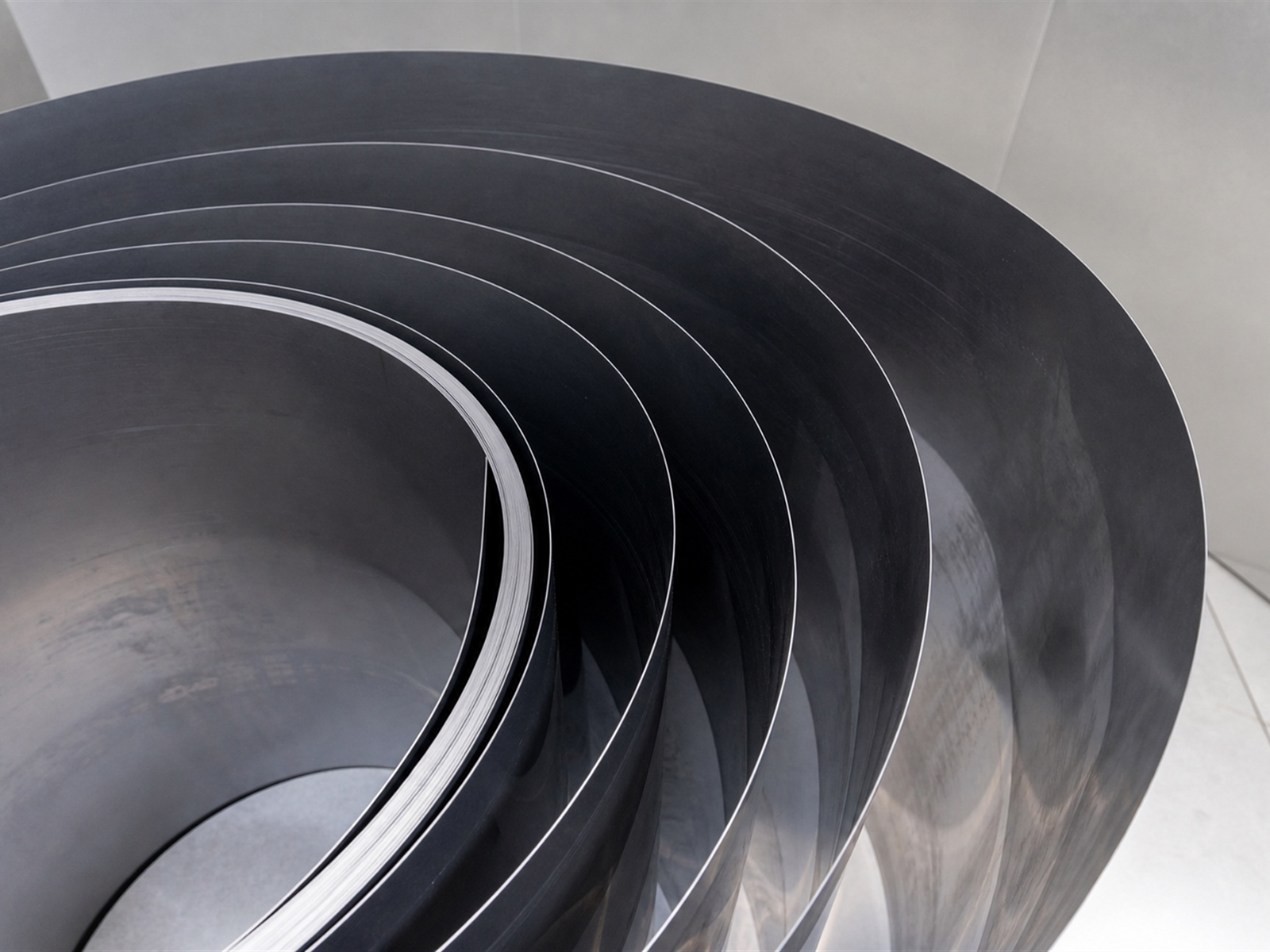
The aerospace industry places extremely demanding requirements on materials: components must withstand extreme mechanical loads and temperature variations while enabling lightweight design to improve fuel efficiency and payload capacity. GR4 titanium foil, the highest-strength grade among commercial pure titanium, has become an essential material in aerospace applications due to its tensile strength of 550 MPa or greater, density of only 4.51 g/cm3 (approximately 40 percent lighter than steel), and excellent corrosion resistance and high-temperature stability.
1. Why Material Characteristics of GR4 Titanium Foil Match Aerospace Requirements
(1) Dual Advantages of High Specific Strength for Structural Lightweighting and Load-Bearing
Aerospace structural components must sustain high loads while maintaining minimum weight. GR4 titanium foil achieves tensile strength above 550 MPa, far exceeding GR1 (275 MPa or greater per ASTM B265) and GR2 (345 MPa or greater) titanium foil, while its density is only approximately 60 percent that of steel. This high specific strength enables 40 percent or greater structural weight reduction under equivalent load conditions, significantly improving the payload-to-weight ratio of aircraft.
Property | GR4 Titanium Foil | Aluminum Alloy 2024 | Stainless Steel 304 | Nickel Alloy Inconel 718 |
Tensile Strength (MPa) | >= 550 | 470 | 515 | 1240 |
Density (g/cm3) | 4.51 | 2.77 | 7.93 | 8.19 |
Specific Strength | High | Very High | Moderate | Moderate |
Max Service Temp (C) | 350 | 150 | 500 | 700 |
Corrosion Resistance | Excellent | Poor (unprotected) | Good | Excellent |
(2) Wide-Temperature-Range Stability Meeting Extreme Environment Service Requirements
Aerospace vehicles experience extreme temperature differences from minus 253 degrees Celsius in liquid hydrogen environments to 350 degrees Celsius in aerodynamic heating zones during operation. GR4 titanium foil possesses a melting point of 1,668 degrees Celsius and excellent low-temperature toughness, undergoing no brittle transition at minus 196 degrees Celsius in liquid nitrogen environments, while maintaining stable mechanical properties during long-term operation below 300 degrees Celsius. This wide-temperature adaptability makes it suitable for rocket fuel line insulation, hypersonic vehicle thermal protection systems, and satellite structural components.
(3) Excellent Corrosion Resistance Extending Service Life of Critical Components
Aerospace equipment is exposed long-term to complex corrosive environments including high humidity, salt spray, aviation fuel, and hydraulic oil. The surface of GR4 titanium foil spontaneously forms a dense TiO2 passive film with outstanding corrosion resistance against marine atmosphere, aviation kerosene, liquid oxygen, and liquid hydrogen. In applications such as hydraulic system protective covers for naval aircraft operating from coastal airports and structural components on offshore oil platform helicopter pads, GR4 titanium foil achieves maintenance-free service life of over 20 years, substantially reducing lifecycle costs.
2. Core Application Scenarios in Aerospace Vehicle Structures
(1) Honeycomb Cores Constructing High-Strength Lightweight Composite Structures
Aerospace composite sandwich structures require core materials providing high stiffness and low density. Ultra-thin GR4 titanium foil of 0.02 to 0.05mm thickness is precision-stamped or laser-cut into hexagonal honeycomb cores. When bonded to carbon fiber composite face sheets, the resulting sandwich structure achieves exceptional specific strength. This structure is widely used in launch vehicle fairings, satellite solar panel support frames, and fighter wing leading edges. The 20-roll finishing process ensures foil thickness tolerance within plus or minus 0.001mm, providing uniform mechanical properties across the full sheet width.
(2) Sealing Gaskets Ensuring Reliable Sealing in Extreme Environments
High-temperature high-pressure regions such as aircraft engine turbine sections and rocket engine combustion chambers require sealing components tolerant of temperatures above 300 degrees Celsius and strong vibration environments. GR4 titanium foil of 0.1 to 0.3mm thickness is laser-cut and mechanically formed into high-precision sealing gaskets. Its high yield strength of 480 to 665 MPa ensures no creep failure under bolt preload. Ultrasonic cleaning treatment elevates surface dyne value above 40 mN/m, ensuring reliable bonding with high-temperature sealants. These gaskets maintain sealing integrity through thermal cycling exceeding 10,000 cycles.
(3) Electromagnetic Shielding Layers Protecting Avionics System Stability
Modern aircraft carry extensive precision electronic equipment requiring effective protection against external electromagnetic interference (EMI) and inter-device crosstalk. GR4 titanium foil of 0.05 to 0.15mm thickness, after surface polishing, is bonded to aluminum alloy skins or composite wall panels forming efficient electromagnetic shielding layers. The non-magnetic characteristic of titanium avoids interference with aircraft magnetic navigation systems, while its resistivity of 0.50 microhm-meter provides good conductivity. Testing shows shielding effectiveness of 40 to 60 dB across the 10 kHz to 18 GHz frequency range, meeting MIL-STD-461 requirements for military avionics EMI protection.
3. Key Technology Applications in Spacecraft and Satellite Systems
(1) Solar Cell Substrates Achieving High-Efficiency Energy Conversion and Lightweighting
Spacecraft solar panels require extreme lightweighting while maintaining stiffness to maximize power-to-weight ratio. GR4 titanium foil of 0.1 to 0.3mm thickness serves as the substrate for solar cells, achieving over 60 percent weight reduction compared to traditional glass substrates. Its high strength enables individual substrate panels up to 1.2 by 0.6 meters, reducing splice gap losses. Special surface polishing controls roughness within Ra 0.4 micrometers, ensuring uniform adhesive bonding for long-term orbital stability.
(2) Thermal Control Coating Carriers Optimizing Spacecraft Thermal Management
During orbital operation, temperature differences between sunlit and shadowed surfaces of spacecraft exceed 300 degrees Celsius, requiring precise thermal control coatings to regulate radiation characteristics. Ultra-thin GR4 titanium foil of 0.05 to 0.1mm thickness, after continuous vacuum annealing, achieves extremely high surface cleanliness (dyne value above 40 mN/m). As a carrier for secondary surface mirrors (OSR) and low-emissivity coatings, it enables precise control of absorptance to emissance ratios. Its excellent dimensional stability (thermal expansion coefficient of 8.8 times 10 to the negative 6th power per degree Celsius) prevents coating delamination during thermal cycling.
(3) Micro-Propulsor Components Supporting High-Precision Attitude Control
Cold gas thrusters and ion thrusters in microsatellite attitude control systems require lightweight high-strength structural support. GR4 titanium foil of 0.2 to 0.5mm thickness is precision-bent and electron-beam welded into thruster nozzle supports and gas cylinder mounting frames. Its high yield strength ensures no deformation under thrust pulses, and non-magnetic characteristics avoid interference with satellite magnetometers and other sensitive payloads. A CubeSat attitude control system using GR4 titanium foil structural components achieved 35 percent weight reduction while improving pointing accuracy by 20 percent.
4. Critical Applications in Aircraft Engine and Propulsion Systems
(1) Thermal Barrier Coating Substrates for Engine Hot Section Components
Modern turbofan engines operate with turbine inlet temperatures exceeding 1,400 degrees Celsius, requiring thermal barrier coatings on hot section components. GR4 titanium foil of 0.1 to 0.3mm thickness serves as the substrate for plasma-sprayed yttria-stabilized zirconia (YSZ) thermal barrier coatings. Its low thermal conductivity (7.2 W per meter-Kelvin, approximately one-thirty-third that of aluminum) combined with high emissivity after special coating treatment enables efficient radiation insulation. This structure outperforms traditional nickel-based alloy substrates in weight reduction while maintaining thermal protection efficacy.
(2) Flexible Connection Components Absorbing Thermal Expansion and Vibration
Aircraft engine exhaust piping operates under combined conditions of high temperature (at or below 650 degrees Celsius), high pressure (at or below 3 MPa), and strong vibration (acceleration above 20g), requiring flexible connections to compensate for thermal expansion and absorb vibration energy. GR4 titanium foil of 0.3 to 0.6mm thickness is hydraulically formed into bellows or omega-shaped expansion joints. Its high fatigue strength (strength retention above 90 percent after 10 to the 7th power cycles) ensures long-life reliable operation. The excellent oxidation resistance of titanium prevents degradation in high-temperature exhaust environments.
(3) Low-Temperature Valve Sealing Components for Liquid Oxygen and Liquid Hydrogen Systems
Next-generation rocket engines employ liquid oxygen and liquid hydrogen propellants, requiring valve sealing materials maintaining toughness and sealing performance at cryogenic temperatures of minus 253 degrees Celsius. GR4 titanium foil of 0.2 to 0.4mm thickness, after special annealing treatment, possesses excellent low-temperature impact toughness, formed into valve stem seals, packing glands, and other components. When combined with soft sealing materials such as PTFE, titanium foil provides structural support preventing cold flow. Caution is required: titanium may react violently with liquid oxygen under high-velocity contact conditions; design must incorporate safety measures including impact velocity limitation and spark prevention mechanisms.
5. Advanced Manufacturing Processes Ensuring Aerospace-Grade Quality
(1) 20-Roll Finishing Technology Breaking Through Ultra-Thin Wide-Format Production Bottlenecks
Aerospace titanium foil demands extremely high thickness uniformity and surface quality, which conventional 4-roll or 6-roll mills cannot stably produce at 0.02 to 0.1mm ultra-thin specifications. The 750mm 20-roll precision finishing mill, through multi-pass small-reduction rolling (single-pass reduction rate at or below 15 percent) with rolling speeds up to 400 meters per minute and thickness control precision of plus or minus 0.001mm, achieves stable full-range production from 0.02 to 1.0mm thickness. This technology breaks the production bottleneck previously dominated by Japanese and European manufacturers.
(2) Continuous Vacuum Annealing Eliminating Internal Stresses and Optimizing Microstructure
Cold-rolled titanium foil contains extensive dislocations and residual stresses; direct use leads to cracking during subsequent processing or dimensional changes during service. The 7-zone electric heating continuous annealing line employs vacuum atmosphere, conducting continuous annealing in the 650 to 750 degrees Celsius range with control precision of plus or minus 2 degrees Celsius. Precise control of heating rate (at or below 5 degrees Celsius per minute), holding time (30 to 90 seconds), and cooling rate (at or below 3 degrees Celsius per minute) ensures uniform recrystallization, producing equiaxed grain structure with ASTM 8 to 10 grade, eliminating directional anisotropy and ensuring consistent mechanical properties across the coil length and width.
(3) High-Precision Slitting and Surface Treatment Meeting Stringent Application Requirements
Aerospace components impose strict requirements on titanium foil width tolerance (plus or minus 0.1mm), edge quality (no burrs or micro-cracks), and surface cleanliness. High-precision slitting lines equipped with laser width gauges and automatic correction systems stably process foil from 0.02 to 1.0mm thickness at slitting speeds of 150 meters per minute. Surface polishing employs special grinding rolls and self-developed degreasing formulations, removing trace oil and oxide layer residues from rolling, controlling surface roughness within Ra 0.4 micrometers, and ensuring dyne values above 44 mN/m for reliable subsequent bonding and coating operations.
6. Conclusion
GR4 titanium foil, with the highest strength grade among industrial pure titanium, specific strength, and wide-temperature-range stability, has become a key material for structural weight reduction, extreme environment protection, and high-reliability sealing in the aerospace industry. From aircraft honeycomb structures and thermal protection systems to spacecraft solar substrates and engine sealing components, its application scope continues to expand. Advanced 20-roll finishing, continuous vacuum annealing, and high-precision surface treatment processes ensure material performance meets the stringent standards of aerospace applications.
FAQ
Q1: What advantages does GR4 titanium foil have over GR2 titanium foil in aerospace applications?
GR4 titanium foil tensile strength of 550 MPa or greater is approximately 60 percent higher than GR2, with yield strength of 480 to 665 MPa, making it more suitable for high-load structural components such as honeycomb cores and engine seals. Although elongation is slightly lower at 20 percent or greater, it still satisfies most forming processes and offers better cost-performance in applications requiring combined high strength and corrosion resistance.
Q2: How is aerospace-grade thickness precision ensured for ultra-thin GR4 titanium foil (0.02-0.05mm)?
The 750mm 20-roll precision finishing mill achieves thickness tolerance within plus or minus 0.001mm through multi-pass small-reduction rolling combined with real-time thickness feedback systems. Continuous vacuum annealing eliminates internal stresses preventing subsequent processing deformation. High-precision slitting lines employ laser width measurement and automatic correction technology ensuring width tolerance of plus or minus 0.1mm, meeting high-precision application requirements such as honeycomb cores.
Q3: Can GR4 titanium foil be used in ultra-low-temperature aerospace propulsion systems such as liquid oxygen and liquid hydrogen?
Absolutely. GR4 titanium foil maintains excellent toughness in liquid hydrogen environment at minus 253 degrees Celsius without low-temperature brittle transition. Materials after special annealing possess outstanding low-temperature impact toughness, and formed components such as cryogenic valve seals and piping supports perform stably under ultra-low-temperature cycling with leak rates reaching 10 to the negative 8th power Pa-m3 per second, meeting aerospace-grade standards. Caution: in liquid oxygen environments, direct high-velocity contact between titanium and liquid oxygen must be avoided; designs must incorporate safety measures including impact velocity limitation and spark prevention mechanisms.
7. Finding an Aerospace-Grade GR4 Titanium Foil Supplier
Baoji Titanium Valley Titanium Nickel Zirconium Materials Processing Co., Ltd. specializes in high-end titanium foil precision processing with an annual production capacity of 3,000 metric tons of ultra-thin wide-format foil. Thickness range 0.02 to 1.0mm, maximum width 670mm, complying with ASTM B265 standards. As a professional manufacturer and exporter, we provide customized batch supply services for global aerospace enterprises. Contact: sales@titaniumvalleys.com
References
Zhao Yongqing, et al. Aerospace Materials Handbook. Beijing: Aviation Industry Press, 2020.
Liu Jianrong, et al. Titanium Alloy Processing Technology. Beijing: Metallurgical Industry Press, 2018.
Smith, J.R. Titanium Foil for Aerospace Applications. Journal of Materials Engineering, 2019, 41(3): 112-120.
NASA Technical Standards. NASA-STD-6016: Standard Material Specification for Titanium Foil. NASA, 2017.