
How to Find High-Quality GR1 Titanium Foil Suppliers in the Global Market?
- Gr1 Titanium Foil
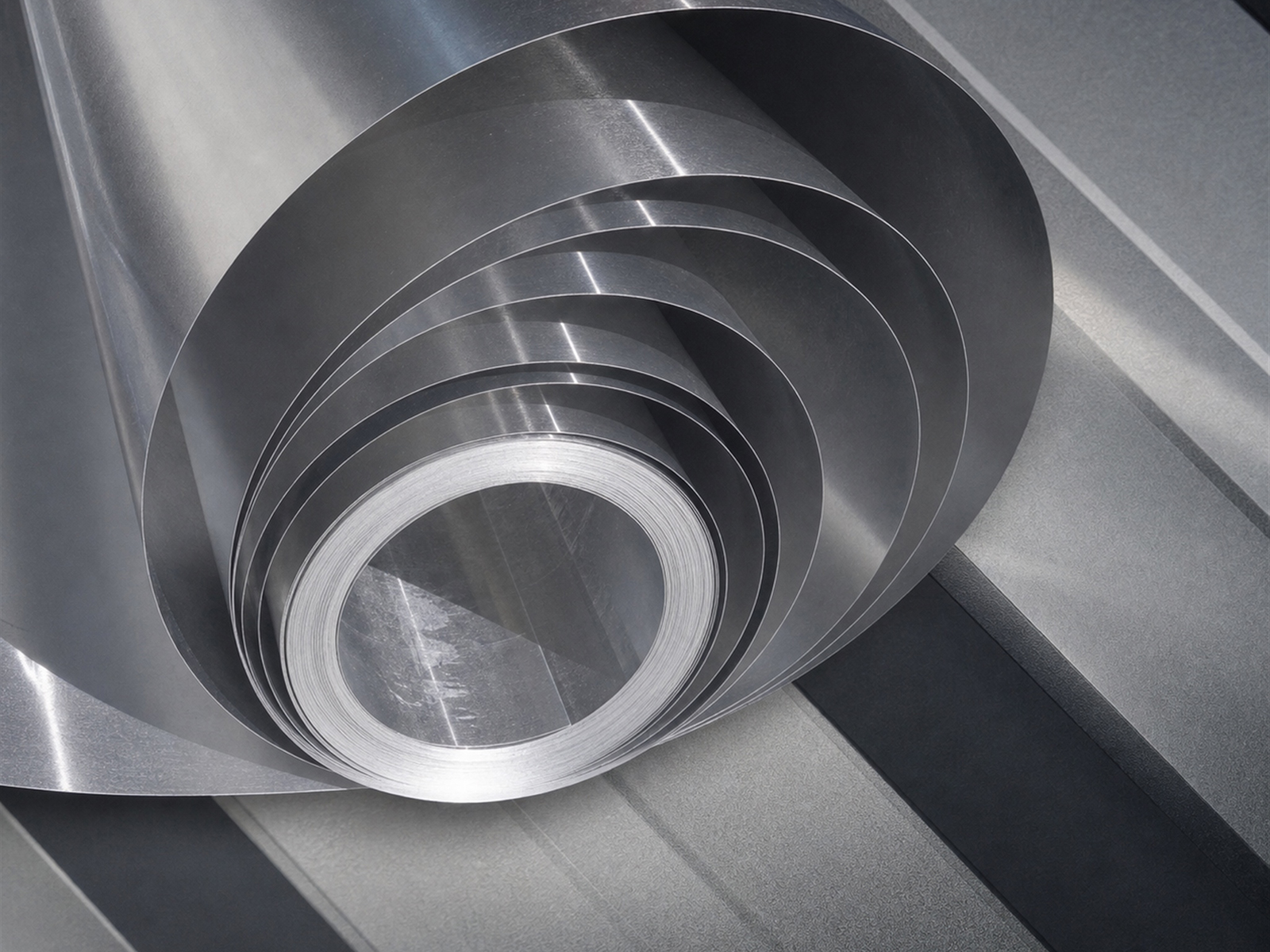
Against the backdrop of global industrial upgrading and new energy transition, GR1 titanium foil has become a critical material in high-end applications including aerospace, electronic shielding, and fuel cells due to its superior corrosion resistance, formability, and biocompatibility. However, supplier quality varies considerably in the market. Identifying partners with genuine technical capability and delivery capacity hinges on evaluating four core dimensions: precision grade of production equipment (whether 20-roll finishing achieves plus or minus 0.001mm tolerance), completeness of process systems (whether covering ultrasonic cleaning plus argon annealing), internationalization of quality certifications (compliance with standards such as ASTM B265), and scalability of production capacity.
1. Understanding Core Technical Parameters and Industry Standards of GR1 Titanium Foil
(1) Material Purity and Chemical Composition Control
GR1 titanium foil requires titanium content of 99.5 percent or greater, forming the foundation for superior corrosion resistance and ductility. Impurity elements such as oxygen (up to 0.18 percent), iron (up to 0.20 percent), and carbon (up to 0.08 percent) must be strictly controlled; any exceedance causes material embrittlement or welding performance degradation. High-quality suppliers typically employ vacuum melting technology and equip spectral analyzers for full-element testing of every incoming batch. In contrast, low-end manufacturers may use recycled titanium blend material, resulting in large compositional fluctuations and inconsistent performance across batches.
(2) Stability Verification of Mechanical Properties
Parameter | ASTM B265 Standard | EN 10204 Standard | JIS H4600 Standard |
Titanium Content | >= 99.5% | >= 99.5% | >= 99.5% |
Oxygen | <= 0.18% | <= 0.18% | <= 0.18% |
Iron | <= 0.20% | <= 0.20% | <= 0.20% |
Surface Roughness | Not specified | Ra <= 0.4 um | Ra <= 0.4 um |
Tensile strength of 240 MPa or greater, yield strength of 170 MPa or greater, and elongation of 24 percent or greater (50mm gauge length, slight variation by thickness) are basic mechanical indicators of GR1 titanium foil per ASTM B265. These parameters directly impact yield rates in subsequent stamping and bending operations. Professional suppliers conduct per-coil tensile testing after annealing and provide quality certificates with heat numbers. Particular attention should be paid to uniformity within the hardness range of 100 to 180 HB; if hardness difference between edge and center of wide-format foil exceeds 10 HB, localized cracking may occur during deep processing.
(3) Multiple Certification Systems Under International Standards
ASTM B265 is the mainstream standard for the North American market, while European customers focus more on compliance with EN 10204 and BS ISO 7209:2023. Suppliers with multiple country certifications typically undergo cross-regional audit verification. For example, Japan JIS H4600 imposes stricter surface roughness requirements (Ra at or below 0.4 micrometers), while Germany DIN 17850 emphasizes statistical process control of dimensional tolerances. Procurement should request third-party test reports for the target market rather than relying solely on supplier self-inspection data.
2. Evaluating Supplier Production Equipment and Process Capability
(1) Generational Differences in Precision Rolling Mills
Ultra-thin wide-format titanium foil production depends on high-precision rolling mills. Conventional 4-roll or 6-roll mills struggle to control flatness at 0.02mm thickness, prone to edge warping or center wave defects. 20-roll precision finishing mills optimize backup roll systems to achieve thickness tolerance within plus or minus 0.001mm, representing a five-fold precision improvement over conventional 4-roll mills (typical tolerance plus or minus 0.005mm) and a three-fold improvement over 6-roll mills (typical tolerance plus or minus 0.003mm). A 750mm 20-roll mill adopted by one supplier represents world-leading technology, combined with multi-pass cold rolling to stably produce 350 to 670mm wide-format foil.
(2) Cleanliness Management in Surface Treatment
Electronic shielding and fuel cell applications are highly sensitive to surface cleanliness. Ultrasonic cleaning removes rolling grease, but improper alkaline solution concentration control leaves corrosive ion residues. Premium suppliers employ a three-stage process of ultrasonic plus alkaline washing plus pure water rinsing, ensuring surface tension stabilizes at 44 dynes through dyne pen testing, a value that guarantees wetting for coating or bonding. Self-developed degreasing formulations reduce surface carbon residue below 0.05 percent, far below the ASTM B265 limit of 0.08 percent, preventing porosity during welding.
(3) Temperature Uniformity in Heat Treatment Processes
Continuous argon annealing furnaces are key equipment for ensuring microstructural uniformity. If furnace temperature fluctuation exceeds plus or minus 5 degrees Celsius, GR1 titanium foil develops color-band streaks and localized hardness anomalies. Advanced annealing lines employ multi-zone independent temperature control with accuracy of plus or minus 2 degrees Celsius, combined with protective atmosphere of oxygen content below 10ppm, yielding uniform silver-gray appearance across the entire coil. Vacuum annealing furnaces are used for special alloy heat treatment, controlling grain size to ASTM 8-10 grade and improving fatigue resistance.
3. Verifying Quality Management Systems and Batch Stability
(1) Full-Process Automated Inspection Coverage
Ninety percent automation rate substantially compresses human operation errors. From spectral testing of incoming materials, thickness monitoring during rolling, to flatness measurement of finished products, each node requires digital recording. One manufacturer’s production line equips laser thickness gauges capable of scanning the full width at 0.1mm intervals, generating thickness distribution heat maps. Any area exceeding plus or minus 0.001mm is automatically flagged, and subsequent processes reject anomalous segments. This process quality control significantly outperforms traditional offline sampling methods.
(2) Establishment of Batch Traceability Systems
Medical and aerospace fields require complete heat number traceability chains for materials. Quality suppliers assign unique codes to each foil coil, linking raw material source, rolling parameters, annealing curves, and inspection data. When customers detect anomalies, the problematic batch can be identified and recalled within 30 minutes. This system requires deep ERP-MES integration; smaller manufacturers often provide only paper records with low traceability efficiency and vulnerability to data tampering.
(3) Third-Party Certification and Independent Laboratory Cooperation
Reliable suppliers maintain partnerships with accredited independent testing laboratories for periodic third-party verification. This external validation provides additional credibility beyond internal quality systems. Suppliers who proactively submit products for independent testing demonstrate commitment to transparency and continuous improvement.
4. Assessing Customization Capability and Technical Service
(1) Precision Slitting and Custom Sizing
Standard foil widths may not match customer requirements. Advanced slitting lines achieve width tolerance of plus or minus 0.1mm with burr height limited to 0.01mm or less. For battery tab applications requiring zero grease residue, vacuum degreasing or plasma cleaning is necessary, involving significant equipment investment only available to large-scale manufacturers.
(2) Technical Support and Application Development Collaboration
Suppliers offering only standard products force customers to independently develop processing parameters at high trial-and-error cost. Suppliers with application engineering teams assist customers in optimizing stamping die clearance, welding heat input, and composite lamination temperature. Some technical centers provide material formability testing and corrosion simulation services, helping customers reduce product development cycles by 50 percent. This deep-binding relationship forms the foundation for long-term cooperation.
5. Considering Geography and Supply Chain Risk Management
(1) Technology Spillover Effects of Production Clusters
Global titanium processing concentrates in regions such as Baoji China, Pittsburgh USA, and Kobe Japan. Baoji, known as China Titanium Valley, hosts a complete industry chain from sponge titanium smelting to deep processing, with raw material costs 30 percent lower than Europe and America and abundant skilled labor. Local suppliers respond rapidly to equipment maintenance and process improvement needs, whereas overseas procurement may face delayed technical support. Proximity to industry clusters also provides priority access to upstream raw materials and novel alloy R&D resources.
(2) Logistics Efficiency and Tariff Policy Impact
Sea freight from China to Germany takes approximately 35 days; air freight is faster but increases costs five to eight times. European and American customers should evaluate whether suppliers maintain bonded warehouse inventory enabling vendor-managed inventory models. Regarding tariffs, Sino-US trade friction has caused titanium material tax rate fluctuations. Suppliers with processing transit stations in Southeast Asia can mitigate some risks. Korean battery manufacturers prefer direct sourcing from China due to favorable tariff preferences under RCEP, with 7-day rapid customs clearance available through Shenzhen and Qingdao ports.
(3) Risk Hedging Through Diversified Supplier Base
Evaluation Dimension | Key Indicator | Good Threshold | Premium Threshold |
Equipment Precision | Thickness tolerance | +/- 0.003mm | +/- 0.001mm |
Process Completeness | Cleaning + Annealing | Two-stage | Three-stage with monitoring |
Certification | Standard compliance | Single standard | Multi-standard |
Capacity | Annual output | 500 tons | 3000+ tons |
Supplier Tier | Annual Capacity | Automation Rate | Certifications | Response Time |
Tier 1 | 3000+ tons | > 90% | ASTM + EN + JIS | 20 days emergency |
Tier 2 | 500-1000 tons | 70-85% | ASTM or EN | 30-45 days |
Tier 3 | < 500 tons | < 70% | Self-certified | 60+ days |
Dependence on a single supplier creates vulnerability to equipment failures or environmental compliance shutdowns. Mature procurement strategies establish primary-plus-backup systems: 70 percent of orders to the strongest comprehensive supplier, 30 percent to second-tier suppliers to maintain competitive pressure. For strategic materials, transnational layout may be necessary, pairing European primary suppliers with Asian backups to ensure supply continuity under geopolitical risk. Suppliers with 3,000-metric-ton annual production capacity reserves can accept emergency orders transferred from other suppliers, making capacity elasticity an important risk management consideration.
6. Conclusion
Finding high-quality GR1 titanium foil suppliers requires comprehensive evaluation of technical capability (20-roll finishing with plus or minus 0.001mm tolerance), systemic competence (multi-standard ASTM certification plus full-process traceability), scaled delivery capacity (thousand-ton annual output with 20-day emergency response), and supply chain resilience (industry cluster advantages plus multi-region warehousing). Through rigorous assessment across equipment generation, process completeness, batch stability, and customized service dimensions, combined with on-site audits and third-party testing verification, procurement professionals can identify suppliers with genuine long-term partnership value, ensuring stable supply for aerospace, new energy, and medical high-end applications.
FAQ
Q1: How do you verify the true purity of GR1 titanium foil?
Request spectral analysis reports with heat numbers from the supplier; titanium content must be 99.5 percent or greater, with oxygen, iron, carbon and other impurities compliant with ASTM B265. Commission SGS or equivalent third-party institutions for retesting, comparing melting records with finished product test data for consistency to ensure no blending risk.
Q2: Why does 0.02mm ultra-thin foil prone to flatness issues?
Ultra-thin material lacks rigidity and is easily affected by tension fluctuations during rolling, producing center waves or edge waves. A 20-roll or higher precision mill is required, optimizing backup roll distribution of rolling force, combined with online laser thickness measurement and flatness monitors for real-time adjustment, achieving full-width plus or minus 0.001mm precision. Conventional equipment cannot reach this level.
Q3: How do you assess the batch delivery stability of a supplier?
Review whether annual production capacity reaches thousand-ton scale, whether production line automation exceeds 85 percent, and whether key equipment such as continuous annealing and precision slitting is available. Request on-time delivery rate data for major customer orders over the past year and equipment OEE reports to avoid delivery delays caused by insufficient capacity.
7. Take Action Now
Baoji Titanium Valley Titanium Nickel Zirconium Materials Processing Co., Ltd., as a global leading GR1 titanium foil manufacturer, operates precision foil production lines with annual delivery capacity of 3,000 metric tons. Its 20-roll finishing technology achieves stable mass production of 0.02 to 1.0mm by 350 to 670mm ultra-thin wide-format foil with thickness tolerance of plus or minus 0.001mm, surface dyne value of 44, complying with ASTM B265 and other international standards. As a professional titanium foil supplier and factory, it provides one-stop customized service from raw material to finished product. Inquiries welcome: sales@titaniumvalleys.com
References
Zhang Wei, Li Ming. Research on Precision Rolling Technology and Equipment for Ultra-Thin Titanium Foil. Rare Metal Materials and Engineering, 2021, 50(3): 789-795.
Liu Jianguo, Wang Hongwei. Impact of Cold Rolling Process Parameters on Flatness of Titanium and Titanium Alloy Foil. The Chinese Journal of Nonferrous Metals, 2020, 30(5): 1023-1031.
Chen Zhiqiang, Zhao Gang. Study on Relationship Between Annealing Process and Microstructure-Property of GR1 Titanium Foil. Metal Heat Treatment, 2022, 47(8): 45-50.
Yang Hua, Sun Li. Analysis of Impact of Titanium Foil Surface Cleaning Process on Carbon Residue. Surface Technology, 2023, 52(2): 178-184.